Today · Aug 19, 2026
A $25K Airbnb Theft at Coachella. Your Guests Are Watching How You Handle What Airbnb Won't.

A $25K Airbnb Theft at Coachella. Your Guests Are Watching How You Handle What Airbnb Won't.

A model allegedly stole $25,000 from an Airbnb during Coachella, and the story went viral. The interesting part isn't the crime... it's what happens when short-term rental guests realize nobody's screening, nobody's monitoring, and nobody's accountable when things go wrong.

So a Penthouse model allegedly walks into a Coachella Airbnb, walks out with $25,000 in guest valuables, and the whole thing becomes tabloid content for a week. That's the headline. Here's what actually matters if you're running a hotel anywhere near a major event market.

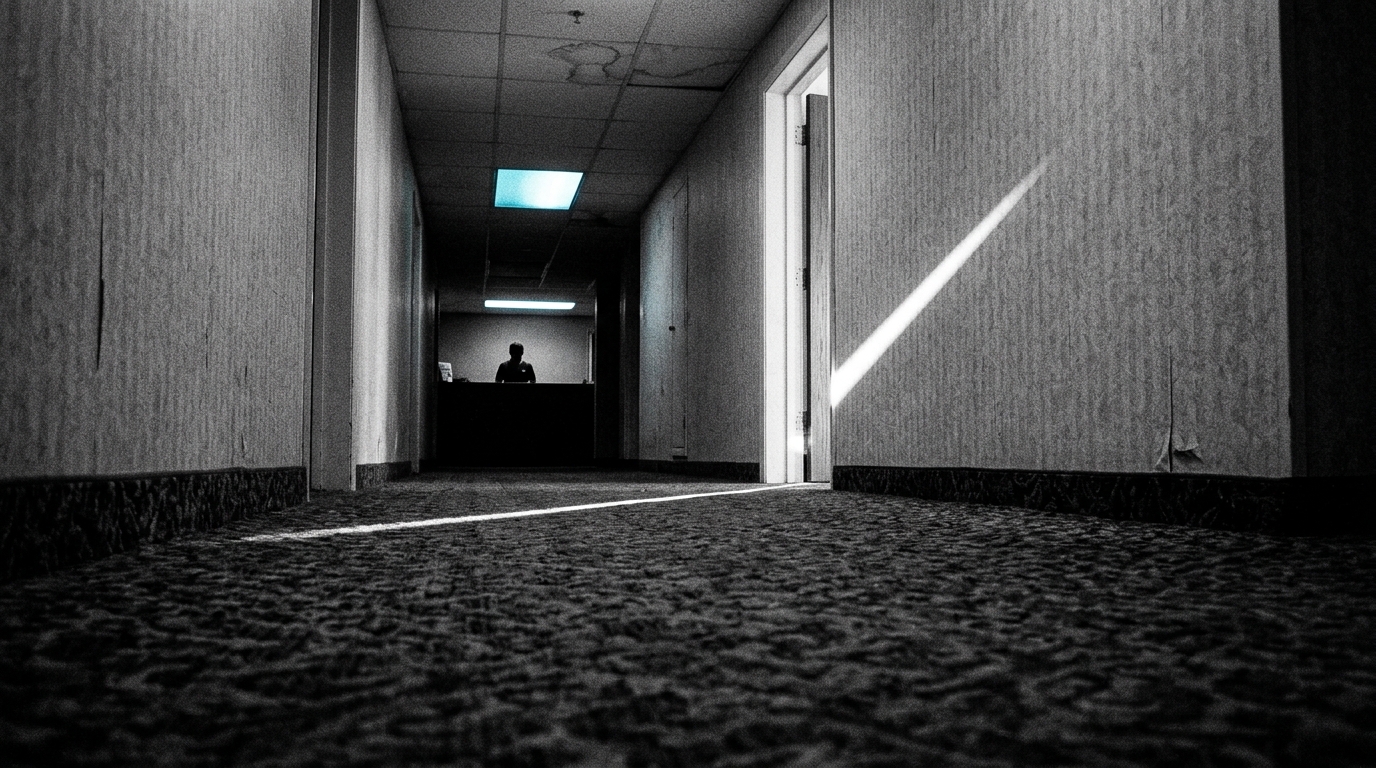
This isn't about one person stealing stuff. This is about the trust architecture of short-term rentals getting stress-tested in public, and failing in public. Airbnb's model has always assumed that reviews and identity verification are sufficient substitutes for on-site staff, physical security infrastructure, and operational accountability. For most stays, that assumption holds. During high-demand event weekends... Coachella, SXSW, Art Basel, any market where rates spike 3-4x and rental volume explodes... it doesn't. There's no front desk. There's no security camera in the hallway. There's no night auditor (and yes, I think about night auditors a lot, because they're the last line of defense when everything else fails). There's a lockbox and a checkout message. That's the entire security stack.

Look, I'm not here to dunk on Airbnb. I've stayed in plenty of Airbnbs. The platform works for what it is. But what it IS matters for hotel operators, because every time a story like this goes viral, it recalibrates the risk perception for a certain segment of traveler. The business traveler whose company policy already prohibits short-term rentals. The family booking a $400/night event-weekend stay who suddenly wonders what happens if something goes wrong. The event planner who's weighing hotels versus rental blocks for a group. These people are reading the New York Post at breakfast. And they're doing a quiet mental calculation about what "hosted" actually means versus "self-service."

Here's where the technology angle gets interesting. Hotels have been spending money on guest-facing security tech for years... mobile key, in-room safes, hallway cameras, integrated access logs. Most of that spend gets justified on insurance and liability grounds. It rarely gets marketed as a competitive differentiator. That's a mistake. A hotel's security infrastructure IS a feature, especially during event weekends when the short-term rental market floods with one-time hosts who've never managed a property and guests who've never met each other sharing walls and common spaces. If you're running a hotel in an event market and you're not actively messaging your security infrastructure to potential guests, you're leaving positioning on the table. Not in a fear-mongering way... in a "here's what you get when you book with us" way. The front desk is staffed 24 hours. The hallways have cameras. Your in-room safe is bolted to the floor. That stuff matters more during Coachella week than it does on a random Tuesday in February.

The bigger pattern here is accountability architecture. When something goes wrong at a hotel... a theft, a safety incident, a maintenance failure... there's a chain of response. There's a person. There's a process. There's insurance that actually covers the guest. When something goes wrong at an Airbnb, the guest files a claim through a platform and waits. I talked to a property manager last year who handles 40 short-term rental units near a major festival market. He told me his insurance doesn't cover guest personal property at all. "That's between the guest and Airbnb's guarantee program," he said. I asked him if his guests knew that. He changed the subject. That gap... between what guests assume is covered and what's actually covered... is where hotels have a story to tell. Most aren't telling it.

Operator's Take

If you're a GM in an event market... Coachella, SXSW, any weekend where your comp set triples their rates... this is a positioning conversation you should be having with your sales and marketing team right now. Pull your security features into your event-weekend messaging. Not buried on page six of the website. Front and center. 24-hour front desk. Hallway cameras. In-room safes. Guest incident response protocol. These aren't just operational checkboxes... they're differentiators against a short-term rental market that has none of them. Run your event-weekend ADR against the Airbnb listings in your three-mile radius and ask yourself: are we capturing the guest who wants to pay a premium for accountability? Because that guest exists, and right now they're booking your competitor because nobody told them what they're actually getting for the rate.
— Mike Storm, Founder & Editor
Read full analysis → ← Show less
Source: Google News: Airbnb
A Father Was Killed in His Hotel Room at 5 AM. His Baby Was Right There.

A Father Was Killed in His Hotel Room at 5 AM. His Baby Was Right There.

A 30-year-old father was shot and killed in his second-floor room at an Extended Stay America in Springdale, Ohio, while his one-year-old child and the child's mother were feet away. If you run an extended-stay property, the question you need to sit with isn't whether this could happen at your hotel... it's what you'd do in the 47 minutes between the gunshot and the first news truck.

Available Analysis

I managed a property once where a guest pulled a knife on another guest in the parking lot at 3 AM. Nobody got hurt. The police came, took a report, and left. The next morning I had 14 staff members who'd heard about it, a front desk agent who didn't want to work nights anymore, and zero guidance from anyone about what to say to the guests who saw police lights from their windows. That was a knife in a parking lot. Nobody died.

A 30-year-old man was shot and killed inside his room at an Extended Stay America in Springdale, Ohio, at 5:17 in the morning on June 30th. His one-year-old baby was in the room. The child's mother was in the room. The suspect... a 20-year-old staying in the room next door... fired shots through the wall. Court documents say the shooter didn't know the victim. Didn't know the mother. Just fired into the room and later told police he was "trying to scare his child's mother." A $30 million bond was set. The father is dead. The baby is alive and will never remember this, which might be the only mercy in the entire story.

Here's what I want to talk about, because nobody else is going to. That property is a 70-room extended-stay built in 1988. It sold late last year to a private investor. Which means right now, somewhere, there's an owner who bought this hotel maybe seven months ago and is staring at a news cycle that has their property's name attached to a murder. There's a GM (or maybe just a manager on duty, because a 70-key extended-stay at 5 AM might not have a GM anywhere near the building) who walked into the worst shift of their career. There's a front desk agent or night auditor who heard gunshots, called 911, and then had to keep functioning. That person probably makes $14 an hour. Maybe $15. And there's a housekeeper who's going to have to service that room eventually, or the room next to it, or the hallway. Nobody's talking about any of these people.

Extended-stay properties carry a specific operational reality that transient hotels don't. Your guests are residents. They're there for weeks, sometimes months. You don't have the natural turnover that flushes problems out every 48 hours. The person in 204 knows the person in 206 in ways that don't happen at a Courtyard. Conflicts build. Tensions simmer. And your staffing model... lean by design, skeleton crew overnight... means that when something goes wrong at 5 AM, you might have one person in the entire building who works there. One. This isn't a criticism. It's the math of operating a 70-key extended-stay. But it's a math that assumes nothing catastrophic happens on the overnight shift. And sometimes it does.

The property had another incident in 2024... a man found dead from a gunshot in the lobby of a nearby hotel on the same street. This is a corridor with a history now. If you're the new owner, you're doing a calculation right now that has nothing to do with RevPAR or occupancy. You're calculating whether the cost of additional overnight security ($18-22/hour in that market, call it $50K-$60K annually) is worth it against what just happened. And you're realizing that the answer is unknowable... because you can't put a dollar value on a prevented tragedy. You can only put a dollar value on the one that already occurred. Insurance. Legal exposure. Reputation. Online reviews that will reference this for years. The invisible costs that never show up on a P&L but absolutely show up in the value of your asset. I've seen properties carry the weight of a single violent incident for a decade. It doesn't wash off with a rebrand or a renovation. It lives in the Google results. It lives in the staff who were there that night and never quite come back to normal.

Operator's Take

If you run an extended-stay property... any size, any flag, any market... do three things this week. First, audit your overnight staffing and ask yourself honestly: if a violent incident occurred at 4 AM, who responds, what's the protocol, and has anyone actually been trained on it? If the answer is "the night auditor calls 911," that's a start but it's not a plan. Second, review your guest screening process for extended-stay residents. I'm not talking about turning your hotel into a fortress. I'm talking about knowing who's in your building. Third, and this is the one nobody wants to hear... call your insurance broker and ask specifically about liability exposure for violent criminal acts by one guest against another. Don't wait for the claim. Know what you're carrying before you need to. That family in Ohio had a one-year-old baby in the room. Your staff could be one shift away from being the person who has to deal with something like that. Make sure they're not doing it alone and untrained.

Read full analysis → ← Show less
Source: Google News: Extended Stay Hotels
End of Stories