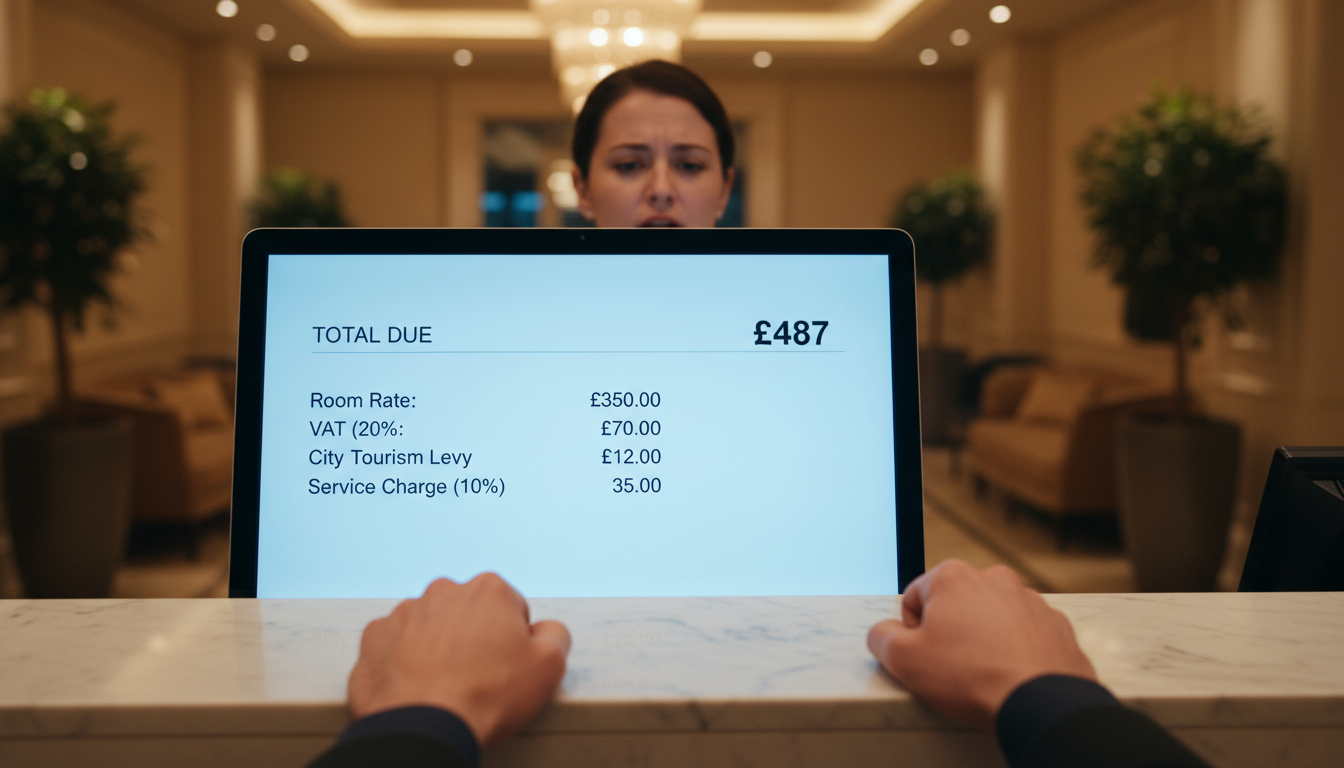
F1 Fills Your Hotel. Then It Leaves. Then What?
Formula 1 is driving massive hotel demand worldwide. But the GMs living through race week know a truth the headlines won't touch.
Revenue Management is the strategic practice of optimizing hotel pricing and inventory allocation to maximize profitability. It involves analyzing demand patterns, competitor pricing, market conditions, and booking pace to determine optimal room rates and length-of-stay restrictions across different customer segments and distribution channels. Modern revenue management systems integrate dynamic pricing algorithms, forecasting models, and occupancy targets to balance volume and yield.
The discipline has become increasingly complex as hotels navigate competing priorities between loyalty program economics, brand positioning, and direct booking incentives. Recent industry developments show revenue management strategies intersecting with loyalty program design, credit card partnerships, and market segmentation decisions. Hotels face tension between aggressive revenue optimization and guest acquisition costs, particularly when promotional strategies across multiple brands or loyalty tiers cannibalize higher-margin bookings.
Revenue management effectiveness directly impacts hotel profitability and competitive positioning. Operators must balance short-term revenue maximization against long-term brand equity and customer lifetime value, especially as alternative accommodations and dynamic pricing become industry-wide practices.
Formula 1 is driving massive hotel demand worldwide. But the GMs living through race week know a truth the headlines won't touch.
Everyone's publishing where to stay for 2026. Nobody's talking about what happens inside those hotels when 400,000 fans show up at once.
The rumors swirling around World of Hyatt — Category 10 hotels, super peak pricing, a $795 credit card — aren't loyalty tweaks. They're the architecture of a brand split most owners haven't priced in yet.
Marriott Bonvoy's latest global promotion promises bonus points and elite night credits. What it actually promises is deeper owner subsidization of a system that benefits corporate more than it benefits properties.
Rumored super-peak pricing and a new top award tier reveal the real play: Hyatt is repricing access to its most valuable properties — and owners should read the fine print.
A 75,000-point sign-up bonus sounds like a gift to travelers. It's actually a franchise economics chess move — and owners should read the board.
The bifurcation story everyone's telling misses the part that matters — what it actually looks like inside the building when your segment falls on the wrong side.
A no-annual-fee credit card books a family vacation. The real story is what IHG extracted in return — and who's actually paying for that 'free' room.
A century-old Jersey Shore golf resort gets a Destination by Hyatt flag. The collection brand looks like a perfect match — until you map the conversion against what the property actually needs.
Politicians want to crack down on institutional single-family rental owners. The hospitality crowd hopes that capital rotates into hotels. It won't — and the reason tells you something about how investors actually think about lodging.
Expedia guided cautious on 2026 margins. Wall Street panicked. Hotel operators should be paying attention for a completely different reason.
Kasumigaseki Hotel REIT is hiking projections on surging inbound demand. The real story is what this signals about technology infrastructure readiness in Japan's hotel market.
JW Marriott Kolkata names a new GM. The press release is boilerplate. The question nobody's asking is what a leadership transition actually means for the tech stack a property runs on.
Industry leaders are fighting the wrong battle. While they petition against visitor levies, the real threat to profitability is hiding in plain sight at every property.
China just proved what every hotel operator knows but won't say out loud — sometimes the property is too iconic to touch, too expensive to hold, and too political to profit from.
While operators debate ancillary revenue, New York City just outlawed the playbook. The ripple effects will reshape how every property in America prices rooms.
While independent hoteliers debate inventory strategies, Airbnb is quietly building the most comprehensive guest behavior database in hospitality history.
Marriott properties are undercutting corporate rates by $450 on Airbnb. If it's happening to the biggest brand in the world, it's definitely happening to you.
Hospitality leaders are begging the Chancellor to scrap visitor levies. They're fighting the wrong battle — and about to lose the war.
While you're fighting for ADR increases, Marriott just added more rooms in China than most cities have total. Here's why that math problem is about to become your problem.