Today · Jul 27, 2026
AI Is Running Your Hotel at 2 AM. Does It Pass the Night Audit Test?

AI Is Running Your Hotel at 2 AM. Does It Pass the Night Audit Test?

The industry is spending billions on AI that promises to manage hotels invisibly. But most of it was built by people who've never had to troubleshoot a system failure with one person on shift and a lobby full of guests.

So here's the pitch: AI runs in the background, optimizes your pricing, handles 80% of guest inquiries, cuts food waste by 50%, speeds up housekeeping by 20%... and nobody gets fired. The "invisible manager." That's the framing from a new wave of coverage positioning AI as the silent co-pilot every hotel operator has been waiting for. The global AI-in-hospitality market is supposedly headed from $16.3 billion to $70 billion by 2031. And 77% of hoteliers say they're planning to throw 5-50% of their IT budget at it.

Let me tell you what actually happens.

I consulted with a 180-key select-service property last fall that bought into one of these "invisible" AI platforms. Conversational guest messaging, dynamic pricing recommendations, automated housekeeping task assignment. The demo was gorgeous. Worked perfectly on the sales rep's laptop. They signed at $1,400 a month. What the vendor didn't mention: the PMS integration took 11 weeks instead of three, required a middleware patch that nobody on the hotel's team understood, and the dynamic pricing module kept pushing rates that conflicted with the revenue manager's comp set strategy. The front desk staff stopped trusting the guest messaging bot after it told a guest the pool closed at 9 PM (it closes at 10) and offered a "complimentary spa upgrade" at a property that doesn't have a spa. The GM told me he spends more time babysitting the AI than it saves him. His words: "I didn't buy an invisible manager. I bought an invisible toddler."

Look, I'm not anti-AI. I'm an engineer. I've built rate-push systems. I understand what good automation architecture looks like, and some of what's emerging is genuinely impressive. The food waste tracking using computer vision in kitchen operations? That's real. The math works... if you're a 400-key full-service property with a serious F&B operation, you can see ROI in under a year. Voice-powered LLM systems that can handle multi-step guest requests? Getting better fast. But here's the thing nobody's asking: what percentage of the hotels being sold this technology actually have the infrastructure, the bandwidth, the staff training capacity, and the PMS architecture to make it work? The BCG-NYU report from last week quietly mentions that only 2.9% of hospitality workers have AI-relevant skills. The average hotel PMS is 15 years old. And 65% of North American hotels can't fully staff their existing shifts. So we're layering autonomous systems onto properties where the WiFi drops on the second floor and the night auditor learned the PMS from a three-ring binder in 2011. That's not an AI readiness problem. That's a fantasy-meets-reality problem. And I've been on the wrong side of that equation before... my first startup crashed because I built technology that worked perfectly in a demo environment and failed spectacularly in a real hotel at midnight. The gap between "works in the pitch" and "works at 2 AM when nobody's here" is where most of these AI promises will die.

The real question for operators isn't whether AI is useful (it can be) or whether it's coming (it is). The question is: does this specific product, at this specific price point, solve a problem my team actually has, on infrastructure my building actually supports, with a failure mode my least technical employee can actually recover from? That's the test. And Marriott's own SEC filing from early 2025 flags something even bigger... AI-driven platforms may shift bookings away from direct channels and loyalty programs toward intermediaries, potentially increasing distribution costs. So while vendors are selling you AI as a cost-saver, the macro effect of AI on the distribution landscape might actually cost you more on the top line. Nobody's putting THAT in the demo.

If you're a GM or owner being pitched an AI platform right now, do three things before you sign anything. First, ask the vendor what happens during a system outage at 2 AM with one person on shift. If the answer involves "contact support," walk away. Second, get the actual total cost... not the monthly subscription, but implementation, training, integration maintenance, and the productivity dip during the transition. That "$500 a month" system has a very different real cost. Third, demand performance data from properties that match yours... not the 500-key resort with a dedicated IT team, but the 120-key select-service with a night auditor who's also watching the door. If they can't show you that, they haven't proven their product works where you need it to work.

Operator's Take

Here's what I'd tell you if we were sitting in the lobby right now. Don't let the vendor run the demo on their hardware and their WiFi. Make them install a pilot on YOUR infrastructure, on YOUR PMS, with YOUR team running it for 30 days before you commit to anything. If they won't do that, they already know it's going to break in your environment. And that $1,400 a month? Multiply it by three to get your real cost once you factor in the GM hours, the training, and the integration headaches. If the ROI still works at 3x... then we're talking.


— Mike Storm, Founder & Editor
Read full analysis → ← Show less
Source: Google News: Hotel AI Technology
Lighthouse's ChatGPT Booking App Sounds Great... Until You Ask What Happens at 2 AM

Lighthouse's ChatGPT Booking App Sounds Great... Until You Ask What Happens at 2 AM

Lighthouse just launched a direct booking app inside ChatGPT that lets hotels bypass OTA commissions entirely. But the timing is weird, the platform is already backing away from transactions, and the real question is whether this actually helps the 90-key independent or just gives enterprise chains another toy.

Available Analysis

So Lighthouse... the company that raised $473 million including a $370 million round from KKR... just launched what they're calling the first direct booking app for hotels inside ChatGPT. Flat-fee subscription. Zero commissions. Hotels surface their own rates, their own brand content, their own perks, directly inside an AI chat with 800 million users. On paper, this is the thing every independent operator has been asking for since Booking.com started eating 15-25% of their revenue. A commission-free distribution channel that puts the hotel in front of AI-powered travel searches without an OTA middleman. That's the pitch. Let's talk about what this actually does.

Here's what the press release doesn't tell you. The same week Lighthouse launched this app, OpenAI started scaling back its own in-chat transaction features. Their "Instant Checkout" experiment? Quietly getting shelved. TD Cowen analysts called it a "stunning admission" that AI platforms replacing apps as the transaction layer isn't happening as fast as anyone predicted. So what does Lighthouse's app actually do? It surfaces hotel rates and content inside ChatGPT... then redirects the user to the hotel's own website to complete the booking. That's not a booking engine inside ChatGPT. That's a referral link with extra steps. And if you've ever looked at direct website conversion rates for hotels (spoiler: they hover around 2%), you already know the gap between "discovery" and "booking" is where most of this value evaporates.

Look, I get why everyone's excited about this. The stat Lighthouse cites... 62% of travelers prefer to book directly when given the option... is probably accurate. But "prefer" and "do" are different verbs. The OTAs figured this out 20 years ago. Travelers prefer direct. Travelers book wherever is easiest. And right now, the easiest path inside ChatGPT is still going to be the Booking.com and Expedia apps that have been live since October 2025, with full booking flows that don't punt you to a hotel website where half the properties have a mobile experience built in 2019. Accor already launched their own ChatGPT app back in January. Hyatt's in there too. So the "first direct booking app for hotels" claim needs a pretty big asterisk... it's the first platform enabling any hotel to participate, not the first hotel presence in ChatGPT. That distinction matters if you're an independent, because it means this is genuinely new territory for you. It matters less if you're a branded property, because your flag might already be there.

The architecture question is the one nobody's asking. I talked to a consultant last month who was helping a 15-property group evaluate AI distribution tools. His exact words: "Every vendor shows me the discovery layer. Nobody shows me the fallback." What happens when Lighthouse's Connect AI engine... the thing that bridges hotel PMS data to ChatGPT in real time... hiccups? What happens when your rate update doesn't sync and ChatGPT surfaces last Tuesday's pricing? What happens when a guest sees a rate in the chat, clicks through to your website, and the rate is different? That's not a hypothetical. That's a Wednesday. If you've ever managed a channel manager integration (and if you're reading this, you probably have), you know that real-time rate parity across distribution channels is the promise every vendor makes and approximately zero deliver perfectly. Adding another channel... especially one powered by an AI model that might interpret or reformat your data... doesn't simplify the problem. It adds another place for the rate to be wrong.

The Dale Test question here is straightforward: when this system fails at midnight, who fixes it? If your night auditor can't troubleshoot a rate discrepancy surfaced by an AI chatbot to a guest who's now angry because the price changed between the chat and the website... you don't have a distribution solution. You have a new complaint channel. For large chains with dedicated revenue management teams and 24/7 support desks, this is manageable. For the 90-key independent with one person on the night shift? This is another vendor subscription, another integration to maintain, another system that promises the world in the demo and delivers a support ticket queue in production. I'm not saying don't watch this space. I'm saying don't sign anything until you've seen it work at a property that looks like yours... not in a conference room demo running on perfect data.

Operator's Take

Here's what I'd tell you if you called me today. If you're running an independent or a small portfolio, don't rush into this. Let the early adopters find the bugs... and there will be bugs. Your job right now is to make sure your direct booking engine, your website, and your rate parity are airtight, because THAT'S what this app redirects to. If your website converts at 1.8% on mobile, no amount of AI discovery is going to save you. Fix the foundation first. The shiny stuff can wait.

— Mike Storm, Founder & Editor
Read full analysis → ← Show less
Source: Google News: Hotel AI Technology
Airbnb's Hotel Push and TripAdvisor's Collapse Tell the Same Story About Your Distribution Costs

Airbnb's Hotel Push and TripAdvisor's Collapse Tell the Same Story About Your Distribution Costs

Airbnb beat revenue estimates while quietly expanding into boutique hotels. TripAdvisor's hotel segment cratered 15%. If you're an independent operator paying for metasearch placement, the ground just shifted under your feet.

So here's what actually happened in the Q4 earnings dumps on February 12th. Airbnb posted $2.78 billion in revenue (up 12% year-over-year), grew gross booking value 16% to $20.4 billion, and is now openly talking about adding boutique hotels to its platform. TripAdvisor posted $411 million in revenue... flat... missed EPS estimates by 73% ($0.04 actual vs. $0.67 expected), and watched its Hotels & Other segment revenue drop 15% in a single quarter. One platform is expanding into your territory. The other one is abandoning it. Both of those things affect what you're paying for distribution right now.

Let's talk about what Airbnb is actually doing. They're not just listing spare bedrooms anymore. They're selectively onboarding boutique and independent hotels in markets where traditional supply is thin. They're rolling out "Reserve Now, Pay Later" globally (as of February 24th). And Brian Chesky is out there calling the company "AI-native," which... look, I'm an engineer, and every time a CEO calls their company "AI-native" without explaining the architecture, I reflexively check whether the product actually changed or just the investor deck. But here's the thing that matters for operators: Airbnb generated $4.6 billion in free cash flow last year. They have the money to build whatever distribution infrastructure they want. When a company with that kind of cash starts targeting your segment, you don't ignore it. You figure out what your cost-per-acquisition looks like on their platform versus every other channel you're paying for.

Now TripAdvisor. This is where it gets interesting. The Hotels & Other segment is down 15%. The Experiences segment grew 10% to $204 million. The company is publicly pivoting to "experiences-first." They're exploring selling TheFork (their restaurant booking platform). And Starboard Value... an activist investor with over 9% of the company... is pushing for a board overhaul and potentially a full sale, citing "material underperformance." I talked to an independent operator last month who was still spending $2,800/month on TripAdvisor Business Advantage. His click-through rate had dropped 40% over two years. He kept paying because "it's TripAdvisor." That's brand loyalty to a platform that is actively deprioritizing your segment. The analyst consensus on TRIP is basically "Reduce" across 14 firms. When Wall Street is telling you a company's hotel business is dying, and the company itself is pivoting away from hotels, and an activist investor is trying to force a sale... that's not a mixed signal. That's a signal.

What does this actually mean if you're running a 90-key independent or a boutique property? It means your distribution mix needs to be re-evaluated this quarter, not next year. Airbnb's commission structure is different from OTA models (they charge the guest a service fee, which changes the psychology of the booking). TripAdvisor's declining hotel traffic means your cost-per-click there is buying fewer eyeballs every month. The math on where your marketing dollars go has changed, and most operators I work with haven't updated their channel cost analysis since 2024. Pull your actual cost-per-acquisition by channel. Not the number your revenue management system shows you... the real number, including the time your team spends managing each platform. I'd bet money at least one of your top-three channels is underwater when you factor in labor.

The bigger picture here is that distribution power is consolidating again. Airbnb has the cash and the user base to move into traditional hotel territory whenever it wants. Google is eating metasearch. TripAdvisor is retreating from hotels. If you're an independent without a direct booking strategy that actually works (not a "Book Direct" button that nobody clicks, but a real acquisition-to-conversion funnel), you're about to be paying more for less across every third-party channel. The window to fix this is now, while Airbnb is still selectively onboarding and before they open the floodgates.

Operator's Take

Here's what nobody's telling you... your distribution costs are about to shift whether you do anything or not. If you're an independent or boutique operator still writing checks to TripAdvisor Business Advantage, pull your last 90 days of click-through and conversion data this week. Compare it to the same period last year. If it's down more than 20% (and I'd bet it is), reallocate that spend to your direct booking infrastructure or test Airbnb's host platform for your property type. The math doesn't lie, and right now, the math says one platform is growing and the other is walking away from you.

— Mike Storm, Founder & Editor
Read full analysis → ← Show less
Source: Google News: Airbnb
Tripadvisor's AI Traffic Problem Is Every Hotel's Distribution Problem

Tripadvisor's AI Traffic Problem Is Every Hotel's Distribution Problem

Google's AI Overviews are eating Tripadvisor's organic traffic alive, and the company's scrambling for "strategic alternatives" again. If you're an independent hotel that still relies on Tripadvisor for visibility, the ground just shifted under you.

So here's what actually happened. Tripadvisor just told everyone on their Q4 earnings call that AI Overviews... Google's thing where it just answers your question right there on the search page... are killing their organic traffic. Their CFO said that by the end of this year, free SEO traffic will drive less than 10% of their Experiences segment's bookings. Less than 10%. That's not a trend. That's an extinction event for a business model that was built entirely on being the place Google sent you.

Let's talk about what this actually does to hotels. Tripadvisor's hotel segment revenue dropped 15% in Q4 to $151 million. Their media and advertising revenue cratered 17%. The company's pivoting hard toward Viator (experiences, tours, that stuff) because that's where the growth is... $924 million in revenue, up 10%. They're also exploring selling off TheFork, their restaurant platform. Translation: Tripadvisor is slowly walking away from the hotel business that made it famous. They're not saying it that bluntly. But the math is saying it for them. Full-year hotel revenue down 8% to $750 million while everything else grows? That's a company reallocating attention.

Look, I consulted with an independent hotel group last year that was still spending about $2,400 a month on Tripadvisor Business Advantage listings and sponsored placements. Their attribution data was a mess... they couldn't tell me how many actual bookings came from the platform versus people who would have booked anyway. When we dug into it, the real incremental revenue was maybe 30% of what they assumed. And that was before AI Overviews started siphoning traffic. Now you've got Starboard Value (activist investor, 9%+ stake) publicly calling the company's management too slow to react. When activists start pushing for a full company sale and threatening to replace the board, that's not a company focused on making your hotel listing perform better. That's a company in survival mode.

Here's the part that should actually worry you if you run a hotel. The underlying technology shift isn't about Tripadvisor specifically. It's about what happens when the dominant search engine decides to answer travel queries without sending anyone to a third-party site. Google's AI Overview tells the user "here are the best hotels in downtown Nashville, here are the prices, here are the reviews"... and the user never clicks through to Tripadvisor, never clicks through to your website, never enters your booking funnel. The intermediary layer is getting compressed. Tripadvisor is just the first major casualty we can measure (Kayak took a $457 million impairment charge for similar reasons). Your OTA partners are next. Your metasearch strategy is next. Any distribution channel that depends on Google sending organic traffic is exposed.

The Dale Test question here is brutal: when your night auditor can't explain where your bookings come from anymore because the distribution chain has three AI layers between the guest and your property... you've lost control of your own demand generation. Independent hotels that built their direct booking strategy around "get great Tripadvisor reviews, rank well on Google, capture the click" need to rebuild that playbook. Not next quarter. Now. Because the click is disappearing, and nobody at Tripadvisor is coming to save you. They're too busy figuring out how to save themselves.

Operator's Take

Here's what nobody's telling you... if you're an independent operator spending money on Tripadvisor placements, pull your attribution data this week. Actually look at incremental bookings, not vanity traffic metrics. If you can't prove direct ROI, reallocate that spend to Google Hotel Ads or your own direct booking incentives before the organic traffic pipeline dries up completely. The hotels that survive the AI search shift are the ones building direct guest relationships right now, not the ones waiting for Tripadvisor to figure out its next act.

— Mike Storm, Founder & Editor
Read full analysis → ← Show less
Source: Google News: Hotel AI Technology
Chesky Says Airbnb's AI Is "Impossible to Replicate." Here's What He's Actually Building.

Chesky Says Airbnb's AI Is "Impossible to Replicate." Here's What He's Actually Building.

Airbnb's CEO is calling competitors' chatbots glorified FAQ pages and betting the company's future on an AI-native platform. For hotel operators, the real question isn't whether he's right about AI. It's whether Airbnb just became a fundamentally different kind of competitor.

Let me be clear about something before we get into this: Brian Chesky is doing what every CEO does on an earnings call. He's selling. But unlike most travel CEOs who bolt "AI-powered" onto a press release and call it innovation, Chesky is describing something specific enough to evaluate. And some of it should make hotel operators pay attention.

Here's what's actually happening. Airbnb's AI currently resolves about a third of customer support inquiries in North America without a human touching them. Not routing tickets to the right department. Resolving them. Cancellations, refund calculations, dispute mediation. They're targeting "significantly more than 30%" within a year and adding voice support by end of 2026. The data underneath this is what matters: 200 million verified identities and 500 million proprietary reviews feeding the model. That's not a chatbot. That's a recommendation engine with context about who you are, what you've booked before, what you complained about, and what made you rebook. When Chesky says "impossible to replicate," he's not talking about the AI models themselves. He's talking about the data those models are trained on. And on that specific point, he's mostly right.

Now, the part that should actually concern hotel distribution teams: Airbnb says traffic coming from chatbot interactions converts at a higher rate than traffic from Google. Read that again. If that holds as they scale, it means the traditional search-to-booking funnel that hotels have spent two decades optimizing for is getting bypassed entirely. A guest asks a conversational AI "where should I stay in Nashville for a bachelorette weekend under $250 a night," and the AI returns curated options with context from reviews, not a ranked list of blue links. Citizens Bank analysts just downgraded Booking Holdings to "market perform" partly on this thesis, arguing that AI could "collapse the traditional travel funnel" and pressure take rates for OTAs. Airbnb, with roughly 90% direct traffic already, is positioned to benefit from that collapse. Booking and Expedia, which depend on intercepting search intent, are not.

Here's what nobody's telling you, though. Chesky acquired Gameplanner.AI for just under $200 million in late 2023 and hired Meta's former Generative AI lead as CTO. Those are real commitments. But when he says AI investment "won't significantly impact the P&L" because they're fine-tuning existing foundational models rather than building from scratch, that's a feature and a vulnerability. Fine-tuning is efficient, yes. It also means your differentiation lives in the data layer, not the model layer. If a competitor with comparable data, say a Booking Holdings that processes more hotel transactions annually than Airbnb, decides to invest seriously in the same approach, the "impossible to replicate" claim gets a lot softer. I consulted with a mid-size hotel group last year that was told by a vendor their AI concierge was "proprietary and unique." Turned out it was GPT with a branded skin and their FAQ loaded as context. That's not what Airbnb is doing, but the instinct to overclaim in AI is industry-wide, and CEOs on earnings calls are not immune.

For independent hotel operators and branded property owners alike, the actionable takeaway isn't about Airbnb's AI specifically. It's about the shift in how guests discover and book travel. If conversational AI becomes the dominant search paradigm, and there's growing evidence it will, then your visibility depends entirely on whether your property data is structured, accurate, and rich enough for AI systems to recommend you. That means your descriptions, your review responses, your rate parity, your photography, and your attribute tagging across every channel need to be treated as AI-readable content, not just human-readable marketing. The hotels that get recommended by the next generation of AI travel agents will be the ones whose data tells a clear, consistent, specific story. Start there.

Operator's Take

Here's what to do this week. Pull up your property listings on every major channel, Airbnb included, and read them like a machine would. Are your amenities tagged accurately? Are your room types differentiated with specific attributes, not just "Deluxe King"? Is your review response strategy building a narrative an AI can parse? If you're an independent without a revenue manager who thinks about distribution this way, you're about to get invisible. The guests aren't going to Google anymore. They're going to ask. Make sure the AI has a good answer when your market comes up.

— Mike Storm, Founder & Editor
Read full analysis → ← Show less
Source: Google News: Airbnb
Expedia's "Agentic Commerce" Bet Means Your Direct Booking Strategy Just Got More Complicated

Expedia's "Agentic Commerce" Bet Means Your Direct Booking Strategy Just Got More Complicated

Expedia is rebuilding its platform around AI agents that book travel on behalf of guests, cutting humans out of the search-and-compare loop entirely. If you're an independent operator who spent the last five years investing in direct booking, you need to understand what this means before the agents start making decisions your guests used to make.

Let me explain what "agentic commerce" actually means, because the term is designed to sound impressive without being clear. Expedia is building toward a model where AI agents, not humans, browse options, compare rates, and complete bookings. The guest tells the agent what they want. The agent does the rest. The guest never sees your website, never sees your metasearch listing, never reads your TripAdvisor reviews. The agent picks for them based on data feeds, rate availability, and whatever optimization logic Expedia bakes into the system.

This is not new thinking. It's the logical next step in a trajectory that started with OTA price comparison, accelerated with Google's hotel search integration, and now removes the human browsing step altogether. Remember when everyone panicked about Google Hotel Ads cannibalizing OTA traffic around 2019? Same energy, bigger implications. The difference is that Google still showed the guest options. Agentic systems make the choice. Your property either fits the agent's criteria or it doesn't exist. There's no "scroll down and discover" in this model.

Here's what the press release won't tell you: the properties that win in an agentic system are the ones with clean, structured data feeds, competitive dynamic pricing, and strong programmatic availability. That's a fancy way of saying your PMS-to-channel-manager pipeline needs to be airtight, your rate strategy needs to be responsive in near-real-time, and your content in Expedia's system needs to be machine-readable, not human-readable. That beautiful hero image on your booking engine? The agent doesn't care. It cares about room-type granularity, cancellation policy structure, and rate consistency across channels.

For independent operators and small portfolio owners, this is where it gets uncomfortable. Branded properties plugged into Marriott's or Hilton's distribution infrastructure will adapt to agentic feeds faster because those systems are already built for programmatic consumption. Your 85-key independent with a ten-year-old channel manager that still requires manual rate pushes? You're not just disadvantaged. You're invisible to the agent. I consulted with a boutique hotel group last year that discovered their channel manager was sending stale rates to one OTA for up to six hours after a change. In a world where a human guest might still book at the old rate, that's a revenue management annoyance. In a world where an AI agent is comparing your stale rate against a competitor's real-time rate and making an instant decision, that's a permanent loss of the booking. You never even competed.

The irony is thick: the industry spent a decade preaching "drive direct bookings, own the guest relationship, reduce OTA dependency." That was the right strategy and it still is. But agentic commerce doesn't replace OTAs. It makes OTAs the infrastructure layer that AI agents query. Your direct booking engine isn't competing with Expedia for a guest's attention anymore. It's competing for inclusion in an automated decision the guest delegated to software. So here's what you do: audit your distribution stack now. Make sure your channel manager pushes rates in under 60 seconds. Make sure your content, room types, policies, and amenity data are structured and complete in every connected system. And for the love of everything, do not assume your current tech vendor is ready for this. Ask them directly: "How does your system serve data to AI agent queries?" If they can't answer that in specific technical terms, start shopping.

Operator's Take

If you're running an independent or a small-portfolio property, call your channel manager vendor this week and ask one question: what is your average rate-push latency to Expedia? If the answer is anything over two minutes, or if they can't tell you, that's your problem to solve before agentic booking goes mainstream. This isn't a 2028 problem. Expedia is building this now. Your distribution hygiene is either ready for machines to read or it isn't. Find out which one before the machines decide for you.

— Mike Storm, Founder & Editor
Read full analysis → ← Show less
Source: Google News: Expedia Group
Airbnb Wants Your Hotel Inventory. Let's Talk About What That Actually Means.

Airbnb Wants Your Hotel Inventory. Let's Talk About What That Actually Means.

Airbnb's latest earnings report buries the real story under travel demand headlines: they're building hotel partnerships and moving upmarket. If you're an independent operator, this isn't just a competitor flexing. It's a distribution channel decision you need to make with your eyes open.

Everyone's running the "Airbnb earnings soar" headline this week. Fine. Strong quarter, global travel demand, premium rentals growing. None of that is news if you've been watching short-term rental platforms for the past five years. What IS worth paying attention to: Airbnb is actively building hotel partnerships and pushing into premium accommodations. That's a distribution play, and it changes the math for a lot of operators.

Let me be clear about what's happening here. Airbnb spent a decade eating the budget and midscale leisure segment's lunch. Entire markets saw independent hotels lose 10-15% of their weekend demand to short-term rentals. Now they're moving up the chain. Premium rentals. Boutique hotels. Full-service partnerships. This is the same playbook Booking.com ran in the early 2010s when they shifted from European apartment inventory to becoming the dominant hotel OTA globally. Start with alternative accommodations, build the demand base, then come for the hotels with a massive audience and a "we already have your customers" pitch.

Here's what the press release doesn't mention: commission structure and data ownership. If you're an independent hotel operator considering listing on Airbnb, the first question isn't "will I get bookings?" It's "what does this cost me per reservation, and who owns the guest relationship after checkout?" Every OTA partnership starts friendly. The early adopters get favorable terms, maybe even reduced commissions to seed the marketplace. Then the platform has the demand. Then the fees go up. I consulted with a 60-key boutique last year that listed on a newer distribution platform at 12% commission. Eighteen months later, the rate was 18%, and 40% of their bookings were coming through that channel. They'd built a dependency they couldn't unwind without a revenue cliff. That's not a partnership. That's a trap with a delayed trigger.

The technology angle matters too. Airbnb's platform wasn't built for hotel operations. Their booking flow, messaging system, review structure, and cancellation policies were designed for individual hosts, not properties running a PMS with rate parity obligations across multiple channels. If you connect your inventory to Airbnb, ask yourself: does your channel manager support it cleanly? What happens when there's a rate discrepancy at 2 AM? Who handles the guest complaint that comes through Airbnb's messaging system instead of your front desk? These aren't hypothetical problems. They're Tuesday night realities. And if the integration isn't solid, your night auditor is the one who pays for it.

For branded hotels, this probably doesn't change much. Your franchise agreement likely restricts which third-party channels you can list on, and the brands will fight to keep their loyalty ecosystems closed. But if you're an independent or a soft-branded property with flexibility on distribution, Airbnb as a channel deserves evaluation, not excitement. Run the numbers. Calculate your net revenue per booking after commission, compare it to your direct booking cost of acquisition, and look at what percentage of your mix you're comfortable having controlled by a platform that doesn't owe you anything. The goal is always the same: own the guest relationship, control your rate integrity, and never let any single channel own more than 20-25% of your business. Airbnb isn't the enemy. But they're not your friend either. They're a publicly traded company that just told Wall Street they're coming for your inventory. Act accordingly.

Operator's Take

If you're an independent hotel operator getting a call from Airbnb about listing your property, don't say no, but don't say yes without doing the math first. Calculate your true cost per acquisition on every channel you use today, including direct. Set a hard cap at 20% of total bookings from any single OTA, Airbnb included. And before you sign anything, confirm in writing: who owns the guest data, what's the commission in year two, and what are the cancellation terms they're pushing to your guests. Get it in writing or walk.

— Mike Storm, Founder & Editor
Read full analysis → ← Show less
Source: Google News: Airbnb
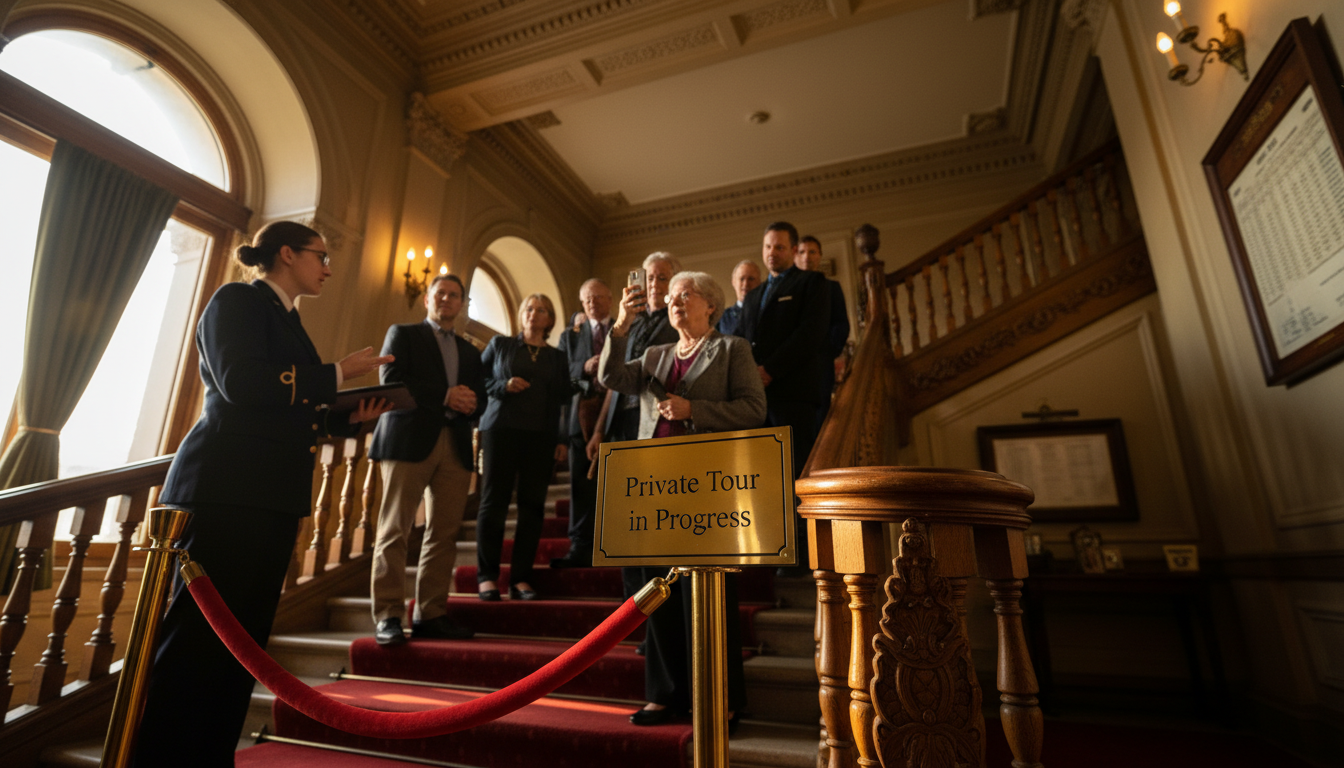
Historical Tours Are Revenue You're Leaving on the Table at Legacy Properties

Historical Tours Are Revenue You're Leaving on the Table at Legacy Properties

The Hotel Jerome in Aspen is partnering with the local historical society to run property tours. Before you dismiss this as boutique fluff, consider what you're missing if your property has any story worth telling.

Here's the thing nobody's telling you: if you're operating a property with 75+ years of history, you're sitting on untapped revenue and you don't even know it. The Hotel Jerome — a 140-year-old landmark in Aspen — just formalized tours with the Aspen Historical Society. Smart move. They're monetizing their story.

I've watched operators at historic properties treat their past like wallpaper. Nice to have, mentioned in marketing copy, maybe a few photos in the lobby. But they never ask the next question: who will pay to experience this? The answer is local historical societies, architecture groups, hospitality students, even competing properties doing comp shopping with context. The Jerome figured this out.

Let me be direct about the economics. A 60-minute tour priced at $25-35 per person with groups of 15-20 runs you maybe 90 minutes of staff time when you factor setup. That's $375-700 in revenue for labor cost under $50. Your marginal cost is almost nothing — you're already paying to light and climate-control those spaces. Run two tours a week and you're adding $40K-75K annually. Not transformational, but it's pure margin and it fills shoulder periods.

But the real value isn't the tour ticket. It's relationship-building with your community and creating another reason for locals to engage with your property who aren't staying overnight. Those historical society members? They have out-of-town guests. They plan events. They're retirement-age with disposable income. You're building your database and your local reputation while someone else (the historical society) does half the marketing.

The contrarian take: most "historic" hotel tours I've seen are terrible. Docent rambles about furniture for 45 minutes, skips the mechanical systems, never mentions the economics of restoration. If you're doing this, make it actually interesting. Talk about the renovation budget. Show the back-of-house. Explain why you kept the original windows or why you didn't. Give people the real story, not the sanitized brochure version.

Operator's Take

If you're running an independent with 50+ years of history in a drive-to or resort market, reach out to your local historical society this month. Propose a quarterly tour program where they handle registration and you provide the access. Price it at $30-40, split the revenue 70/30 in your favor, and make sure your F&B team has a post-tour package ready. This isn't just incremental revenue — it's community relations that actually pays.

Read full analysis → ← Show less
Source: Google News: Resort Hotels
What 50 Years Running Charleston Hotels Teaches You About Local Permanence

What 50 Years Running Charleston Hotels Teaches You About Local Permanence

Michael Bennett just hit 50 years in Charleston hospitality — same market, same relationships, same city. Here's why that model still works when everyone else is chasing management contracts across multiple markets.

I've seen this movie before. Operator puts down roots in one market. Builds actual relationships — not LinkedIn connections, but the kind where the fire marshal knows your cell and the convention bureau considers you family. Stays through three recessions, four brand transitions, and God knows how many "hospitality revolutions." That's Bennett's story in Charleston, and it matters because we're losing this approach fast.

Here's the thing nobody's telling you: the big management companies rotating GMs every 18-24 months are leaving money on the table in markets like Charleston. When you've been in a destination market for five decades, you know which corporate groups book 18 months out versus 6 months out. You know when the medical district is expanding before it hits the planning commission. You know the difference between a tourism trend and actual sustained demand shift. That institutional knowledge doesn't transfer in a transition binder.

Charleston's a specific case — leisure-driven, historic preservation constraints, limited new supply because of development restrictions. But the principle scales. I've watched operators in Savannah, Santa Fe, and Asheville build the same kind of deep-market expertise. They're not chasing VP titles at corporate. They're running 150-200 key properties at 75-80% occupancy year after year because they understand their specific 3-mile radius better than any revenue management algorithm.

The contrarian take? This model is actually becoming MORE valuable, not less. When your booking window is shrinking and OTA dependency is eating your margins, local market intelligence matters more than brand loyalty. Bennett's been through brand conversions — the relationships with the customer stayed constant even when the flag changed. That's the part the brand salespeople don't mention in their pitch decks.

Operator's Take

If you're planning to stay in your market for more than five years, stop acting like a hired gun. Join the tourism board. Know every event planner by name. Understand your city's capital improvement plans. The operators who own their markets — even without owning the building — are the ones still employed when the next recession hits and owners start asking who actually drives local business.

Read full analysis → ← Show less
Source: Google News: Hotel Industry

Another UK Boutique Award Winner — So What? Here's What Actually Matters

A Norfolk hotel just made another "best of" list. Before you dismiss it as marketing fluff, understand what these awards actually signal about guest expectations at your property.

Let me be direct: I don't care about hotel awards. What I care about is what drives them — and right now, every boutique property winning recognition in the UK is doing three things better than most American independents I consult with.

Here's the thing nobody's telling you: these award-winning boutiques aren't winning on thread count or Instagram-worthy lobbies. They're winning on experience curation that starts before check-in and extends past checkout. The Norfolk property getting press this week? I'd bet money they've got pre-arrival communication dialed in, they're leveraging local partnerships that add genuine value, and their staff can tell stories about the product that make guests feel like insiders. That's not magic. That's operations.

I've seen this movie before. When boutique properties start getting mainstream press for "excellence," it raises the floor for everyone. Your guests — especially the ones staying with you on leisure trips — now expect that level of thoughtfulness. They expect you to know the best restaurant within 10 miles. They expect room design that feels intentional, not just "we bought the Marriott FF&E package." They expect your front desk team to act like hosts, not check-in clerks.

The UK independent hotel scene has been ahead of the US market on this for years. Smaller properties. Tighter operations. GMs who actually know their guests' names because they've got 25 rooms, not 250. And they're making it work at ADRs that would make most American independent operators nervous — because they've built genuine differentiation.

But here's what actually matters: if you're running a 40-80 key independent or soft-branded property in a secondary leisure market, you're now competing against this expectation set. Your OTA reviews are being compared — consciously or not — to properties that have figured out how to deliver memorable without spending like a luxury brand.

Operator's Take

If you're running an independent under 100 keys, stop worrying about awards and start auditing your guest experience against three questions: What story are we telling about this place? What do we do that guests can't get from a branded property? What do my front-line staff say when guests ask for recommendations? Get those right and the occupancy follows.

Read full analysis → ← Show less
Source: Google News: Boutique Hotels

Boston's Allston Gets Its First Boutique — Here's What It Tells You About Neighborhood Plays

The Atlas Hotel just opened in Allston, becoming Boston's first boutique in a neighborhood known for college kids and dive bars. This is the urban infill playbook everyone's talking about, and the math only works if you understand who's actually staying.

Allston has never been a hotel neighborhood. It's Boston University overflow, young renters, and enough questionable late-night spots to keep it affordable. But The Atlas is betting that the neighborhood has flipped — or is about to — and they're planting a flag before anyone else does.

Here's the thing nobody's telling you about these urban infill boutiques: your comp set isn't other hotels. It's Airbnb saturation in neighborhoods where locals would never pay $300/night to sleep in their own zip code. You're targeting the Brooklyn effect — out-of-towners who think staying in the "local" neighborhood is more authentic than downtown, and locals who need a staycation that feels like they left town.

The Atlas is first-mover in Allston, which means they're going to define what a hotel stay there costs and feels like. That's powerful. But it also means they're educating a market from scratch. No wedding blocks are coming to Allston. No corporate transient is choosing it over Back Bay. You're playing the leisure weekend game and the "visiting my kid at BU" parent game — and you better have food and beverage that pulls neighborhood traffic, because you're not filling 60% occupancy on heads in beds alone.

I've seen this movie before in Brooklyn, in Denver's RiNo, in Nashville's Germantown. It works when the neighborhood gentrification curve is 18-24 months ahead of your opening. Too early and you're explaining why anyone should stay there. Too late and you're overpaying for land and competing with three other concepts.

The real question for Atlas: did they time it right, or are they hoping their presence accelerates what hasn't happened yet? Because in Allston, you can't count on convention overflow or corporate rate. You're a destination play in a neighborhood that isn't one yet.

Operator's Take

If you're looking at urban infill or neighborhood plays, audit your feeder patterns honestly. Walk the six-block radius at 10 PM on a Tuesday — that's your reality, not the developer's rendering. And make sure your F&B is designed to do 40% of its revenue from non-hotel guests, or your pro forma is fantasy. These projects live or die on becoming the neighborhood's third place, not just a place to sleep.

Read full analysis → ← Show less
Source: Google News: Boutique Hotels

Historic Resorts Are Killing It With Wellness — If You Know How To Price It

The Omni Homestead's 250-year-old warm springs operation proves heritage properties can own the wellness market. But most operators are leaving serious ADR on the table.

Here's what nobody's telling you about historic resort properties: the wellness crowd will pay 40-50% premiums over your rack rate if you package your unique assets right. The Omni Homestead in Hot Springs, Virginia — operating since 1766 — has figured this out with their historic warm springs bathhouses. Two original structures, gender-separated, fed by natural 98-degree mineral water. They're not trying to be a Four Seasons spa. They're leaning into what nobody else can replicate.

I've seen this movie before with heritage properties. Most GMs treat their historic features like museum pieces — something to mention in the welcome packet and forget. Wrong approach entirely. The Homestead charges separately for the springs experience on top of room rates, and guests are lining up. Why? Because you can get a massage anywhere. You cannot get a 250-year-old bathhouse experience anywhere else.

Let me be direct: if you're running a historic independent or a resort with any kind of natural feature — hot springs, mineral baths, even just killer mountain views — you need to rebuild your entire rate strategy around exclusivity. The wellness market is worth $1.8 trillion globally and growing at 9-10% annually. These guests don't comparison shop on OTAs. They book direct when you give them something unreplicable.

But here's where operators screw it up. They undercharge because they think "old" means "less valuable." The opposite is true. Historic properties should price 20-30% above comparable modern resorts in your market, minimum. Add experience packages that bundle your unique assets at premium pricing. The Homestead gets this — they're not competing on thread count. They're selling an experience literally nobody else can offer.

Operator's Take

If you're running a property with any historic or natural feature, audit your ancillary revenue today. Are you charging separately for unique experiences? Are you packaging them at premium rates? Stop giving away your differentiation as a free amenity. Build standalone revenue centers around anything your competition cannot copy, price them aggressively, and watch your RevPAR index climb 15-20 points.

Read full analysis → ← Show less
Source: Google News: Resort Hotels

Heavens Portfolio's Partner Play Shows How Luxury Properties Really Scale Distribution

Australia's boutique luxury operator just locked in six global travel partners in one move. It's the distribution strategy mid-sized luxury operators should be watching — because going direct-only gets you nowhere in the ultra-high-end.

Heavens Portfolio — the Australian group running properties like Spicers Peak Lodge and Balfour Kitchen — just signed partnership deals with six heavy-hitter luxury travel networks simultaneously. We're talking Virtuoso, Signature Travel Network, and four other global consortia that control serious wallet share in the $500+ ADR segment.

Here's what's actually happening. Most boutique luxury operators think they can win on direct bookings and Instagram alone. They can't. The guest spending $1,200 a night for three nights in the Outback isn't finding you on Google — they're working with a Virtuoso advisor who books 40 luxury trips a year. Heavens figured this out and went wide with preferred partnerships instead of trying to muscle into OTA dominance or pretending direct-only works at true luxury price points.

The math changes completely once you're north of $400 ADR. Your guest acquisition cost through paid search is brutal. Your conversion rate on cold traffic is maybe 1.2%. But a referred booking from a trusted travel advisor who's pre-qualified the guest and understands the property? That converts at 40%+ and the guest stays longer. Heavens is paying 10-15% commission to these partners, but they're eliminating the 25-30% they'd burn on performance marketing to maybe get the same guest.

I've seen this movie before with Relais & Châteaux properties and the smart Preferred Hotel Group operators. The ones who build deep partnerships with 4-6 luxury consortia consistently run 8-12 points higher occupancy in shoulder seasons than comparable properties trying to do it all themselves. Heavens is making the right bet — they're buying access to guests who were already planning luxury travel to Australia, they just hadn't decided where yet.

Operator's Take

If you're running an independent luxury property over $350 ADR, stop pretending you'll win on direct bookings alone. Pick three luxury travel networks, build real relationships with their top advisors, and give them reasons to sell you — site visits, competitive commission, reliable service. Your occupancy in February and September will thank you.

Read full analysis → ← Show less
Source: Google News: Luxury Hotels

Trilogy's Peppers Takeover Shows Independent Operators Getting Squeezed

Another boutique property changes hands as management companies consolidate Australia's hotel market. This isn't just about Canberra.

Trilogy Hotels just took over management of the Peppers Gallery Hotel in Canberra, and here's what nobody's talking about — this is exactly how independent operators get pushed out of premium markets. Peppers Gallery was running as a boutique property in Australia's capital, probably doing decent numbers given Canberra's steady government and conference demand. But decent isn't enough anymore.

I've seen this movie before. A 120-room boutique property starts losing ground to bigger operators with better distribution, stronger revenue management systems, and deeper marketing budgets. The ownership group gets tired of single-digit RevPAR growth while branded competitors pull 15-20% increases. So they call in a management company like Trilogy that promises corporate efficiency with boutique positioning.

Here's the thing nobody's telling you about these takeovers — they work because independent operators aren't investing in the tech stack and talent needed to compete. Trilogy brings centralized revenue management, integrated PMS systems, and group sales reach that a standalone property just can't match. The Peppers Gallery ownership probably saw immediate improvements in their pipeline reports and ADR projections.

But this trend should worry every independent GM reading this. When management companies start cherry-picking your best-performing competitors in secondary markets like Canberra, it means the squeeze is coming to your market too. The days of running a successful boutique property on charm and local relationships alone are over.

Operator's Take

If you're running an independent boutique property, start building your defense now. Invest in a proper revenue management system, upgrade your PMS integration, and get serious about direct booking strategies. You can't compete on charm alone when management companies bring million-dollar tech stacks to the fight.

Read full analysis → ← Show less
Source: Google News: Boutique Hotels
End of Stories