Airbnb's Co-Founder Sold $17.7M in Stock Last Week. The Hotel Push Is the Part You Should Care About.
Nathan Blecharczyk dumped over 121,000 Airbnb shares across three days while the company quietly hires hotel distribution sales reps and offers commission rates designed to poach your independent inventory. The insider selling is noise... the platform strategy is the signal.
So here's what actually matters about this story, and it's not the stock sale.
Airbnb's co-founder and Chief Strategy Officer sold roughly 121,500 shares over three days last week... June 24 through 26... netting approximately $17.7 million. It was all pre-scheduled under a Rule 10b5-1 plan adopted back in August 2025, which means this wasn't a panic move. It was calendar-driven liquidation. CEO Brian Chesky, co-founder Joe Gebbia, and CFO Elinor Mertz have collectively sold over $226 million in the last 90 days under similar plans. Blecharczyk still holds over 45 million Class B shares indirectly. He's not running for the exits. He's diversifying. This is what founders of $86 billion companies do. If you're an operator reading this as some kind of signal about Airbnb's future... it's not. Stop looking at the stock ticker.
Look at the hiring page instead.
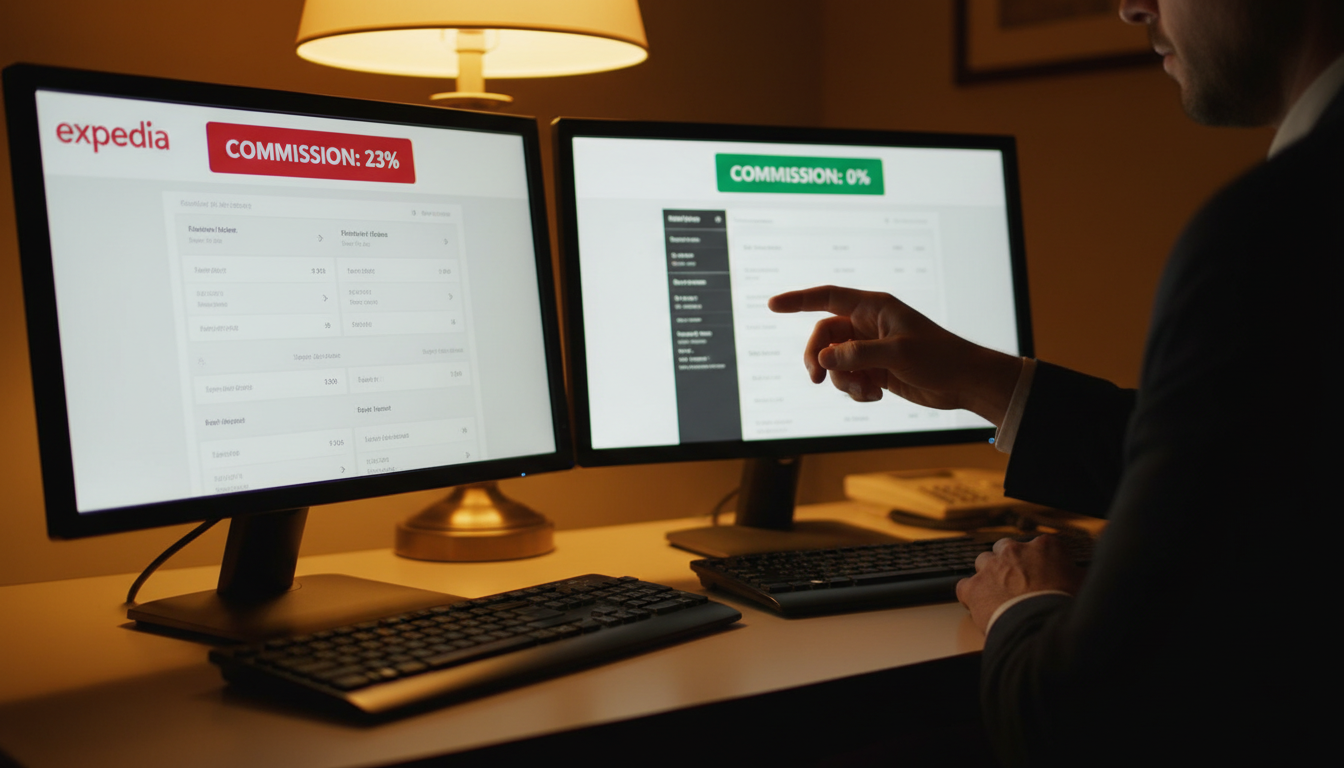
Airbnb is actively recruiting hotel distribution salespeople and offering competitive commission structures specifically targeting boutique and independent properties. That's the story. Not a co-founder's personal finance decisions. They're building the infrastructure to pull independent hotel inventory onto their platform, and they're doing it by going after the one thing independents care about most: cost of acquisition. If they come in at a lower effective commission than Booking.com or Expedia... even by a couple of points... some owners are going to listen. And honestly? I get why. I grew up in an independent hotel. My family's property has been paying OTA commissions for years that feel like a second mortgage. When someone shows up offering a lower rate, you at least take the meeting.
But here's where my engineering brain kicks in. What does the actual integration look like? What PMS systems does Airbnb connect with? What happens to your rate parity obligations with your existing OTA contracts when you list on a platform that historically let hosts set whatever price they wanted? What does the channel manager handoff look like for a 90-key independent running a PMS from 2017? These are not small questions. I talked to a boutique hotel operator last month who was excited about Airbnb's outreach until she realized their content requirements (photos, descriptions, experience narratives) would take her team 40+ hours to build out properly... for a channel that might deliver 3-5% of her bookings in year one. That's a terrible ROI on labor.
The AI lab Chesky just announced is the other piece worth watching. Airbnb is betting that artificial intelligence can personalize the booking experience in ways that traditional hotel distribution hasn't. What that actually means at a technical level is unclear (and when a company says "AI lab" without specifying what models they're training or what problems they're solving, my default assumption is that it's a press release, not a product). But the intent is clear: they want to own more of the guest decision journey. For independents who already struggle with direct booking conversion, that's another layer of intermediary between you and your guest. Another platform that knows your guest's preferences better than you do because they have the data and you don't.
The $226 million in insider selling across Airbnb's leadership team is a footnote. The hotel distribution push is the chapter. And most independent operators I talk to aren't reading that chapter yet.
Here's the thing... if you're running an independent or a small boutique portfolio, you're going to get a call from Airbnb's distribution team in the next 6-12 months if you haven't already. Before you take that meeting, do three things. First, pull your actual OTA commission rates across every channel and calculate your blended cost of acquisition per booking. You need that number cold before anyone pitches you a "lower rate." Second, read your existing OTA contracts... specifically the rate parity clauses. Listing on Airbnb at a different rate could trigger penalties you didn't see coming. Third, ask the Airbnb rep one question: "What happens to my guest data?" Because if the answer is "it lives on our platform," you're not gaining a distribution channel. You're renting one. And that's a conversation I've seen go sideways at enough properties to know... the channel that owns the guest relationship eventually owns the guest. Period.