Today · Apr 1, 2026
Hilton's First Curio on Kaua'i Is a $714K-Per-Key Bet That "Sense of Place" Still Sells

Hilton's First Curio on Kaua'i Is a $714K-Per-Key Bet That "Sense of Place" Still Sells

Hilton is planting the Curio flag in Hawai'i with a 210-room new-build on Kaua'i backed by a $150 million construction loan... and the real question isn't whether the resort will be beautiful, but whether the brand promise can survive the operational reality of a remote island market.

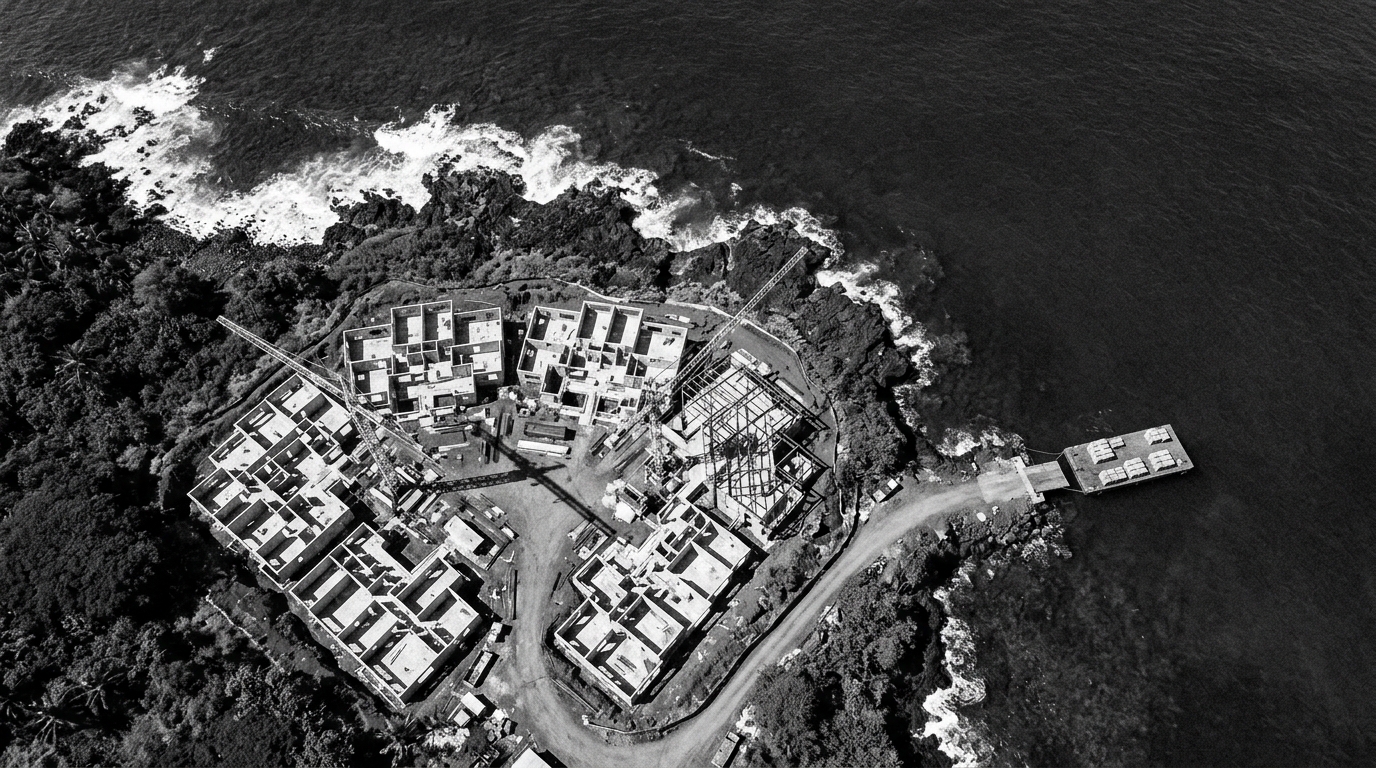
So Hilton is finally bringing Curio Collection to Hawai'i, and honestly, I'm surprised it took this long. The brand is approaching 200 properties worldwide and they didn't have a single one in one of the most desirable leisure destinations on the planet? That's not strategy. That's an oversight someone finally corrected. The property, Hale Hōkūala Kaua'i, is a 210-room new-build overlooking the ocean near Līhu'e Airport, owned by Silverwest Hotels and managed by Hilton, with a $150 million senior construction loan closed back in mid-2024. That works out to roughly $714,000 per key, which... look, for a luxury resort on Kaua'i with a Jack Nicklaus golf course and ocean views, that number isn't outrageous. But it's not casual either. Someone is making a very specific bet about what this market will bear in late 2026 and beyond.

Here's what I want to talk about, because nobody else will. The Curio Collection brand promise is "individuality, sense of place, and authentic moments." I've read that language on approximately forty different Curio announcements over the past five years and I still don't know what it means operationally. It means whatever the individual property wants it to mean, which is both Curio's greatest strength and its most persistent vulnerability. When it works (and it does work sometimes), you get a property that genuinely reflects its location and culture while giving Hilton Honors members the loyalty infrastructure they expect. When it doesn't work, you get a standard upscale hotel with local art in the lobby and a line in the brand guide about "celebrating the destination" that nobody on staff can actually execute. The question for Kaua'i is which version shows up. They've hired a GM who previously ran a major Waikīkī resort, they've engaged local architects, they're talking about design inspired by Kaua'i's environment and traditions. All good signs. But I've sat in enough brand presentations to know that the rendering phase is the easy part. The hard part is what happens eighteen months after opening when you're trying to deliver a "curated" food and beverage experience on an island where your supply chain is a barge and your labor pool is competing with every other resort on the Garden Isle.

The Kaua'i tourism data is genuinely interesting here and it tells a more complicated story than the headline suggests. November 2025 saw visitor spending up 13.1% to $236.9 million... but arrivals actually dropped 1%. Fewer visitors spending more money. That's exactly the market dynamic a luxury Curio property should thrive in, IF (and this is the if that keeps me up at night) the brand can deliver an experience that justifies premium pricing against established competitors who've been on-island for decades. You don't walk into Kaua'i and immediately command loyalty. You earn it. And Hilton's broader Hawai'i strategy of adding roughly 2,000 rooms across nearly 10 pipeline properties means this isn't a one-off... it's a market play. Which means the performance of this Curio is going to be watched very carefully by every owner in Hilton's Hawai'i pipeline.

What the press release doesn't address (they never do) is the tension between Hilton's brand ambitions and the very real community concerns about hotel development across the islands. A proposed 36-story Hilton tower in Waikīkī has drawn significant resident pushback over traffic and view corridors. Kaua'i is not Waikīkī... it's smaller, quieter, more protective of its character... and any brand that walks in talking about "authentic moments" while ignoring the community conversation about overtourism is going to have a credibility problem before they check in their first guest. I've watched three different flags try to enter sensitive markets with the "we're different, we respect the culture" pitch. The ones that succeeded actually meant it. The ones that didn't had it on a PowerPoint but not in their operating manual. The Deliverable Test for this property isn't the lobby design or the restaurant concept. It's whether Hilton can build genuine community relationships on Kaua'i while delivering the kind of returns that justify $714K per key. That's the real brand integration challenge, and it won't be on the spec sheet.

For owners being pitched Curio conversions or new-builds in other premium leisure markets... watch this one. Closely. Because the performance data from Kaua'i over its first 18-24 months is going to tell you everything you need to know about whether the Curio brand can actually command a revenue premium in a competitive luxury market, or whether you're paying franchise fees for a flag and a reservation system while doing all the brand-building yourself. I've read enough FDDs to know the difference between projected loyalty contribution and actual loyalty contribution, and the variance should concern anyone writing a check this large. If Hilton delivers? Fantastic. It means the Curio model works in the markets where it matters most. If they don't? That $150 million construction loan doesn't care about your sense of place.

Operator's Take

If you're an independent resort owner in Hawai'i or any premium leisure market... pay attention to the loyalty contribution numbers that come out of this property in its first two years. That's your real comp data for whether a Curio flag (or any soft brand) is worth the fee structure versus staying independent with a strong direct booking strategy. And if you're already in Hilton's Hawai'i pipeline, call your development contact this week and ask specifically what marketing support looks like for Kaua'i. Because "sense of place" doesn't market itself, and you need to know whether the brand is investing in demand generation or just collecting fees while you figure it out.

— Mike Storm, Founder & Editor
Read full analysis → ← Show less
Source: Google News: Hilton
Curio Collection's Hawaii Debut Looks Beautiful. Can It Pass the Tuesday Test?

Curio Collection's Hawaii Debut Looks Beautiful. Can It Pass the Tuesday Test?

Hilton is bringing its soft-brand collection to Kauaʻi with a 210-room new-build resort, and the renderings are gorgeous. The question nobody's asking is whether "purposeful experiences and immersive journeys" can survive a 3 PM check-in rush with a skeleton crew.

So Hilton just announced that Curio Collection is finally landing in Hawaii... a 210-room luxury resort called Hale Hōkūala Kauaʻi, owned by Denver-based Silverwest Hotels, managed by Hilton, opening fall 2026. Jack Nicklaus golf course. Signature restaurant overlooking a tropical lagoon. 10,000 square feet of outdoor event space. The whole fantasy. And I want to be clear: the bones of this project look legitimately strong. Kauaʻi is one of the most stunning leisure markets in the world, the developer isn't a first-timer, and they've hired a GM with 15-plus years of Hawaii luxury experience. That's not nothing. That's actually more operational forethought than I see in most brand announcements, and I read a LOT of brand announcements.

But here's where I start asking the questions that the press release was not designed to answer. Curio Collection is nearing 200 hotels globally, and Hilton's luxury and lifestyle portfolio hit 1,000 properties in 2025 with nearly 500 more in development. That is aggressive growth. And the whole value proposition of a soft brand is supposed to be that each property maintains its own identity while benefiting from Hilton's distribution engine... the Honors program, the booking infrastructure, the loyalty contribution. Beautiful in theory. In practice, what I've watched happen (at multiple soft-brand conversions across multiple companies) is that the "individual identity" part gets slowly eaten by the "brand standards" part until you're left with a property that's too standardized to feel independent and too independent to deliver the consistency loyalty members expect. It's the uncanny valley of hotel brands. You're not quite boutique, you're not quite Hilton, and the guest can feel it even if they can't name it.

The Hawaii context matters here, and it matters more than Hilton's press language about "evolving traveler preferences" lets on. Hawaii tourism is still recovering... international numbers remain below pre-pandemic levels, and the emotional and economic aftershocks of the 2023 Maui wildfires haven't disappeared just because the headlines moved on. Opening a luxury resort in this environment is a bet on continued recovery, and it's probably a good bet (Nassetta said on the Q4 call that demand patterns are improving, and Hilton already operates 25-plus hotels in the state with nearly 10 more in the pipeline). But "probably a good bet" and "guaranteed win" are two very different financial documents. If you're Silverwest, you're looking at a new-build cost in one of the most expensive construction markets in the country, resort-level staffing requirements on an island where the labor pool is finite, and a loyalty contribution number that Hilton projects but doesn't guarantee. I sat in a franchise review once where the owner pulled out a calculator, divided the projected loyalty contribution by the total brand cost, and just started shaking his head. Not laughing. Not angry. Just... doing the math out loud for the first time. That moment happens more often than brands would like you to believe.

The piece I keep coming back to is the Deliverable Test. Hilton's brand language talks about "meaningful connections" and "immersive journeys." I've been to four brand launches that used almost identical phrasing. (They always serve the same champagne, by the way.) What does "immersive journey" actually look like on a Wednesday afternoon when your signature restaurant is between lunch and dinner service, two of your front desk agents called out, and a family of five just arrived early wanting to check in? THAT'S the brand experience. Not the rendering. Not the lagoon at sunset. The 2:47 PM moment when the promise meets the operation. The GM they've hired, Jon Itoga, seems like the right pick... local, experienced, deeply embedded in Hawaii's luxury market. That gives me more confidence than any mood board. Because the person running the building is the brand. Everything else is marketing.

Here's what I'll be watching: whether Hilton treats this as a genuine flagship for Curio in a world-class leisure market, or whether it becomes one more pin on the growth map... opened, counted toward the 6-7% net unit growth target Nassetta promised for 2026, and then left to figure out the "immersive journey" part on its own. The difference between those two outcomes isn't in the architecture. It's in the staffing model, the training investment, and whether someone at corporate is still paying attention 18 months after the ribbon cutting. If you're an owner being pitched a Curio conversion right now, watch this property. Not the opening. The second year. That's when you'll know if the brand delivers or if the brand just launches.

Operator's Take

If you're an independent owner in a leisure market getting pitched a soft-brand conversion right now... Curio, Tapestry, Tribute, any of them... don't get seduced by the distribution promise until you've done the math on total brand cost as a percentage of revenue. Pull the FDD. Look at actual loyalty contribution data, not projections. And ask the hard question: what am I giving up in identity that I can't get back? Because the sign goes up fast. The sign comes down slow and expensive.

— Mike Storm, Founder & Editor
Read full analysis → ← Show less
Source: Google News: Hilton
The Monarch San Antonio Just Opened at $925K Per Key. Let's Talk About What That Actually Costs.

The Monarch San Antonio Just Opened at $925K Per Key. Let's Talk About What That Actually Costs.

A $185 million, 200-room Curio Collection hotel just opened in downtown San Antonio at nearly a million dollars per key. The architecture is stunning. The chef pedigree is real. The math? That's where it gets interesting.

So here's the thing about a $925,000 per-key build cost on a soft brand in a secondary Texas market... the numbers have to come from somewhere. The Monarch San Antonio opened today, 200 rooms, 17 stories, three chef-driven restaurants, 15,000 square feet of event space, all under the Curio Collection flag. Starting rate: $398 a night. And if you know anything about hotel development math, you just did the same thing I did... you grabbed a calculator.

The old rule of thumb (the 1-in-1,000 rule, which says your ADR needs to be roughly 1/1,000th of your per-key cost to make the economics work) puts the required ADR somewhere around $900. They're opening at $398. That's not a rounding error. That's a $500 gap between where the rate needs to be and where the market will actually pay. Now, does that mean the project is doomed? Not necessarily. Zachry Hospitality is a San Antonio institution with deep roots in the Hemisfair district going back to the 1968 World's Fair. There's almost certainly a layer of public subsidy, tax incentive, or favorable land deal underneath this that makes the pure per-key number misleading. But here's my question... has anyone actually published what that incentive structure looks like? Because if you strip out the subsidies and the project still pencils at $925K per key on a Curio flag, I'd love to see that proforma. Actually, I'd love to see that proforma either way.

Look, I genuinely respect what they're doing with the technology and F&B infrastructure here. A Michelin-pedigreed executive chef running three distinct concepts (a steakhouse, a rooftop Yucatán restaurant, and a café) is not your typical hotel food program. That's real operational complexity. The POS integration alone across three venues with different service models, different inventory systems, different labor profiles... that's a project. I consulted with a hotel group last year that tried to run two signature restaurants under one roof and the kitchen management software couldn't handle split-concept inventory tracking without a custom middleware build that took four months and cost $180K they hadn't budgeted. Three concepts at this scale? I hope their tech stack is ready for it. The question isn't whether the food will be good (that chef's resume suggests it will be). The question is whether the systems behind the food can handle a sold-out Saturday with a 200-person event in the ballroom, a two-hour wait at the rooftop, and room service running simultaneously.

The broader market play is actually smart. San Antonio's luxury inventory sits at roughly 8% of total supply versus 20% in Austin and Dallas. That gap is real and it's been there for years. A property like this, if executed well, doesn't just capture existing demand... it creates demand that was bypassing San Antonio entirely. Group planners who defaulted to Austin for upscale corporate events now have a reason to look south. That's the thesis, anyway. But "if executed well" is doing a LOT of heavy lifting in that sentence. The Curio flag gives them Hilton Honors distribution without the rigid brand standards of a Waldorf or Conrad, which is smart for an independent developer who wants creative control. But Curio is an upper-upscale soft brand, not a luxury flag. And $398 starting rate with this build cost means they need to push ADR significantly north of that opening number... probably into the $500-600 range blended... to make the operating economics work even with subsidies.

The Dale Test question here is straightforward: what happens to the guest experience in this 17-story, three-restaurant, 15,000-square-foot-event-space property when the integrated systems hiccup at 11 PM on a Saturday? Does the night team have manual fallbacks for the F&B POS? Can the front desk override the room management system if the cloud connection drops? At $398 a night minimum, the guest tolerance for technical failure is approximately zero. Every system in this building needs to work perfectly or fail gracefully. In my experience, buildings this complex with this many integrated technology layers take 6-12 months post-opening to stabilize. The real story of the Monarch won't be the opening. It'll be the TripAdvisor reviews in October.

Operator's Take

Here's what I want you thinking about if you're running an independent or soft-branded property in a market where somebody just dropped serious money on a new luxury build. Don't panic about the rate pressure... that $398 opening number is aspirational positioning, not your new comp set floor. What you SHOULD do is look at your F&B and event space. Properties like the Monarch pull group business that trickles into surrounding hotels for overflow. Get your catering sales team on the phone with local event planners this week. If there's a rising tide in San Antonio, make sure your boat is in the water.

— Mike Storm, Founder & Editor
Read full analysis → ← Show less
Source: Google News: Hilton
End of Stories