Today · Jun 10, 2026
Your Fly-In Guests Are Disappearing. Here's What to Do Before Q2 Hits.

Your Fly-In Guests Are Disappearing. Here's What to Do Before Q2 Hits.

A 33% collapse in global air traffic and nearly 6% domestic decline aren't just airline problems. They're hotel problems. And if you're running a gateway city property that built its rate strategy on international inbound and business travel, the phone calls from your owners are about to get uncomfortable.

I knew a director of sales once... sharp woman, been in the business 20 years... who kept a whiteboard in her office with one number on it: the percentage of her hotel's occupied rooms on any given night that arrived by airplane. Not the percentage that booked through the brand. Not the loyalty contribution. The fly-in percentage. She updated it weekly. When I asked her why, she said "because when that number moves, everything else moves 90 days later." She was right then. She's right now.

Here's what's happening. Global air traffic is down a third from where it was before the shooting started in the Middle East. Domestic traffic is off nearly 6%. Jet fuel just about doubled in two weeks... from $2.50 a gallon to almost $4.00... and airlines are already passing that through in fares and surcharges. Hong Kong Airlines just raised fuel surcharges 35%. United's CEO is publicly warning about higher ticket prices. And that's before we talk about the Middle Eastern carriers... Emirates, Qatar, Etihad... that are essentially grounded because their home airports are closed. Those carriers fed international guests into every major gateway city in America. That pipeline is shut off. Not reduced. Shut off.

Let me be direct about who's exposed here. If you're running an upper-upscale or luxury property in New York, LA, Miami, Chicago, or San Francisco, and more than 25% of your demand comes from international inbound or fly-in business transient, you need to be stress-testing your Q2 and Q3 forecasts right now. Not next week. Now. The international inbound number was already soft... foreign tourist arrivals were declining before the Iran situation escalated... and now you're stacking a shooting war, $90-plus oil, airspace closures across the entire Middle East, and a perception problem with international travelers who were already cooling on the US. That's not one headwind. That's four, all blowing the same direction. PwC had RevPAR growth for the year at 0.9%. I'd take the under on that for gateway markets. And the luxury segment that's been carrying the industry? It holds up only as long as the high-income travelers keep flying. When their corporate travel budgets get cut in the next round of budget meetings (and they will... those meetings are happening right now), even the top of the market feels it.

I've seen this movie before. After September 11th. During the Gulf War. Every time air traffic contracts, there's a 60-to-90 day lag before hotel operators fully feel it in occupancy, because the bookings that are already on the books mask the hole forming underneath. The cancellations come after the corporate budget meeting, not before. Your sales directors should be on the phone today... not emailing, calling... every group account with Q2 business on the books. Ask them directly: has your travel budget been adjusted? Is your attendee projection still holding? Because the worst thing that happens isn't a cancellation. The worst thing is a group that shows up at 60% of the block they committed to, and you've been holding inventory you could have sold.

Now here's the counterintuitive part, and this is where I'd be looking if I ran a drive-to leisure property within three or four hours of a major metro. When flying gets expensive and scary, people still want to get away. They just drive. I watched this happen in 2008, and again during COVID. Drive-to resorts and regional leisure markets absorbed displaced demand both times. If you're a 150-key resort property in the Poconos, the Hill Country, the Finger Lakes, coastal Carolinas... watch your booking pace for the next 30 days. If you see it ticking up, don't just take the reservations. Adjust your rate strategy. You might be sitting on pricing power you didn't have two months ago. The World Cup is still coming in June, and the host cities are going to get a boost, but even that event is now a question mark for international attendees who were planning to fly in from markets that are currently dealing with closed airspace and doubled airfares. Some of that demand redirects to domestic drive-to leisure instead. Be ready for it.

The math doesn't lie. A 33% global air traffic decline isn't a blip. It's structural until something changes in the Middle East, and nothing suggests that's happening soon. Your revenue management strategy for Q2 needs two scenarios on the table: one where air traffic stabilizes, and one where it doesn't recover until Q4. If you only have the optimistic scenario, you're not planning. You're hoping. And hope is not a revenue strategy.

Operator's Take

If you're a GM or revenue manager at a gateway city property, pull your segmentation data today and calculate what percentage of your occupied rooms over the last 90 days arrived via air travel. That's your exposure number. Then stress-test your Q2 forecast assuming that segment drops 20-30%. Have that number ready before your owner or asset manager calls, because they're going to call. If you're running a drive-to leisure property within four hours of a major metro, check your next-60-day booking pace against last year... if it's up, push rate now, don't wait. And every DOS in America should be personally calling (not emailing) their top 10 group accounts this week to verify attendee projections are still holding. The cancellation wave comes after the budget meeting. Get ahead of it.

Read full analysis → ← Show less
Source: InnBrief Analysis — National News
Three-Hour TSA Lines Just Handed Airport Hotels a Gift. Don't Waste It.

Three-Hour TSA Lines Just Handed Airport Hotels a Gift. Don't Waste It.

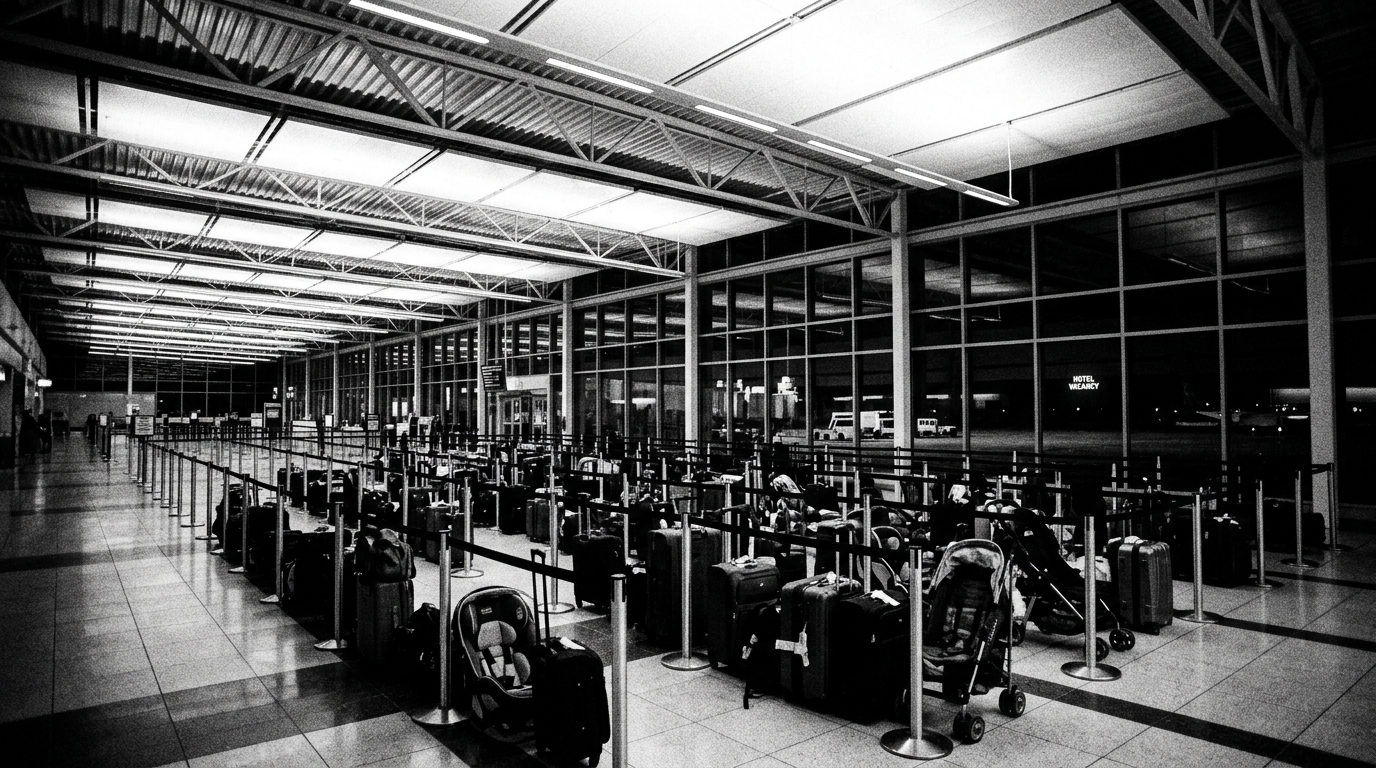
The government DHS shutdown is stranding thousands of travelers at major airports right as spring break kicks off. If you're running an airport-adjacent hotel and you're not already adjusting your playbook, you're leaving money on the counter.

I managed an airport hotel during the 2018-2019 shutdown. Thirty-five days. And here's what I remember most... it wasn't the surge in walk-ins that caught us off guard. It was how completely unprepared the front desk was to handle people who were angry, exhausted, and desperate for a room at 11 PM on a Tuesday. We hadn't briefed the team. We hadn't updated our day-rate policy. We hadn't even thought about early check-in availability because nobody on my staff had been through this before. I had, but I hadn't pushed that knowledge down to the people who needed it. That cost us. Not in lost rooms... we sold plenty. It cost us in reviews, in guest experience, in a staff that felt ambushed every night for a month.

This one's worse. Four weeks into a DHS funding fight, over 50,000 TSA officers are working without pay. Call-out rates have doubled nationally to around 6%... and at some airports it's not even close to that. One hub reported a 53% call-out rate on a single day last week. Three hundred TSA employees have just walked away entirely since February 14th. And their first fully missed paycheck hits tomorrow, March 14th. So if you think the lines are bad now (three to four hours at Atlanta, Houston, New Orleans), wait until next week when people who've been showing up out of duty finally decide they can't make rent. This is going to get worse before it gets better.

The math runs in two directions and you need to figure out which side you're on. If you're an airport hotel or anything within a 15-minute drive of a major hub... you're about to see distressed demand that books same-day, often at rate, and doesn't shop. These are families who missed connections, business travelers stranded overnight, people who just spent three hours in a security line and will pay whatever you're asking for a clean room and a hot shower. This demand is real, it's inelastic, and it's happening right now. Your revenue manager should be watching OTA pickup in real-time, your front desk should have a day-rate card ready to go, and your housekeeping team needs to understand that early check-in requests are going to spike (which means flip times need to tighten). On the other side... if you're a resort property dependent on fly-in leisure guests, particularly Florida Gulf Coast, Hawaii, mountain destinations... start calling your group contacts today. Not tomorrow. Today. Spring break groups are making cancellation decisions right now, and you'd rather know about attrition this afternoon than discover it in your no-show report Saturday morning.

Here's the angle I haven't seen anyone talk about. Drive-to leisure is about to have a moment. Gas prices are at a five-year low. Families who were planning to fly to Orlando are looking at those TSA lines and doing the math on loading up the minivan and heading to the Smokies or the Outer Banks or the Poconos instead. If you're a GM at a drive-to leisure property within four hours of a major metro, you should be pushing rate, not discounting. Your comp set is about to get a demand bump that none of you planned for. The properties that capture it will be the ones that are paying attention this week... not the ones who figure it out next Monday when they look at their weekend numbers and wonder what happened.

One more thing. I've watched enough of these government shutdowns to know how they end... eventually, suddenly, and with a retroactive pay bill that makes everyone in Washington feel good about themselves. But "eventually" could be next week or it could be June. The 2018-2019 shutdown lasted 35 days and the recovery took weeks after that because you can't just flip a switch and get experienced security officers back to full staffing when you've spent a month treating them like they don't matter. Plan for this lasting through April at minimum. Staff accordingly. Brief your teams accordingly. And if you haven't already reached out to your local airport authority to understand what's actually happening on the ground at your nearest hub (not what CNN is showing you... what's actually happening), pick up the phone.

Operator's Take

If you're running an airport-adjacent property, get your front desk leads together before this weekend and establish a distressed-traveler protocol... day rates, early check-in thresholds, late checkout policy, and a script for handling frustrated guests who just spent three hours in a security line. If you're at a fly-in resort or destination property, call your top five group contacts today and ask them directly about attrition... you need that information now, not when it shows up as empty rooms. And if you're at a drive-to leisure property within a few hours of a major metro, push rate this weekend. Don't discount. The demand is coming to you whether you ask for it or not.

Read full analysis → ← Show less
Source: Vertexaisearch
Gas Just Hit $3.32. Your Weekend Leisure Book Is About to Get Ugly.

Gas Just Hit $3.32. Your Weekend Leisure Book Is About to Get Ugly.

A 25-cent gas price spike sounds like a macro story until you're the GM watching your weekend pickup soften in real time while your own shuttle fuel bill climbs. Here's what 40 years of managing through these cycles tells me about what happens next.

Available Analysis

I managed a 180-key resort property about four hours from a major metro back in 2008 when gas blew past $4. You know what happened before the numbers showed it? The vibe changed. Friday check-ins got later because people were combining trips, driving less frequently, staying shorter. The revenue report didn't catch it for three weeks. The front desk knew within three days.

That's what's coming right now for anyone running a drive-to leisure property. Gas jumping to $3.32 per gallon doesn't sound catastrophic in isolation. But here's the thing nobody talks about... it's not the price, it's the psychology. When families see that number tick past $3.25, they start doing napkin math in their heads. A 600-mile round trip that cost $85 last month now costs $110. That's not a deal-breaker for everyone. But for the family deciding between your resort and a closer option? You just lost.

The historical pattern is brutally consistent. When gas crosses that $3.25 threshold, drive-to leisure demand drops 8-12% within 30 days. And the hit isn't evenly distributed. Properties 200-300 miles from major metros get crushed first because that's the trip that feels optional. The 100-mile weekend getaway survives longer because it's still cheap enough to justify. So if you're running a mountain resort or a beach property that's a solid three-hour drive from your feeder market... your March and April weekends are about to look different than your forecast says.

But here's where it gets interesting, and where most people stop thinking. That demand doesn't evaporate. It redistributes. Urban hotels and properties within 90 minutes of population centers are about to pick up guests who would have driven farther. I watched this happen at a city-center property I ran years ago during a fuel spike... our weekend occupancy bumped 6 points in a month because we became the "close enough" option. If you're sitting in that sweet spot, this is your moment. Adjust your weekend rate strategy NOW. Not next week. Today. Because the booking window on leisure drive-to is 7-14 days, which means the decisions about your March 21st weekend are being made right now, while that family is staring at the gas pump.

And don't forget your own P&L. Your shuttle is burning the same expensive gas. Your maintenance trucks are burning it. Your employees are paying more to get to work (and if you don't think that affects retention and call-outs, you haven't been paying attention). I've seen operators spend so much time worrying about the demand side that they completely miss the 2-3% expense creep hitting them from the operational side. Pull your shuttle schedule tomorrow morning. If you're running half-empty shuttles on fixed routes, consolidate. Run on-demand or reduce frequency during off-peak. Every gallon you save is a gallon you don't have to explain on your next owners call.

Operator's Take

If you're a GM at a resort or leisure property more than two hours from your feeder market, pull up your next four weekends of pickup pace right now and compare to the same period last year. You're going to see softness. Don't wait to react... get a weekend package with a value hook into your OTA listings and your email list by Wednesday. If you're closer to your metro, lean in hard on proximity messaging and bump your weekend rates $10-15 while the farther-out competition scrambles. Either way, pull your shuttle and vehicle fuel expenses from the last 90 days, project forward at $3.32, and have that number ready before your owner or asset manager calls asking about it. Because they will.

Read full analysis → ← Show less
Source: Vertexaisearch
End of Stories