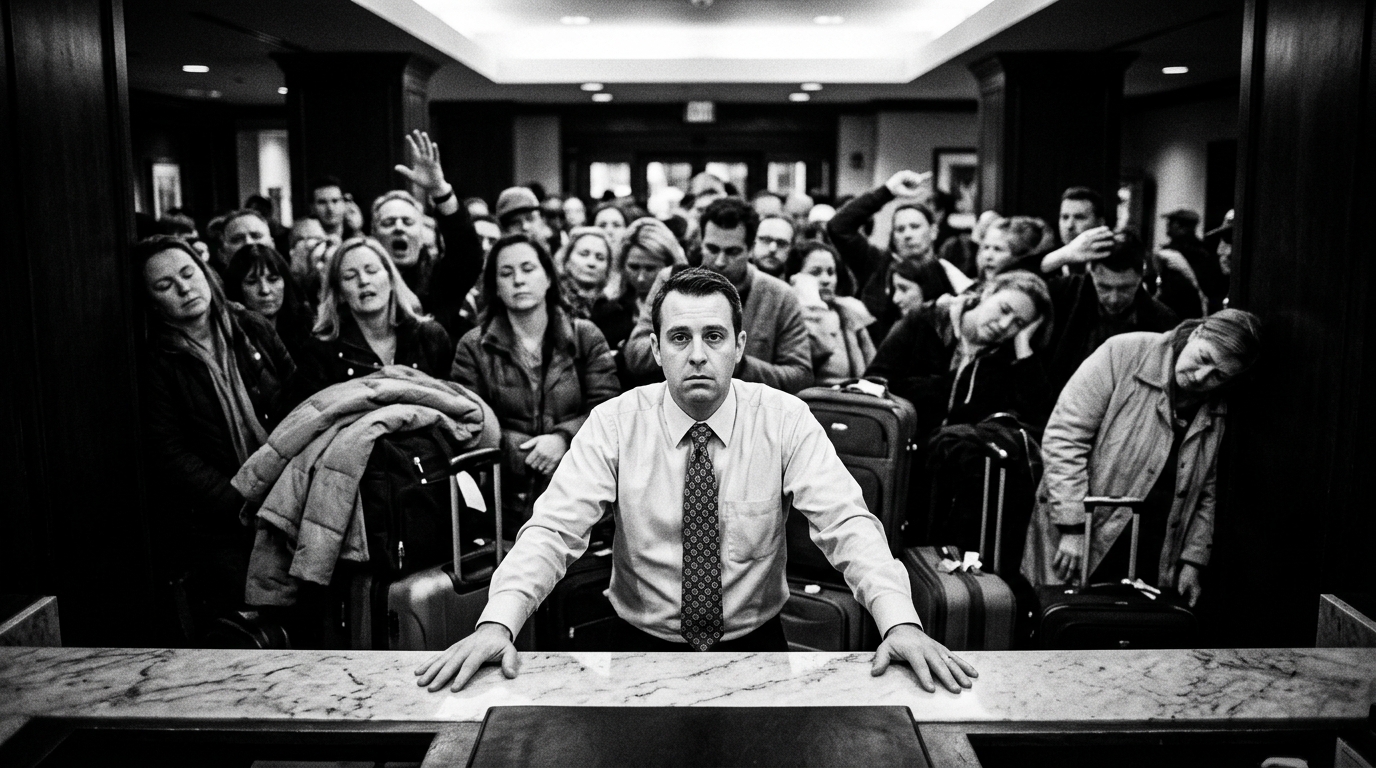
Airlines Are Melting Down. Your Front Desk Just Became the Complaint Department for Delta and United.
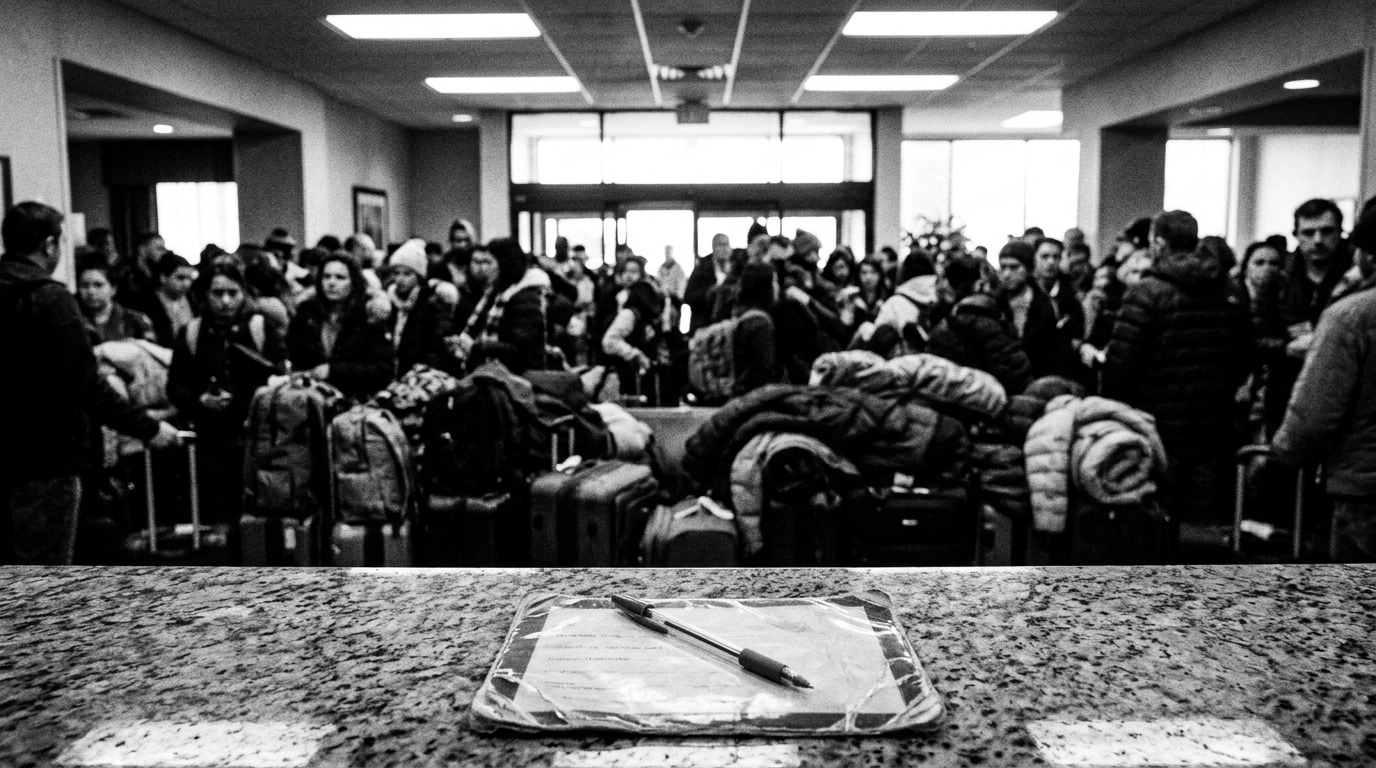
Over 3,200 flight delays hit U.S. airports in a single day last week, and every one of those stranded travelers needs a room, a drink, and someone to yell at. The question is whether your team is ready to absorb the anger and capture the revenue at the same time.
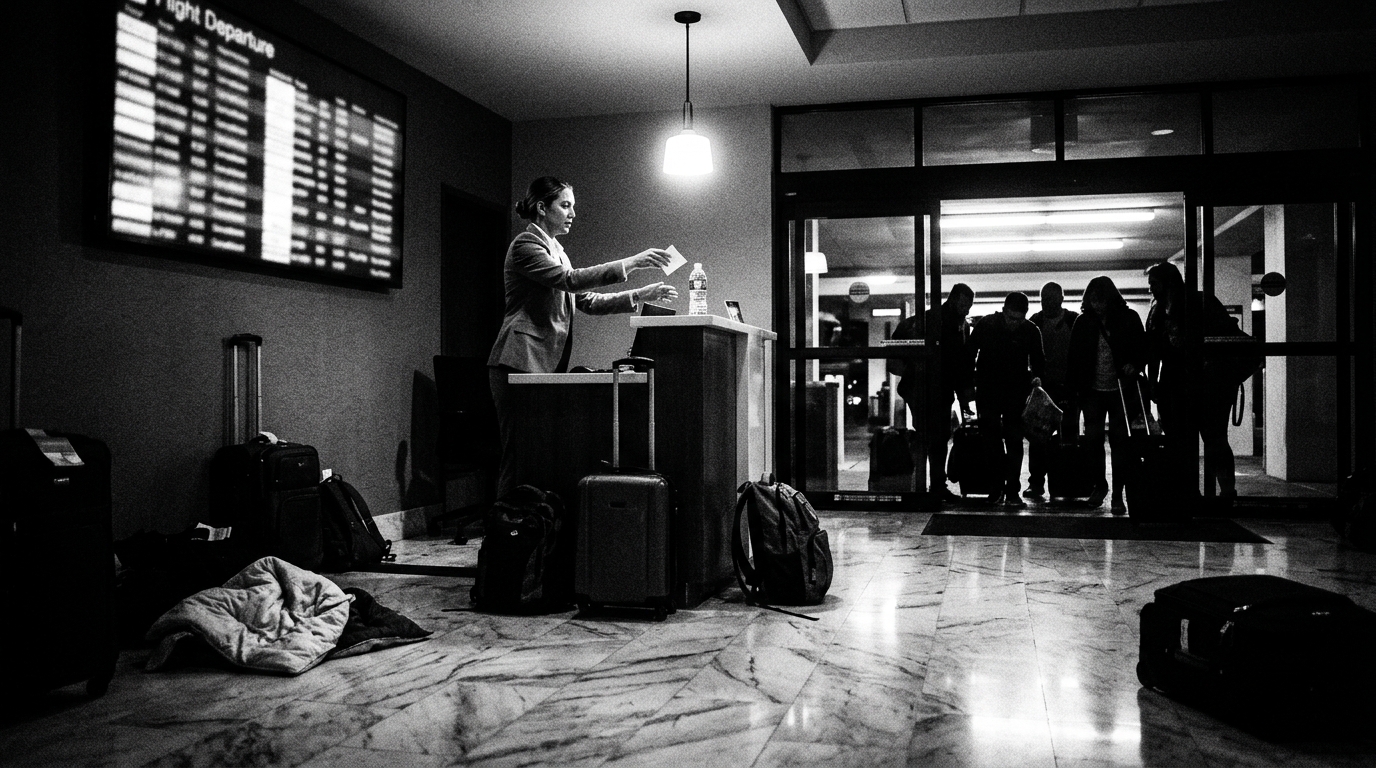
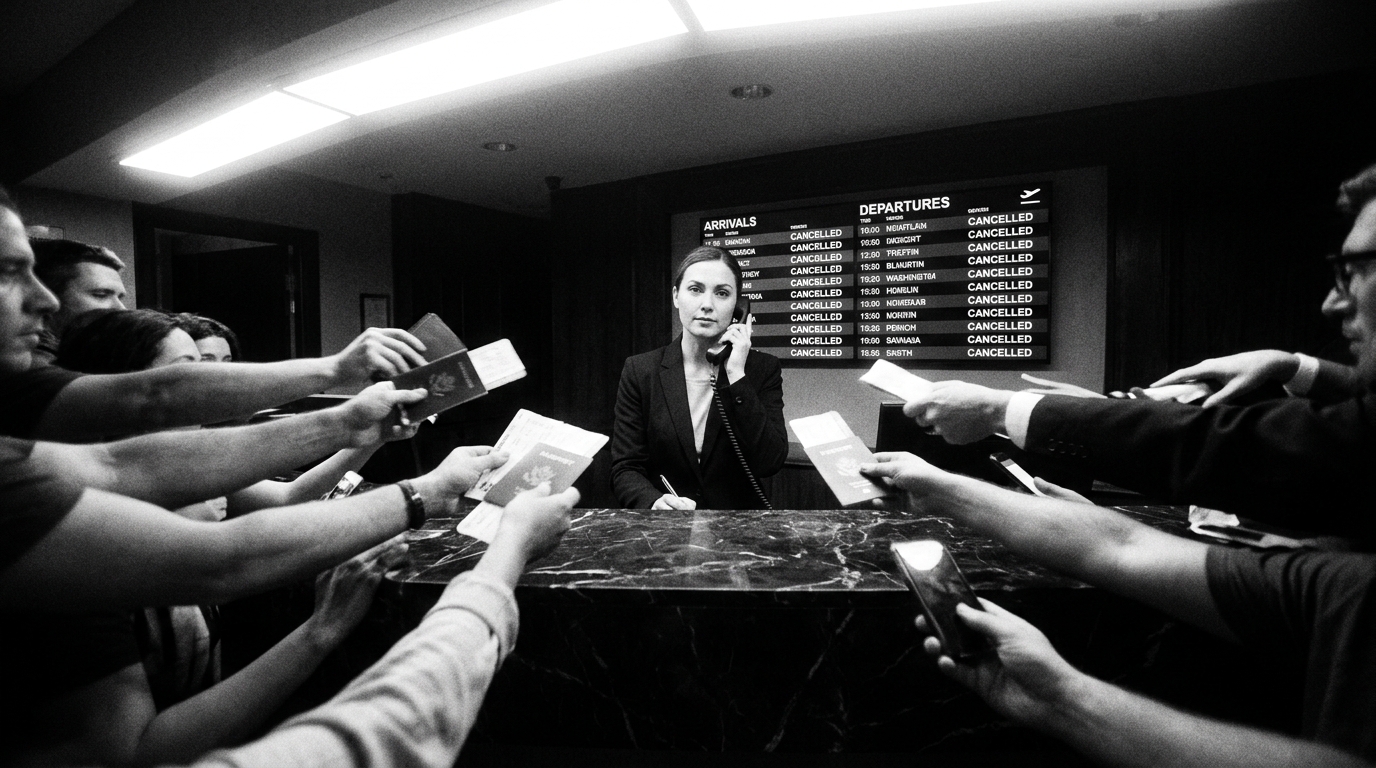
I worked with a GM years ago who ran an airport hotel outside one of the big hubs. Every summer he'd tell his front desk team the same thing: "From June to September, you're not just checking people in. You're the first human being who hasn't lied to them in six hours." He wasn't being dramatic. He'd been doing it long enough to know that the guest walking through his doors at 11 PM after a cancelled flight isn't mad at you. They're mad at the gate agent who gave them three different stories, the app that stopped updating, and the airline that sold them a seat on a plane that never left the ground. But you're the one standing there. And if you handle it right, you've got a guest for life. Handle it wrong, and you've got a one-star review that mentions your hotel by name for a problem you had absolutely nothing to do with.
This isn't theoretical right now. On July 7th alone, U.S. airports logged 529 cancellations and over 3,200 delays. The day before that, 387 cancellations. The week before, hundreds more. Newark is running at 35% of flights delayed. LaGuardia's at 32%. And it's not getting better anytime soon... the FAA has nearly half of its major control towers operating below safe staffing levels, there's a projected shortfall of 24,000 pilots this year, and we're heading into the teeth of thunderstorm season with the World Cup knockout rounds still pulling international traffic through already-overwhelmed hubs. This is structural, not a bad weather weekend. The system is running at capacity with no margin for error, and error is showing up every single day.
For airport hotels and properties within 15 minutes of a major hub, this is the most predictable revenue opportunity you'll have all summer. Distressed travelers don't comparison shop. They don't check three OTAs and read 40 reviews. They need a room now, tonight, and they'll pay what the rate is. If you've got rate caps on your same-day pricing... why? If your RMS is holding back because occupancy hasn't hit the threshold to trigger the next tier... override it. This is textbook inelastic demand. A guest who just spent four hours on the floor at O'Hare is not going to blink at your rack rate. But I've seen too many properties leave $30-50 per room on the table on nights like this because someone set a pricing rule eighteen months ago and nobody's revisited it. Pull your same-day rate performance from the last two weeks. If your walkup ADR isn't meaningfully above your booked ADR on disruption nights, you've got a pricing problem that's costing you real money right now.
Here's the part that's harder to put a number on but matters just as much. Your TripAdvisor score, your Google reviews, your brand guest satisfaction survey... they don't have a filter for "this guest was furious before they ever walked into my lobby." A 2-star review that says "unfriendly staff, nobody seemed to care" doesn't come with an asterisk that says "guest had been stranded for 9 hours and hadn't eaten since breakfast." It just sits there, dragging your average down. Your front desk team needs a specific protocol for this, not a generic customer service reminder. Name what happened. "I heard flights out of O'Hare were a disaster today... I'm sorry you dealt with that." Offer something that costs you almost nothing but resets the emotional temperature... a bottle of water, a late checkout, an early check-in if the room's ready. Document every interaction with a travel-disrupted guest so you can flag those reviews in your response. "We're sorry your travel day was so difficult and we're glad we could provide a comfortable place to land" is a response that neutralizes the review for anyone reading it later.
And if you're NOT an airport hotel... pay attention anyway. The broader signal here matters. When air travel gets unreliable, consumers shift to driving. AAA projected over 61 million Americans took road trips over the Fourth of July week. If you're running a resort or a leisure property within a three or four-hour drive of a major metro, watch your booking windows. If you're seeing compression in the 7-14 day window that wasn't there last summer, that's not random. That's people choosing certainty over chaos. They'd rather load the car and know they're getting there than gamble on a 32% delay rate out of LaGuardia. That's a pricing signal. Don't ignore it.
If you're running a property within 20 minutes of a major airport, do three things before Monday. First, pull your same-day and walkup rate performance for the last 14 days and compare it to your OTB rate for those same nights. If they're within $15 of each other on high-disruption evenings, your pricing is broken and you're giving away margin on guests who would have paid more. Fix your rate floor for same-day sells. Second, brief your front desk team... not with a memo, in person. Give them the script: acknowledge the airline situation by name, offer water and a quiet spot, don't take it personally. Role-play it if you have to. The review they prevent is worth more than the comp water costs. Third, if you're a drive-to leisure property near a major metro and you're still pricing August the way you priced it in April, re-forecast now. Air travel confidence is cracking and your booking window is probably tightening. This is what I call the Three-Mile Radius... your revenue ceiling isn't set by what's happening nationally, it's set by what's happening around you. And right now, what's happening around every major hub is chaos that's sending demand your direction.