Today · Apr 19, 2026
A $1M Restaurant Inside a $25M Bet on a Foreclosed Marriott

A $1M Restaurant Inside a $25M Bet on a Foreclosed Marriott

Visions Hotels bought a struggling 356-key full-service Marriott out of foreclosure for $14.4 million and is now pouring up to $25 million into renovations... nearly double the purchase price. The new restaurant getting all the press is just the tip of a very expensive iceberg.

Let me tell you the part of this story that the headline doesn't tell you.

Somebody bought a 356-room full-service Marriott at a post-foreclosure auction in 2023 for $14.4 million. That's roughly $40,400 per key for a full-service branded hotel. If that number doesn't make you sit up straight, you haven't been paying attention. That's select-service pricing for a full-service asset. Which tells you exactly how distressed this property was. The previous ownership couldn't make it work. The debt got called. The hotel went to auction. And Visions Hotels, a company out of Corning, New York that runs 50-plus properties, raised their hand and said "we'll take it."

Now they're spending $15 million to $25 million on renovations. All 356 rooms. Banquet facilities. And this new restaurant that's getting the headlines. Let's do the math that matters. At the high end, you're looking at $25 million in renovations on top of a $14.4 million acquisition. That's $39.4 million all-in, or about $110,700 per key. For a suburban Marriott on Millersport Highway in Amherst. That's a very different number than $40K per key, and it tells a very different story. This isn't a bargain flip. This is a ground-up repositioning bet disguised as a renovation. The restaurant is the part that photographs well for the press release. The real story is whether the market supports $110K per key in total basis.

I managed a property years ago that went through a similar cycle. Previous owner let it slide, brand got nervous, the debt went bad, new buyer came in with big plans and a thick checkbook. The renovation was beautiful. Genuinely impressive work. But nobody stress-tested whether the market had moved on during the years of neglect. The comp set had shifted. Corporate accounts had relocated their preferred hotel. Group business had found other venues. The building looked great. The revenue took three years to catch up to the new cost basis. Three years of an ownership group looking at monthly financials and wondering when "the turnaround" was going to show up in the numbers.

Here's what I think Visions Hotels is actually doing, and it's not stupid. They're betting that a full-service Marriott in that market, properly capitalized and properly run, has a revenue ceiling significantly higher than where the previous ownership was operating. They're probably right. A neglected full-service hotel bleeds revenue in ways that don't show up until you fix it... group business won't book a tired banquet facility, F&B gets a reputation that kills catering revenue, transient guests start filtering you out on the brand website because of review scores. Fix all of that, and yes, there's real upside. The question is how much upside, and how fast. Because at $25 million in renovations, you need substantial incremental NOI to justify the capital, and "substantial" in a suburban Buffalo market means you're pushing rate hard in a market where labor costs are up over 15% since 2019 and RevPAR nationally was basically flat last year.

The restaurant itself... $1 million for a new F&B concept in a 356-room full-service hotel is actually modest. That's not a signature restaurant build-out. That's a refresh with a new concept. Which is probably smart. The days of the grand hotel restaurant that loses money as an "amenity" are over for most full-service properties outside of luxury. What you need is an F&B operation that breaks even or better, supports your group and catering business, and doesn't embarrass you on the guest survey. A million dollars can get you there if you're thoughtful about the concept and realistic about the labor model. The trap is building a restaurant that requires a staffing level the market can't support. I've seen that movie more times than I can count.

Operator's Take

If you're an owner who bought distressed and you're now deep into renovation capital, here's the conversation you need to have with your management team this week: what is the realistic stabilization timeline, and what does the P&L look like in year two... not year five, not "at maturity," year two. This is what I call the Renovation Reality Multiplier. The disruption to revenue during renovation, the ramp-up period after, the time it takes to rebuild group pipelines and retrain the market on your rate... it always takes longer than the proforma says. Build your cash reserves and your ownership reporting around the real timeline, not the optimistic one. Your lender will thank you.

Read full analysis → ← Show less
Source: Google News: Marriott
Citi Dumped 56% of Its RLJ Stake. The Real Number Is Worse Than the Headline.

Citi Dumped 56% of Its RLJ Stake. The Real Number Is Worse Than the Headline.

Citigroup slashed its RLJ Lodging Trust position to $2.05 million... a rounding error for a bank that size. The interesting part isn't why Citi sold. It's what RLJ's full-year numbers say about who's actually making money in this portfolio.

Citigroup cut 362,632 shares of RLJ Lodging Trust in Q3, a 56% reduction that left it holding $2.05 million in stock. That's 0.17% of a company with a $1.2 billion market cap. Let's be honest about scale: this is not Citi making a dramatic call on lodging REITs. This is Citi cleaning out a position that barely registered on its book.

The real number is RLJ's full-year 2025 net income to common shareholders: $3.4 million. Down from $42.9 million in 2024. That's a 92% decline. On a portfolio of premium-branded, focused-service hotels in major urban markets. Q4 comparable RevPAR fell 1.5% year-over-year to $136.79. The company beat adjusted FFO estimates ($0.32 vs. $0.28 expected), which tells you the Street's expectations were already low. Beating a low bar is not a thesis.

Let's decompose the owner's return here. RLJ carries $2.2 billion in debt at a weighted average rate of 4.6%. That's roughly $101 million in annual interest expense against $3.4 million in net income. The refinancing completed in February 2026 extended maturities through 2028, which removes near-term default risk but doesn't change the fundamental math: this portfolio is servicing debt, not generating equity returns. The 7.6% dividend yield at $7.87 per share looks attractive until you ask how long a company earning $3.4 million can sustain distributions that imply a significantly higher payout. Check again.

What's instructive is the divergence in institutional behavior. JPMorgan increased its position by 4.5% in the same quarter Citi was selling. Vanguard holds 13.5%. BlackRock holds 11.2%. Institutional ownership sits at 92.35%. These are not dumb holders. They see the 2026 guidance (0.5%-3% RevPAR growth, $1.21-$1.41 adjusted FFO per share) and they're making a bet that the cycle turns. Maybe it does. But 0.5% RevPAR growth on the low end, against expense inflation that RLJ itself called "choppy," means margin compression is the base case for owners. Revenue growth without margin improvement is a treadmill (I've audited this exact dynamic at three different REITs... the top line moves, the bottom line doesn't, and the management company still collects its fee).

Analysts have a consensus "Hold" with an $8.64 target. That's 16% upside from $7.43. In a sector trading near historic lows with 92% institutional ownership, the question isn't whether RLJ survives. It's whether the owner's actual return... after management fees, franchise fees, FF&E reserves, CapEx, and debt service... justifies holding the equity at these levels. The math works if you believe the cycle inflects in late 2026. If it doesn't, $3.4 million in net income on a $1.2 billion market cap is a 0.28% return on equity. That's not a lodging investment. That's a parking lot for capital waiting for something better.

Operator's Take

Here's what I'd tell you if you're an asset manager or owner looking at a lodging REIT position right now... or if you're a GM whose ownership group holds RLJ-type assets. The numbers at RLJ are telling the same story I'm hearing from operators everywhere: RevPAR is flat to slightly down, expenses are grinding higher, and the spread between top-line revenue and what actually flows to the owner is getting thinner every quarter. This is what I call the Flow-Through Truth Test... revenue growth only matters if enough of it reaches GOP and NOI. If your property is showing 1-2% RevPAR growth but your labor and insurance costs are up 4-5%, you're working harder to make less. Pull your trailing 12-month flow-through percentage this week. If it's declining, that conversation with your owner needs to happen now, not at the next quarterly review.

— Mike Storm, Founder & Editor
Read full analysis → ← Show less
Source: Google News: RLJ Lodging Trust
Paradise City's Hyatt Regency Is Open... and the Casino Math Still Hasn't Changed

Paradise City's Hyatt Regency Is Open... and the Casino Math Still Hasn't Changed

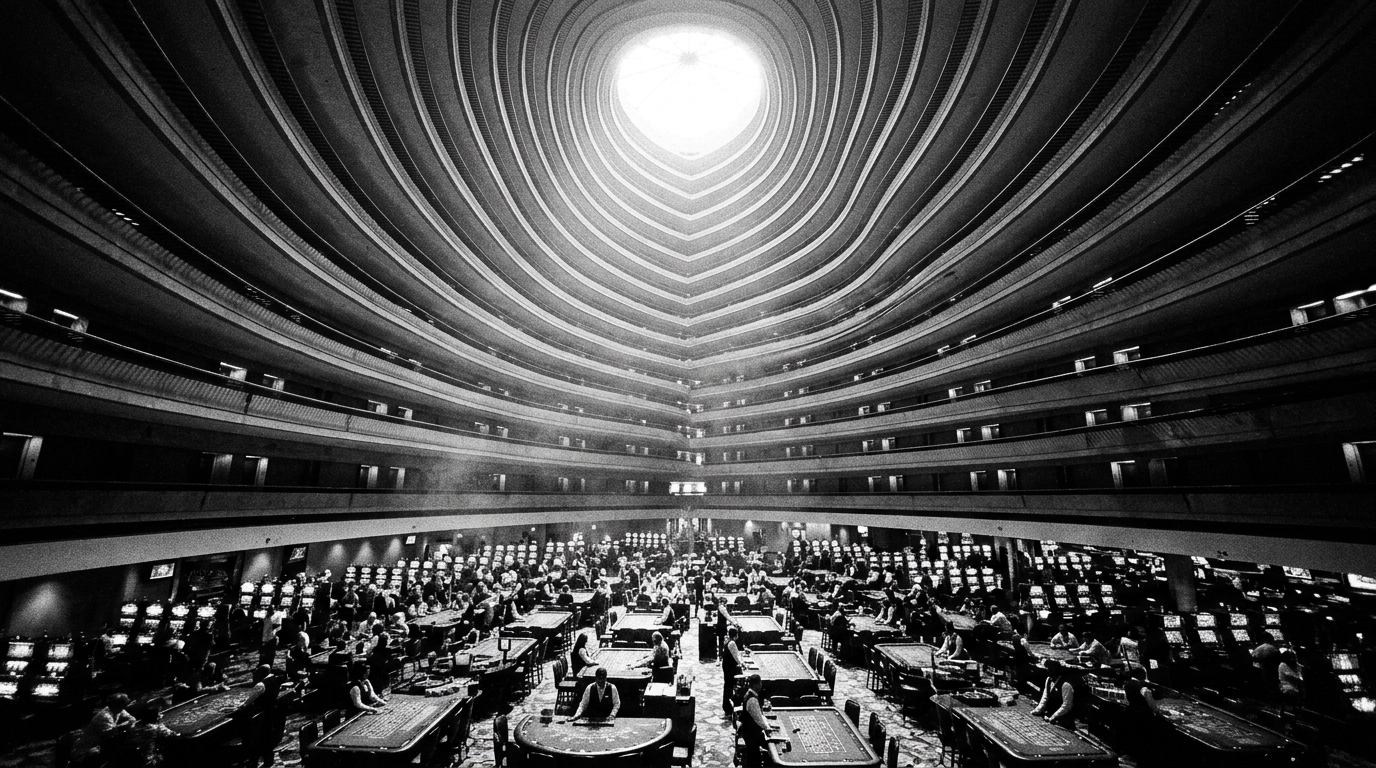
Two weeks after we broke down why Paradise Co. bought a 501-room tower for $151 million, the doors are open and the press releases are flying. The question I asked then is the same question I'm asking now: what happens when the VIP tables go cold?

We covered this deal twice already. March 14th and 15th. I laid out the math then and I'm not going to pretend the math changed because someone cut a ribbon on March 9th.

Here's what happened: Paradise Sega Sammy took a former Grand Hyatt west tower, paid roughly $301,000 per key, rebranded it as a Hyatt Regency, and bolted it onto their integrated resort complex near Incheon Airport. Total campus is now 1,270 keys. The press release talks about two swimming pools, 12 banquet venues, a Market Café, something called a Swell Lounge. All very nice. None of it is the story.

The story is the same one it was two weeks ago. Paradise City exists to fill casino tables with foreign visitors (South Korean citizens can't legally gamble there). Every hotel room on that campus is fundamentally a comp strategy... a way to keep high-value players on property longer, spending more at the tables. A Hana Securities analyst projected Paradise Co.'s operating profit could hit roughly KRW 280 billion by 2027, a 48% jump from expected 2025 numbers. That's the bull case. And it depends almost entirely on gaming revenue from foreign VIPs, which means it depends on Chinese travel patterns, Japanese tourism flows, and the broader macro environment in Asia Pacific. The hotel rooms are the tail. The casino is the dog.

I've seen this exact model play out at three different properties over the years. Integrated resort buys or builds hotel capacity to support gaming operations. The hotel P&L looks fine when the tables are running hot... because it's not really a hotel P&L, it's a marketing expense for the casino that happens to generate room revenue. The problem hits when gaming revenue dips. Suddenly you're sitting on 1,270 keys near an airport in a market where your primary demand generator just went soft. And 501 of those rooms just went from "Hyatt Regency" luxury positioning to "whatever rate gets heads in beds" in about one quarterly earnings call. This is what I call the Brand Reality Gap. Hyatt sells the promise of a premium guest experience. Paradise Co. needs those rooms filled to justify the gaming investment. Those two objectives align perfectly... until they don't. And when they don't, the brand promise is the first thing that gets sacrificed at property level.

What's interesting is the downgrade in flag itself. The west tower was a Grand Hyatt. Now it's a Hyatt Regency. That's not nothing. Grand Hyatt is upper luxury. Hyatt Regency is upper upscale. Paradise essentially traded up in operational flexibility (Regency is easier to deliver, lower service cost per occupied room, more forgiving standards) while trading down in brand cachet. Smart if your real business is filling casino comp rooms and you don't need the full-service luxury overhead eating into your margin. Less smart if you're trying to attract independent luxury travelers who chose Grand Hyatt specifically. The 34 suites suggest they're keeping the whale program alive for VIP players. The Regency flag on the rest of the building tells you who they expect to fill the other 467 rooms... and at what rate.

Look... I don't think this is a bad deal for Paradise Co. At $151 million for 501 keys of existing product that was already operating, you're buying below replacement cost in most Asian gateway markets. If the gaming revenue projections hold, the hotel rooms pay for themselves as a comp and retention tool. But if you're watching this from the outside... if you're an owner or operator thinking about integrated resort adjacency, or brand flag economics, or the relationship between gaming and lodging demand... pay attention to the next two years. Because the projections from Hana Securities are projections. And I've got 40 years of experience watching projections meet reality. Reality usually wins, and it doesn't send a press release first.

Operator's Take

If you're operating a hotel anywhere near an integrated resort... Incheon, Macau, Singapore, or any of the new tribal gaming complexes stateside... understand that your demand profile is tethered to someone else's P&L. When gaming revenue is strong, your overflow and comp business looks great. When it contracts, you're the first line item that gets squeezed. Know your non-gaming demand floor. Build your staffing model and rate strategy around that floor, not the peak. And if a casino operator ever approaches you about a partnership or acquisition, ask one question before anything else: what's my occupancy at when your tables are down 20%? If they don't have an answer, you have your answer.

Read full analysis → ← Show less
Source: Google News: Hyatt
Hilton's Bringing LXR to Australia and the Real Question Is Who's Paying for That Promise

Hilton's Bringing LXR to Australia and the Real Question Is Who's Paying for That Promise

Hilton just signed a former Palazzo Versace on the Gold Coast as its first LXR property in Australia, banking on a 2027 relaunch and the 2032 Olympics. The brand promise sounds gorgeous... the owner math is where it gets interesting.

So Hilton has found its first LXR Hotels & Resorts property in Australia, and of course it's the Gold Coast, and of course it's a property with a story. The 200-key hotel sitting on the Southport Spit used to be the Palazzo Versace... one of those properties everyone in the region knows by reputation whether they've stayed there or not. Islander Hotel Trading is the ownership group, and they're committing to a full renovation before relaunching under the LXR flag in early 2027. And look, on paper, this makes sense. South-East Queensland is a genuine luxury leisure market with tailwinds (international arrivals climbing, domestic travel strong, and oh yes, a little event called the 2032 Brisbane Olympics that's already reshaping every development conversation on that coast). National occupancy is running at 71% with ADR at $240 as of late 2025, and the Gold Coast specifically has been outperforming year-over-year on key metrics. The bones are there. The demand story is real. I'm not questioning the market.

What I'm questioning is the model. LXR is Hilton's soft brand collection for luxury independents... nearly 40 properties globally now, either open or in the pipeline. The pitch is beautiful: keep your unique identity, keep your local character, but plug into Hilton's distribution engine and the Honors loyalty program. You get the reservation flow without becoming a Hilton Garden Inn. You stay special while gaining scale. I've sat through this pitch. I've GIVEN this pitch, from the other side of the table, when I was brand-side. And here's the thing... the pitch is genuinely compelling. Soft brands at the luxury tier can work brilliantly when the alignment is right. But "alignment" is doing a LOT of heavy lifting in that sentence, and nobody in the press release is talking about what alignment actually costs.

Here's the part that doesn't make the announcement. A property with Palazzo Versace DNA has a very specific identity... dramatic, European-influenced, architecturally bold. LXR's brand philosophy is supposed to celebrate that uniqueness rather than suppress it. Great. But Hilton's commercial engine doesn't just passively deliver reservations... it comes with standards, technology requirements, loyalty integration expectations, and the inevitable tension between "maintain your unique character" and "meet the brand's quality assurance framework." I've watched three different soft brand conversions where the owner signed believing they were getting distribution with independence, and within 18 months they were fielding brand compliance visits about the minibar selection and the thread count. The promise is freedom. The delivery is freedom-ish. (And freedom-ish comes with a fee structure that deserves more scrutiny than it typically gets.)

The renovation is the real tell. "Comprehensive" renovation of a 200-key luxury property on the Gold Coast... we're talking significant capital. The press materials say they're preserving the "iconic design heritage" while elevating the experience. Translation: the owner is spending real money to meet LXR's standards while trying not to lose the thing that made this property distinctive in the first place. That's a tightrope. I once sat in a brand review where an owner had just spent $22,000 per key on a conversion renovation, and the brand rep looked at the plans and said "this is a great start." The owner's face... I'll never forget it. The gap between what the brand calls a renovation and what the owner budgeted for a renovation is where family wealth goes to get very, very nervous.

The 2032 Olympics angle is real but it's also six years away, and any owner banking their renovation ROI on an event that far out needs to show me the math for the years in between. What does the property earn in 2027, 2028, 2029 as a freshly converted LXR with a renovation loan to service? What's the loyalty contribution going to actually deliver versus what the franchise sales team projected? (I have a filing cabinet full of those projections. The variance between projected and actual should be criminal.) The Gold Coast is a legitimate luxury leisure destination. The demand fundamentals are sound. But fundamentals don't service debt... cash flow does. And cash flow depends on whether the brand actually delivers the rate premium and the occupancy lift that justified the conversion in the first place. If you're an owner in the Asia-Pacific region watching this announcement and thinking "maybe LXR is right for my property too," please, before you sign anything, ask for actual performance data from comparable LXR conversions. Not projections. Actuals. And if they can't give you actuals... that tells you everything you need to know about where this collection is in its maturity curve.

Operator's Take

Here's what I'd tell any owner being pitched a soft brand luxury conversion right now. This is what I call the Brand Reality Gap... brands sell promises at scale, but properties deliver them shift by shift, and the gap between the two is where your capital goes. Before you sign, get three things in writing: actual loyalty contribution percentages from comparable existing properties (not projections), a complete list of every brand-mandated cost including technology, training, and QA compliance, and a renovation scope that's been blessed by the brand BEFORE you budget it. If the franchise development team can't give you all three, they're selling you a mood board, not a business case. Your asset deserves better math than that.

— Mike Storm, Founder & Editor
Read full analysis → ← Show less
Source: Google News: Hilton
Zacks Cut Hyatt's Q1 EPS Estimate 23%. The Real Number Is Worse.

Zacks Cut Hyatt's Q1 EPS Estimate 23%. The Real Number Is Worse.

One research firm slashed Hyatt's near-term earnings forecast while most of Wall Street raised price targets. The divergence tells you more about the asset-light model's accounting opacity than about Hyatt's actual health.

Zacks dropped Hyatt's Q1 2026 EPS estimate from $0.83 to $0.64... a 22.9% reduction. Q2 went from $1.08 to $0.94. Full-year 2026 lands at $2.97, eight cents below consensus. Meanwhile, 18 analysts maintain a "Moderate Buy" with price targets north of $175. That's a wide spread. When one firm sees deterioration and the rest see upside, the interesting question isn't who's right. It's what assumptions are driving the gap.

Let's decompose this. Hyatt reported Q4 2025 EPS of $1.33, crushing consensus estimates of $0.29 to $0.41. That looks like a blowout. But full-year 2025 produced a net loss of $52 million. Read that again. A company that "beat" Q4 estimates by 3x still lost money for the year. The $1.33 quarter is carrying a lot of one-time items and asset-sale gains baked into the asset-light transition. Strip those out and you're looking at a recurring earnings profile that's thinner than the headline suggests. Zacks appears to be pricing in the normalized earnings power. The bulls are pricing in the management-fee growth trajectory. Both can be internally consistent and lead to completely different numbers.

The 148,000-room development pipeline and 7.3% net rooms growth look strong on paper. But pipeline isn't revenue. I've audited enough hotel companies to know that a signed letter of intent in India or Turkey converts to fee income on a timeline that rarely matches the investor presentation. Hyatt's bet on luxury and all-inclusive (70% of portfolio in luxury and upper-upscale) insulates them from the softness in U.S. select-service, but it also concentrates exposure in segments where a single geopolitical disruption or recession quarter can crater group bookings. The adjusted EBITDA guidance of $1,090M to $1,110M for 2026 represents growth over 2024 when adjusted for asset sales... but that adjustment is doing a lot of heavy lifting. "Adjusted for asset sales" is the hotel REIT version of "other than that, Mrs. Lincoln."

Here's what the headline doesn't tell you. Hyatt's franchise fees faced pressure in Q4 from the Playa acquisition structure and soft U.S. select-service demand. That's the fee line that scales with the asset-light model. If franchise fees compress while management fees grow, the quality of earnings shifts toward a smaller number of larger properties... higher concentration risk. An owner I spoke with last year put it simply: "They're building a company that makes more money from fewer relationships. That works until one of those relationships has a bad year." He wasn't wrong.

The negative P/E ratio of -267.79 and $14.17 billion market cap tell you the market is pricing Hyatt on future fee streams, not current profitability. That's fine in an expansion. In a contraction, it's the first multiple to get repriced. Zacks may be early. They may be wrong. But the question they're implicitly asking (what does Hyatt earn when the cycle turns and the pipeline conversion slows?) is the question every asset manager holding Hyatt-flagged properties should be asking too.

Operator's Take

Here's what I'd tell you if you're running a Hyatt-flagged property right now. Your brand parent is spending capital and attention on luxury expansion and international pipeline. That's where their growth story lives. If you're a select-service GM in a secondary U.S. market, you are not the priority... and your loyalty contribution numbers are going to reflect that before your franchise fee does. Talk to your owner about what the brand is actually delivering in reservations versus what you're paying. The math on that gap is the only number that matters for your next franchise review.

— Mike Storm, Founder & Editor
Read full analysis → ← Show less
Source: Google News: Hyatt
Host Hotels' $1.1B Asset Sale Looks Smart Until You Check the Reinvestment Math

Host Hotels' $1.1B Asset Sale Looks Smart Until You Check the Reinvestment Math

Host Hotels just dumped two Four Seasons properties for $1.1 billion and is projecting FFO per share to decline in 2026. The capital recycling story sounds clean. The numbers tell a more complicated story about what "optimization" actually costs the shareholder.

Host Hotels reported $2.07 adjusted FFO per share for 2025. The 2026 guidance: $2.03 to $2.11. Midpoint is $2.07. Flat. After selling $1.15 billion in assets across three properties in early 2026, flat is the best-case scenario. That should tell you everything about what those dispositions actually mean for per-share returns.

Let's decompose the sales. The Four Seasons Orlando and Four Seasons Jackson Hole went for a combined $1.1 billion. The St. Regis Houston sold for $51 million. I don't have the individual key counts on the Four Seasons pair, but Host's total portfolio sits at approximately 41,700 rooms across 76 hotels. The company now has $2.4 billion in total liquidity. That's a fortress balance sheet by any lodging REIT standard. The question isn't whether they can weather a downturn. The question is whether sitting on that much dry powder while guiding flat FFO is capital allocation or capital avoidance.

The 2026 RevPAR growth projection of 2.5% to 4% is interesting (and by interesting I mean it requires a specific set of assumptions). Host is banking on affluent leisure demand staying elevated and the FIFA World Cup providing a tailwind. They outperformed upper-tier industry RevPAR by roughly 200 basis points in 2025. That's genuine. But 200 basis points of outperformance on a decelerating growth curve still produces a decelerating growth number. The CapEx budget drops from $644 million in 2025 to a range of $525 million to $625 million in 2026. If you're an institutional holder (and 98.52% of HST shares sit with institutions), you're looking at a company that sold high-quality assets, guided flat earnings, reduced capital investment, and is paying a $0.20 quarterly dividend. The yield math works at current prices. The growth math doesn't, unless the reinvestment pipeline materializes.

Here's what the 10-K risk mapping really signals. Every REIT files risk factors. Most of them are boilerplate... macroeconomic cycles, interest rates, labor costs, climate exposure. The filing itself isn't news. What's worth paying attention to is the composition of the remaining 76-property portfolio. It's heavily weighted toward Marriott and Hyatt flags, concentrated in U.S. markets, and positioned at the luxury and upper-upscale tier. That's a bet on domestic affluent travel continuing to outperform. If that thesis holds, the portfolio is well-positioned. If business travel structurally underperforms (which several analysts have flagged), the concentration becomes a vulnerability. A portfolio that sold its most iconic resort assets and kept its convention and urban luxury exposure is making a directional call about where RevPAR growth lives in 2027 and beyond.

The $0.20 quarterly dividend ($0.80 annualized) on a stock trading around $20 gives you roughly a 4% yield. That's adequate, not compelling, for a lodging REIT with flat FFO guidance. The real return thesis depends entirely on what Host does with $2.4 billion in liquidity. If they deploy it into acquisitions at cap rates below 6%, they're buying growth at the top of the cycle. If they sit on it, the opportunity cost compounds quarterly. An owner I talked to once put it simply: "Cash on the balance sheet is the most expensive asset you can hold, because it earns nothing and everyone assumes you're scared." Host isn't scared. But the clock on that liquidity is ticking.

Operator's Take

Here's what I'd tell any asset manager benchmarking against Host right now. They sold two trophy Four Seasons assets and guided flat. That's your signal that even the biggest, best-capitalized REIT in the space is telling you growth is slowing at the top of the market. If you're holding luxury or upper-upscale assets and your 2026 budget assumes acceleration... check again. Host just showed you what "good" looks like this cycle, and good is flat. Plan accordingly.

— Mike Storm, Founder & Editor
Read full analysis → ← Show less
Source: Google News: Hotel REIT
The Hotels That Actually Develop Their People Are Winning. The Rest Are Just Complaining About Turnover.

The Hotels That Actually Develop Their People Are Winning. The Rest Are Just Complaining About Turnover.

Two Glasgow hotels are running 65-80% female leadership in management roles while most of the industry can't figure out why nobody wants to stay past 18 months. The difference isn't luck. It's a decision.

Available Analysis

I sat across from a GM last year who spent 45 minutes telling me he couldn't find good managers. Couldn't develop them. Couldn't keep them. The labor market was impossible. Nobody wants to work anymore. The whole speech. Then I asked him what his internal promotion rate was. He didn't know the number. Didn't even know where to find it. That told me everything I needed to know about why his bench was empty.

Two IHG properties in Glasgow just put up numbers that should make every operator in North America uncomfortable. Kimpton Blythswood Square is running 68% female middle management and 80% female department heads. The voco Grand Central next door is at 65% and 60%. Five of seven cluster executives across both hotels are women. And here's the part that matters... these aren't outside hires. These are people who came up through the properties. One went from restaurant manager to director of operations in six years. Another joined as line staff in 2018 and is running a signature bar program now. They didn't post jobs on LinkedIn and hope for magic. They built a pipeline and actually used it.

Look... I know what some of you are thinking. "That's great for Glasgow. Different market. Different labor laws. Doesn't apply to me." Wrong. The mechanics are universal. IHG runs a program called RISE that pairs high-potential women with mentors and accelerates them into GM-track roles. That's not a cultural initiative. That's a retention strategy with teeth. Because here's what 40 years has taught me about turnover... people don't leave hotels because the work is hard. They leave because they can't see a future. The minute someone believes there's a path from where they are to somewhere better, your retention math changes overnight. And the cost of developing an internal candidate into a department head is a fraction of recruiting, onboarding, and training an external one who might not last a year anyway.

The UK hospitality industry runs about 8-30% female representation in senior leadership (depending on how you slice it) against a workforce that's 54-70% women. That gap isn't a diversity problem. It's an operational problem. You're telling me the majority of your labor pool is female, and you can't figure out how to promote them into leadership? That's not a pipeline issue. That's a management failure. And it's costing you money every single day in turnover, in institutional knowledge walking out the door, in the training hours you burn through because your supervisors keep leaving for the property down the street that actually gives them a title and a future. The gender pay gap in UK hospitality is still 7.7%. Think about what that means for your ability to retain your best people when they figure out the math.

Here's what I want you to hear. This isn't a feel-good story about women in hospitality. It's a business case study about what happens when you actually invest in career progression instead of just talking about it at management meetings. The Glasgow numbers didn't happen because IHG got lucky with hiring. They happened because someone decided... deliberately, with resources attached... to build leaders from within. And the results speak for themselves. The question isn't whether you agree with the approach. The question is whether you can afford to keep doing what you're doing now, which for most of you is watching your best mid-level talent walk out the door every 14 months and then wondering why your service scores look the way they do.

Operator's Take

If you're a GM who hasn't sat down with every department head and supervisor in the last 90 days to ask "where do you want to be in two years?"... do it this week. Not a performance review. A career conversation. Then map out what it would actually take to get them there and put it in writing. This is what I call the Invisible P&L... the cost of turnover, of lost institutional knowledge, of constantly retraining never shows up on your monthly report, but it's eating your margins alive. Your owners want to know why labor costs keep climbing? Start here. Build your bench. Promote from within. The math works and so does the hotel.

Read full analysis → ← Show less
Source: Google News: IHG
Consumer Sentiment Just Flashed Red. Your Spring Leisure Forecast Is Wrong.

Consumer Sentiment Just Flashed Red. Your Spring Leisure Forecast Is Wrong.

Michigan sentiment cratered to 55.5 this month... its lowest print of 2026... and if you're a revenue manager at a drive-to leisure property still holding rate based on last year's comps, you're about to learn an expensive lesson about the difference between confidence and data.

Available Analysis

I watched a revenue manager lose her job once over something exactly like this. Property was a 180-key resort about two hours from a major metro. Gas prices spiked, consumer confidence dropped, and she held rate because the brand's forecast tool was still showing green. "The pace looks fine," she kept saying in the Monday calls. Pace looked fine because the bookings that were going to evaporate hadn't evaporated yet. They were just... not materializing. By the time the 30-day pickup report confirmed what the macro data had been screaming for six weeks, she'd missed the window to adjust. Occupancy fell 11 points in April. The owner replaced her by Memorial Day.

That's the thing about consumer sentiment as a leading indicator. It doesn't show up in your PMS first. It shows up at the gas pump. It shows up in the conversation a family has at the kitchen table when they're deciding between the beach weekend and staying home. The Michigan number hitting 55.5 is that kitchen table conversation happening simultaneously in millions of households. Gas just crossed $3.79 nationally... up more than 80 cents in three weeks because of the Iran situation... and the year-ahead inflation expectation is stuck at 3.4%. That's not a number that says "let's book the resort." That's a number that says "let's see what happens."

Here's what nobody's telling you about the 60-90 day correlation between sentiment drops and leisure travel softening. It's not uniform. It hits drive-to leisure hardest because those travelers feel gas prices twice... once getting there, once in their psychological willingness to spend at the destination. A family that was planning a $1,200 weekend (room, gas, dining, activities) is now looking at $1,350 for the same trip because fuel went up. That $150 delta doesn't cancel the trip for everyone. But it cancels it for enough of them to move your occupancy 5-8 points. And for the ones who still come? They trade down. The suite becomes a standard king. The steakhouse dinner becomes the sports bar. Your ADR compresses even before occupancy does. The luxury and upper-upscale segments will weather this better (they always do... the K-shaped recovery that's been playing out since 2023 isn't going away). But if you're running a select-service or an independent in a secondary drive-to market, the math is coming for you. Right now.

The instinct when you see softening is to cut rate. I understand the instinct. I've given in to that instinct myself a few times and regretted it every single time. This is what I call the Rate Recovery Trap. You drop your rate $20 to fill rooms in April, and you spend June, July, and August trying to retrain your market to pay what you were worth before the cut. The OTAs lock in your lower rate. Your comp set adjusts. The price anchor resets in the consumer's mind. Instead of losing 5-8 points of occupancy for two months, you lose $15-20 of ADR for six months. The math on that is catastrophic. Don't do it. There are better moves.

What you should be doing right now... today, this week... is pulling your 60-90 day pickup data and comparing it to 2023 and 2019. Not 2024. Not 2025. Those were anomaly years with pent-up demand dynamics that no longer exist. If your Q2 pace is trailing 2019 by more than 3-4 points, you have a demand problem that isn't going to self-correct. Second, shift your promotional strategy toward value-add instead of rate reduction. Package the room with breakfast. Throw in parking. Add a late checkout. You protect your published rate while giving the guest the perception of a deal. Third, increase your OTA visibility now... not in April when every other revenue manager in your market has the same idea and bid costs spike. The window to capture displaced demand (families who are still going to travel but are shopping harder) is the next 3-4 weeks. After that, the travelers who were going to cancel have cancelled, and the ones who are still booking have already made their decision. You're either in their consideration set by then or you're not.

Operator's Take

If you're a revenue manager at a drive-to leisure property still building your spring forecast off 2024 and 2025 comps, stop. Pull 2019 and 2023 instead. If your 60-day pace is trailing those benchmarks by more than a few points, you need to shift to value-add packaging this week... not rate cuts. Protect ADR at all costs. And if you're a GM who hasn't had this conversation with your revenue manager yet, have it tomorrow morning. Your owner is going to ask about Q2 by mid-April. Have the answer before they ask the question.

Read full analysis → ← Show less
Source: Tradingeconomics
Three Weather Fronts, Three Different Hotel Crises, and You've Got Maybe 12 Hours

Three Weather Fronts, Three Different Hotel Crises, and You've Got Maybe 12 Hours

Right now, half the country is getting hammered by blizzards, heatwaves, and coastal storms simultaneously... and the GM at an airport hotel in Chicago is dealing with the exact opposite problem as the GM at a beach resort in the Carolinas. Both of them need a plan by tonight.

Available Analysis

I worked with a GM years ago who kept a laminated card behind the front desk. One side said "STORM PROTOCOL" and the other side said "SELL-OUT PROTOCOL." She told me once that in 22 years, she'd never needed both sides on the same day. This week, there are properties across the country that need both sides AND a third card that doesn't exist yet.

Here's what's actually happening on the ground right now, not the weather map version but the hotel operations version. You've got three completely different emergencies running simultaneously, and they require opposite responses. Airport-adjacent hotels in blizzard markets are getting crushed with walk-in demand from stranded travelers. When Winter Storm Fern hit in late January, airport locations saw a 32% spike in demand and a 46% jump in RevPAR on the first impact day. That's happening again right now, today, at properties near O'Hare, Denver, Minneapolis... every hub where flights are grounding. If you're running one of those hotels and you haven't already switched to walk-in rate management and activated your distressed traveler protocols, you're leaving thousands on the table. Capture the demand without destroying your reputation. There's a difference, and your front desk team needs to know what it is before the next wave hits the lobby.

Meanwhile, leisure properties in the mid-Atlantic and Midwest are watching cancellations pile up in real time. The data from January's storms showed hotels losing 887,000 room-nights of demand in just three days during Fern. That's not a rounding error. That's a catastrophe for a 150-key resort in the Poconos that was counting on spring break bookings. Your revenue manager should be on the OTAs right now... not tomorrow, not after the storm passes... repositioning rates for local staycation demand and loosening cancellation restrictions to capture whatever replacement business exists. The rooms that sit empty tonight don't come back.

The staffing piece is what nobody outside this business understands. When a blizzard drops 18 inches on your market, your housekeeping team can't get to the building. Period. I've managed through enough of these to know that the GM who survives a weather week is the one who planned for it before the first flake fell. Cross-trained staff. Rooms blocked for employees who can stay on-property. Reduced service plans that maintain safety and cleanliness even if you're running half a team. If you're in a blizzard market and you haven't already called your people to figure out who can get in tomorrow... you're behind. And in California, you've got the opposite problem. Your staff can get to work, but your HVAC is running at 100% capacity in a building that might be decades old. HVAC accounts for 40-80% of a hotel's total energy consumption. In a sustained heatwave, that number lives at the top of the range, and when a compressor fails in a building running at max load (and one will fail, because they always do), you've got a guest comfort crisis that turns into a review crisis that turns into a revenue crisis. Your chief engineer should be monitoring system temps right now. Not checking once a day. Monitoring.

Here's what bothers me about how this industry handles weather events. We treat them like surprises. They're not surprises anymore. Marriott said it in their annual report last month... extreme weather is raising costs for insurance, energy, and operations. Between 1980 and 2023, the U.S. averaged 8.5 billion-dollar weather disasters per year. In the last five years? Over 20. This is the new operating environment. Not an anomaly. Not a once-a-season disruption. This is what running a hotel looks like now, and every property needs a playbook that doesn't start with "well, let's see how bad it gets." The January storms knocked national occupancy down to 49.2% and cratered RevPAR by 13.2% in a single week. If you don't have your weather protocols laminated and behind the desk... if your revenue manager doesn't have a cancellation-wave playbook ready to deploy in 30 minutes... if your chief engineer doesn't have a failure cascade plan for when the second HVAC unit goes down... you're not managing a hotel. You're hoping. And hope is not a strategy.

Operator's Take

This is what I call The Shockwave Response... know your floor and your breakeven before the shock hits, because panic is not a strategy. If you're a GM at an airport-adjacent property in a blizzard market, get your walk-in rate tier set right now, brief your front desk on distressed traveler upsell procedures, and for the love of God make sure someone has confirmed your airline distressed passenger rate agreements are current. If you're running a leisure property absorbing cancellations, your revenue manager should have been on the OTAs two hours ago repositioning for local demand... if they haven't, pull them off whatever else they're doing. And if you're in any affected market and you don't have a laminated weather protocol behind your front desk by this weekend, build one. This isn't the last time. It's not even the last time this month.

Read full analysis → ← Show less
Source: Lockhaven
Your RMS Is About to Need a Lawyer in Four States

Your RMS Is About to Need a Lawyer in Four States

Connecticut, Maryland, Ohio, and Tennessee are pushing bills broad enough to regulate how your hotel sets rates tonight... and the penalties in some of these states make your annual RMS subscription look like a rounding error.

So here's something that should bother you. Tennessee already passed its algorithmic pricing bill. Enacted January 22, 2026. Effective July 1. That's not "coming"... that's here. And the language in SB 1807 defines "personalized algorithmic pricing" as any dynamic pricing set by an algorithm using personal data. Think about what your RMS does. It looks at booking patterns, loyalty tier, device type, search history, stay history. That's personal data. Every rate your system pushed last night potentially falls under this definition.

Let's talk about what "personal data" actually means in these bills, because this is where it gets interesting (and by interesting I mean terrifying for anyone running revenue management). Tennessee's definition is broad enough that NetChoice, a major tech trade group, has publicly argued it would capture loyalty discounts. Your IHG Rewards rate? Your Hilton Honors member pricing? Those are algorithmically generated prices based on personal data. The bills aren't distinguishing between "we used your browsing history to charge you more" and "we used your loyalty status to charge you less." The legislators writing these bills don't understand the difference. And the law doesn't care about your intent... it cares about the mechanism.

Connecticut is the one that should make your stomach drop. Their bill includes criminal fines up to $250,000 for individuals and $6,000,000 for businesses, plus civil penalties up to $1,000,000 per violation. Per violation. How many rate changes does your RMS push in a night? Fifty? A hundred? Now multiply. Ohio's HB 665 goes after algorithms trained on nonpublic competitor data... which is exactly what happens when your RMS vendor aggregates anonymized rate shopping data across their client base to improve recommendations. That's the product. That's literally what you're paying for. And Ohio wants to make it criminal. I talked to a revenue manager last month who told me his RMS pushes over 200 rate changes per week across his portfolio. He had no idea these bills existed. None.

Look, I've built rate-push systems. I know what's under the hood of most RMS platforms. The architecture wasn't designed with state-by-state regulatory compliance in mind. These systems are cloud-based (obviously... it's 2026), which means the computation happens on servers that don't care about state lines, but the rate gets applied to a hotel that very much exists inside a specific state's jurisdiction. Your RMS vendor is almost certainly not tracking which state legislatures are drafting algorithmic pricing bills. I asked three vendors about this last week. One had a "regulatory monitoring team" that turned out to be one compliance person covering all of North America. One said they were "aware of the landscape." The third asked me to send them the bill numbers. These are companies charging you $500-$2,000 a month and they can't tell you whether their product is about to become a compliance liability in four states. The Travel Technology Association has been sending letters to lawmakers warning that these bills will actually increase prices by restricting discount algorithms... and they're probably right. But being right about economics doesn't matter when the bill passes anyway because "algorithm price gouging" polls at about 80% approval with voters.

The real problem isn't any single bill. It's the patchwork. If you're a brand operating in 30 states and four of them have different algorithmic pricing disclosure requirements, rate floor restrictions, and penalty structures, your enterprise RMS doesn't get to push one national rate strategy anymore. It needs state-level compliance logic. That's a rebuild, not a patch. And who pays for that rebuild? Not the RMS vendor (check your contract... I guarantee there's no clause covering state-level algorithmic pricing legislation). Not the brand (they'll issue "guidance" and shift liability to the franchisee). The hotel pays. The owner pays. Like always.

Operator's Take

Here's what I call the Invisible P&L... the costs that never appear on your financial statements destroy more margin than the ones that do, and this is about to be a textbook example. If you're operating in Tennessee, Connecticut, Maryland, or Ohio, pull your RMS contract this week and search for the words "regulatory," "compliance," and "indemnification." I promise you won't like what you find... or don't find. Call your vendor and ask one question: "If this state's algorithmic pricing bill passes, who is liable... you or me?" Get the answer in writing. If you're a branded operator, don't wait for the brand to issue guidance. They'll protect themselves first and send you a bulletin second. Start documenting how your rates are set now so you have a compliance baseline before you need one.

— Mike Storm, Founder & Editor
Read full analysis → ← Show less
Source: InnBrief Analysis — National News
The Fed Just Killed Your 2026 Refi Assumptions. Now What.

The Fed Just Killed Your 2026 Refi Assumptions. Now What.

Hotel owners who underwrote refinancing, PIP financing, or development deals assuming H2 2026 rate relief are staring at a 3.5%-3.75% federal funds rate that isn't moving... and the math on their desks just broke.

The federal funds rate holds at 3.5%-3.75%, and J.P. Morgan now expects it to stay there for the rest of 2026. That's not a forecast revision. That's a repricing of every hotel deal underwritten in the last 18 months on the assumption that relief was six months away. It wasn't. It isn't.

Let's decompose what "holds steady" actually costs. A 200-key select-service property carrying $18M in floating-rate debt at SOFR plus 400 basis points is paying roughly 7.8% today. The owner who penciled a 2026 refi at 6.5% (assuming two 25-basis-point cuts) just lost $234,000 in annual debt service savings that were already baked into the hold model. That's not a rounding error. That's the difference between a property that cash-flows and one that doesn't. And the Feb jobs report (negative 92,000 payrolls, unemployment at 4.4%) suggests the revenue side isn't coming to the rescue either.

The PIP math is worse. Bank construction loan rates for hospitality sit at 7.33% to 8.33% right now. An owner facing a $4M brand-mandated renovation is financing that at roughly $330,000 in annual interest alone before a single wall gets touched. I audited a management company once that ran a portfolio-wide PIP analysis assuming "normalized" financing costs of 5.5%. Every property in the model showed positive ROI. At actual rates, eleven of fourteen were underwater. The spreadsheet was beautiful. The assumptions were fiction. That's the gap I keep finding... the model that "works" versus the model that reflects what the lender actually quotes.

The development pipeline is where the math gets interesting (and by interesting I mean it doesn't close). Ground-up hotel construction requires cap rate compression or revenue growth to justify current financing costs, and neither is appearing. Average hotel cap rates ran 9.5% in 2025. A developer borrowing at 8% on a construction loan and targeting a 9.5% exit cap has roughly 150 basis points of spread to absorb all construction risk, lease-up risk, and timing risk. That's not a deal. That's a prayer. The secondary story here is adaptive reuse... converting distressed office and retail into hotels at 60-70% of ground-up cost, with faster timelines. Oil at $96 a barrel (up 44% this month alone on the Iran conflict) is pushing construction material costs higher, which only widens the gap between conversion economics and new-build economics.

One more number, because it matters. Core PCE inflation printed 3.1% in January. The Fed's target is 2%. Until that gap closes, rate cuts aren't a debate... they're a fantasy. Every owner, asset manager, and developer reading this should update their models today with one assumption: 3.5%-3.75% through December 2026. If you're still running scenarios with H2 rate relief, you're not modeling. You're hoping. Check again.

Operator's Take

Here's what I'd tell every owner and asset manager this week. If you have floating-rate debt maturing in 2026, call your lender tomorrow... not next month, tomorrow... and get the actual extension or refi terms on paper. Stop modeling what rates might do. Model what they are. If you're staring down a brand PIP and the renovation math doesn't work at 7.5% financing, pick up the phone and start the deferral conversation now, because you're not the only one calling and the brands know it. This is what I call the CapEx Cliff... when the cost of required investment exceeds the return it generates, you're not improving the asset, you're destroying equity with good intentions. For developers with ground-up deals that only pencil with rate cuts, kill the pro forma and pivot to conversion opportunities. The math has spoken. Listen to it.

— Mike Storm, Founder & Editor
Read full analysis → ← Show less
Source: Cbsnews
Luxury Wellness Residencies Are Brand Theater... And They're Working

Luxury Wellness Residencies Are Brand Theater... And They're Working

JW Marriott flies a sound healer to the Maldives for three weeks, and somewhere a brand VP is calling it "strategy." But here's the thing... there's a $35 billion reason this keeps happening, and it has nothing to do with chakras.

A luxury resort in the Maldives just hosted a wellness practitioner for 24 days of singing bowls, Reiki, crystal energy work, and something called "Female Taoist practices." The press release reads like a spa menu written by someone who spent a semester in Bali. And my first instinct... the same instinct most operators have... is to roll my eyes so hard I can see my own brain.

But here's where I stop myself. Because the global luxury spa hotel market is projected to hit $35 billion this year. The broader spa industry is on track for $185 billion by 2030. And 90% of high-net-worth travelers now say wellness offerings factor into their booking decisions. Ninety percent. You don't have to believe in chakra balancing to believe in those numbers. This isn't a wellness story. It's a revenue management story wearing yoga pants.

I knew a resort GM years ago who fought his ownership group for six months over bringing in a visiting wellness practitioner. They thought it was fluff. He ran the numbers differently. He tracked length of stay for guests who booked wellness programming versus those who didn't. The wellness guests stayed 1.8 nights longer on average and spent 40% more on F&B. Not because the sound bath changed their life. Because the programming gave them a reason to stay another day, and another day meant another dinner, another spa treatment, another $600 in ancillary revenue. The practitioner cost him maybe $15,000 all-in for the residency. The incremental revenue wasn't even close. Ownership stopped arguing.

That's the lens for this JW Marriott move. This is their second Maldives property, opened barely a year ago. They need differentiation. They need press. They need a reason for the travel advisor to recommend them over the 147 other luxury properties in the Maldives competing for the same guest. A visiting wellness residency checks all three boxes at a fraction of the cost of a permanent program. You don't have to staff a year-round wellness team (good luck finding and retaining that talent on an island, by the way). You get a burst of content, a burst of bookings, and a story to tell. Then the practitioner leaves and you bring in the next one. It's a rotating programming model, and it's honestly pretty smart if you execute it right. The risk is low, the upside is real, and the worst case is you spent some money on a program that generated press coverage you couldn't have bought for twice the price.

Where this gets dangerous is when brands start mandating it down to properties that can't support it. A $35 billion wellness market sounds great until your brand decides every JW Marriott needs a full-spectrum wellbeing program and starts adding wellness requirements to PIPs. That's when the resort in the Maldives becomes the template for a convention hotel in Indianapolis, and some poor GM is trying to find a Reiki healer in central Indiana because brand standards now require "transformative wellness touchpoints." I've seen this movie before. The luxury tier does something genuinely cool and appropriate for their market. Corporate sees the press coverage. Someone at headquarters writes a memo. And 18 months later, every property in the system is buying singing bowls. The concept was never the problem. The copy-paste was.

Operator's Take

If you're running a luxury or upper-upscale resort, visiting practitioner residencies are one of the highest-ROI programming moves you can make right now. Track length of stay and ancillary spend for wellness guests versus non-wellness guests... that's your business case for ownership. If you're a branded GM at a non-resort property and you see wellness mandates coming down the pike, get ahead of it. Build a version that works for YOUR market and YOUR staffing before someone at brand HQ builds one for you that doesn't.

Read full analysis → ← Show less
Source: Google News: Marriott
Sunstone's Preferred Stock Trades at 23% Discount With Call Date Four Months Away

Sunstone's Preferred Stock Trades at 23% Discount With Call Date Four Months Away

SHO's Series I preferred shares are trading around $19.30 against a $25.00 liquidation preference, yielding north of 7.3%... and the company can redeem them at par starting July 16. The math here tells two very different stories depending on which side of the trade you're sitting on.

Sunstone's 5.70% Series I Cumulative Redeemable Preferred (SHO/PI) closed last week around $19.30. Liquidation preference is $25.00. The optional redemption date is July 16, 2026. That's a $5.70 spread on a security the issuer can call at par in four months.

The real number here is the implied yield. At $19.30, you're collecting $1.425 annually on a $19.30 basis... that's roughly 7.4%. Not bad for a lodging REIT preferred with a coverage buffer the company itself pegged at over 9% of FFO. But the discount to par tells you the market doesn't expect a call. And the market is probably right. Sunstone repurchased 9,027 Series I shares in 2025 at an average price of $19.25. Why would you redeem at $25.00 what you can buy back at $19.25? That's a $5.75-per-share difference across nearly 4 million shares outstanding. The math on a full redemption versus open-market repurchase is straightforward: calling the whole series costs roughly $99.7M. Buying it back at current prices costs approximately $77M. That's $22.7M the company keeps in its pocket by not calling.

The board reauthorized a $500M repurchase program in February covering both common and preferred. They filed a mixed shelf the same week. This is a company actively managing its capital stack, not passively waiting for maturity dates. Q4 2025 came in above expectations... $236.97M in revenue against a $223.36M forecast, EPS of $0.02 versus a projected loss. The preferred dividend is well covered. Nobody should be losing sleep over payment risk here. The question isn't whether Sunstone can pay. It's whether Sunstone will call.

I've seen this structure play out at three different REITs. The preferred trades at a persistent discount. The issuer nibbles in the open market. Retail holders sit waiting for a call that economics don't support. Meanwhile, the issuer is effectively retiring capital below book value... which is accretive to common shareholders at the expense of preferred holders who bought at par in 2021 and are now underwater by 23%. The 5.70% coupon looked reasonable when it priced in July 2021. Today, with the 10-year well above where it was at issuance, 5.70% fixed on a lodging REIT preferred doesn't clear the bar for most institutional buyers. That's the discount.

For preferred holders, the calculus is simple but uncomfortable. You're collecting 7.4% current yield on a security that's unlikely to be called and has limited price appreciation catalyst absent a significant rate decline. The dividend is safe (check the coverage). The principal recovery to $25.00 is theoretical. Sunstone has every incentive to keep buying these back at $19 instead of redeeming at $25. If you own this, you own the income stream. Stop waiting for par.

Operator's Take

Here's the thing about lodging REIT preferred stock that most operators never think about... it tells you how the capital markets are pricing YOUR asset class. When Sunstone's preferred trades at a 23% discount to par, that's the bond market saying lodging risk requires north of 7% to hold. If you're an owner thinking about refinancing or recapitalizing in 2026, that's your benchmark. Don't walk into a lender's office expecting 2021 pricing. The preferred market is telling you exactly where hotel capital costs sit today. Listen to it.

— Mike Storm, Founder & Editor
Read full analysis → ← Show less
Source: Google News: Sunstone Hotel
IHG's Garner Hit 100 Hotels in 30 Months. Here's What Nobody's Asking.

IHG's Garner Hit 100 Hotels in 30 Months. Here's What Nobody's Asking.

IHG's midscale conversion brand just became its fastest-scaling flag ever. But 100 open hotels and 80 more in the pipeline raises a question every independent owner should be thinking about... and most aren't.

Available Analysis

A hundred hotels in two and a half years. That's roughly one new Garner opening every nine to ten days since August 2023. Some of these conversions wrapped in barely a month from signing to doors open. Let that sink in. IHG is calling it their fastest brand scale-up ever, and the math supports the claim. Forty-three openings in EMEAA last year alone (more than any other IHG flag in the region), 23 in the Americas, and a pipeline of nearly 80 more coming. The press release is predictably triumphant. But I've seen this movie before... several times, actually... and the third act is where it gets interesting.

Here's what's really happening. IHG looked at the midscale independent market, saw a $14 billion segment in the U.S. projected to hit $18 billion by 2030, and built a conversion machine specifically designed to vacuum up those properties. Flexible design standards. Competitive cost-per-key. Reduced pre-opening spend. Fast turnaround. Everything an independent owner who's tired of fighting the OTAs alone wants to hear. And honestly? For some of those owners, this is probably the right call. The distribution muscle of IHG's loyalty engine is real. If you're running a 90-key independent in a secondary market and your direct booking percentage is under 30%, the pitch is compelling.

But here's what the press release doesn't mention. Conversions that happen in a month aren't transformations. They're sign changes with a reservation system swap. That 56-property deal with NOVUM in Germany? That's a bulk conversion agreement... terrific for IHG's investor deck, but the question I'd be asking is what the actual loyalty contribution looks like 18 months in at those properties versus what was projected at signing. I sat through a brand pitch once where the franchise sales team showed a 38% projected loyalty contribution for a secondary market conversion. The property was at 19% two years later. The owner was stuck with the fees either way. The brand counted it as a success because the flag was on the building. The owner had a different word for it.

What concerns me about this pace is the quality control problem that always follows scale-at-speed. Garner's brand promise is straightforward... comfortable beds, good sleep, hot breakfast, affordable price. Simple. But "simple" executed inconsistently across 180 properties in dozens of markets is how you end up with a brand that means nothing. Every conversion brand hits this inflection point. The first 50 properties are hand-picked, well-supported, and carefully vetted. Properties 100 through 200 are where standards start slipping because the development team has targets and the field team is stretched thin. IHG knows this (they've been through it before with other flags), and the question is whether they've built enough operational scaffolding to keep Garner from becoming just another collection of random midscale hotels sharing a name.

The other thing worth watching... and this is where it gets real for independents... is what this does to the competitive landscape in secondary and tertiary markets. Every Garner conversion is an independent that just got plugged into IHG's distribution system. If you're the independent across the street who didn't convert, you just lost a competitor and gained a branded one with loyalty pricing power you can't match. That's not hypothetical. That's happening in markets right now. The pressure to flag up is going to intensify, and the brands know it. This is what I call the Brand Reality Gap... brands sell promises at scale, and properties deliver them shift by shift. The gap between the two is where owners either win or get hurt, and it widens every time the pace of conversions accelerates beyond the brand's ability to support them.

Operator's Take

If you're an independent owner in a secondary market and a Garner (or similar conversion brand) rep is knocking on your door, don't say no reflexively... but don't say yes based on projections. Ask for actual loyalty contribution data from comparable conversions that have been open 18+ months, not pro formas. Get the total cost number... franchise fees, loyalty assessments, reservation fees, technology mandates, PIP if any... as a percentage of total revenue, and make sure the incremental revenue clears that bar by enough margin to justify the loss of independence. And if you're already a Garner conversion in that first wave of 100? Your job right now is to demand the field support you were promised before 80 more properties dilute the attention you're getting. Call your area director this week.

Read full analysis → ← Show less
Source: Google News: IHG
Marriott's Record Card Bonuses Are a Loyalty Tax Invoice Disguised as a Gift

Marriott's Record Card Bonuses Are a Loyalty Tax Invoice Disguised as a Gift

Marriott is dangling the biggest credit card welcome bonuses in program history to capture summer travelers. The real question is who's actually paying for all those "free" nights... and if you're an owner, you already know the answer.

Available Analysis

Let me tell you something about 271 million loyalty members. That's where Marriott Bonvoy sits right now, after adding 43 million new members last year alone. And the company just rolled out what every travel blog is calling "all-time high" welcome bonuses on its co-branded credit cards... 200,000 points on the Brilliant card, 175,000 on the Bevy, free night awards stacked on the business and Boundless cards like they're handing out candy at a parade. The Amex offers expire May 13, perfectly timed to get new cardholders earning and burning for summer. It's a gorgeous acquisition play. The press is loving it. CNBC is practically writing the marketing copy for them. And I'm sitting here thinking about a franchise owner I know who watched his loyalty contribution climb to 68% of room nights while his ADR on those stays sat 12-15% below what he'd get from a direct booking or even an OTA guest willing to pay rack rate.

Here's the part nobody's writing about in the travel blogs. Those credit card fees... the ones Marriott reported grew 8% in Q4 2025... that's revenue that flows to Marriott International. Not to you. Not to the property. To the franchisor. When a cardholder redeems 50,000 points for a "free" night at your hotel, the brand reimburses you at a rate that may or may not cover your actual cost to service that room. Meanwhile, the guest who booked that room on points isn't paying your $189 rate. They're paying nothing (or close to it), and feeling great about it, and writing a review that says "amazing value!" And you're over here trying to figure out why your ADR is soft when occupancy looks healthy. This is the brand math that never makes it into the CNBC article.

Now, do I think loyalty programs are bad? Absolutely not. I spent 15 years brand-side. I helped build these systems. A well-run loyalty program creates a flywheel... repeat guests, lower acquisition costs, predictable demand patterns. That's real. What concerns me is the scale of the promise inflation. When you're offering 200,000 points as a welcome bonus (valued at roughly $1,400 by most travel sites), you're creating a pool of redemption liability that has to land somewhere. It lands on property-level economics. Every free night award is a room that could have been sold at rate. Every points stay is an occupied room generating less revenue per key than the room next door booked through your own website. And Marriott's incentive structure... card fees flowing to corporate, redemption costs absorbed at property level... means the brand benefits from every card signup whether or not the owner does.

The timing is strategic and, honestly, kind of brilliant from Marriott's perspective. Summer is when leisure demand peaks, which means it's also when owners should be capturing their highest rates. Instead, a wave of new cardholders armed with free night certificates will be booking rooms that would have otherwise sold at premium seasonal pricing. The brand gets to report fantastic loyalty engagement numbers and growing card fee revenue. The owner gets occupied rooms at redemption reimbursement rates during the quarter when rate optimization matters most. I sat in a brand review once where the VP of loyalty told a room full of owners that "every loyalty stay is a future full-rate guest." An owner in the back row said, "When? Because I've been waiting six years." The room got very quiet.

And here's what's new this cycle that makes it sharper. Marriott just introduced stricter eligibility rules for the Amex cards... cross-referencing applicant history with Chase Marriott products. That tells you everything about how seriously they're investing in this channel. They're tightening the funnel, not loosening it. They want the RIGHT cardholders... high spenders who generate ongoing interchange revenue, not churners who grab the bonus and disappear. That's sophisticated. It also means the program is becoming more deeply embedded in the brand's revenue model, which means owners are going to have less and less room to push back on loyalty assessments, marketing fund contributions, and the redemption economics that come with being part of a 271-million-member program. You signed up for the flag. The flag comes with the program. The program comes with the card. The card comes with the cost. That's the chain, and every link gets a little heavier each year.

Operator's Take

Here's the Brand Reality Gap in action. Marriott sells the loyalty story as a rising tide that lifts all boats... and at the corporate P&L level, it does. Credit card fees up 8%, membership up 43 million, headlines calling it genius. But at property level, if you're a franchisee running a 150-key select-service in a leisure market, you need to run the actual math on what loyalty redemptions cost you during peak season. Pull your summer 2025 data. Calculate your effective ADR on points stays versus paid stays. If the gap is more than 10%, you need to be having a conversation with your revenue manager about inventory controls on free night award availability during your highest-demand periods. The brand won't tell you to do this. They benefit from maximum redemption. You benefit from maximum rate. Know whose math you're optimizing for.

— Mike Storm, Founder & Editor
Read full analysis → ← Show less
Source: Google News: Marriott
Daytona's "Booming Corridor" Is Getting Four New Flags. Let's Talk About What That Actually Means for the Owners Already There.

Daytona's "Booming Corridor" Is Getting Four New Flags. Let's Talk About What That Actually Means for the Owners Already There.

Marriott, Hyatt, and Drury are all racing into the same stretch of Daytona Beach, and everyone's calling it a boom. But when you layer four new hotels onto a market where tourism tax collections dropped 13.6% last summer, somebody's math is wrong... and it's probably not the brands'.

I've been watching brand development teams descend on secondary Florida markets for 20 years, and the pattern is always the same. A corridor gets hot... new jobs, infrastructure money, a convention center renovation... and suddenly every franchisor with an open development slot decides THIS is the market. Marriott is planting two flags (a Residence Inn and a TownePlace Suites, both opening this year). Hyatt just announced a Hyatt House tied to the LPGA corridor. And Drury got planning board approval for a 180-key Plaza Hotel on International Speedway Boulevard. Four branded properties, all converging on the same stretch of Daytona Beach, all banking on the same growth story. The press releases are glowing. The question nobody's asking is whether the market can actually absorb all of them at the rates the pro formas assume.

Here's what the brands are pointing to, and it's not nothing. Boeing opened an engineering facility nearby bringing 400 jobs. There's a French aerospace manufacturer building a 500,000-square-foot plant at the airport that's supposed to create over 1,000 positions. AdventHealth is pouring $220 million into expansion. The Ocean Center convention complex is finishing a $40 million renovation next month. Real investment. Real demand drivers. I get why the development teams are excited... future job growth projections for Daytona are running at 43%, well above the national average. On paper, this is exactly the kind of market you want to be in.

But here's where my filing cabinet starts talking back. Volusia County posted five consecutive months of declining tourism numbers. Bed tax collections dropped 13.6% in July compared to the prior year. The Halifax Area Advertising Authority... that's the Daytona Beach core tourist zone... saw declines ranging from 2% to over 16% across multiple months. Now, yes, those numbers are still 20% above pre-COVID 2019 levels, and leisure markets are cyclical, and Daytona has events (Speedweeks, Bike Week, spring break) that spike demand in concentrated windows. But concentrated demand spikes are exactly the problem when you're adding 500+ rooms to a corridor. You don't build a hotel for Bike Week. You build it for the 340 days that aren't Bike Week. And on those 340 days, four new branded properties are going to be fighting each other... and every existing property in the comp set... for the same corporate extended-stay traveler, the same convention attendee, the same family driving down I-95.

What fascinates me (and by "fascinates" I mean "concerns me deeply") is the brand mix. Two Marriott extended-stay products opening within months of each other in the same market. A Hyatt extended-stay product right behind them. A Drury targeting the same upper-midscale traveler. I sat in a franchise review once where an owner asked the development rep, "Who exactly am I competing against?" and the rep said, "Not us... we're differentiated." The owner pulled out his phone, showed him three other flags from the same parent company within four miles, and said, "Differentiated from what?" The room got very quiet. That's the conversation that should be happening in Daytona right now. When two Marriott-branded extended-stay hotels are opening in the same corridor in the same year, the brands aren't competing with each other... they're collecting fees from both. The owners are the ones competing. And the owners are the ones holding the debt.

The growth story might be real. I actually think the aerospace and healthcare investments could fundamentally change Daytona's demand profile over the next five to seven years. But "five to seven years" is a long time to carry a new-build mortgage while waiting for a manufacturing plant to finish hiring. The brands get paid from day one... franchise fees, loyalty assessments, reservation system charges, marketing contributions. The owners get paid when occupancy stabilizes at rates high enough to cover all of that plus debt service plus the $15-20 per key per year in FF&E reserves. If you're an existing owner in this corridor, your comp set just got a lot more crowded. And if you're one of the new owners, your stabilization timeline just got longer because everyone else had the same idea at the same time. The brand development pipeline doesn't coordinate. It competes. And the owners are the ones who find out what that costs.

Operator's Take

This is what I call the Brand Reality Gap. The brands are selling Daytona's future. The owners are financing Daytona's present. If you're an existing operator in the International Speedway corridor, pull your STR data this week and model what happens to your RevPAR index when 500 new rooms come online over the next 12-18 months. Don't wait for it to show up in your numbers... by then you've already lost rate positioning. And if you're an owner being pitched a flag in this market right now, demand the brand show you actual loyalty contribution data from comparable Florida secondary markets, not projections. Projections are dreams with decimal points. Actuals are what you'll live with.

— Mike Storm, Founder & Editor
Read full analysis → ← Show less
Source: Google News: Marriott
A Quant Fund's $634K IHG Position Tells You Nothing. The Story Behind It Might.

A Quant Fund's $634K IHG Position Tells You Nothing. The Story Behind It Might.

A headline about a hedge fund holding IHG stock sounds like it matters. It doesn't. But what's actually happening at IHG right now... that's worth your attention.

Every few weeks, one of these stories crosses my feed. Some hedge fund files a 13F and suddenly it's news that they hold a position in a hotel company. This time it's Quantbot Technologies... a quant shop in New York that manages north of $3 billion in securities... and their $634,000 position in IHG. Six hundred thirty-four thousand dollars. In a company with a $22 billion market cap. That's like finding a quarter in the couch cushions of a mansion and writing a real estate article about it.

Here's what actually matters, and what this headline is distracting you from. Quantbot didn't buy in... they sold 76.2% of their IHG position during Q3 2025. Dumped 16,779 shares. The $634K is what's LEFT. And before anyone starts reading tea leaves about what that means for IHG's future... stop. Quantbot is an algorithmic trading firm. They hold stocks for seconds to days. Their models identify pricing anomalies, they trade, they move on. This has absolutely nothing to do with whether IHG is a good long-term investment, whether your franchise agreement is sound, or whether the Holiday Inn Express down the street is going to take your corporate accounts. Zero.

What IS worth paying attention to is what IHG has been doing while nobody was watching the quant funds. They just posted 4.7% net system growth... fourth year in a row of acceleration. They opened 443 hotels in 2025. Their Garner brand is scaling faster than any brand in company history. They're overhauling their hotel data infrastructure for AI agents (and I'd love to know what that actually means at property level, because "AI overhaul" can mean anything from genuinely useful revenue optimization to a chatbot that frustrates your guests). They're buying back $950 million in shares this year. And their fee margin expanded 360 basis points. That last number? That's the one your owners should be looking at, because expanding fee margins on the franchisor side means they're getting more efficient at extracting value from the system. Whether that value creation flows down to the property level is a different conversation entirely.

I sat in a meeting once with an owner who got spooked because a "major institutional investor" had reduced their position in his brand's parent company. He wanted to know if he should be worried. I asked him one question: "Did your RevPAR index go up or down last quarter?" It went up. "Then stop reading stock ticker headlines and go manage your hotel." He laughed. But I wasn't really joking. The financial engineering happening at the corporate level... the buybacks, the hedge fund positions, the share price movements... that's a different universe than the one where you're trying to hold room rate against new supply and figure out how to staff breakfast with two fewer people than you need.

Look... IHG is executing well right now. The numbers say so. But 1.5% global RevPAR growth, while respectable, isn't setting the world on fire. And that 6.6% gross system growth versus 4.7% net tells you something about what's falling off the other end of the pipeline. Hotels are leaving the system too. The question for any IHG-flagged operator isn't what Quantbot Technologies thinks about the stock. It's whether your property is capturing enough of that loyalty contribution to justify the total cost of the flag. Because IHG is getting very good at making money for IHG. Whether they're getting equally good at making money for you... that's the number nobody puts in a 13F filing.

Operator's Take

If you're a GM or owner at an IHG-flagged property, ignore the stock market noise completely. What you should be doing this week is pulling your actual loyalty contribution percentage and comparing it against what was projected when you signed. Then look at your total brand cost as a percentage of revenue... fees, assessments, mandated vendors, all of it. If you're north of 15% and your loyalty contribution isn't keeping pace, that's a conversation worth having with your franchise rep. That's what matters. Not some algorithm in New York shuffling shares for six seconds at a time.

Read full analysis → ← Show less
Source: Google News: IHG
Hyatt's Southeast Essentials Push Is a Bet on Secondary Markets. Let's Talk About What That Means for Owners.

Hyatt's Southeast Essentials Push Is a Bet on Secondary Markets. Let's Talk About What That Means for Owners.

Hyatt just dropped 30-plus hotels into its Southeast pipeline, mostly extended-stay and select-service, targeting markets that five years ago wouldn't have made anybody's development shortlist. The question isn't whether the demand is real... it's whether the brand delivers enough to justify the flag.

So Hyatt wants to plant roughly 4,000 rooms across Florida, Georgia, South Carolina, and Alabama, and the bulk of that pipeline is Hyatt Studios and Hyatt House... extended-stay products designed for markets that are growing fast enough to show up on the development radar but haven't traditionally been Hyatt markets. Fourteen Studios properties. Nine Hyatt House. Nine Hyatt Select. Four Hyatt Place. If you're an owner in one of those secondary or tertiary Southeast markets, you just got a phone call you've been waiting for. Or dreading. Depends on which side of this you're sitting on.

Here's what excites me about this, and I'll be honest, some of it genuinely does. The Southeast population story is real. Corporate relocations, infrastructure spending, retiree migration... these aren't projections on a franchise sales PowerPoint, they're census data and tax filings and building permits. Hyatt's been vocal about going "asset-light" (90% of 2026 earnings from fees and management, per their own guidance), and that means they NEED franchise partners in markets they haven't traditionally served. They sold the Playa portfolio for $2 billion in December 2025. That money isn't going back into bricks. It's going into pipeline growth, and pipeline growth means convincing owners in places like suburban Birmingham and coastal South Carolina that Hyatt is the right flag. The pitch is compelling: growing markets, efficient prototypes (they've been trimming build costs on the Hyatt Place model specifically), and the World of Hyatt loyalty machine, which... okay, let's talk about that loyalty machine, because that's where this gets interesting.

Hyatt's loyalty contribution has always been the question mark for owners outside their traditional gateway markets. I've sat across the table from franchise sales teams (at more than one company, not just this one) and watched them project loyalty delivery numbers that would make my filing cabinet weep. Projected loyalty contribution in a tertiary market and actual loyalty contribution in a tertiary market are two documents that often have very little in common. When Hyatt says they've had a 30% increase in U.S. signings year-over-year and half of those are in new markets... that means half of those deals are owners betting on World of Hyatt delivering guests in markets where the brand has no established presence. That's a real bet. And the question every owner needs to ask before signing is not "what does the FDD project?" but "show me three comparable properties in similar markets that are actually hitting those numbers after 24 months of operation." If the answer involves a lot of qualifiers and phrases like "early ramp-up period," you have your answer. (And honey, you won't like it.)

There IS a case for this working, and I'm going to make it, because the analysis deserves it. Extended-stay in secondary markets is genuinely undersupplied in a lot of the Southeast. The demand drivers are structural, not cyclical. Hyatt Studios as a product is designed to be cheap to build and efficient to operate... if the prototype actually delivers on cost, that changes the math for owners who've been looking at the extended-stay space but couldn't pencil a Marriott or Hilton flag. And Hyatt's development team knows they're the third-biggest player trying to grow like a top-two player, which means they're often more flexible on deal terms than their larger competitors. That flexibility matters to a first-time Hyatt franchisee. But flexibility on terms doesn't fix a loyalty contribution shortfall. A great deal on fees still requires heads in beds, and heads in beds in a market where nobody's ever searched "Hyatt near me" requires real marketing support, not just a listing on the app.

The piece of this that worries me most is the brand clarity question. Hyatt Studios, Hyatt Select, Hyatt House, Hyatt Place... four Essentials brands in one regional pipeline. I count four brands that a consumer is supposed to differentiate between, three of which start with the same word and two of which (Place and Select) are close enough in positioning that I've seen experienced travel advisors confuse them. When you're launching into markets where you have low brand awareness, brand confusion isn't a minor issue... it's a guest acquisition problem. If the guest standing at their laptop trying to book a room in Savannah can't immediately tell why Hyatt Select costs $15 more than Hyatt Place, you've lost the booking. I've watched three different flags try this "flood the zone with sub-brands" approach and it always looks brilliant in the development pipeline presentation. It looks less brilliant in year two when the owner realizes their property is competing with another property from the same parent company twelve miles down the road. (A brand VP once told me owners would "naturally find their competitive position within the portfolio." I asked how many owners he'd actually talked to about that. The silence was... informative.)

Operator's Take

This is what I call the Brand Reality Gap. Hyatt's selling a promise in markets where they haven't proven the delivery yet. If you're an owner being pitched one of these Southeast Essentials deals, do one thing before you sign anything: demand actual performance data from comparable properties in similar-sized markets that have been open at least 18 months. Not projections. Not "comparable market analysis." Actual trailing RevPAR, actual loyalty contribution percentage, actual total brand cost as a percentage of revenue. If they can't produce that... or if the numbers they produce come with a lot of asterisks... you're not buying a brand. You're funding Hyatt's growth experiment with your capital. That might be a bet worth making. Just make sure you know it's a bet.

— Mike Storm, Founder & Editor
Read full analysis → ← Show less
Source: Google News: Hyatt
Kissimmee Wants to Be a Destination. $180M Says They're Serious.

Kissimmee Wants to Be a Destination. $180M Says They're Serious.

A city that's spent decades as Orlando's cheaper cousin is betting a 300-room luxury hotel and convention center can finally make tourists sleep downtown instead of just driving through it. The deal structure is fascinating... and the math deserves a closer look.

Available Analysis

I've seen this movie before. A secondary market that's been living in the shadow of a bigger neighbor decides it's tired of being a pass-through. City leaders get ambitious. A developer shows up with renderings that look like they belong in Miami. The press conference uses words like "generational" and "historic." Everyone applauds.

Sometimes it works. Sometimes the renderings end up in a drawer.

Here's what's actually happening in Kissimmee. The city just cut a deal with Azure Hotel International to tear down the existing civic center and build a 10-story, 300-room luxury hotel (affiliated with Preferred Hotels & Resorts) and a new 45,000-square-foot convention center. Total price tag: $183.8 million. The developer guarantees the city at least $2.5 million annually in lease payments with escalators, plus 5% of the hotel's net operating income. The city keeps 100% of convention center revenue. No public debt. Construction timeline is roughly 36 months, with the convention center targeted for late 2028 and the hotel opening projected for early 2029. On paper, the deal structure is actually pretty smart from the city's perspective... they've shifted the execution risk to the developer while locking in a revenue floor. That's better than what a lot of municipalities negotiate. I've watched cities hand developers everything short of the mayor's parking spot and get nothing guaranteed in return.

But let's talk about the elephant in the room. The projected average rate is $175 a night. For a luxury hotel. In downtown Kissimmee. I don't care how nice the rooftop pool is... that number has to make you pause. Kissimmee is a market with 70,000-plus accommodation options, including somewhere between 30,000 and 50,000 vacation homes. You're not just competing with other hotels. You're competing with a four-bedroom house with a private pool that sleeps eight for $200 a night on Vrbo. A $175 ADR for a "luxury" product in that environment feels like it's threading a very specific needle... high enough to signal quality, low enough to acknowledge where you actually are. I knew a GM once who took over a new-build in a market with similar dynamics. Beautiful property, great amenities, and he spent his first two years explaining to ownership why the rate couldn't climb faster. "People know what the neighborhood costs," he told me. "You can't charge Ritz prices at a Ritz address that doesn't exist yet." Downtown Kissimmee isn't exactly the Ritz address. Not yet.

The convention center piece is where this gets more interesting. The existing facility is 38,000 square feet, and they're bumping it to 45,000. That's not a dramatic increase in raw space, but it's the quality upgrade that matters. Experience Kissimmee has reportedly nearly doubled its meeting lead volume over the past decade, and contracted room nights have climbed significantly. There's clearly demand for meeting space in the broader Orlando corridor... the question is whether downtown Kissimmee specifically can capture enough of it to fill 300 rooms midweek. Because luxury leisure travelers come on weekends. Convention business fills Tuesday through Thursday. If the convention center doesn't deliver consistent group business, that hotel is going to be running a very expensive leisure operation with a midweek occupancy problem. And at $175 ADR, the flow-through math gets tight fast. You need occupancy north of 65% to make a 300-key luxury property pencil when you're factoring in the staffing levels that "luxury" demands.

What I actually respect about this deal is what it signals about smaller markets getting smarter. The city isn't putting up public debt. They're guaranteeing themselves a revenue floor. They negotiated a profit share. That's not how these deals usually go. Usually the city writes the check, takes all the risk, and hopes the tax revenue shows up. Kissimmee flipped the script here, and other secondary markets should be taking notes. But none of that changes the fundamental bet... that tourists who have been driving through downtown Kissimmee on their way to Disney for 30 years will suddenly decide to spend the night. That's a behavioral change, not just a construction project. And behavioral change is the hardest thing in hospitality.

Operator's Take

If you're running a hotel in the greater Kissimmee or Orlando corridor, don't panic about this... but don't ignore it either. A 300-key luxury property with a convention center is going to pull group business from somewhere, and if your property relies on meeting and events revenue within a 30-mile radius, start paying attention to what Azure books starting in 2028. This is what I call the Three-Mile Radius at a macro scale... your revenue ceiling just got a new competitor, and the smart move is to lock in your group contracts now with longer terms while you still have the only game in town. For independent owners in secondary markets watching this deal structure, take the blueprint to your next city council meeting. Kissimmee negotiated like an owner, not a government. That's rare, and it's worth studying.

Read full analysis → ← Show less
Source: Google News: Hotel Development
The AHLA Survey Tells You What You Already Know. Here's What It Doesn't.

The AHLA Survey Tells You What You Already Know. Here's What It Doesn't.

A survey of 246 hoteliers confirms rising costs and staffing shortages are crushing margins. But the real story isn't the complaints... it's what's hiding underneath the numbers nobody wants to talk about.

Available Analysis

Every year or two, a trade association publishes a survey that tells hotel owners exactly what they already feel in their gut. Costs are up. Staff is hard to find. Margins are getting squeezed. And every year, the industry nods along, shares the article, and then goes back to doing exactly what they were doing before. I've been watching this cycle for four decades. The survey changes slightly. The response never does.

So let me skip past the confirmation and get to the part that matters. The numbers behind this survey are the ones that should be keeping you up at night. Wage cost per occupied room jumped 12.8% year-over-year, from $42.82 to $48.32. That's not a trend. That's a structural shift. And it accelerated in Q4 2025... 21.1% increase compared to Q4 2024. Hours per occupied room went up 4.4% on top of that. So you're paying more per hour AND using more hours per room. That's the double hit. Revenue grew 2.3% in 2024. Total expenses above GOP grew 4.1%. Insurance alone was up 17.4%. You don't need a survey to tell you that math doesn't work. You need a plan.

Here's what frustrates me about the conversation around these numbers. Seventy percent of respondents say they're raising wages to attract staff. Fifty-four percent say they're offering flexible scheduling. And I get it... those are the levers you can pull. But almost nobody is talking about the structural question underneath all of this: are we building operating models that assume we'll always be able to throw bodies at the problem? Because we're not going to be able to. I knew a regional VP years ago who told every GM in his portfolio to stop hiring to the old model and start hiring to the real model. "Figure out how to run your hotel with 85% of the staff you think you need," he said. "Because 85% is what you're going to get, and if you build your operation around 100%, you'll be short every single day and your team will burn out covering the gap." He was right then. He's more right now.

The survey says 39% of respondents expect demand to hold steady in 2026, and roughly a third expect it to improve. But nearly 20% report bookings below expectations. That's a bifurcation. Some markets are going to ride FIFA and business travel recovery into a solid year. Others are going to sit there with 62% occupancy wondering where the demand went while their cost structure keeps climbing. This is what I call the Flow-Through Truth Test. Your top line might look okay... it might even grow a few points. But if your expenses are growing faster (and right now, they are), that revenue growth never reaches the owner. It evaporates somewhere between gross revenue and NOI. And 32% of owners have already delayed or canceled development projects because the returns don't pencil anymore. That's not a blip. That's capital leaving the industry.

Look... I'm not here to tell you costs are going up. You know that. Your P&L told you that three months ago. What I am here to tell you is that the window for making incremental adjustments is closing. The operators who are going to survive the next two years aren't the ones cutting hours or deferring maintenance (that's just slow failure with better optics). They're the ones fundamentally rethinking how their hotels run. How many touches does a guest actually need? What can be automated without destroying the experience? Where is your labor actually creating value versus just filling a shift? Those aren't theoretical questions. They're the questions that separate the properties that thrive from the ones that slowly bleed out while everyone stands around nodding at survey results.

Operator's Take

If you're a GM at a select-service or limited-service property, pull your wage CPOR for the last four quarters and put it next to your RevPAR growth. If the gap is widening... and for most of you it is... that's the conversation you need to have with your owners this month, not next quarter. Stop hiring to your old staffing model. Build your schedules around the staff you can actually get and keep, then figure out which tasks can be eliminated, consolidated, or automated. Every hour of labor in your building needs to justify itself against what it costs you right now... not what it cost you in 2023.

Read full analysis → ← Show less
Source: Google News: AHLA
End of Stories