Daytona's "Booming Corridor" Is Getting Four New Flags. Let's Talk About What That Actually Means for the Owners Already There.
Marriott, Hyatt, and Drury are all racing into the same stretch of Daytona Beach, and everyone's calling it a boom. But when you layer four new hotels onto a market where tourism tax collections dropped 13.6% last summer, somebody's math is wrong... and it's probably not the brands'.
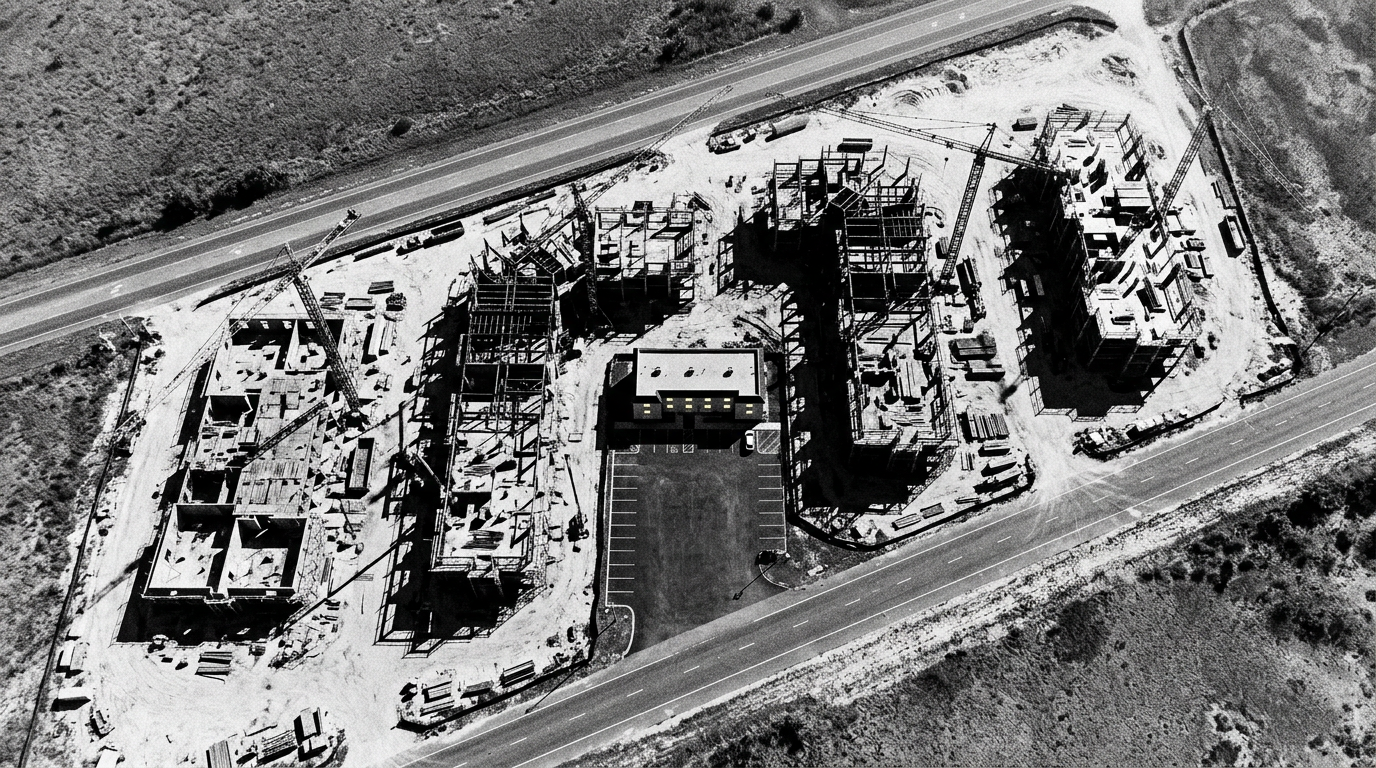
I've been watching brand development teams descend on secondary Florida markets for 20 years, and the pattern is always the same. A corridor gets hot... new jobs, infrastructure money, a convention center renovation... and suddenly every franchisor with an open development slot decides THIS is the market. Marriott is planting two flags (a Residence Inn and a TownePlace Suites, both opening this year). Hyatt just announced a Hyatt House tied to the LPGA corridor. And Drury got planning board approval for a 180-key Plaza Hotel on International Speedway Boulevard. Four branded properties, all converging on the same stretch of Daytona Beach, all banking on the same growth story. The press releases are glowing. The question nobody's asking is whether the market can actually absorb all of them at the rates the pro formas assume.
Here's what the brands are pointing to, and it's not nothing. Boeing opened an engineering facility nearby bringing 400 jobs. There's a French aerospace manufacturer building a 500,000-square-foot plant at the airport that's supposed to create over 1,000 positions. AdventHealth is pouring $220 million into expansion. The Ocean Center convention complex is finishing a $40 million renovation next month. Real investment. Real demand drivers. I get why the development teams are excited... future job growth projections for Daytona are running at 43%, well above the national average. On paper, this is exactly the kind of market you want to be in.
But here's where my filing cabinet starts talking back. Volusia County posted five consecutive months of declining tourism numbers. Bed tax collections dropped 13.6% in July compared to the prior year. The Halifax Area Advertising Authority... that's the Daytona Beach core tourist zone... saw declines ranging from 2% to over 16% across multiple months. Now, yes, those numbers are still 20% above pre-COVID 2019 levels, and leisure markets are cyclical, and Daytona has events (Speedweeks, Bike Week, spring break) that spike demand in concentrated windows. But concentrated demand spikes are exactly the problem when you're adding 500+ rooms to a corridor. You don't build a hotel for Bike Week. You build it for the 340 days that aren't Bike Week. And on those 340 days, four new branded properties are going to be fighting each other... and every existing property in the comp set... for the same corporate extended-stay traveler, the same convention attendee, the same family driving down I-95.
What fascinates me (and by "fascinates" I mean "concerns me deeply") is the brand mix. Two Marriott extended-stay products opening within months of each other in the same market. A Hyatt extended-stay product right behind them. A Drury targeting the same upper-midscale traveler. I sat in a franchise review once where an owner asked the development rep, "Who exactly am I competing against?" and the rep said, "Not us... we're differentiated." The owner pulled out his phone, showed him three other flags from the same parent company within four miles, and said, "Differentiated from what?" The room got very quiet. That's the conversation that should be happening in Daytona right now. When two Marriott-branded extended-stay hotels are opening in the same corridor in the same year, the brands aren't competing with each other... they're collecting fees from both. The owners are the ones competing. And the owners are the ones holding the debt.
The growth story might be real. I actually think the aerospace and healthcare investments could fundamentally change Daytona's demand profile over the next five to seven years. But "five to seven years" is a long time to carry a new-build mortgage while waiting for a manufacturing plant to finish hiring. The brands get paid from day one... franchise fees, loyalty assessments, reservation system charges, marketing contributions. The owners get paid when occupancy stabilizes at rates high enough to cover all of that plus debt service plus the $15-20 per key per year in FF&E reserves. If you're an existing owner in this corridor, your comp set just got a lot more crowded. And if you're one of the new owners, your stabilization timeline just got longer because everyone else had the same idea at the same time. The brand development pipeline doesn't coordinate. It competes. And the owners are the ones who find out what that costs.
This is what I call the Brand Reality Gap. The brands are selling Daytona's future. The owners are financing Daytona's present. If you're an existing operator in the International Speedway corridor, pull your STR data this week and model what happens to your RevPAR index when 500 new rooms come online over the next 12-18 months. Don't wait for it to show up in your numbers... by then you've already lost rate positioning. And if you're an owner being pitched a flag in this market right now, demand the brand show you actual loyalty contribution data from comparable Florida secondary markets, not projections. Projections are dreams with decimal points. Actuals are what you'll live with.