Kissimmee Wants to Be a Destination. $180M Says They're Serious.
A city that's spent decades as Orlando's cheaper cousin is betting a 300-room luxury hotel and convention center can finally make tourists sleep downtown instead of just driving through it. The deal structure is fascinating... and the math deserves a closer look.
I've seen this movie before. A secondary market that's been living in the shadow of a bigger neighbor decides it's tired of being a pass-through. City leaders get ambitious. A developer shows up with renderings that look like they belong in Miami. The press conference uses words like "generational" and "historic." Everyone applauds.
Sometimes it works. Sometimes the renderings end up in a drawer.
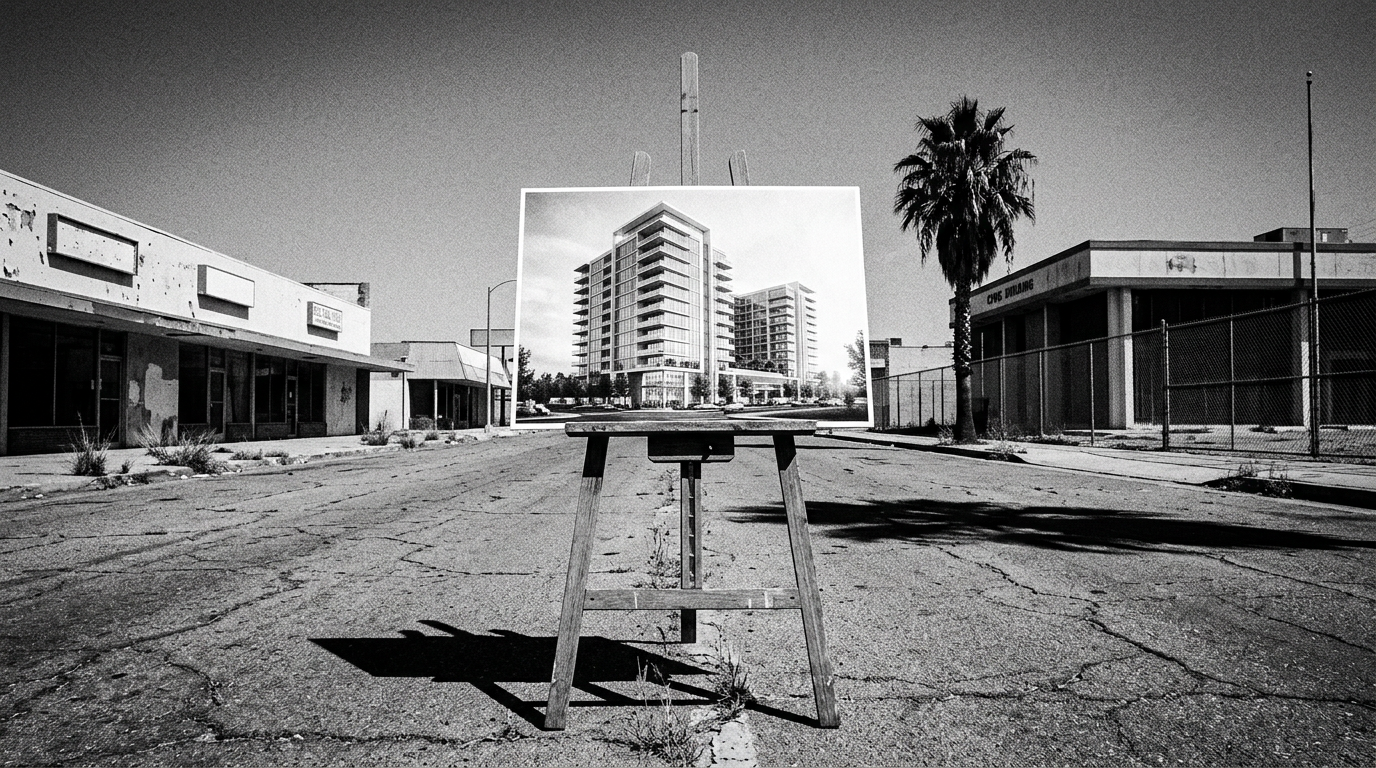
Here's what's actually happening in Kissimmee. The city just cut a deal with Azure Hotel International to tear down the existing civic center and build a 10-story, 300-room luxury hotel (affiliated with Preferred Hotels & Resorts) and a new 45,000-square-foot convention center. Total price tag: $183.8 million. The developer guarantees the city at least $2.5 million annually in lease payments with escalators, plus 5% of the hotel's net operating income. The city keeps 100% of convention center revenue. No public debt. Construction timeline is roughly 36 months, with the convention center targeted for late 2028 and the hotel opening projected for early 2029. On paper, the deal structure is actually pretty smart from the city's perspective... they've shifted the execution risk to the developer while locking in a revenue floor. That's better than what a lot of municipalities negotiate. I've watched cities hand developers everything short of the mayor's parking spot and get nothing guaranteed in return.
But let's talk about the elephant in the room. The projected average rate is $175 a night. For a luxury hotel. In downtown Kissimmee. I don't care how nice the rooftop pool is... that number has to make you pause. Kissimmee is a market with 70,000-plus accommodation options, including somewhere between 30,000 and 50,000 vacation homes. You're not just competing with other hotels. You're competing with a four-bedroom house with a private pool that sleeps eight for $200 a night on Vrbo. A $175 ADR for a "luxury" product in that environment feels like it's threading a very specific needle... high enough to signal quality, low enough to acknowledge where you actually are. I knew a GM once who took over a new-build in a market with similar dynamics. Beautiful property, great amenities, and he spent his first two years explaining to ownership why the rate couldn't climb faster. "People know what the neighborhood costs," he told me. "You can't charge Ritz prices at a Ritz address that doesn't exist yet." Downtown Kissimmee isn't exactly the Ritz address. Not yet.
The convention center piece is where this gets more interesting. The existing facility is 38,000 square feet, and they're bumping it to 45,000. That's not a dramatic increase in raw space, but it's the quality upgrade that matters. Experience Kissimmee has reportedly nearly doubled its meeting lead volume over the past decade, and contracted room nights have climbed significantly. There's clearly demand for meeting space in the broader Orlando corridor... the question is whether downtown Kissimmee specifically can capture enough of it to fill 300 rooms midweek. Because luxury leisure travelers come on weekends. Convention business fills Tuesday through Thursday. If the convention center doesn't deliver consistent group business, that hotel is going to be running a very expensive leisure operation with a midweek occupancy problem. And at $175 ADR, the flow-through math gets tight fast. You need occupancy north of 65% to make a 300-key luxury property pencil when you're factoring in the staffing levels that "luxury" demands.
What I actually respect about this deal is what it signals about smaller markets getting smarter. The city isn't putting up public debt. They're guaranteeing themselves a revenue floor. They negotiated a profit share. That's not how these deals usually go. Usually the city writes the check, takes all the risk, and hopes the tax revenue shows up. Kissimmee flipped the script here, and other secondary markets should be taking notes. But none of that changes the fundamental bet... that tourists who have been driving through downtown Kissimmee on their way to Disney for 30 years will suddenly decide to spend the night. That's a behavioral change, not just a construction project. And behavioral change is the hardest thing in hospitality.
If you're running a hotel in the greater Kissimmee or Orlando corridor, don't panic about this... but don't ignore it either. A 300-key luxury property with a convention center is going to pull group business from somewhere, and if your property relies on meeting and events revenue within a 30-mile radius, start paying attention to what Azure books starting in 2028. This is what I call the Three-Mile Radius at a macro scale... your revenue ceiling just got a new competitor, and the smart move is to lock in your group contracts now with longer terms while you still have the only game in town. For independent owners in secondary markets watching this deal structure, take the blueprint to your next city council meeting. Kissimmee negotiated like an owner, not a government. That's rare, and it's worth studying.