Labor Stories
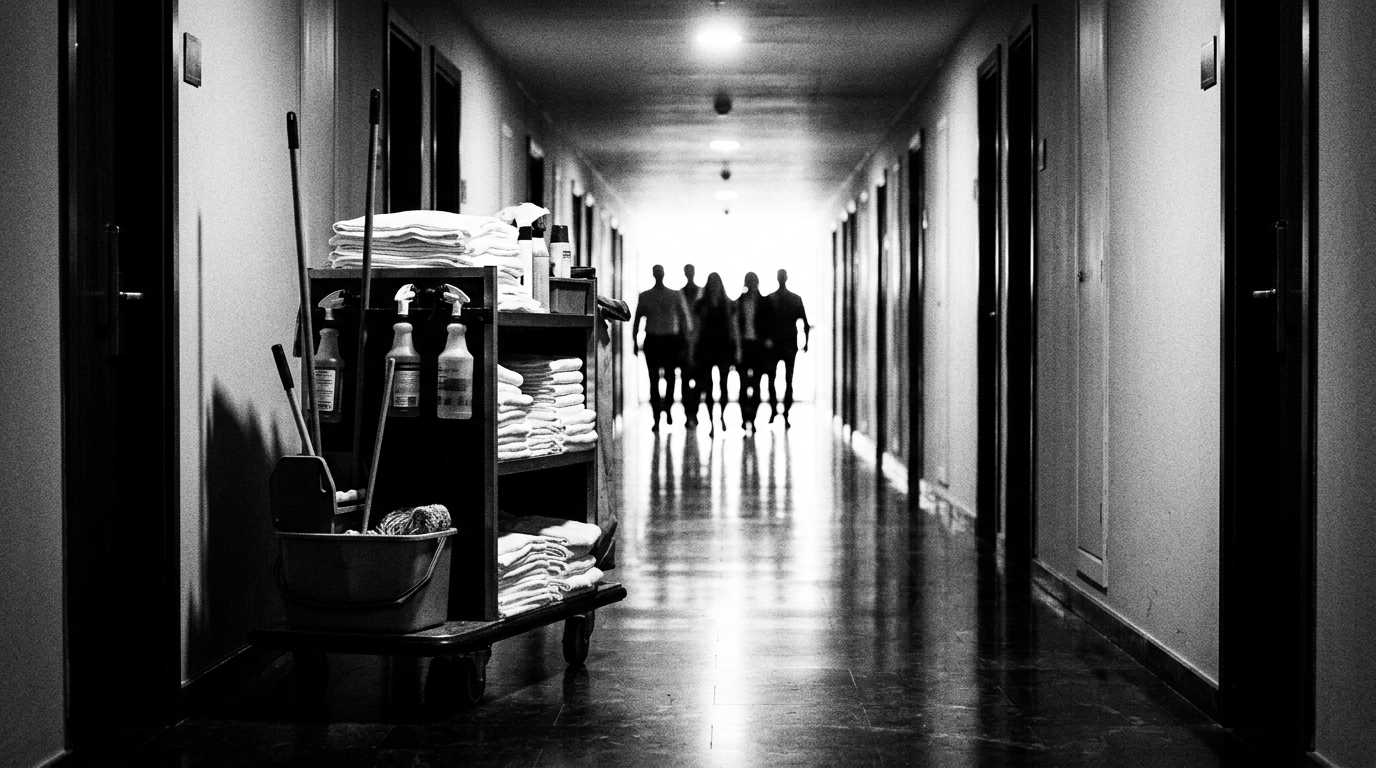
Vancouver Hotel Got Caught Fighting the Union. The Board Didn't Just Rule Against Them... They Handed the Union the Keys.

Vancouver Hotel Got Caught Fighting the Union. The Board Didn't Just Rule Against Them... They Handed the Union the Keys.

A boutique hotel's management told supervisors to "stop the union," dangled wage increases, and pressured employees to pull their cards. The labour board's response was the nuclear option: certify the union anyway, no vote required.

I've seen this movie before. Every few years, some ownership group decides they're going to outsmart an organizing drive by throwing money at it. Bump the wages. Fix the stuff that's been broken for months. Suddenly management cares about the things housekeeping has been complaining about since forever. And every time... every single time... it blows up in their face worse than if they'd just let the process play out.

The Exchange Hotel Vancouver is a 201-room boutique property. Nice hotel. LEED Platinum heritage conversion, part of a $240 million development. The kind of place that wins awards and charges accordingly. UNITE HERE Local 40 started organizing housekeeping staff in November 2024. By mid-December, 26 employees had signed cards. Then management found out. And here's where it gets predictable. They held a staff meeting on December 13th. Offered to match wages at the "big hotels" downtown. Eliminated the flashlight room inspections that housekeepers hated. Changed the credit system for allocating work. All the things they could have done six months earlier but didn't... until the union cards started circulating. Between December 14th and when the union filed its application in February, exactly one new card got signed. One. The campaign was effectively dead. Mission accomplished, right?

Wrong. The British Columbia Labour Relations Board looked at that timeline and saw exactly what it was. They found violations on two sections of the Labour Relations Code. Management pressured employees to rescind their cards. Supervisors were directed to "stop the union." Future bonuses were dangled. The board called it a "pattern of impermissible activity" and noted this was the second time in less than a year that an affiliate of the same ownership group got caught doing this (they pulled similar moves at another Vancouver property). So the board went remedial. They certified the union without a vote. Just... here's your union. Deal with it. And they ordered the full decision posted on staff bulletin boards for a month. Which is the labour board equivalent of making you wear a sign.

Here's what most people miss about remedial certification. It's not a slap on the wrist. It's the board saying "you corrupted the process so thoroughly that we can't trust a vote to reflect what employees actually want." It's reserved for the worst cases. And it means ownership now has a union they have to bargain with, having spent political capital and employee goodwill fighting something they made inevitable by fighting it. I worked with a GM years ago who went through something similar. He told me afterward, "We spent $80,000 on labor consultants to avoid a union, and all we did was guarantee a union that hates us." That's the math. The ownership group here didn't just lose... they poisoned the well for their own first contract negotiation. UNITE HERE Local 40 has been on a tear in Vancouver. They just organized the Hyatt downtown and the Georgian Court. They're negotiating contracts pushing wages toward $40 an hour by 2028. The Exchange Hotel is now at that table, and they're sitting down with a workforce that watched management try to buy them off and then pressure them to change their minds. Good luck getting collaborative bargaining out of that relationship.

Look... if you're an owner or a GM and you find out there's an organizing drive at your property, the single worst thing you can do is panic and start making promises. I'm not pro-union or anti-union. I'm pro-not-being-stupid. Everything you offer after you learn about the drive becomes evidence. Every meeting you hold becomes a hearing exhibit. Every supervisor you tell to "handle it" becomes a witness against you. The employees who were on the fence? They just watched you prove the union's argument for them... that management only cares about working conditions when they're scared of losing control. If the housekeeping staff needed better wages and the flashlight inspections were unnecessary and the credit system was broken, you should have fixed all of that a year ago because it was the right thing to do for your operation. Not because someone handed out cards in the break room.

Operator's Take

If you're a GM at a non-union property and you hear the word "organizing," your first call should be to a labor attorney, not your department heads. Do not hold all-hands meetings. Do not offer raises. Do not change policies. Everything you do from the moment you learn about a drive is discoverable. Your second call should be to yourself, six months ago, asking why your housekeepers were unhappy enough to sign cards in the first place. Fix your house before someone else forces you to.

Read full analysis → ← Show less
Source: Google News: Hotel Labor
92,000 Jobs Vanished in February. Your Hiring Window Just Opened. Your Demand Forecast Just Broke.

92,000 Jobs Vanished in February. Your Hiring Window Just Opened. Your Demand Forecast Just Broke.

The February jobs report is a gift and a grenade for hotel operators. You're about to have more applicants than you've seen in five years... and fewer guests to serve them.

Available Analysis

I've seen this movie before. Twice, actually. And both times, the operators who moved fastest in the first 30 days came out the other side in better shape than everyone else.

Here's what happened Friday. The economy shed 92,000 jobs in February... against expectations of a 60,000 gain. That's a 152,000-job miss. Healthcare lost 28,000 (mostly strike-related, which means those workers are coming back, but the disruption is real). Manufacturing down 12,000. Construction down 11,000. And here's the one that should have every GM's attention: leisure and hospitality dropped 27,000. Our own industry lost jobs last month. Unemployment ticked to 4.4%. And the revisions to December and January? Another 69,000 jobs that we thought existed... didn't. The labor market isn't softening. It's stalling.

Now, I managed through a version of this in 2008 and again in the early stages of COVID. The pattern is always the same. First, the labor pool opens up. People who wouldn't have considered hotel work six months ago... your construction workers, your manufacturing line staff, your healthcare support people... suddenly they're looking. For GMs who've been running housekeeping departments at 80% staffed since 2021, this is the first real opportunity to get back to full strength. But here's the part that kills you if you're not paying attention: the demand impact lags the labor impact by about 60 to 90 days. So you've got a window right now... maybe six weeks... where you can hire aggressively into a softening labor market before the revenue line starts to feel it. After that, you're hiring people you might not be able to keep busy. I knew a GM once who stocked up on housekeeping staff during a downturn like this, got his rooms spotless, reviews climbed three months later, and when demand recovered he was the highest-rated comp set hotel in his market. The ones who waited? They were still short-staffed when the rebound hit. Timing is everything.

Let me be direct about the demand side, because this is where I think most operators are going to underreact. Average hourly earnings are still growing at 3.8% year-over-year, which sounds fine until you realize that the people earning those wages are increasingly worried about keeping the job that pays them. Consumer confidence doesn't collapse on the day of a bad jobs report. It erodes over the next quarter. Leisure travel is the first discretionary line item that gets cut... not canceled outright, but shortened. The four-night stay becomes three. The family upgrades from a suite to a standard. Corporate travel? Companies in healthcare, manufacturing, and construction are going to pull back on T&E within 30 days. If your market has a heavy corporate base in those sectors, you need to be modeling 5 to 10% demand softening for Q2 right now. Not next month. Now. Your revenue managers should already be running those scenarios by the time you finish reading this.

The play here is surgical. Hire this week. Not next month... this week. Post the housekeeping and maintenance roles you've been short on. You'll get applicants you haven't seen in years. Lock them in at competitive wages (not inflated panic wages... the market is shifting in your favor, but don't be cheap either, because the good ones still have options). On the revenue side, get aggressive with your extended-stay inventory if you have any. Displaced workers relocating for jobs is a real demand pocket that most operators ignore. And for the love of all that is holy, call your top 10 corporate accounts this week. Not to sell. To listen. Find out who's freezing travel budgets. Find out who's cutting headcount. Because that intelligence is worth more than any STR report right now. The operators who treated 2008 as an information-gathering exercise survived. The ones who kept running last year's playbook didn't.

Operator's Take

If you're a GM at a select-service or limited-service property, stop reading industry commentary and start making phone calls. Call your staffing agencies today and tell them you're hiring... you'll get better candidates this month than you've seen since 2019. Then sit down with your revenue manager and model Q2 at 93% of your current forecast for business-heavy segments. If you're in a market with significant healthcare or manufacturing employment, make it 90%. And call your top corporate accounts before they call you with a cancellation. The information advantage right now belongs to whoever picks up the phone first.

Read full analysis → ← Show less
Source: Vertexaisearch
Your Housekeeping Team Is About to Get More Expensive. Plan Accordingly.

Your Housekeeping Team Is About to Get More Expensive. Plan Accordingly.

Congress can't get an immigration bill across the finish line, and if you're running a hotel that depends on immigrant labor for the back of the house... which is most of you... the staffing math you budgeted for 2026 is already wrong.

Available Analysis

I worked with a GM once in South Florida who told me his entire housekeeping department shared three languages and zero of them were English. He said it like he was bragging. And he should have been. That team ran 17-minute room turns, had the highest inspection scores in his comp set, and turnover was half the market average because they looked out for each other. When I asked him what kept him up at night, he didn't say OTAs or RevPAR index. He said "what happens to my team if the rules change."

That was four years ago. The rules haven't changed. And somehow that's worse.

Here's where we are. The Dignity Act... the bipartisan bill that was supposed to thread the needle on border security, legal status pathways, and updated visa programs... is stuck in committee. Nobody's shocked. Immigration legislation has been stuck in committee for basically my entire career. But the difference now is that hotels are operating with a labor force that's structurally different from 2019 and the pressure is coming from every direction at once. One in three hospitality workers in this country is foreign-born. In markets like Miami and New York, that number is over 65%. The AHLA reported 67% of hotels couldn't staff to occupancy targets last year. That shortage cost the industry an estimated $9 billion in revenue nobody earned. And average hourly wages in hospitality went from $16.84 to $22.70 between 2020 and early 2025... a 30% jump in four years. The source material on this story suggests another 8-12% on top of current budgets. I think that's aggressive for 2026 across the board (recent data shows wage growth moderating), but in the markets that depend most heavily on immigrant labor... South Florida, Southern California, Phoenix, Las Vegas, Houston... 8% is probably the floor, not the ceiling.

Look... I've seen this movie before. Every time immigration policy tightens or stalls, the same cycle plays out. Properties can't fill positions. The remaining staff gets stretched. Service quality drops. Guest scores drop. Then revenue drops. And the GM is sitting in an owner's call explaining why labor costs went up AND satisfaction went down at the same time, which is a conversation nobody enjoys having. The people who survive this cycle are the ones who stop waiting for Washington to fix it and start fixing their own labor model. That means three things, and none of them are optional. First, get aggressive about non-traditional recruiting pools. Retirees, part-time college students, career changers, second-job workers. The properties I've watched navigate this well are the ones that stopped posting on Indeed and started showing up at community colleges and senior centers with actual offers. Second, simplify the operation. If your F&B is running a 40-item menu and you can't staff the kitchen, you don't have a menu problem... you have a math problem. Cut it to 25 items, cross-train your line, and stop pretending you're running a restaurant when you're really running a feeding operation. Third, stop treating technology like a luxury. Mobile check-in, kiosk-assisted arrivals, automated housekeeping dispatch... these aren't "nice to have" anymore. They're how you run a 150-key hotel with the 14 people you can actually hire instead of the 22 your labor model says you need.

The seasonal operators are in an even tighter spot. The H-2B program is capped at 66,000 visas annually, and yes, DHS released supplemental visas in late 2025 and January 2026 (about 100,000 additional between the two rounds). But if your summer operation in a beach market depends on J-1 visa workers and you don't have a domestic backup plan, you're not managing risk... you're gambling. I know a resort operator who used to fill 80% of his summer seasonal positions through visa programs. Last year he filled 50%. This year he's planning for 35% and building the rest of the team locally. That's not pessimism. That's arithmetic.

Here's what I keep coming back to. The people who work in our hotels... the ones pushing carts down hallways, washing dishes at 11 PM, maintaining HVAC systems that should have been replaced a decade ago... they're not a line item on a P&L. They're the product. Every discussion about immigration policy that treats labor as an abstract economic input misses the fundamental reality of what we do. We sell a human experience delivered by humans. When you can't find those humans, or when the ones you have are stretched so thin that the experience degrades, nothing else matters. Not your brand. Not your renovation. Not your revenue management strategy. Your $200-a-night guest doesn't care about immigration policy. They care that their room was clean and someone smiled at them when they checked in. If you can't deliver that, the rest is noise.

Operator's Take

If you're a GM at a select-service or extended-stay property in a high-immigrant-labor market, pull your workforce composition report this week. Know exactly what percentage of your team requires visa sponsorship or could be affected by enforcement changes. Then build a 90-day contingency plan that assumes you'll be operating at 80% of your current staffing level by summer. Call your local community college, your workforce development board, and your temp agencies... not next quarter, Monday. And if you haven't budgeted at least 6-8% above your current wage line for back-of-house positions, go fix that number before your owner finds out the hard way.

Read full analysis → ← Show less
Source: Congress
Your Maintenance Engineer Just Got a Better Offer From a Road Crew

Your Maintenance Engineer Just Got a Better Offer From a Road Crew

Unemployment hit 4.3% in February, job-switching premiums are at record lows, and everyone's calling it good news for retention. It's not that simple. The labor market just split into two problems, and most hotel operators are only solving one of them.

Available Analysis

I had an engineer quit on me once... not for another hotel, not for a management company, not even for a related industry. He left for a county highway department. Better benefits, pension, no weekend calls. He looked me in the eye and said "Mike, I like you. But I don't like being in this building at 2 AM anymore." I never replaced him with anyone half as good.

That's the story behind these February numbers. Unemployment sitting at 4.3%. Healthcare adding 82,000 jobs in January alone. Construction picking up 33,000. And leisure and hospitality? "Little or no change." Let that sink in. The economy is creating jobs. Just not our jobs. The workers we need are being absorbed by industries that can offer what we structurally can't... predictable schedules, benefits packages that don't require a magnifying glass, and the ability to go home at the end of a shift without someone calling you back because the boiler tripped.

Here's what nobody's telling you about the job-switching premium dropping to 6.4%. Everyone's reading that as "good news, your people won't leave for a 50-cent raise across the street." And that's true... for the people you already have. But it completely misses the other half of the equation. Attracting new hires into hospitality when construction sites are offering $22 an hour with overtime and healthcare is hiring housekeeping staff at hospitals with full benefits? That's a different fight. And it's one where your starting wage matters more than your retention strategy. The 65% of hotels still reporting staffing shortages aren't short-staffed because people are leaving. They're short-staffed because people aren't showing up to apply in the first place. Those are two completely different problems with two completely different solutions, and most operators are conflating them.

The markets where this hurts worst are the ones you'd expect. Anywhere with active infrastructure spending (and that's a LOT of markets right now, thanks to federal construction money flowing into roads, bridges, and data centers) your maintenance and engineering candidates have options that didn't exist two years ago. Your housekeeping candidates in any market with a major medical center? They're comparing your offer to a hospital job with a pension. I've managed through tight labor markets before... 2018-2019 was brutal. But this one is structurally different because the competition isn't other hotels. It's other industries entirely. You can't win a wage war with a hospital system. You have to win on something else.

And that "something else" is where most hotels are failing. The industry is projected to spend $131 billion on wages and benefits this year. That's $3 billion more than last year. But if that money is going entirely into base wages without restructuring how we develop people, we're just paying more for the same turnover cycle. I've seen this movie before... and the sequel is always the same. The properties that survive tight labor markets aren't the ones that pay the most. They're the ones where a housekeeper can see a path to becoming a supervisor in 18 months, where a front desk agent gets cross-trained on revenue management basics, where people feel like they're building something instead of just surviving a shift. That's not HR fluff. That's math. Every turnover costs you $3,000-$5,000 in recruiting, training, and productivity loss. A career development program that keeps five people per year costs a fraction of replacing them. RevPAR growth is barely keeping pace with inflation right now... GOPPAR is stuck around 90% of 2019 levels. You cannot expense your way out of a labor problem when margins are this thin. You have to build your way out.

Look... the numbers are going to get harder before they get easier. The demographic pipeline feeding entry-level hospitality workers is shrinking. Immigration constraints aren't loosening. Construction spending is accelerating. Healthcare isn't slowing down. If you're waiting for the labor market to "normalize" before you fix your staffing model, you're waiting for something that isn't coming. The properties that figure this out in 2026 will have a structural advantage for the next decade. The ones that keep treating labor as a line item to be minimized will keep wondering why they can't staff a Tuesday night.

Operator's Take

If you're a GM at a select-service or limited-service property, pull your maintenance and housekeeping starting wages this week and compare them to what your local hospital system and the nearest construction contractor are paying. Not what you think they're paying... actually look. Then take that number to your owner or management company with a simple argument: we can pay $2 more an hour now, or we can pay $4,500 to replace someone in 90 days. If you're in a market with active infrastructure projects, your engineering candidates already have a better offer. Stop competing on wage alone and start building a 12-month advancement track for every hourly position. Put it in writing. Show it in the interview. That's your edge... because the road crew can't offer a career path.

Read full analysis → ← Show less
Source: Adp
The State of the Union Didn't Mention Travel and Tourism. That's a Problem.

The State of the Union Didn't Mention Travel and Tourism. That's a Problem.

Last night's speech was 108 minutes of economic cheerleading that never once addressed the industry bleeding workers, losing international visitors, and staring down tariff-driven cost increases. Here's what every GM, owner, and asset manager needs to understand about what wasn't said.

I'm going to skip the political theater about last night's 108 minute long speech, and talk about what actually matters for our industry for the rest of 2026.

Start with tariffs, because this is the one hitting your P&L right now. The administration's trade war has been a moving target all year... baseline tariffs, reciprocal tariffs, legal challenges, court rulings, new rounds, temporary pauses that aren't temporary. If you've been trying to underwrite a renovation or a PIP in this environment, you already know the pain. I talked to a GM last month who was pricing out a 140-room soft goods refresh and got requoted 8% higher in the span of three weeks. Case goods. Lighting fixtures. Bathroom fixtures. Soft goods. Anything that crosses a border is a moving target, and the direction is only up.

Here's what nobody's talking about on the capital side: the PIP timing problem. If your property improvement plan is due in 2026 or 2027, you're facing a decision that could swing millions of dollars. Hard costs are up 10-15% on imported FF&E and they're not coming back down while this tariff regime is in place. So do you accelerate the project and eat the higher cost now before it gets worse? Do you negotiate a deferral with the brand? Or do you let the flag go entirely?

Here's the thing... brands can't afford to lose flags in a softening market. They know it. You should know it too. That's leverage owners have RIGHT NOW that they might not have in 12 months. If you've got a PIP conversation coming, have it this quarter. Not next quarter. This quarter. Come with updated cost estimates that show the tariff impact and make the brand tell you they'd rather lose the flag than grant a 12-month extension. They won't say that. Because they can't afford to.

Now the labor piece. This is the one that keeps me up at night, and it's the one the story should have been about from the beginning.

Nearly a third of our industry's workforce is immigrant labor. A third. That's not a political talking point... it's a staffing reality that every GM in America lives with every day. And the current administration is systematically dismantling the pipeline. Mass deportations. Visa processing delays and restrictions affecting dozens of countries. Federal workforce cuts that have thrown immigration services into chaos. The exact numbers are hard to pin down because the situation changes weekly, but the direction is unmistakable and the impact on hotel operations is already here.

But here's where I get frustrated with the industry conversation. Everyone's talking about the PROBLEM. Nobody's talking about the MATH.

Let's do the math.

You're running a 200-key select-service in a secondary market. You're already short on housekeeping three days a week. Your current average wage for room attendants is $16 an hour. The labor pool just got smaller... not theoretically, not eventually, RIGHT NOW. To attract from a shrinking pool, you need to move that number. Maybe $19. Maybe $21 in markets where distribution centers and fast food are already paying $18.

At $16 an hour, your housekeeping labor cost per occupied room (assuming 30-minute credits and a 72% occupancy) runs roughly $14-16 depending on your benefit load. Move that wage to $20 and you're looking at $17-20 per occupied room. That's $3-4 more per room, every room, every night. On a 200-key property at 72% occupancy, that's roughly $150K-$210K annually... straight off your GOP. And that's just housekeeping. Your kitchen, your laundry, your public area cleaning... same pressure, same math.

Your management company is going to tell ownership that service scores require maintaining current staffing models. Ownership is going to look at a GOP that's getting eaten alive by wage inflation and ask why they're paying a management fee for declining returns. And you, the GM, are going to be standing in the middle of that conversation holding the bag. I've been in that exact meeting more times than I can count. It never gets easier.

So what do you actually DO?

First, you get honest about minimum staffing. Not the staffing guide the brand sent you... the actual minimum number of bodies you need to keep the building running without a health code violation or a safety incident. That's your floor. Everything above that floor is a decision about service level versus cost, and you need to present it to ownership exactly that way. Not "we need 12 housekeepers." Instead: "at 8 housekeepers we can clean every stayover room every other day and every checkout daily. At 10 we can do daily stayovers on weekends. At 12 we're back to full service. Here's the cost difference and here's the projected review score impact." Give them the menu. Let them choose.

Second, look at where technology actually helps versus where it's a vendor fantasy. Automated check-in and checkout that reduces front desk staffing needs by one FTE per shift? Real savings, and the technology works now. Housekeeping optimization software that routes room attendants efficiently and eliminates deadhead walks between assignments? Proven to save 15-20 minutes per attendant per shift. That's meaningful. A robot that delivers towels to the third floor? That's a press release, not a labor solution.

Third, cross-training. If you're running select-service and you're not already cross-training front desk agents to flip rooms during low-arrival periods, you're behind. It's not glamorous. The front desk team won't love it. But a front desk agent who can strip and make a bed in a pinch is worth more than a front desk agent who can't. Build it into the job description now, before you're desperate.

Fourth... and this is the one nobody wants to hear... you might need to raise rates to cover the labor cost increase. I know. Revenue management just felt a chill. But if your comp set is facing the same labor pressure (and they are), the whole market is going to need to move. The properties that move first and communicate the value will outperform the ones that try to hold rate and cut service to make the margin work. Guests will pay $10 more per night for a clean room. They will not forgive a dirty one at any price.

If you're in a union market, everything I just said gets harder. UNITE HERE knows exactly how much leverage a labor shortage gives them at the negotiating table. If you've got a contract coming up in 2026 or 2027, start preparing now. Not when you're 90 days out. Now. Because the union's opening position is going to be aggressive, and they'll have the labor market data to back it up.

Now let's talk about the demand side, because the squeeze isn't just about costs.

Business travel is the wild card. When corporate America gets nervous, the first thing they cut is T&E. Every single time. I've managed through four recessions and the pattern never changes... group bookings soften first, then corporate transient follows about 90 days later, and by the time it shows up in your STR report it's already been eating your margins for a quarter. The tariff uncertainty alone is enough to make CFOs tighten travel budgets. Your convention hotels in gateway cities should be watching forward group pace like a hawk right now.

International leisure is the slow-motion disaster. The rest of the world is having a tourism boom. We're not. The visa restrictions, the enforcement rhetoric, the chaos at ports of entry... all of it is sending a message to international travelers, and the message is "go somewhere else." The U.S. Travel Association has been sounding this alarm for months. If you're running a property in a market that depends on international visitors... and that's not just New York and Miami, it's Orlando, Las Vegas, San Francisco, and increasingly Nashville and Austin... you need to be actively pivoting your marketing spend toward domestic leisure. Right now. Not next quarter.

The tax provisions announced last night... no tax on tips was already signed into law, and the overtime and Social Security proposals would put a few more dollars in domestic travelers' pockets if they pass. But "a few more dollars" doesn't replace international visitors who aren't showing up at all.

Operator's Take

Here's what you do this week. Not this month. This week. One. If you have any capital project or PIP in the pipeline, call your procurement team tomorrow and get updated pricing with a 10-15% tariff buffer built in. Do not submit a budget to ownership without it. And if your PIP is due in the next 18 months, pick up the phone and start the deferral conversation with your brand rep now, while you have leverage. Two. Build your minimum staffing model. Not the one that makes the brand happy... the one that keeps the building running. Then build two more versions above it at different service levels with the cost delta for each. Present all three to ownership with projected review score impacts. Give them the decision, not the problem. Three. Run the wage math. Figure out what it actually costs you per occupied room if you have to raise housekeeping wages 20-25% to fill positions from a shrinking labor pool. If you don't know that number, you can't have an honest conversation with your owner about what's coming. Four. If international visitors represent more than 15% of your room nights, shift marketing dollars to domestic drive markets immediately. The international volume isn't coming back this year. Five. Pull your forward group pace for the next six months and compare it to this time last year. If it's soft, start the conversation with your revenue manager about transient rate strategy before you're chasing occupancy in a falling market. Six. If you're in a union property with a contract expiring in the next 18 months, get your labor attorney on the phone this week. Not next month. This week. The negotiating environment just shifted dramatically in the union's favor and you need a strategy before you're reacting to their opening proposal. Your owners are going to ask what the State of the Union means for the hotel. The answer is: nothing good was announced, and several things got worse. The labor pipeline is shrinking, renovation costs are rising, international demand is falling, and nobody in Washington mentioned any of it. Be the one who tells your owner first. And be the one with a plan, not just a problem.


Read full analysis → ← Show less
Source: Npr
88 Jurisdictions Just Blew Up Your Labor Budget. Here's What to Do Before It's Too Late.

88 Jurisdictions Just Blew Up Your Labor Budget. Here's What to Do Before It's Too Late.

The biggest coordinated minimum wage spike since the pandemic is rolling through 22 states, and if you haven't already remodeled your compensation structure from the ground up, you're about to get a very ugly surprise on your next P&L.

Available Analysis

Let me be direct. Eighty-eight jurisdictions pushing minimum wages to the $15-17 range isn't a policy debate anymore. It's a line item. If you're running a hotel in California, New York, Seattle, or any of the other affected markets, the cost is already baked. The question isn't whether your labor costs are going up. They are. The question is whether you've done the math on everything that goes up with them.

Here's what nobody's telling you: the minimum wage increase itself isn't the real problem. The compression is. When your housekeeper goes from $13 to $17, your housekeeping supervisor who was making $17.50 is now making fifty cents more than the people she manages. Your front desk lead who's been there six years is suddenly at the same rate as the new hire. You don't just adjust the floor. You adjust the entire wage ladder, or you lose every experienced employee who's been carrying your operation. I've seen this movie before. Back in the 2014-2020 wave, hotels in affected markets saw roughly 12% labor cost inflation. But the ones that got hammered worst weren't the ones who couldn't afford the base increase. They were the ones who ignored compression, lost their best people, and spent the next two years paying recruiting costs and eating bad guest satisfaction scores because they were running on a skeleton crew of new hires.

The math on rate absorption is straightforward but unforgiving. For every dollar per hour your wages go up, you need roughly $8-12 more per available room to hold your margin. That's not a theoretical number. Pull up your STR report. If your comp set isn't moving rates at the same pace, you're eating margin or losing share. Pick one. And if you're at a branded select-service property, this gets worse. Your brand standards dictate staffing models, breakfast requirements, amenity levels. You can't just cut the hot breakfast to continental and save $40K a year without a brand compliance conversation. Independents have more flexibility here. Franchisees are in a box.

The segment math is brutal for select-service. A 150-key property running 65% occupancy with an ADR of $129 has a lot less room to absorb a 15-20% hourly wage spike than a luxury property charging $400 a night. The luxury hotel can push rate and the guest won't blink. The select-service GM in a secondary market is competing against five other flags within a mile, and if you push rate $10, your OTA ranking drops and your occupancy softens. You're not solving the problem. You're moving it. I talked to a GM recently running a branded property in one of these newly affected markets. She'd already done the math before the increase took effect. Her total labor cost was going up $218,000 annually once she adjusted for compression across all hourly tiers. Her owner's first question: "Can we automate something?" Her answer was honest: "We can put in self-check-in kiosks and save one FTE on the desk. That's maybe $38,000. The other $180,000 is housekeeping, and nobody's automated making a bed yet."

Your owners are going to ask about this. Here's what to tell them: we need to reforecast 2026 labor now, not at midyear review. We need a compression analysis across every hourly position completed this month. We need to model three ADR scenarios against the new cost structure and decide where we're willing to lose margin versus lose share. And we need to stop pretending that kiosks and apps are going to solve a problem that's fundamentally about the cost of human beings doing physical work in a 24/7 operation. Automation helps at the edges. It does not replace the housekeeping team, the breakfast attendant, or the night auditor. Anyone who tells you otherwise hasn't run a hotel.

Operator's Take

If you're a GM at a branded select-service property in any of these 22 states, stop what you're doing and run a full compression analysis this week. Every hourly position, current rate versus new minimum, and what the supervisory and lead rates need to be to maintain at least a 10-15% differential. Then reforecast your full-year labor line and present your owner with the real number, not the one that just adjusts the minimum positions. The worst thing you can do right now is wait for your management company or brand to tell you what to do. They're not the ones explaining to ownership why GOP dropped 200 basis points.

Read full analysis → ← Show less
Source: InnBrief Analysis — National News
The Labor Market Just Tilted Back Your Way. Don't Blow It.

The Labor Market Just Tilted Back Your Way. Don't Blow It.

For the first time in years, hotel operators have actual leverage in hiring. The question is whether you're smart enough to use it on productivity instead of wasting it on short-sighted wage cuts that'll cost you double when the cycle turns again.

Available Analysis

I've seen this movie before. Twice, actually. The labor market tightens, operators panic, throw money at warm bodies, lower their standards, and watch service quality crater. Then the market loosens and those same operators overcorrect the other direction, slash wages, lose their best people, and spend the next 18 months rebuilding teams from scratch. It's a cycle of self-inflicted wounds, and we're sitting right at the inflection point where you either break the pattern or repeat it.

Here's what actually happened in January. Job growth came in soft at 130,000. More importantly, the ratio of open positions to unemployed workers dropped below 1.0 for the first time since 2021. That means there are now more people looking for work than there are jobs posted. For hotel HR directors who've spent the last three years getting outbid by Amazon warehouses and Buc-ee's for the same labor pool, this is the first real breathing room you've had. Your applicant flow is going to improve. Your no-show rate for interviews is going to drop. Candidates will actually return your calls.

But here's what nobody's telling you: this is not a green light to cut pay. I talked to a director of operations last month who was already floating the idea of rolling housekeeping wages back $2 an hour "because the market will support it." The math doesn't lie, and neither does history. In 2009, properties that cut wages aggressively during the downturn spent 2010 through 2012 paying 15-20% premiums to rehire experienced staff. The people you keep right now, the ones who showed up during the worst of the staffing crisis, are your institutional knowledge. They train your new hires. They know which PTAC units in the 300 wing need the filter cleaned weekly instead of monthly. They remember which group contact needs a late checkout without being asked. You cannot replace that for $2 an hour in savings.

What you should do instead is trade wage leverage for productivity standards. If you're running a 200-key select-service and your housekeeping team is cleaning 13 rooms per 8-hour shift because that's what you agreed to when you were desperate, now is the time to move that number to 15. Not 18. Not 20. Fifteen. Reasonable, achievable, and worth roughly one FTE per shift at most properties that size. That's $35,000-$40,000 a year in labor savings without touching anyone's hourly rate. For full-service properties with more complex staffing, this is your window to require cross-training. Your front desk agents should be able to assist with breakfast service. Your maintenance tech should be able to reset a meeting room. You can now hire for versatility instead of just availability, and that changes the quality of your operation.

One more thing. This "low-hire, low-fire" environment means your existing employees aren't jumping ship either. Voluntary turnover is going to slow down, which is great for your training investment but bad if you've been counting on natural attrition to shed your weakest performers. Don't wait. If you've got someone on staff who's been underperforming for six months and you kept them because you couldn't afford the vacancy, you can afford the vacancy now. Upgrade your roster. Tighten your standards. Invest your training dollars in the people who earned it. This window won't last forever. Use it to build the team you actually want, not just the team you could get.

Operator's Take

If you're a GM at a branded select-service property, do three things this week. First, pull your housekeeper-to-room ratio and set a realistic productivity target that's 10-15% better than your current standard. Second, freeze any planned wage increases but do not cut existing pay. Third, identify your bottom two performers and start the documentation process to replace them with better hires while the applicant pool is deep. Your owners are going to see the labor data and ask why payroll isn't dropping. Tell them you're converting wage pressure into productivity gains, which flows straight to GOP without the turnover cost of pay cuts. That's a story any owner will buy because it's true.

Read full analysis → ← Show less
Source: InnBrief Analysis — National News
The Palms Just Showed Vegas How Labor Fights Really Work

The Palms Just Showed Vegas How Labor Fights Really Work

When front desk agents vote Teamsters in a casino property, it's not about wages. It's about what happens when corporate forgets the most basic rule of hospitality management.

Three years ago, I watched a general manager at a downtown Vegas property spend two hours explaining to ownership why his front desk team was asking about union cards. "They make $18 an hour," he kept saying. "What more do they want?"

What they wanted was to not get screamed at by drunk guests at 2 AM without backup. What they wanted was consistent scheduling so they could pick up their kids from daycare. What they wanted was someone to listen when they said the new property management system was creating hour-long check-in lines.

But ownership heard "union" and stopped listening.

Now the front desk crew at the Palms Casino just voted to join the Teamsters. Not the Culinary Union, which represents most Vegas hotel workers. The Teamsters. That's not an accident.

Here's what nobody's talking about: This isn't about money. Vegas front desk wages have been climbing steadily. This is about respect. And when your front-facing team — the people who literally hand guests their room keys — feels disrespected enough to organize, you've already lost the game.

The Palms has been through three ownership changes since 2019. Each transition promised "investment in team members." But promises don't solve the fundamental problem: When you treat hospitality like a factory, workers organize like factory workers.

I've seen this movie before. The property fights the certification. Management starts treating organized workers like the enemy. Guest service suffers because your front desk team is documenting every interaction for potential grievances instead of just solving problems.

Here's the part that should terrify every Vegas GM: The Teamsters don't just represent hotel workers. They represent truck drivers, warehouse workers, delivery drivers. They understand supply chains. They know how to shut things down.

What happens when your linen delivery, your food service trucks, your maintenance supplies all get "delayed" during your next big concert weekend? What happens when solidarity isn't just about room attendants walking out, but about nothing getting in or out of your loading dock?

The smart money says other properties are already scheduling "team appreciation" meetings and dusting off retention bonuses. But if you're reacting to union votes with pizza parties, you've missed the point entirely.

The Palms front desk team didn't vote for the Teamsters because they wanted different health insurance. They voted because they wanted to be heard. And now they will be — whether management likes it or not.

Operator's Take

If you're running a non-union property in a union town, your next all-hands meeting better focus on communication, not compensation. Because the moment your team stops believing you'll listen, they'll find someone who will.

Read full analysis → ← Show less
Source: Google News: Las Vegas Hotels
Marriott's India Bet Will Create the Labor Crisis American Hotels Are Desperate to Solve

Marriott's India Bet Will Create the Labor Crisis American Hotels Are Desperate to Solve

While U.S. hotels scramble for housekeepers at $18/hour, Marriott just signed 99 deals in a country where hospitality is still a career, not a last resort.

The last time I posted a housekeeping position in Vegas, I got three applications in two weeks. One showed up drunk to the interview. The other two never showed up at all.

That was for $18 an hour plus benefits — more than I was making when I started in this business.

Meanwhile, Marriott just announced 99 new hotel deals in India for 2025, leading what they're calling their "record Asia-Pacific expansion." But here's what the press release doesn't tell you: they're not just chasing market share. They're running toward a labor market that still works.

In India, hospitality jobs come with social status. Families celebrate when their kids get hired at international hotel brands. The same position that sits vacant for months in Milwaukee gets 200 qualified applicants in Mumbai.

I've worked turnarounds at properties where half the housekeeping staff quit during a renovation. Not because the work got harder — because Target was offering $19 an hour to fold clothes instead of change sheets. In India, those same positions are career stepping stones, not placeholder gigs.

The real story isn't Marriott's expansion strategy. It's that American hospitality has trained an entire generation to see hotel work as temporary. We've normalized the revolving door, accepted the labor shortage as permanent, and raised wages without raising respect.

India still has both. And Marriott knows it.

While we're burning through Indeed credits trying to fill the same positions over and over, they're building a pipeline in markets where people actually want to work in hotels. Where "hospitality professional" still means something.

Here's the uncomfortable truth: we created our own labor crisis by treating hotel jobs like they don't matter. Now we're watching international brands invest where they're still treated like they do.

Operator's Take

Independent and small chain operators: start recruiting internationally now. Work visa programs, partnerships with hospitality schools abroad, anything. Because while you're competing for the same shrinking local talent pool, the big brands are building global pipelines you can't match.

Read full analysis → ← Show less
Source: Google News: Hotel Development
The $50 Million Question: Can You Automate Your Way Out of Labor Problems?

The $50 Million Question: Can You Automate Your Way Out of Labor Problems?

UNISONO just bet big on AI automation by acquiring Aphy. But every operator knows the real question isn't whether the technology works—it's whether your guests will notice when the humans disappear.

The night audit clerk at one of my Vegas properties once told me something I'll never forget: 'Mr. Conti, the drunk guests don't care if I'm tired. But they sure as hell notice when nobody's here at all.'

That conversation came flooding back when I saw that UNISONO Hospitality just acquired a majority stake in Aphy, an AI automation company. The press release talks about 'scaling operational efficiency' and 'enhancing guest experiences.' But here's what it's really about: UNISONO is betting they can replace humans with algorithms—and that their guests won't revolt.

I've been through three major technology rollouts in my career. Every single one promised to 'free up staff for more meaningful guest interactions.' You know what actually happened? We freed up the staff right out the door, pocketed the labor savings, and crossed our fingers that nobody would notice.

The math is seductive. Night audit at $15/hour across 50 properties? That's $6.5 million annually you could theoretically save with AI check-ins, automated room assignments, and chatbot guest services. Add housekeeping optimization, predictive maintenance, and F&B automation, and you're looking at real money.

But here's the thing every operator learns the hard way: automation works beautifully until it doesn't. And when it breaks down at 2 AM with a wedding block checking in, or when the AI can't handle the guest whose room key stopped working, you better have a human who knows how to fix it.

The real test isn't whether UNISONO's AI can handle 80% of routine tasks—it probably can. The test is whether their guests will pay the same rates for 80% human service. Because that's the deal they're making, whether they admit it or not.

Every property I've run, the moments that created raving fans weren't the efficient ones. They were the moments when a human being solved a problem the system couldn't handle. When my front desk manager personally drove to CVS at midnight to get a guest's prescription. When the maintenance guy spent an hour helping a elderly guest figure out the TV remote.

You can't automate caring. And you sure can't program the kind of problem-solving that turns a disaster into a story your guest tells for years.

UNISONO might be making a smart financial play—labor costs are crushing everyone right now. But they're also making a bet that their brand can survive the transition from hospitality to efficiency. Some brands can. Most can't.

Operator's Take

If you're running select-service or limited-service properties, watch UNISONO's rollout closely—their wins and failures will preview your future. But if you're competing on service, this might be your biggest opportunity in years. While everyone else automates, double down on the humans. The guests who want robots will go to UNISONO. The guests who want hospitality? They'll pay a premium to stay with you.

Read full analysis → ← Show less
Source: Google News: Hotel AI Technology
Someone in Cedar City Just Made Your Housekeeping Manager's Job Obsolete

Someone in Cedar City Just Made Your Housekeeping Manager's Job Obsolete

An inventor from Utah patented a system that washes every window in a building at once. It sounds insane—until you remember how much labor costs are about to hurt.

I've stood in the back office of a 300-room property at 6 AM, calculator in hand, trying to figure out how to cut two hours of labor per day without guests noticing. You know what never made the cut? Window washing.

Not because windows don't matter—they absolutely do. But because when you're choosing between housekeeping coverage and the guy who spends four hours a week on a ladder with a squeegee, the ladder guy loses every time.

Someone in Cedar City, Utah just invented a system that washes every window in a building simultaneously. Automatically. The patent application (SBT-2165) filed through InventHelp describes it as eliminating "the time-consuming process" of manual window washing.

Here's what the press release doesn't say: this isn't about convenience. It's about survival math.

The average full-service hotel spends $15-25 per hour for window cleaning contractors. For a 200-room property with standard glazing, that's 8-12 hours monthly. Factor in high-rise properties where you need specialized equipment or certified technicians? You're looking at $500-800 monthly, minimum. Mid-market properties often just... don't do it. They wait until the windows are embarrassing, then they panic-schedule it before an inspection.

I worked a turnaround in Vegas where the previous management hadn't cleaned exterior windows in fourteen months. Fourteen. The GM's excuse? "We had to choose between window cleaning and keeping the pool heated." That's not hyperbole—that's modern hospitality economics.

Now imagine telling your regional director you've eliminated that line item entirely. Not reduced it. Eliminated it.

The inventor's quoted motivation is almost quaint: "eliminate the time-consuming process." But talk to any property-level operator and they'll tell you the real problem isn't time—it's prioritization. Windows are the thing you're always planning to do next quarter. This system makes "next quarter" irrelevant.

Here's the OMG moment: this isn't even the innovation that matters most. The innovation is that someone finally looked at building maintenance and asked "what if we stopped thinking about labor allocation and started thinking about permanent systems?"

Because once you automate windows, what's next? Pressure-washing walkways? Gutter maintenance? All those quarterly contracted services that cost $300-800 each time?

The window washing system isn't even on the market yet—it's still in the patent phase. But the fact that someone filed this patent in 2026 tells you everything about where hospitality infrastructure is heading. We're not automating the guest experience first anymore. We're automating the invisible stuff that kills P&L statements.

Will this specific system work? Maybe. Probably not in the first iteration. But someone will make it work, because the math is too compelling to ignore.

The properties that figure this out first—the ones willing to invest in permanent automation solutions instead of variable labor—are going to have a 200-300 basis point advantage in property-level EBITDA within three years. That's the difference between a GM who gets promoted and a GM who gets a "performance improvement plan."

Operator's Take

If you're a property-level operator: start documenting every recurring contracted service you pay for monthly or quarterly. Windows, pressure washing, exterior maintenance, anything with a ladder involved. Build the business case now for one-time capital investments that eliminate recurring costs. Your 2027 budget cycle is going to be brutal—the operators who show up with automation proposals instead of labor requests are going to be the ones who survive it.

Read full analysis → ← Show less
Source: PR Newswire: Travel & Hospitality
End of Stories