Someone in Cedar City Just Made Your Housekeeping Manager's Job Obsolete
An inventor from Utah patented a system that washes every window in a building at once. It sounds insane—until you remember how much labor costs are about to hurt.
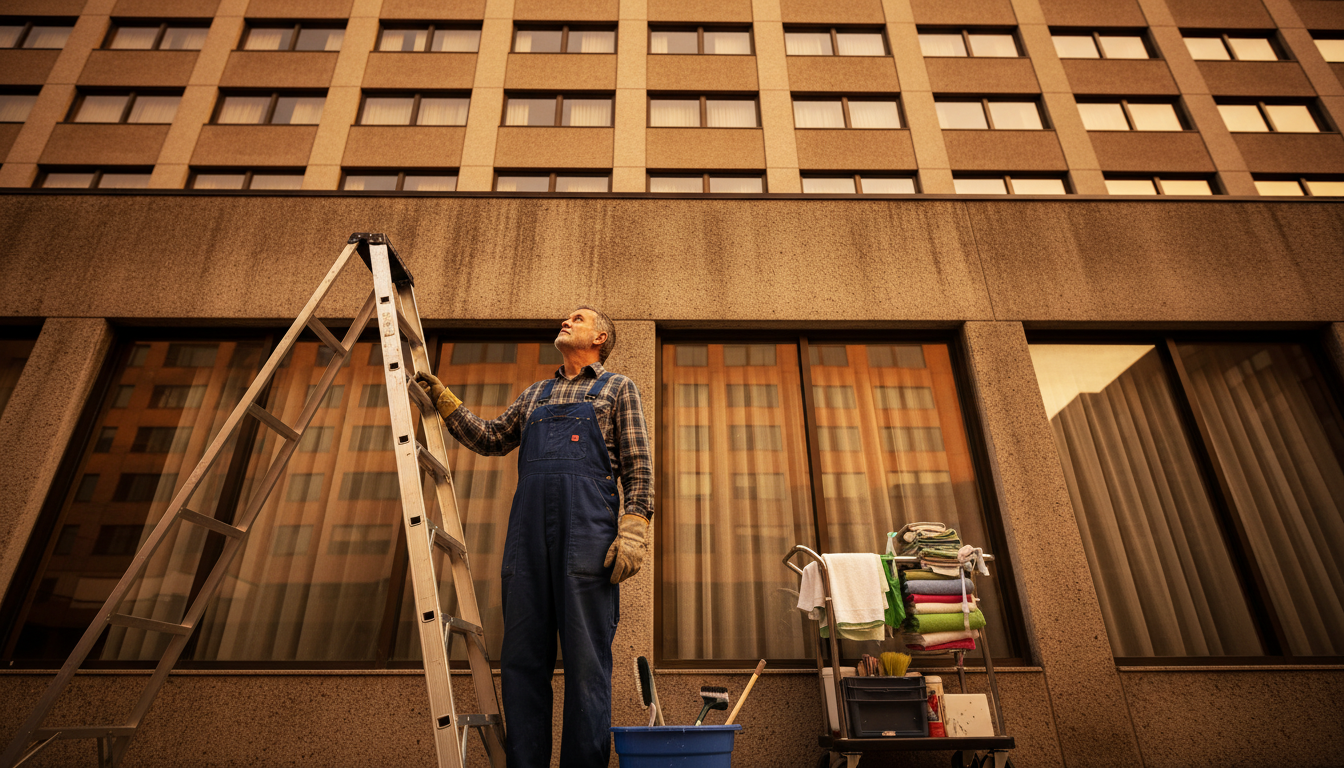
I've stood in the back office of a 300-room property at 6 AM, calculator in hand, trying to figure out how to cut two hours of labor per day without guests noticing. You know what never made the cut? Window washing.
Not because windows don't matter—they absolutely do. But because when you're choosing between housekeeping coverage and the guy who spends four hours a week on a ladder with a squeegee, the ladder guy loses every time.
Someone in Cedar City, Utah just invented a system that washes every window in a building simultaneously. Automatically. The patent application (SBT-2165) filed through InventHelp describes it as eliminating "the time-consuming process" of manual window washing.
Here's what the press release doesn't say: this isn't about convenience. It's about survival math.
The average full-service hotel spends $15-25 per hour for window cleaning contractors. For a 200-room property with standard glazing, that's 8-12 hours monthly. Factor in high-rise properties where you need specialized equipment or certified technicians? You're looking at $500-800 monthly, minimum. Mid-market properties often just... don't do it. They wait until the windows are embarrassing, then they panic-schedule it before an inspection.
I worked a turnaround in Vegas where the previous management hadn't cleaned exterior windows in fourteen months. Fourteen. The GM's excuse? "We had to choose between window cleaning and keeping the pool heated." That's not hyperbole—that's modern hospitality economics.
Now imagine telling your regional director you've eliminated that line item entirely. Not reduced it. Eliminated it.
The inventor's quoted motivation is almost quaint: "eliminate the time-consuming process." But talk to any property-level operator and they'll tell you the real problem isn't time—it's prioritization. Windows are the thing you're always planning to do next quarter. This system makes "next quarter" irrelevant.
Here's the OMG moment: this isn't even the innovation that matters most. The innovation is that someone finally looked at building maintenance and asked "what if we stopped thinking about labor allocation and started thinking about permanent systems?"
Because once you automate windows, what's next? Pressure-washing walkways? Gutter maintenance? All those quarterly contracted services that cost $300-800 each time?
The window washing system isn't even on the market yet—it's still in the patent phase. But the fact that someone filed this patent in 2026 tells you everything about where hospitality infrastructure is heading. We're not automating the guest experience first anymore. We're automating the invisible stuff that kills P&L statements.
Will this specific system work? Maybe. Probably not in the first iteration. But someone will make it work, because the math is too compelling to ignore.
The properties that figure this out first—the ones willing to invest in permanent automation solutions instead of variable labor—are going to have a 200-300 basis point advantage in property-level EBITDA within three years. That's the difference between a GM who gets promoted and a GM who gets a "performance improvement plan."
If you're a property-level operator: start documenting every recurring contracted service you pay for monthly or quarterly. Windows, pressure washing, exterior maintenance, anything with a ladder involved. Build the business case now for one-time capital investments that eliminate recurring costs. Your 2027 budget cycle is going to be brutal—the operators who show up with automation proposals instead of labor requests are going to be the ones who survive it.