Today · May 23, 2026
92,000 Jobs Vanished in February. Your Staffing Crisis Just Became a Revenue Crisis.

92,000 Jobs Vanished in February. Your Staffing Crisis Just Became a Revenue Crisis.

The worst jobs report in years is about to hit your top line and your applicant pool at the same time... and most GMs aren't ready for what that combination actually looks like on a P&L.

Available Analysis

I got a text from a GM friend Saturday morning. Two words: "Here we go." He'd just seen the February jobs number. Minus 92,000. Not a slowdown. Not a soft landing. A loss. And his first thought wasn't about the economy. It was about what his owner was going to say on Monday's call.

Here's what nobody's connecting yet. That 92,000 number is actually two stories happening simultaneously, and they pull in opposite directions. Story one: consumer confidence is about to take a hit, which means your corporate transient pace for Q2 and Q3 is softer than whatever your RMS is telling you right now. The historical pattern is reliable... 60 to 90 days after labor market deterioration shows up in headlines, you see it in booking windows. People don't cancel trips. They just don't book the next one. Story two: that same unemployment tick (4.4%, up from 4.3%) means for the first time in three years, your HR director might actually have a stack of applications worth reading. Leisure and hospitality alone shed 27,000 jobs in February. Those people need work. Some of them are your next housekeeping team.

But here's where it gets tricky, and where I've seen GMs get this wrong before. I watched a GM at a 180-key select-service during the 2008-2009 slide try to ride the labor surplus and the demand dip at the same time. He hired aggressively because he finally could... then had to lay off half of them four months later when occupancy dropped 11 points. The sequencing matters. You don't staff up for a demand environment that might not exist in Q3. You staff strategically. Fill your chronic vacancies (housekeeping, overnight front desk, the positions that have been killing your service scores for two years). But don't add headcount against a forward pace you haven't stress-tested. And stress-test it today. Not next week. Today. Pull your Q2 and Q3 group pace. Compare it to the same period last year. If you're soft by more than 5%, you have a rate decision to make before your comp set makes it for you.

The bigger picture is uglier than one month's number. This is the sixth consecutive month of labor market deterioration. December got revised down to a loss of 17,000 (originally reported as a gain). January's already thin 130,000 got trimmed another 4,000. Average hourly earnings are still climbing at 3.8% year-over-year, which means your labor costs aren't coming down even if your labor pool is loosening. And oil just spiked past $117 a barrel on the Iran situation, which means your energy costs are about to move too. If you're running a property with floating-rate debt and you were counting on a Fed rate cut to ease your debt service... J.P. Morgan just pulled their 2026 rate cut forecast entirely. The Fed is stuck. Inflation at 2.9%, unemployment rising, oil surging. That's the textbook definition of stagflation, and the last time we dealt with real stagflation in this industry, a lot of owners with thin liquidity cushions didn't make it to the other side.

So what do you do? You play defense and offense simultaneously, which is the hardest thing in hotel management and the thing that separates operators who survive downturns from operators who get replaced during them. Offense: recruit now. The applicant pool is the best it's been since 2021. Fill your gaps. Lock in your talent before every other hotel in your market reads this same data and does the same thing. Defense: stress-test every line of your forecast. Talk to your revenue manager about ADR compression scenarios. Get in front of your ownership group before they call you. And if you're an independent or boutique operator carrying variable-rate debt... call your lender this week. Not to renegotiate. To have the conversation. Because the worst time to start that conversation is when you're already behind on a covenant.

Operator's Take

If you're a GM at a branded select-service or upper-midscale property, here's your Monday: pull your Q2 group pace, pull your corporate transient production report, and compare both to the same week last year. If either is soft by more than 5%, schedule a revenue strategy call before Friday. Then walk down to HR and tell them to post every open position they've been sitting on... housekeeping, F&B, front desk... because this labor window won't last. Staff for your vacancies. Don't staff for growth you can't see yet. And get ahead of your owner. Call them before they call you. Show them the numbers, show them your plan, and show them you're already moving. That's the difference between a GM who manages a downturn and a GM who gets managed by one.

Read full analysis → ← Show less
Source: InnBrief Analysis — National News
$850 Million Casino Resort in San Juan. And 1,250 People Who Don't Exist Yet Have to Make It Work.

$850 Million Casino Resort in San Juan. And 1,250 People Who Don't Exist Yet Have to Make It Work.

Hard Rock just announced an $850 million integrated resort in Puerto Rico with 415 rooms, branded residences, and a casino opening in 2029. The press release is gorgeous. The question is who's staffing a three-pool, multi-restaurant, full-casino operation on an island where January occupancy just hit 80% and every existing hotel is already fighting for the same labor pool.

I worked with a GM once who'd been through three resort openings in the Caribbean. Big ones. The kind where the renderings look like heaven and the press conference has a governor at the podium. He told me something I never forgot: "The ribbon cutting is the easy part. Finding 1,200 people who show up on day two... that's the project nobody budgets enough for."

Hard Rock and its development partners just announced an $850 million integrated hotel, casino, and residential project in San Juan. 415 rooms, 58 suites, 186 branded residences, three pools, a recording studio, a Rock Spa, a kids' club, event space, and what they're calling the first integrated casino on the island. Construction starts mid-2026. Doors open 2029. The project is expected to create over 2,500 construction jobs and 1,250 permanent positions.

Let me be direct. The timing looks smart on paper. Puerto Rico's tourism numbers are screaming right now... January occupancy hit 80% (up 11% year over year), lodging revenue neared $218 million for the month, and February came in at 75% occupancy, up 17%. Those are not soft numbers. That's a market that's absorbing demand and asking for more. And Hard Rock, backed by the Seminole Tribe, has the balance sheet and the operational track record to pull off a build this size. They've done it in Las Vegas. They've done it in other major markets. The brand carries weight, the casino component adds a revenue stream that pure hotel plays don't have, and the branded residences help de-risk the capital stack by pulling cash forward during development.

But here's what nobody's talking about in the press release. An integrated resort of this scale doesn't just need 1,250 bodies. It needs 1,250 trained, reliable, hospitality-caliber team members in a market where every existing hotel is already competing for the same workforce. When occupancy is running at 80% in January, that means your competition for housekeepers, line cooks, front desk agents, dealers, spa therapists, and maintenance techs is already fierce. You're not hiring into a slack labor market. You're hiring into a market that's running hot. That means you're either paying a premium (which changes your labor cost assumptions from day one), or you're pulling from existing properties (which creates a staffing crisis across the market), or you're relocating workers to the island (which adds housing and relocation costs that never show up in the development pro forma). Probably all three.

And then there's the question every owner in the San Juan market should be asking right now: what does 415 new rooms plus casino-driven demand do to my comp set? If you're running a 200-key hotel in San Juan and your ADR has been climbing because demand outpaces supply, an integrated resort with this kind of pull changes the math. It could lift the entire market by bringing in travelers who wouldn't have considered Puerto Rico before. Or it could redistribute existing demand toward the shiny new thing and leave you fighting for the leftovers. The answer depends entirely on your positioning, your rate strategy, and whether you use the next three years to sharpen your product before this thing opens. Three years is a lot of time. It's also not nearly enough if you waste the first two pretending it won't affect you.

Operator's Take

If you're running a hotel in San Juan or anywhere on the north coast of Puerto Rico, this is a three-year countdown and it starts now. First, lock in your best people. Retention bonuses, career development, whatever it takes... because when Hard Rock starts recruiting in 2028, they're coming for your staff with signing bonuses and a brand name. Second, look hard at your product. What does your property offer that a nearly $1,800-per-key integrated resort doesn't? If the answer is "lower price," that's not a strategy... that's a race to the bottom. Figure out your positioning before the market figures it out for you. Third, if you're an owner contemplating a PIP or renovation in this market, accelerate it. You want your refreshed product in the market before 2029, not after. The properties that will thrive alongside Hard Rock are the ones that defined their identity before the competition forced them to.

Read full analysis → ← Show less
Source: Google News: IHG
92,000 Jobs Gone in February. Your Summer Is Already in Trouble.

92,000 Jobs Gone in February. Your Summer Is Already in Trouble.

The February jobs report didn't just miss expectations... it missed by a mile, and leisure and hospitality led the bleeding. If you're not pulling your forward pace reports this morning, you're already behind.

I managed through the 2008 collapse. I managed through COVID. And the thing I remember most clearly from both is not the moment it got bad. It's the six weeks BEFORE it got bad, when every GM I knew was staring at the same softening pace reports and telling themselves "it'll come back." It didn't come back. It got worse. And the operators who survived were the ones who stopped hoping and started adjusting before the numbers forced them to.

That's where we are right now.

The economy shed 92,000 jobs in February. Not gained... lost. Economists were calling for a gain of 50,000 to 60,000. That's not a miss. That's a different universe. Unemployment ticked up to 4.4%. Labor force participation dropped to 62%, the lowest since late 2021. And our industry specifically gave back 27,000 jobs, with restaurants and bars going negative for the first time after eight straight months of growth. I want you to sit with that for a second. Eight months of momentum... gone in one report. Winter Storm Fern gets some of the blame. A Kaiser Permanente strike skewed healthcare numbers. Fine. But the trend underneath the noise is what matters, and the trend is pointing in a direction that should have every revenue manager in America awake right now.

Here's what nobody's talking about yet. Rising unemployment doesn't hit hotel demand the day the report comes out. It hits 60 to 90 days later, when the family in suburban Atlanta who was planning four nights at a beach resort decides to do two nights at a drive-to instead. Or cancels altogether. That 60-to-90-day window lands squarely on spring break shoulder weeks and early summer booking pace. I talked to a revenue manager last week at a 180-key resort property on the Gulf Coast... she told me April pickup was already running 8% behind the same point last year, and that was BEFORE this report dropped. Nearly half of consumers surveyed right now say they believe the economy is getting worse. Those aren't people booking five-night vacations. Those are people pulling back on discretionary spend, and hotel rooms are about as discretionary as it gets. If you're running a select-service property in a drive-to leisure market, this is a five-alarm fire. If you're running luxury urban with strong corporate transient, you've got more runway... but don't get comfortable. Companies in healthcare, construction, and manufacturing (all sectors that shed jobs last month) are going to start scrutinizing Q2 and Q3 meeting budgets. Your group sales director needs to be making calls today. Not next week. Today.

Now here's the twist, and it's an uncomfortable one. The same report that signals demand trouble also signals a potential break in the staffing crisis that's been strangling operations since 2022. The industry has been running with a projected 18% labor shortfall. If people are losing jobs... including hospitality jobs... your applicant pool is about to get deeper. HR directors at full-service and resort properties should be watching applicant flow over the next 30 days like a hawk. This might be the first real window in four years to fill chronic open positions without paying crisis-premium wages. I knew an HR director at a convention hotel during the last recession who told me "the only good thing about a downturn is you finally get to hire the people you actually want instead of the people who show up." She was right. It's a brutal silver lining, but it's real.

The performance gap is widening and it's going to get wider. Luxury and upper upscale are projected to outperform because high-income travelers don't cancel trips over a jobs report. Midscale and economy are going to feel this first and feel it hardest. STR is already calling for a negative first quarter. RevPAR growth industry-wide is limping along at 1 to 1.5%. And here's the number that should scare you... long-term unemployment (people out of work 27 weeks or more) jumped to 1.9 million, up from 1.5 million a year ago. That's not a blip. That's a consumer base that's slowly, steadily losing purchasing power. Your rate strategy needs to reflect that reality. Holding rate into softening demand isn't discipline... it's denial. I've seen this movie before. The GMs who adjust early, who capture volume through strategic yield moves before the hesitation deepens, are the ones who come out the other side with their RevPAR index intact. The ones who hold rate and watch occupancy crater end up explaining a 6-point index drop to their owners in July. Don't be that GM.

Operator's Take

Pull your April through June forward pace reports today and compare them against the same pickup window last year. If you're down more than 5%, it's time to have the rate conversation with your revenue manager and your ownership group now, not after Q2 closes soft. If you run group business, get your sales director on the phone with every account in healthcare, construction, and manufacturing this week... those are the sectors bleeding jobs and they're going to start cutting meeting spend. And if you've been struggling to fill housekeeping or front desk positions for two years, talk to your HR team about refreshing job postings and reaching out to former applicants. The labor window that just opened won't stay open long.

Read full analysis → ← Show less
Source: Vertexaisearch
Your Maintenance Engineer Just Got a Better Offer From a Road Crew

Your Maintenance Engineer Just Got a Better Offer From a Road Crew

Unemployment hit 4.3% in February, job-switching premiums are at record lows, and everyone's calling it good news for retention. It's not that simple. The labor market just split into two problems, and most hotel operators are only solving one of them.

Available Analysis

I had an engineer quit on me once... not for another hotel, not for a management company, not even for a related industry. He left for a county highway department. Better benefits, pension, no weekend calls. He looked me in the eye and said "Mike, I like you. But I don't like being in this building at 2 AM anymore." I never replaced him with anyone half as good.

That's the story behind these February numbers. Unemployment sitting at 4.3%. Healthcare adding 82,000 jobs in January alone. Construction picking up 33,000. And leisure and hospitality? "Little or no change." Let that sink in. The economy is creating jobs. Just not our jobs. The workers we need are being absorbed by industries that can offer what we structurally can't... predictable schedules, benefits packages that don't require a magnifying glass, and the ability to go home at the end of a shift without someone calling you back because the boiler tripped.

Here's what nobody's telling you about the job-switching premium dropping to 6.4%. Everyone's reading that as "good news, your people won't leave for a 50-cent raise across the street." And that's true... for the people you already have. But it completely misses the other half of the equation. Attracting new hires into hospitality when construction sites are offering $22 an hour with overtime and healthcare is hiring housekeeping staff at hospitals with full benefits? That's a different fight. And it's one where your starting wage matters more than your retention strategy. The 65% of hotels still reporting staffing shortages aren't short-staffed because people are leaving. They're short-staffed because people aren't showing up to apply in the first place. Those are two completely different problems with two completely different solutions, and most operators are conflating them.

The markets where this hurts worst are the ones you'd expect. Anywhere with active infrastructure spending (and that's a LOT of markets right now, thanks to federal construction money flowing into roads, bridges, and data centers) your maintenance and engineering candidates have options that didn't exist two years ago. Your housekeeping candidates in any market with a major medical center? They're comparing your offer to a hospital job with a pension. I've managed through tight labor markets before... 2018-2019 was brutal. But this one is structurally different because the competition isn't other hotels. It's other industries entirely. You can't win a wage war with a hospital system. You have to win on something else.

And that "something else" is where most hotels are failing. The industry is projected to spend $131 billion on wages and benefits this year. That's $3 billion more than last year. But if that money is going entirely into base wages without restructuring how we develop people, we're just paying more for the same turnover cycle. I've seen this movie before... and the sequel is always the same. The properties that survive tight labor markets aren't the ones that pay the most. They're the ones where a housekeeper can see a path to becoming a supervisor in 18 months, where a front desk agent gets cross-trained on revenue management basics, where people feel like they're building something instead of just surviving a shift. That's not HR fluff. That's math. Every turnover costs you $3,000-$5,000 in recruiting, training, and productivity loss. A career development program that keeps five people per year costs a fraction of replacing them. RevPAR growth is barely keeping pace with inflation right now... GOPPAR is stuck around 90% of 2019 levels. You cannot expense your way out of a labor problem when margins are this thin. You have to build your way out.

Look... the numbers are going to get harder before they get easier. The demographic pipeline feeding entry-level hospitality workers is shrinking. Immigration constraints aren't loosening. Construction spending is accelerating. Healthcare isn't slowing down. If you're waiting for the labor market to "normalize" before you fix your staffing model, you're waiting for something that isn't coming. The properties that figure this out in 2026 will have a structural advantage for the next decade. The ones that keep treating labor as a line item to be minimized will keep wondering why they can't staff a Tuesday night.

Operator's Take

If you're a GM at a select-service or limited-service property, pull your maintenance and housekeeping starting wages this week and compare them to what your local hospital system and the nearest construction contractor are paying. Not what you think they're paying... actually look. Then take that number to your owner or management company with a simple argument: we can pay $2 more an hour now, or we can pay $4,500 to replace someone in 90 days. If you're in a market with active infrastructure projects, your engineering candidates already have a better offer. Stop competing on wage alone and start building a 12-month advancement track for every hourly position. Put it in writing. Show it in the interview. That's your edge... because the road crew can't offer a career path.

Read full analysis → ← Show less
Source: Adp
The Labor Market Just Tilted Back Your Way. Don't Blow It.

The Labor Market Just Tilted Back Your Way. Don't Blow It.

For the first time in years, hotel operators have actual leverage in hiring. The question is whether you're smart enough to use it on productivity instead of wasting it on short-sighted wage cuts that'll cost you double when the cycle turns again.

Available Analysis

I've seen this movie before. Twice, actually. The labor market tightens, operators panic, throw money at warm bodies, lower their standards, and watch service quality crater. Then the market loosens and those same operators overcorrect the other direction, slash wages, lose their best people, and spend the next 18 months rebuilding teams from scratch. It's a cycle of self-inflicted wounds, and we're sitting right at the inflection point where you either break the pattern or repeat it.

Here's what actually happened in January. Job growth came in soft at 130,000. More importantly, the ratio of open positions to unemployed workers dropped below 1.0 for the first time since 2021. That means there are now more people looking for work than there are jobs posted. For hotel HR directors who've spent the last three years getting outbid by Amazon warehouses and Buc-ee's for the same labor pool, this is the first real breathing room you've had. Your applicant flow is going to improve. Your no-show rate for interviews is going to drop. Candidates will actually return your calls.

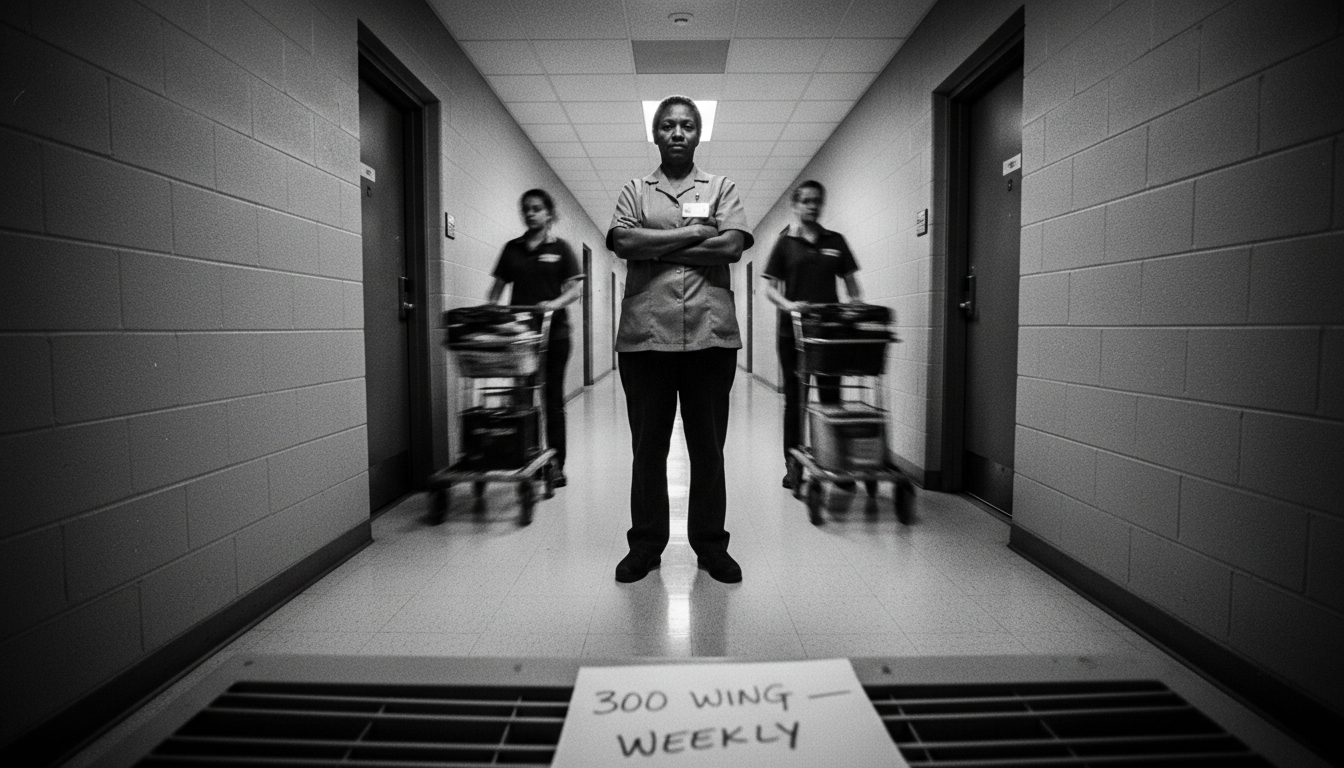
But here's what nobody's telling you: this is not a green light to cut pay. I talked to a director of operations last month who was already floating the idea of rolling housekeeping wages back $2 an hour "because the market will support it." The math doesn't lie, and neither does history. In 2009, properties that cut wages aggressively during the downturn spent 2010 through 2012 paying 15-20% premiums to rehire experienced staff. The people you keep right now, the ones who showed up during the worst of the staffing crisis, are your institutional knowledge. They train your new hires. They know which PTAC units in the 300 wing need the filter cleaned weekly instead of monthly. They remember which group contact needs a late checkout without being asked. You cannot replace that for $2 an hour in savings.

What you should do instead is trade wage leverage for productivity standards. If you're running a 200-key select-service and your housekeeping team is cleaning 13 rooms per 8-hour shift because that's what you agreed to when you were desperate, now is the time to move that number to 15. Not 18. Not 20. Fifteen. Reasonable, achievable, and worth roughly one FTE per shift at most properties that size. That's $35,000-$40,000 a year in labor savings without touching anyone's hourly rate. For full-service properties with more complex staffing, this is your window to require cross-training. Your front desk agents should be able to assist with breakfast service. Your maintenance tech should be able to reset a meeting room. You can now hire for versatility instead of just availability, and that changes the quality of your operation.

One more thing. This "low-hire, low-fire" environment means your existing employees aren't jumping ship either. Voluntary turnover is going to slow down, which is great for your training investment but bad if you've been counting on natural attrition to shed your weakest performers. Don't wait. If you've got someone on staff who's been underperforming for six months and you kept them because you couldn't afford the vacancy, you can afford the vacancy now. Upgrade your roster. Tighten your standards. Invest your training dollars in the people who earned it. This window won't last forever. Use it to build the team you actually want, not just the team you could get.

Operator's Take

If you're a GM at a branded select-service property, do three things this week. First, pull your housekeeper-to-room ratio and set a realistic productivity target that's 10-15% better than your current standard. Second, freeze any planned wage increases but do not cut existing pay. Third, identify your bottom two performers and start the documentation process to replace them with better hires while the applicant pool is deep. Your owners are going to see the labor data and ask why payroll isn't dropping. Tell them you're converting wage pressure into productivity gains, which flows straight to GOP without the turnover cost of pay cuts. That's a story any owner will buy because it's true.

Read full analysis → ← Show less
Source: InnBrief Analysis — National News
End of Stories