Today · Jul 30, 2026
$70M to Renovate 791 Rooms. The Renovation Isn't the Story. What Happens Next Is.

$70M to Renovate 791 Rooms. The Renovation Isn't the Story. What Happens Next Is.

Kyo-ya just spent $88,500 per key refreshing Waikiki's most iconic hotel after an 11-year gap. The real question is whether the luxury bet pays off in a Hawaii market that's splitting in two... and what that split means for every operator watching from the mainland.

Available Analysis

A guy I used to work with managed a historic property on the coast... not Hawaii, but the same DNA. Big-name flag, irreplaceable location, ownership group that let the soft goods slide for about a decade because the views kept selling rooms. He told me once, "The ocean is the best revenue manager I've ever had. It covers up a lot of sins." Then one year, reviews started slipping. Not catastrophically. Just enough. The comp set renovated. OTA photos started looking dated. And suddenly the ocean wasn't enough.

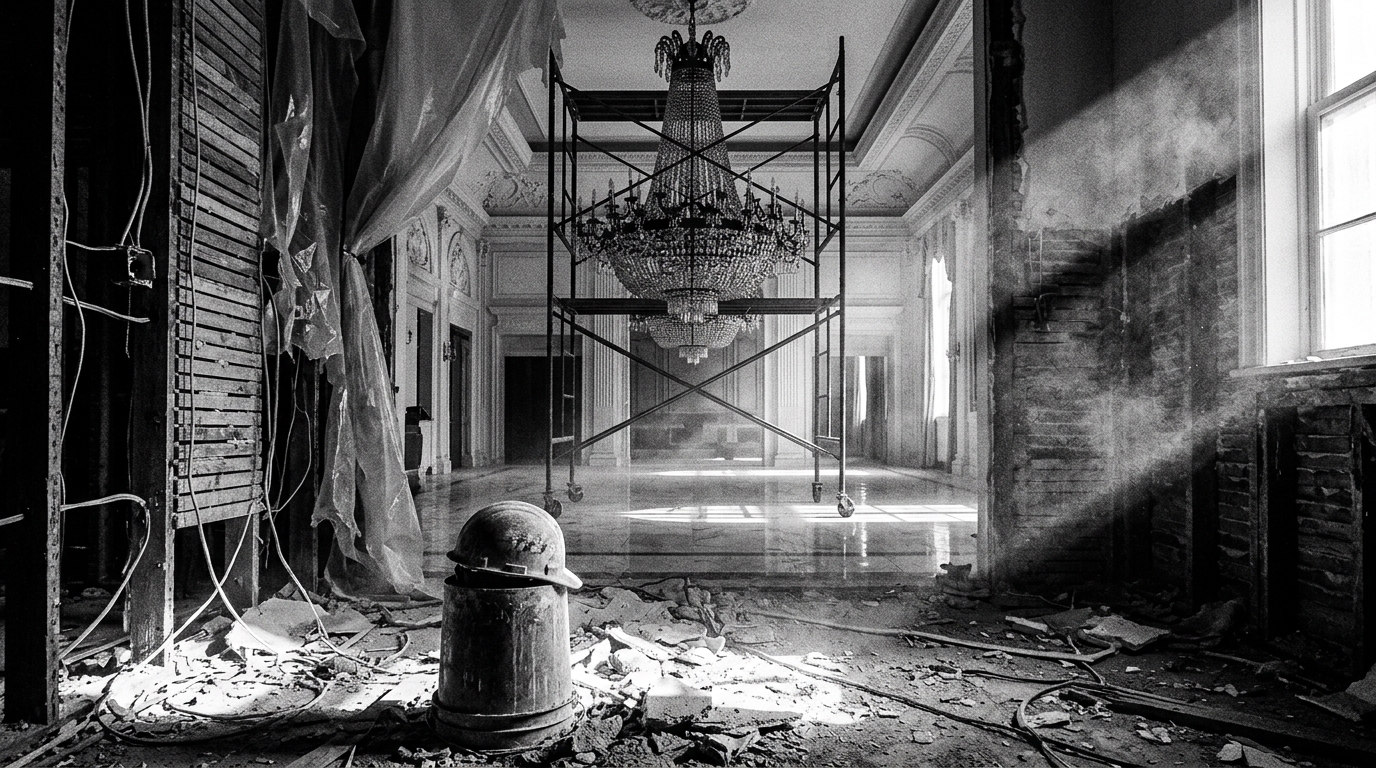
That's the backdrop for what Kyo-ya just did at the Moana Surfrider. Seventy million dollars across all 791 keys, the lobby, and a new 200-person oceanfront event space. First significant renovation in 11 years. Do the math... that's roughly $88,500 per key, which for a luxury beachfront Westin in Waikiki is actually reasonable. Not cheap. But reasonable. Especially when you consider what they were protecting. This property opened in 1901. It's not just a hotel. It's the hotel that made Waikiki a destination. You don't let that slide into irrelevance because the renovation committee couldn't agree on a timeline.

Here's what I find more interesting than the renovation itself. Hawaii's luxury segment is running hot... December 2025 saw luxury RevPAR at $795 statewide, with ADR north of $1,200. But the mid-tier market is softening. That's a K-shaped recovery, and it means the gap between properties that invest and properties that don't is widening fast. Kyo-ya owns four major Waikiki hotels and has reportedly poured over $300 million into renovations across the portfolio. They're not guessing about which side of the K they want to be on. They're buying their way onto the top line with conviction. Meanwhile, Marriott is stacking luxury conversions across the islands... a St. Regis on Maui, a Ritz-Carlton at Turtle Bay. The brand is making a clear bet that Hawaii's future is high-ADR, high-loyalty-contribution, premium positioning. If you're a mid-market operator in Honolulu wondering why your occupancy feels soft while the luxury properties celebrate, this is your answer. The market isn't shrinking. It's bifurcating. And capital is flowing uphill.

The phased approach here is worth studying. They kept the hotel open through the entire project, rolling wing by wing from winter 2024 through early 2026. That's the right call for a 791-key property that can't afford to go dark (and an owner that can't afford 18 months of zero revenue on a Waikiki beachfront asset). But anyone who's managed through a rolling renovation knows the reality behind the press release. Guests in the finished Tower Wing listening to construction noise from the Diamond Wing. Housekeeping working around contractor staging areas. Front desk teams fielding complaints about something they have zero control over while trying to protect the review scores that justify the post-renovation rate increase. The finished product looks gorgeous. The 18 months it took to get there? That's where the real operational story lives.

What Kyo-ya understands (and what a lot of owners miss) is that $88,500 per key isn't a cost. It's a down payment on rate integrity for the next decade. This is what I call the Renovation Reality Multiplier... you don't just budget for the construction. You budget for the disruption during, the ramp-up after, and the rate repositioning that either justifies the spend or turns it into the most expensive coat of paint you ever bought. At $350 a night starting rate post-renovation (or 58,000 Bonvoy points), they're clearly planning to push rate. Whether Waikiki's demand curve holds at that level while international competitors like Mexico and Fiji pull leisure travelers... that's the $70 million question. My bet is it holds. Location wins in the long run. But it only wins if the product matches the price tag, and after 11 years of deferred investment, they were running out of runway.

Operator's Take

If you're sitting on a property that hasn't seen a significant renovation in eight-plus years, the Moana Surfrider story isn't about Hawaii. It's about you. Markets are bifurcating everywhere, not just Waikiki. Capital is flowing to properties that invest, and demand is softening for properties that don't. Run your own numbers... what's your per-key renovation cost to stay competitive with your comp set, and what rate increase do you need post-renovation to justify it? If the payback stretches past your franchise agreement or your hold period, you've got a harder conversation ahead. But if you're the one who brings that analysis to your ownership group before they read about someone else's $70 million renovation and start asking questions... you're the operator running the business, not reacting to it. Don't wait for the reviews to slip. The ocean doesn't cover as many sins as it used to.

Read full analysis → ← Show less
Source: Google News: Resort Hotels
Westin's Sleep Campaign Is Brand Theater. The Real Question Is Whether Your Owner Should Pay for It.

Westin's Sleep Campaign Is Brand Theater. The Real Question Is Whether Your Owner Should Pay for It.

Westin rolls out another World Sleep Day activation across Asia Pacific, complete with sound baths and lavender balm. But when you strip away the press release, the question every franchisee should be asking is: does the wellness pillar actually move the needle on rate, or is it just a really expensive mood board?

Let me tell you what I love about Westin. They picked a lane. In 1999, they introduced a signature bed concept and basically forced every other hotel brand in the world to stop pretending that a lumpy mattress with a polyester bedspread was acceptable. That was real. That was a brand promise with a physical, tangible deliverable that a guest could feel the moment they sat down on the bed. Twenty-seven years later, the Heavenly Bed is still the single best piece of brand strategy in hospitality. I mean that. It's specific, it's ownable, and it passes the Deliverable Test every single time... because a bed is a bed, and you either have a great one or you don't.

So why does everything Westin does AROUND the bed feel like it was designed by a wellness influencer's content team? World Sleep Day 2026 brings us sleep education talks, breathwork sessions, sound baths, yoga nidra meditation, herbal tea rituals, a "Balinese Nutmeg Chocolate Nightcap" (I am not making this up), and a collaborative campaign with a soccer media company called "Your Goals Matter" at a training facility in Bali. I read that last one three times. A soccer training centre. For a sleep campaign. If you're a franchise owner paying into the brand marketing fund, I need you to sit with that for a moment. Your assessment dollars helped fund a wellness activation at a soccer pitch. You're welcome.

Here's the part that actually matters, and the part the press release predictably ignores: does any of this translate to rate? Because wellness positioning only works if guests will pay a premium for it, and "willing to pay a premium" is one of the most over-claimed, under-evidenced assertions in our entire industry. I've sat in franchise reviews where brand teams presented guest survey data showing travelers "increasingly prioritize well-being." Great. Show me the ADR lift. Show me the booking data that proves a guest chose your Westin over the Hilton across the street because of the lavender balm and not because of the Bonvoy points. I've been asking this question for years. The silence remains... informative. The wellness tourism trend is real (the research confirms it's one of the fastest-growing segments heading into 2026), but "the trend is real" and "YOUR property benefits from the trend" are two very different sentences. A Westin in Brisbane charging $89 for a sleep reset event is a lovely ancillary revenue play for one night. It is not a brand strategy that justifies the total cost of being flagged.

And that total cost is where every owner in this system should be sharpening their pencil. Franchise fees, loyalty assessments, reservation system fees, marketing contributions, PIP capital, brand-mandated vendors... for many Westin owners, you're north of 15% of total revenue going back to the mothership before you've paid your GM or turned on the lights. The question isn't whether the Six Pillars of Well-being sound lovely in a brand deck (they do... Sleep Well, Eat Well, Move Well, Feel Well, Work Well, Play Well... it's very symmetrical, very aspirational, very PowerPoint). The question is whether the revenue premium generated by that positioning exceeds the cost of maintaining it. And if the evidence supporting that premium is "wellness tourism is growing" rather than "here is your property's actual RevPAR index improvement attributable to brand programming," then you're paying for a promise without a receipt.

I'll say this plainly because someone needs to: the Heavenly Bed was genius. It solved a real problem (hotel beds were terrible), it was deliverable at scale (you buy the mattress, you have the brand experience), and it created genuine differentiation that guests could feel without a brand ambassador explaining it to them. Everything Westin has layered on top of that since... the pillars, the superfoods menu, the lavender balm, the World Sleep Day activations... is decoration on a foundation that was already working. Some of that decoration is charming. Some of it is expensive. And the gap between "charming brand activation in Bali" and "measurable value for the owner in Omaha" is exactly the gap I've spent my career trying to close. If you're a Westin franchisee, your job this week is to pull your total brand cost as a percentage of revenue, compare it against your RevPAR index versus your comp set, and ask yourself one honest question: am I paying for a brand, or am I paying for a mood board? (My filing cabinet has the answer. It usually does.)

Operator's Take

Here's the move if you're a Westin franchisee or any branded owner watching these wellness campaigns roll out. Pull your total brand cost... every fee, every assessment, every mandated spend... and calculate it as a percentage of total revenue. Then pull your loyalty contribution percentage and your RevPAR index against comp set. If brand cost is north of 15% and loyalty contribution is south of 35%, you have a math problem that no amount of lavender balm is going to fix. Bring those numbers to your next franchise review. Don't ask if the wellness programming is nice. Ask what it's worth. In dollars. This week.

— Mike Storm, Founder & Editor
Read full analysis → ← Show less
Source: Google News: Marriott
End of Stories