Today · Aug 21, 2026
Your Distressed Traveler Agreement Is Sitting in a Drawer. Airline Strike Season Starts in Two Weeks.

Your Distressed Traveler Agreement Is Sitting in a Drawer. Airline Strike Season Starts in Two Weeks.

Airline labor disputes across Europe are already live, U.S. carriers are under historic financial pressure, and most hotel front desk teams couldn't find their distressed traveler contract if you gave them ten minutes. That's a problem you can fix this week... if you move before the first cancellation wave hits your booking pace.

Available Analysis

I worked with a front desk manager years ago who kept a laminated card behind the desk with the airline distress contact numbers, the contracted rate, and the room block procedure. She updated it every January. When a freak ice storm shut down the nearby hub for 36 hours, her property picked up 74 room nights in a single evening while every other hotel within five miles was fumbling through filing cabinets trying to figure out who to call. She made it look easy. It wasn't easy. It was preparation disguised as instinct.

That's the story I keep thinking about as I watch what's happening in the airline world right now. Lufthansa's pilot union voted 96% in favor of strike action through the entire summer... through October 26th. Cabin crew voted 94%. Paris airports have a ground disruption planned for June 18th. Italy's got a nationwide ground handling strike June 26th. Spain's air traffic control dispute runs through the end of the month. And that's just Europe. The pressure is building on this side of the Atlantic too, because IATA just slashed its global airline profit forecast from $41 billion to $23 billion. Net margin for the entire industry is expected to hit 2.0%... that's $4.50 profit per passenger. Jet fuel at $152 a barrel, up 70% from last year. Airlines under that kind of financial squeeze don't settle labor disputes quickly. They can't afford to give, and the unions know it.

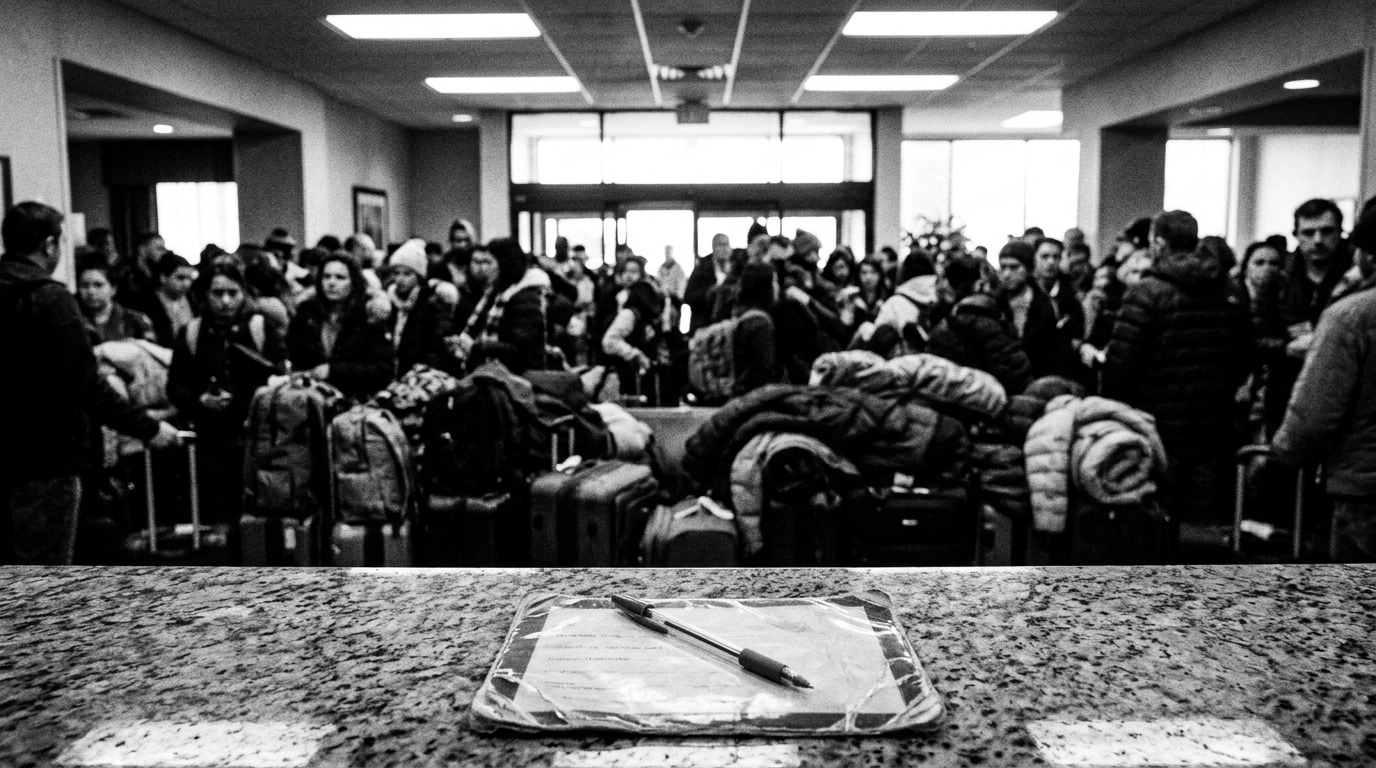
Here's what this means if you're running a hotel. You've got two problems coming at you simultaneously, and they require opposite responses. Problem one: distressed travelers. If you're within 10 miles of a major hub (O'Hare, DFW, Atlanta, Denver... you know who you are), stranded passengers are going to need rooms. Airlines typically contract those rooms through platforms at rates that can run 40% below your standard OTA rate. Those contracts are often signed during a slow quarter, filed somewhere, and never reviewed again. Your front desk team probably doesn't know the terms. Your FOM might not know the contact. And when 200 passengers get dumped at midnight because their connecting flight to wherever just got cancelled, "let me check on that" is not a revenue strategy... it's a missed revenue event.

Problem two is sneakier. Strike headlines suppress forward bookings even when no strike actually happens. Leisure travelers see "airline chaos" on their phone and they hesitate. They don't cancel immediately... they just stop booking. Your 30 to 60 day pace softens and you might not notice for two weeks. If you're a fly-to destination (think resort markets that depend on airlift), this is real exposure. If you're a drive-to leisure property, you might actually see a short-term bump as travelers substitute road trips. But if a significant chunk of your group business depends on attendees flying in... that's your biggest risk right now. Any meeting planner watching these headlines is doing the same mental math you should be doing. Check your July and August group contracts. How many of those groups have high air-dependency? What does your force majeure language actually say about labor actions? Because "act of God" doesn't cover a union vote. You need explicit strike language or you're exposed on both sides... the group cancels and you eat the revenue, or you enforce the contract and you lose the relationship.

The mistake most operators make is treating airline disruptions as weather... something that happens to you. It's not weather. It's predictable. The Lufthansa vote happened three weeks ago. The financial pressure on carriers has been building all year. The disruption calendar for European airports is already published. If you're scrambling when the first wave hits, you waited too long. And if you're sitting in a hub market with a distressed traveler agreement you haven't looked at since 2022, you're leaving money on the counter... literally.

Operator's Take

This is what I call the Shockwave Response. You don't wait for the shock to figure out your plan. If you're within 10 miles of a hub airport, pull your airline distress agreements this week. Read the rate. Read the block limits. If the rate is more than 30% below your current BAR, renegotiate now... airlines need those rooms secured more than you need a 2019 contract you forgot about. Print the contact info and the procedure and put it where your overnight team can find it without calling you. For revenue managers at fly-to-resort or destination properties, run your July and August pace against the same period last year. If 30-day pace is softening more than 5%, start your contingency pricing now... not after Fourth of July. Sales directors: pull every group contract with more than 25% air-dependent attendees and check whether your force majeure clause explicitly covers labor actions. If it doesn't, get on the phone with that planner this week and agree on terms before the first strike headline drops and the conversation gets adversarial. The operators who win during disruption seasons aren't luckier. They're earlier.

Read full analysis → ← Show less
Source: The Wall Street Journal
75 Million Passengers. 750,000 Flights. Your Front Desk Is the Last Stop When It All Falls Apart.

75 Million Passengers. 750,000 Flights. Your Front Desk Is the Last Stop When It All Falls Apart.

Airlines are bracing for the most chaotic summer in a decade, and when flights collapse at 11 PM, stranded passengers don't call their congressman. They walk into your lobby. The question is whether you've set your team up to turn that anger into revenue... or just absorb it.

Available Analysis

I worked with a front desk manager years ago at an airport hotel who kept a laminated card taped to the inside of the desk drawer. It said: "They are not mad at you. They are mad near you." She made every new hire read it on their first day. That property had the highest guest recovery scores in the region, and it wasn't because of the PMS or the loyalty program or the breakfast buffet. It was because someone had bothered to prepare the team for the moment when 40 people walk through the door at midnight, nobody has a reservation, half of them have been sitting on a runway for four hours, and the airline's 800 number has been ringing busy since 9 PM.

That moment is about to happen a lot this summer. American alone is projecting 75 million passengers on 750,000 flights through September. On-time arrivals last year were the worst since 2014... one out of every twelve flights showing up at least an hour late, over 100,000 cancellations across the industry. The FAA is capping flights at congested hubs. Airlines have committed to providing hotel rooms for overnight controllable delays (nine of the ten majors, all but Frontier), and those placements run through third-party systems like Travelliance's StormX portal and API's platform. If your property is within 10 miles of a major hub and you're not enrolled in at least one distressed passenger program... or worse, you're enrolled but nobody's checked that the rates are loaded correctly since last fall... you're watching revenue walk past your building to the Courtyard down the street.

But here's the part most operators aren't thinking about. Distressed passenger programs pay contracted rates. They're volume business, they fill rooms that might otherwise sit empty on a Tuesday, and they're fine. The real money this summer is the second-order effect. A family in Destin whose return flight gets cancelled doesn't call the airline's hotel desk. They walk to the front desk of the resort they're already staying at and ask to extend. That incremental night, booked at the counter with no advance purchase and no OTA discount, is close to rack rate. It's high-margin, zero-acquisition-cost revenue that shows up only if your team knows how to handle it and your system isn't blocking it with rigid length-of-stay restrictions or sold-out inventory you could have opened.

The operational piece matters more than the revenue management piece, and I say that as someone who's spent 40 years obsessing over both. Your front desk agent at 11:30 PM on a Friday in July is going to be the first human being a stranded traveler has talked to face-to-face since their gate agent disappeared. That interaction... the first 90 seconds of it... is going to determine your review score for that stay. Not the room. Not the amenities. Not the thread count. The human moment. I've seen properties turn distressed walk-ins into loyalty program enrollments and five-star reviews. I've also seen properties treat them like an inconvenience and eat a one-star hit that dragged their score for months. The difference was never the property. It was always whether someone had taken 15 minutes to brief the team before the chaos started.

This isn't complicated. It's preparation. And the GMs who do it this week, before the Fourth of July surge, are going to outperform the ones who wait until they're standing in the lobby at midnight trying to figure it out in real time.

Operator's Take

If you're running an airport-adjacent property, pull up your distressed passenger program enrollment today. Not tomorrow. Today. Verify the rates are loaded, the room types are correct, and your front desk knows the process for airline-referred walk-ins. If you're not enrolled, call Travelliance or API before the weekend. For resort and leisure GMs... check your length-of-stay restrictions and make sure your system allows same-day extensions at a rate that makes sense. Then do the thing that actually moves the needle: brief your front desk team this week. Ten minutes. Role-play the angry walk-in. Give them the language. "I'm sorry that happened to you. Let's get you taken care of." This is what I call the Price-to-Promise Moment... the single interaction where a guest decides whether your property was worth it. For a stranded traveler, that moment is the check-in, and you get exactly one shot at it. The properties that nail this will bank revenue and reviews all summer. The ones that don't will wonder why their scores dipped in Q3.

Read full analysis → ← Show less
Source: CNN
Consumer Sentiment at 49.8 and Gas at $4.08. Your Summer Pace Report Is Already Stale.

Consumer Sentiment at 49.8 and Gas at $4.08. Your Summer Pace Report Is Already Stale.

Consumer confidence just posted its lowest final reading in over 70 years, gas is hovering above $4 a gallon, and families are making summer travel decisions right now against a backdrop of inflation anxiety and shorter booking windows. If your revenue strategy is still built on last July's pickup patterns, you're driving with a map from a road that doesn't exist anymore.

Available Analysis

I worked with a revenue manager years ago who had a rule she called the "grocery store test." Every Saturday morning she'd walk through the local supermarket... not to shop, but to watch. Were families buying name-brand cereal or store-brand? Were the carts full or were people doing that thing where they pick something up, look at the price, and put it back? She told me once: "By the time the sentiment surveys catch up, I've already seen it in the parking lot." She was adjusting her leisure transient strategy based on grocery cart behavior two weeks before the data confirmed what she already knew.

That's where we are right now. The University of Michigan's final April read came in at 49.8... a slight revision up from the preliminary 47.6, but still the lowest final reading in over 73 years of tracking. One-year inflation expectations spiked to 4.7%, up a full point from March. Gas is sitting at $4.08 nationally according to AAA (up from $3.17 a year ago). Grocery prices are up roughly 30% from 2020 levels. And here's the part that should keep every leisure-dependent RM up tonight: 77% of U.S. travelers say they still plan a summer trip. They're not canceling. They're recalculating. Shorter drives. Fewer nights. Cheaper properties. More OTA shopping. The demand isn't disappearing... it's shapeshifting. And shapeshifting demand is harder to manage than disappearing demand because your occupancy might look fine while your rate and channel mix quietly deteriorate underneath it.

The drive-to math is where this gets surgical. When gas crosses $4, the family debating between a 400-mile beach trip and a 120-mile lake weekend starts making a different choice. Properties inside that 150-mile radius from major metros might actually see a bump... shorter drive, lower fuel cost, easier to justify. Properties at 400-500 miles? That's where booking hesitation lives. And booking hesitation doesn't always show up as cancellations. It shows up as shorter booking windows (advisors are already reporting a spike in 1-3 month out reservations), shorter lengths of stay, and a migration to whatever rate looks cheapest on the screen. The two-week ceasefire in the Iran conflict gave markets a brief exhale in early April, but the naval blockade is still in place, energy uncertainty hasn't resolved, and the IMF is publicly warning about recession risk. Consumers feel all of that even if they can't name it. They feel it in the gas pump and the grocery receipt and the vague sense that this isn't the summer to stretch the budget.

Here's what I've seen happen three times in my career when sentiment drops this fast while demand stays nominally intact: revenue managers freeze. They look at the pace report, see that bookings are still coming in, and tell themselves "we're fine." They're not fine. They're watching a lagging indicator while the leading indicators are screaming. The pace report shows you what people already decided. Sentiment and gas prices show you what they're about to decide. And what they're about to decide, if the last 40 years have taught me anything, is that the $279 resort night becomes negotiable, the three-night stay becomes two, and the direct booking becomes an OTA search for whoever's cheapest. This is what I call the Rate Recovery Trap. You cut rate to fill rooms today because the pace softened and it felt urgent, and then you spend the next 18 months retraining the market to pay what you were getting before the cut. The operators who survive this without long-term rate damage are the ones who move right now... not to slash rate, but to build value. Packages. Included experiences. F&B credits. Things that protect your published rate while giving the price-sensitive guest a reason to book direct at full ADR.

The select-service and extended-stay operators reading this should see opportunity, not just risk. When the upper-upscale resort starts feeling like a stretch for the family that went there last summer, they're trading down. They're not staying home. They're looking for a clean room, a pool, and a price that doesn't make their stomach hurt. That's your lane. But only if you're positioned for it before they start searching... not after. The window is open right now. By mid-May it starts closing.

Operator's Take

If you're running a leisure-dependent property, here's what I'd do this week... not next month, this week. Pull your summer cancellation data and start tracking it weekly. Not the monthly rollup your management company sends. Weekly. By segment. If leisure transient cancellations tick up more than 10% over last year's pace in the next two weeks, you have a problem forming and you need to see it while you can still respond. Second... build two or three value-add packages that protect your rate. F&B credit, late checkout, kids eat free, whatever fits your property. The goal is to give the OTA shopper a reason to book direct at your published rate instead of waiting for you to panic and discount. Third, if you're a drive-to property inside 150 miles of a major metro, lean into that right now in your digital spend. "No flight required" is a real positioning message this summer. And if you're at the 400-mile-plus range, get honest with your owner about the Q3 forecast before the pace report forces that conversation for you. The operator who brings the plan gets to keep running the hotel. The one who brings the surprise doesn't.

Read full analysis → ← Show less
Source: Coresight
End of Stories