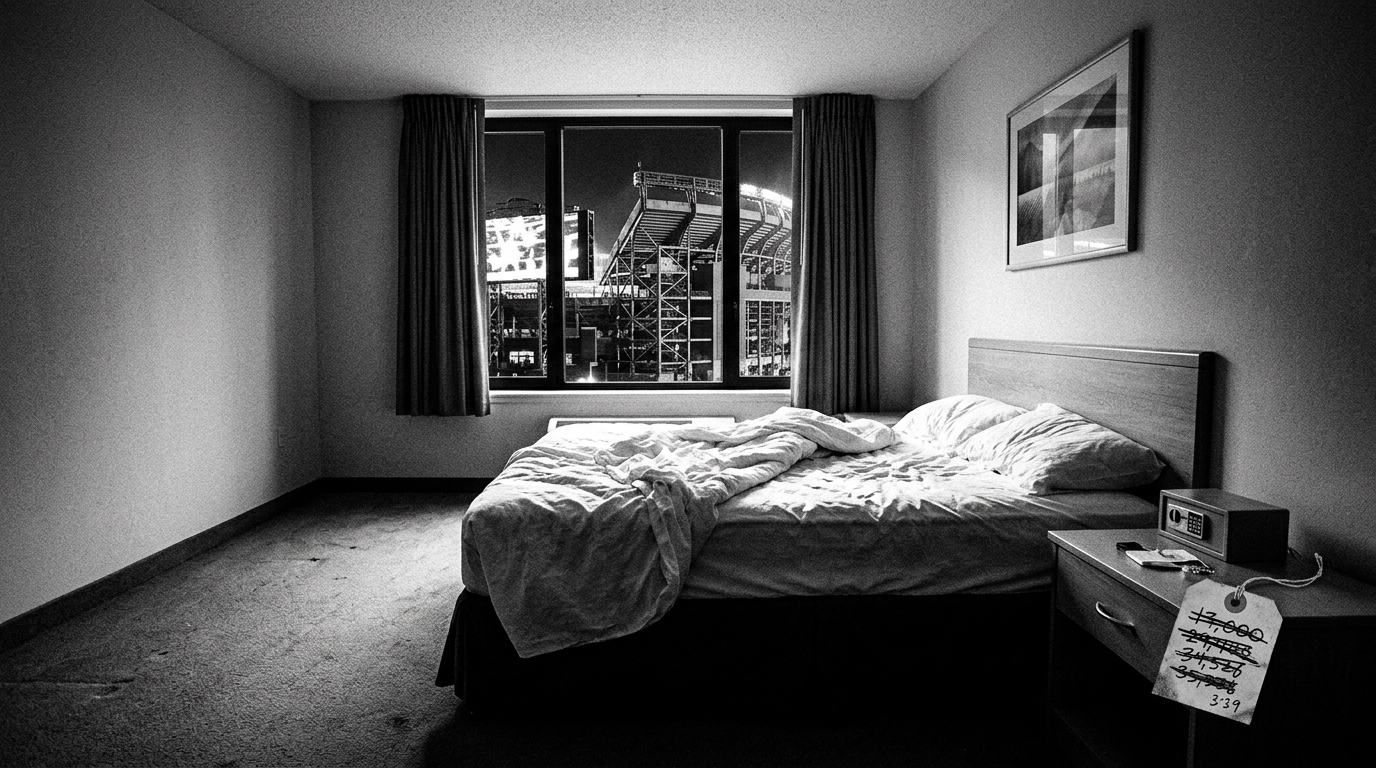
Pittsburgh Airbnb Hosts Wanted $5,000 a Night for the NFL Draft. They're Getting $500.
Short-term rental hosts in Pittsburgh priced their listings like they were selling Super Bowl suites, and now they're sitting at 55% occupancy a week before the draft. The real lesson here isn't about football... it's about what happens when amateur pricing meets professional supply.
So here's what happened in Pittsburgh. The NFL Draft gets announced for April 23-25. Visit Pittsburgh starts throwing around numbers like 500,000 to 700,000 in attendance and $120-213 million in economic impact. Airbnb hosts look at those numbers, see dollar signs, and start listing their spare bedrooms at $3,000 to $5,000 a night. One week out? Those same hosts have dropped to $500, nearly 70% of listings are priced under that mark, and only 55% of short-term rentals are booked.
Look, I've watched this exact pattern play out with technology vendors for years. Someone sees a big number in a pitch deck, builds their entire model around it, and then reality shows up uninvited. Those attendance projections? They're aggregate entries... the same person walking in three times counts as three visits. Actual unique out-of-town visitors needing a bed are closer to 100,000-200,000, and a huge chunk of those are day-trippers from Cleveland, Philadelphia, and Baltimore who drive home after watching their team's pick. The hosts who priced at $5,000 were building their revenue model on a marketing number, not an operational one. That's like a hotel tech vendor telling you their platform "serves 10,000 properties" when 6,000 of them created a login and never came back.
Here's what actually happened with demand allocation. The corporate money... sponsors, athletes, media, league personnel... went straight to hotel blocks. That's always been the pattern for major events. Pittsburgh's 19,000 hotel rooms hit 68% occupancy for opening night as of April 1, with rates pushing $500-$2,000+ at downtown properties. The Spring Hill Suites North Shore is reportedly listing at $2,173 a night (normally $150-200). Hotels got the corporate demand because corporate travelers want reliability, points, and an expense report that doesn't say "Airbnb." Short-term rentals got what was left... price-sensitive leisure travelers who took one look at $3,000 and booked a hotel room in the suburbs instead.
The deeper issue is the pricing feedback loop that kills amateur operators every time. Host sets rate at $5,000. Guest searches, sees $5,000, books a hotel or stays home. Host doesn't get booked. Host drops to $3,000. Then $1,500. Then $500. By the time the price is reasonable, the booking window has passed and the guest already made alternative plans. Meanwhile, the hotel revenue manager who priced at $800 on day one (aggressive but achievable) captured the booking early and held it. This is the fundamental difference between professional pricing and hopeful pricing. A property manager running 150 units in that market told CBS his hosts went from dreaming about $5,000 to accepting $500. That's not a market correction. That's a 90% miscalculation.
What this really exposes is the structural weakness in how short-term rental hosts approach event-driven demand. There's no revenue management system in most of these operations (and yes, tools like PriceLabs exist, but the hosts who needed them most clearly weren't listening). There's no demand forecasting that distinguishes between "people who will attend" and "people who need a room." There's no understanding that a three-day event in a market surrounded by drivable feeder cities produces day-trip demand, not overnight demand. Hotels figured this out decades ago. The STR market is learning it the expensive way... one empty listing at a time.
If you're a hotel operator in a market that's about to host a major event... whether it's the Draft, the World Cup, a political convention, whatever... this is your playbook. Price aggressively but realistically on day one. Don't wait to see what Airbnb hosts do, because they're going to overshoot by 900% and hand you their demand on a silver platter. Your revenue manager should be modeling actual overnight visitor demand, not the inflated attendance projections the CVB is throwing around. And here's the thing nobody's saying out loud: every time STR hosts blow an event like this, it reinforces to corporate travel managers and group planners that hotels are the safer bet. That's long-term brand equity you don't have to pay for. Capture it. Document the conversion from STR to hotel bookings if you can track it. That data is gold for your next ownership presentation.