54% of Mexican Hotels Can't Run Modern Tech. The World Cup Opens in 56 Days.
More than half of Mexico's hotels face structural tech deficiencies with FIFA's opening match weeks away, and the gap between chain-scale properties and independents is widening into a chasm. The question isn't whether the infrastructure gets fixed in time... it's what happens to the properties where it doesn't.
So here's the situation. Mexico is about to co-host the biggest sporting event on the planet. 5.5 million additional visitors. Thirteen matches across Mexico City, Guadalajara, and Monterrey. Opening game at Estadio Azteca on June 11. And according to research from Panduit, 54% of hotels in the country face what they're diplomatically calling "technical specialization challenges" that prevent them from implementing modern digital systems.
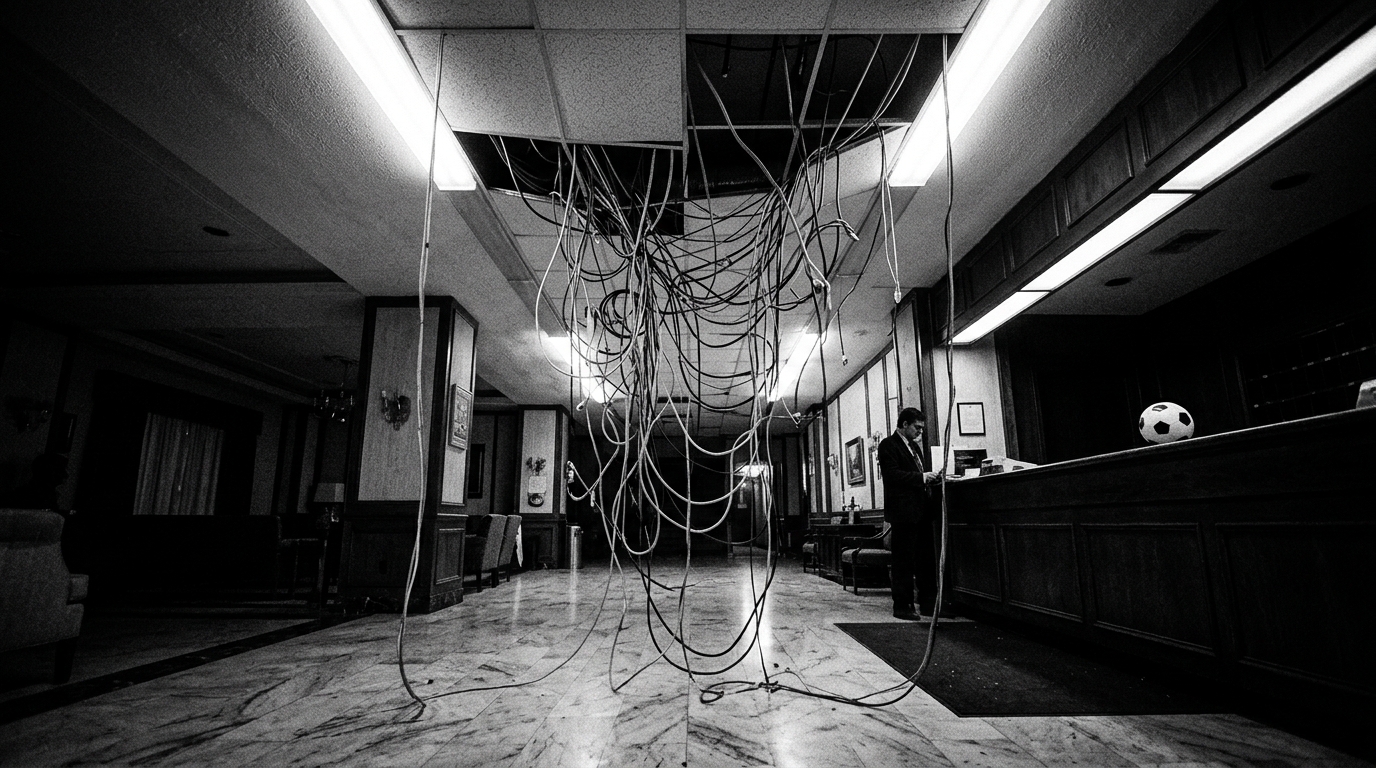
Let me translate that out of consultant-speak: more than half these properties can't run the technology they need to handle what's coming. We're not talking about AI concierges or smart room controls. We're talking about basic connectivity. Legacy wiring. Buildings from the '70s and '80s where the electrical infrastructure creates interference that kills WiFi access points (trust me... I know this problem intimately, and I've been arguing about a $15,000 rewire for two years at a property I know well). The MX$11 billion (roughly $635 million) being invested in hotel modernization sounds impressive until you realize the opening match is less than two months away. You don't rewire a hotel in two months. You barely get through permitting in two months.
What's actually happening is a capabilities gap that's about to get stress-tested in real time. Large chain hotels... your Marriotts, your Hiltons, your IHGs... have been investing in AI-driven revenue management, digital keys, contactless check-in. They'll handle the surge. They have the systems, the bandwidth, the support infrastructure. But independent hotels, the ones that make up the majority of inventory in these host cities, are running on infrastructure that wasn't designed for 2010, let alone 2026. And here's what makes this worse: FIFA already canceled 40% of its blocked reservations in Mexico City back in March... roughly 800 rooms out of 2,000. The hotel association called it "normal market dynamics." Maybe. But when the organizing body for the event starts releasing rooms, it tells you something about how demand is actually shaping up versus the projections everyone's been building budgets around.
The real problem isn't the World Cup itself. It's what the World Cup is exposing. These structural deficiencies... limited connectivity, talent shortages in technical roles, legacy systems that can't integrate with modern distribution or revenue management platforms... they existed before FIFA chose Mexico as a host. The event just put a deadline on problems that properties have been deferring for years. I consulted with a hotel group last year that was running three separate systems with no integration between them. Reservations in one, housekeeping in another, guest communications through a third. Staff spent more time toggling between screens than actually serving guests. That's not a World Cup problem. That's an every-day problem that becomes catastrophic when occupancy spikes to 95% and every guest expects the experience they're paying premium rates for.
Look, the money being invested is real. FIFA's allocated $3.76 billion globally for the 2023-2026 cycle, including $133 million for ICT infrastructure. But technology investment without technical talent to implement and maintain it is just expensive equipment gathering dust. You can buy the best PMS on the market... if the person working the night shift can't troubleshoot a system failure at 2 AM, you haven't solved anything. You've just added a new way for things to break. The Dale Test applies here as much as it applies anywhere: when this system fails during a sold-out World Cup night, what's the recovery path for the least technical person on shift? If nobody's asking that question in Mexico City right now, a lot of guests are about to find out the answer the hard way.
If you're running a property in a market that's hosted (or is about to host) a major event... World Cup, Olympics, Super Bowl, whatever... here's the lesson Mexico is teaching right now. Technology infrastructure isn't something you sprint toward when the deadline appears. It's something you build when you have time to get it wrong, fix it, and get it right before the pressure hits. The time to audit your connectivity, your system integration, and your team's ability to troubleshoot failures was six months ago. If you haven't done it, do it this week. Walk your property at 2 AM. Count the dead spots. Watch your night auditor interact with every system they touch. That's your real technology readiness assessment... not the vendor demo, not the brand scorecard. What actually works when nobody from IT is in the building. This is what I call the Vendor ROI Sentence... if you can't tie a technology investment to a specific operational outcome in one sentence, you're buying a story, not a solution. "This system lets my front desk check in a guest in 90 seconds during peak arrival" is a sentence. "This platform enhances the digital guest experience" is not.