Today · Sep 12, 2026
The World Cup Filled Your Rooms. The Question Is What You Learned From It.

The World Cup Filled Your Rooms. The Question Is What You Learned From It.

U.S. host city hotels averaged 20%+ RevPAR growth during the World Cup, but the numbers underneath tell a more complicated story about rate strategy, demand displacement, and whether a once-in-a-generation event actually taught the industry anything it'll use next month.

Available Analysis

I worked with a GM once who hosted a massive regional event... college football conference championship, 50,000 people flooding a mid-sized market for three days. He jacked rates 60% above normal, sold out, high-fived his revenue manager, and then spent the next six weeks watching his regulars book at the Courtyard down the street because they remembered what he charged them that weekend. He told me later, "I won three days and lost three months."

That story keeps coming back to me as the World Cup dust settles.

Look... the top-line numbers are impressive. Host city RevPAR growth averaging north of 20% during the tournament. New York saw a 41.5% ADR spike the week of the final. Monterrey hit 64% occupancy with rates up 38%. If you were sitting in a host market with rooms to sell, June and early July were very good to you. But here's what the victory lap is going to skip over: this was overwhelmingly a rate event, not an occupancy event. In market after market, the gains came from charging more to fewer (or the same number of) guests, not from filling rooms that would have otherwise sat empty. Guadalajara's occupancy came in 54% below initial projections. New York City hotels generated somewhere between $100M and $150M in incremental revenue against a projection of $250M-$300M before a late surge from the final pulled them closer to target. Nearly 80% of U.S. hoteliers, according to AHLA, tracked below their initial forecasts.

And then there's the part nobody's talking about loudly enough: demand displacement. CoStar reported that non-host markets saw a 6.8% RevPAR bump in June. That's not World Cup tourism. That's your corporate group and your leisure travelers who looked at host city rates, said "absolutely not," and booked somewhere else. Some GM in a secondary market 200 miles from a host city had his best June in five years and has no idea it was because you priced your market into the stratosphere. That demand didn't appear from nowhere. It moved. And some of it isn't coming back to your market at the old price point. This is what I call the Rate Recovery Trap... you pushed rate because you could, and now the market remembers what you charged. Your OTA listing history remembers. Your corporate accounts remember. Retraining expectations downward is possible but it takes longer than the event lasted, and it costs you in ways that don't show up on a single month's P&L.

The real operational lesson here isn't about mega-events. It's about pricing discipline and honest forecasting. FIFA canceled room blocks. Visa barriers suppressed international arrivals. Short-term rental supply surged (Guadalajara saw a 49.7% increase in Airbnb-type inventory). Every one of those factors was knowable in advance, and every one of them was waved away by host committees and tourism boards running projections built on best-case assumptions. If your revenue strategy for a mega-event starts with the tourism board's press release, you've already made your first mistake. The properties that performed best were the ones that priced dynamically based on real booking pace, not based on what some committee projected at a press conference 18 months ago.

Here's what matters now. The World Cup is over. The LA Olympics are four years out. The question for every operator who rode this wave isn't "how much did we make?" It's "what did we learn about our pricing ceiling, our market's real demand elasticity, and our ability to capture rate without losing the base business that pays the bills the other 50 weeks of the year?" Because a $302 average nightly rate on Airbnb in Miami during match days is a data point. Your comp set's performance in August, when nobody's playing soccer and the tourists are gone... that's the truth.

Operator's Take

If you're a GM in a host market, pull your booking pace for August and September right now and compare it to the same window last year. That's where you'll see whether you have a rate hangover. If pace is soft, resist the temptation to discount your way back to volume... that compounds the problem. Instead, reach out directly to your top 10 corporate accounts this week with a personalized rate proposal that acknowledges the event is over without undercutting your positioning. For those of you in non-host markets who had a great June... understand why. That displaced demand is a one-time gift unless you captured those guests' information and gave them a reason to come back. If you didn't, you got lucky. Luck isn't a revenue strategy.
Read full analysis → ← Show less
Source: Google News: Hotel Industry
World Cup Hotels Crushed It on Rate. Now Comes the Hangover.

World Cup Hotels Crushed It on Rate. Now Comes the Hangover.

Host city hotels pushed ADR up 21% during the World Cup while watching occupancy slide... a revenue management masterclass that's going to create the ugliest comp set conversation of 2027. If you're in a host market, the celebration ends when you try to explain next June to your owner.

Available Analysis

I worked a Super Bowl host hotel once. Not the glamorous part... the part where you're running 94% occupancy at rates you'll never see again, your staff is stretched past the breaking point, and every guest complaint gets answered with "well, it IS Super Bowl weekend." We made a fortune. And then February turned into March, and March looked like any other March, except now ownership had a taste of what the building could do on its best night and wanted to know why we couldn't do it every night.

That's the conversation coming for every GM in every World Cup host city right now.

The numbers from CoStar tell one story on the surface and a completely different one underneath. Host market RevPAR climbed more than 20% during the group stage. ADR surged roughly 21% during the knockout round. Kansas City... one match... posted a 49.9% RevPAR increase. Philadelphia hit a 74.3% weekend RevPAR spike (with an assist from the Fourth of July). Those are career numbers. The kind you screenshot and text to your regional VP at 7 AM.

But here's what's happening in the fine print that nobody's texting about. Host market occupancy dropped 2.8 percentage points during the final week of the group stage. Demand fell 2.9%. Luxury and upper-upscale properties in World Cup markets saw ADR jump 27.7% while occupancy declined four full points and demand dropped 4.2%. Translation: the hotels priced out the regular guests, filled the gap with World Cup travelers paying extraordinary rates, and made the P&L look phenomenal. That's not a sustainable business model. That's a one-time event executed well. There's a meaningful difference. What you had was the ultimate rate-over-occupancy play... the demand displacement was real, the regular business went elsewhere, and the question is whether that displaced demand comes back or found somewhere it likes better.

The most interesting data point is one that should make every revenue manager in a host city sit up straight. Non-host markets combined for a 7.6% RevPAR increase during the same period and strung together three consecutive weeks above 6% growth since the tournament started. Your displaced demand didn't evaporate. It went to your competitors in other markets. And some of those guests had a perfectly nice stay somewhere else. Think about that for a minute. The World Cup didn't just give host cities a windfall... it gave non-host cities a free trial of your customers. Some of those customers are going to come back. Some won't.

Now multiply this by what's coming. The 2028 LA Olympics. The 2031 Women's World Cup. The 2034 Salt Lake Olympics. Every one of these events is going to create the same dynamic... extraordinary short-term rate premiums, demand displacement, a comp set you can't replicate the following year, and an ownership group that remembers the peak and wants to know why you can't sustain it. The operators who survive this cycle are the ones who build the narrative now. You document the one-time event revenue separately. You show what baseline performance looks like without the spike. You make sure your 2027 budget has a realistic story for why June will look like a decline even though the business is healthy. Because if you let ownership anchor to 2026's World Cup numbers as the new baseline, you're going to spend all of 2027 explaining a "decline" that's actually just normalcy.

Operator's Take

If you're a GM in a World Cup host city, your single most important task this week is building the narrative before the numbers become the narrative for you. Pull your June and July STR data. Separate the World Cup weeks from the baseline weeks. Build a simple one-page comparison that shows what the property did during event dates versus non-event dates. This is what I call the National Number Trap... those 20%+ RevPAR gains are going to show up in your trailing twelve, and in six months someone on the ownership side is going to point at them and ask why you're "down." Get ahead of it now. Present the event premium as exactly what it was... a windfall, not a new floor. And if you're in a future mega-event city (LA, Salt Lake), start the comp set conversation now. Your 2027 and 2028 budgets need a methodology for handling one-time spikes that doesn't let a single month distort twelve months of expectations.

Read full analysis → ← Show less
Source: Google News: CoStar Hotels
Vancouver Hit a $406 Hotel Rate Record. Occupancy Dropped 16 Points. That's Not a Win.

Vancouver Hit a $406 Hotel Rate Record. Occupancy Dropped 16 Points. That's Not a Win.

Metro Vancouver's World Cup rates shattered Canadian records at $406 a night while downtown occupancy cratered from 91% to 75%. If you think record ADR with collapsing occupancy is something to celebrate, you haven't done the RevPAR math... and you definitely haven't looked at what happens next summer when the circus leaves town.

Available Analysis

I worked with a GM once who inherited a property right after a major international sporting event had blown through town. Previous management had jacked rates to the ceiling, posted record ADR numbers, sent the owner a glowing recap deck with graphs that all pointed up and to the right. Beautiful stuff. The GM asked one question in his first week: "What was our RevPAR index during the event versus the month before and the month after?" Nobody could answer him. Because nobody had bothered to check. They were too busy celebrating the rate.

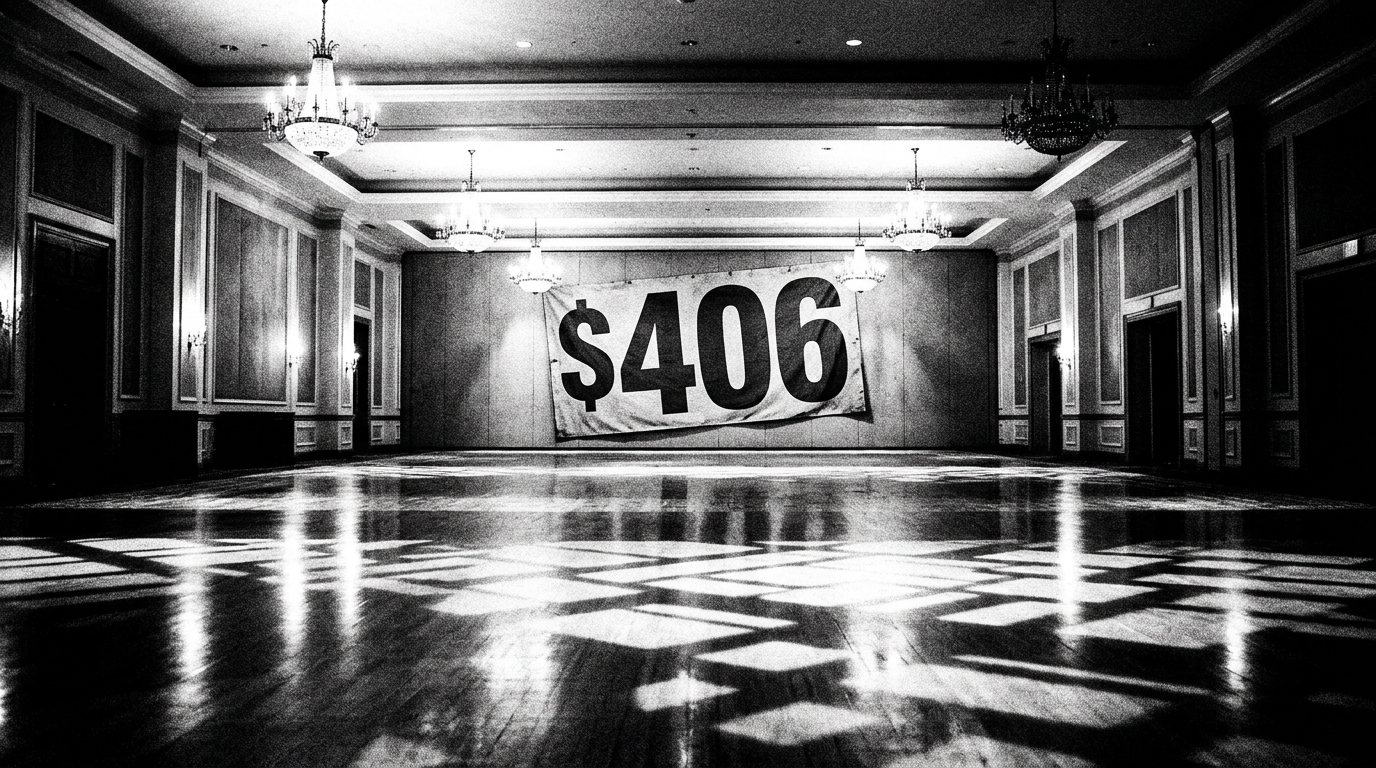
That's Vancouver right now. The headline number is $406.34 average nightly rate in June... a Canadian record, 21.3% above the prior year. Luxury properties reportedly pushed north of $1,800 on game nights. The press releases practically write themselves. But buried underneath the champagne is a number that should make every operator in the market deeply uncomfortable: downtown Vancouver occupancy in June hit roughly 75%. The prior June? 91%. That's a 16-point occupancy collapse happening at the same time as a rate record. Which means you had fewer guests paying more per night, and the total revenue picture is a whole lot murkier than the ADR headline suggests.

Let's be honest about what actually happened. FIFA released something like 15,000 room-nights per night back into the market in March after blocking them for months. The British Columbia Hotel Association publicly blamed "flawed messaging" for creating the impression that the city was sold out, scaring away regular tourists and convention business. An economist from Signal49 Research suggested the World Cup didn't create new tourism so much as it displaced existing tourism. So the families who would have come in June went somewhere else. The conventions that normally book Vancouver in summer moved to different dates or different cities. You traded your reliable, repeatable summer base for a one-time spike... and the spike, while dramatic, didn't fill rooms the way normal summer demand would have.

Here's where this gets really interesting for anyone paying attention to the long game. Destination Vancouver's CEO is already talking about preventing a post-World Cup tourism slump, explicitly referencing the lull that followed the 2010 Olympics. That's not casual commentary. That's an organization that has watched this movie before and is worried about the sequel. The B.C. government is projecting over a billion dollars in GDP contribution from 2026 through 2031, but spread over five years, that number gets thinner fast (especially against $578 million in host-city costs and another $242 million in security spending). The net math on mega-events is almost never as clean as the politicians promise. I've been around long enough to see cities chase these things, get the sugar high, and then spend two years trying to figure out why their booking pace is soft.

The real test isn't June 2026. It's June 2027. When there's no World Cup, no FIFA room blocks, no 350,000 visiting fans... and every hotel in the market has been conditioned to price at $400+. Good luck holding that rate with your normal comp set in a normal summer. The market memory of what guests "should" pay is going to collide hard with the reality of what they will pay when the only draw is Stanley Park and Granville Island. This is what I call the Rate Recovery Trap, except in reverse... instead of cutting rate and trying to retrain the market upward, Vancouver pushed rate to the stratosphere and now has to figure out how to keep it anywhere close to that level when the demand driver disappears. You can't retrain a market that never existed at those prices organically. That rate was an event, not a floor.

Operator's Take

If you're running a property in a market that's hosting (or about to host) a major event... World Cup games, Olympics, Super Bowl, whatever the next one is... learn from Vancouver. Track your displaced demand, not just your event demand. How many group blocks moved off your books? How many repeat leisure guests went elsewhere? That number is your real cost of participation, and nobody puts it in the recap. Run a RevPAR analysis for the full quarter, not just the event window, because the occupancy dip before and after the event will eat into your rate gains faster than you think. And start building your post-event rate strategy now. Don't wait until Q4 to figure out your pricing for next summer when the event is gone and your cost basis hasn't changed. The owners who win this are the ones who banked the cash from the spike and set realistic expectations for the correction. The ones who lose are the ones who baked a World Cup rate into next year's budget.

Read full analysis → ← Show less
Source: Google News: CoStar Hotels
New Jersey Hotels Priced for a World Cup Bonanza. The Rooms Are Still Empty.

New Jersey Hotels Priced for a World Cup Bonanza. The Rooms Are Still Empty.

Hotels near MetLife Stadium are charging $500 to $900 a night for World Cup matches while running occupancy as low as 8%. The "long-term growth" story everyone's selling requires you to survive the short-term math first.

Available Analysis

I watched a GM I know prepare for the Super Bowl once. Spent six months getting ready. Hired extra staff, stocked up on everything, negotiated with three different shuttle companies, bought new lobby furniture. The game came. His hotel filled up for two nights. Then Monday morning hit and he was staring at a payroll overhang, a storage room full of extra inventory, and a Tuesday that looked exactly like every other Tuesday. He turned to me at the bar that week and said, "I made money on the weekend and lost it on the setup."

That's what I keep thinking about when I read these breathless projections about the World Cup driving $3.3 billion in economic activity across the New York-New Jersey region. The headline number sounds incredible. The property-level reality is something else entirely. A hotel near MetLife Stadium is reporting occupancy between 8% and 30% for group stage games. Eight percent. For the biggest sporting event on the planet. Meanwhile, a two-star motel nearby is asking $500 a night and an Extended Stay is pushing past $900 for the final. So the rates are astronomical and the rooms are empty. If you can't see the problem with that equation, I can't help you.

Here's what's actually happening. Eighty percent of hotels in U.S. host cities are reporting bookings below initial forecasts, according to the AHLA. The Hotel Association of New York City already cut its World Cup room revenue forecast by 60%... down to roughly $60 million. Expected visitors for the New York area dropped from FIFA's projected 1.2 million to around 500,000. The culprits aren't mysterious. Ticket prices over $11,000 for the final. Airfare through the roof. A $250 visa integrity fee that took effect last October. NJ Transit charging $98 round-trip to get to the stadium. You've priced out the exact fans who would have filled your hotel rooms for five nights. The ones left can afford the tickets but they're staying in Manhattan, not East Rutherford.

The "long-term growth" argument is the one that really gets me. The theory goes like this: host the World Cup, showcase New Jersey to billions of global viewers, and reap the tourism benefits for years to come. Maybe. I've been in this business long enough to have heard that same pitch for every mega-event going back to the '90s. Sometimes it works. Sometimes the Olympic host city is still paying off bonds a decade later. The difference is always execution at the local level, and right now the execution story is hotels pricing themselves into empty rooms while the state charges fans $98 for a train ride. That's not showcasing your hospitality. That's testing its limits. The demand is arriving late, it's arriving thin, and it's concentrated on specific match days rather than any kind of sustained surge. Tourism Economics' own analysis says hotel revenue bumps of 7% to 25% are limited to match dates, not the full tournament window. If your revenue strategy was built on 40 consecutive nights of elevated demand, your revenue strategy was wrong.

Look... there's a real opportunity here for operators who are honest about what this event actually is. It's a series of one-night and two-night spikes separated by valleys. The properties that will make money are the ones that price for the reality (not the fantasy), keep their cost structure lean during the gaps, and treat every international guest like a future direct booking. Because that's where the "long-term growth" actually lives... not in some abstract economic impact study, but in whether the family from São Paulo who stayed at your hotel remembers the experience enough to come back. Or tell someone. The event is here. The projections are mostly fiction. The question now is what you do with the guests who actually show up.

Operator's Take

If you're running a hotel within 30 miles of MetLife Stadium, stop waiting for the demand wave that isn't coming and start managing what you've got. Drop your minimum-stay requirements for non-match nights immediately... that inventory is going to spoil. For match nights, look at your pickup pace right now and price to fill, not to maximize a rate that nobody's paying. This is what I call the Rate Recovery Trap in reverse... you've already trained the market to expect $500 a night, and when you inevitably have to discount to fill rooms, you've anchored a price nobody believed was real in the first place. Run your actual numbers: if you hired extra staff, extended hours, or committed to vendor contracts for this event, calculate your true breakeven occupancy at your current ADR. Not the rate you're asking. The rate you're getting. Then focus every front desk interaction on capturing guest data for direct future bookings. That's the only "long-term growth" that's actually in your control.

Read full analysis → ← Show less
Source: Google News: Hotel Industry
Vancouver's World Cup Occupancy Is Lower Than Last Year. There Was No World Cup Last Year.

Vancouver's World Cup Occupancy Is Lower Than Last Year. There Was No World Cup Last Year.

Vancouver hotels are pacing 15% behind last year's occupancy for World Cup match days... and last year had no mega-event at all. The government is calling it a "once-in-a-generation opportunity," which should tell you everything about who's holding the risk and who's holding the microphone.

Available Analysis

I worked with a GM once who got talked into blocking 40 rooms for a regional soccer tournament. The organizer promised 200 room nights over the weekend. The GM held those rooms off the market for six weeks. Tournament weekend came, they picked up 61 rooms total. The organizer said "but think of the exposure." The GM said something back that I won't repeat here, but it involved the word "exposure" and a suggestion about where to put it.

That's what I think about every time a government official tells a hotel market to focus on the long-term benefits of a mega-event.

Here's what's happening in Vancouver right now. The FIFA World Cup kicks off tomorrow. Vancouver is hosting seven matches. And hotel occupancy for the first match day is sitting at 57.4%... down from 71.6% on the same date last year. The Canada-Qatar match on June 18th? 50.3% occupancy versus 73.8% last year. Five of seven match days are pacing below 50% occupancy. Let me say that differently so it lands. A city hosting the biggest sporting event on the planet has LOWER hotel demand than a random Wednesday in June 2025 when nothing was happening.

How does this happen? Start with FIFA canceling 70-80% of its reserved room block in March, dumping roughly 15,000 room nights back onto the market after hotels had been holding that inventory. Then add early messaging that told potential visitors Vancouver was "sold out" (it wasn't... it was never close). Then factor in short-term rental listings jumping 11.3% in the ten months before the tournament because every Airbnb host in British Columbia smelled opportunity. Then recognize that a 48-team tournament spread across three countries and 16 cities means the demand is diluted to a degree nobody modeled honestly. And here's the part that really stings... average booked rates for game days are up 49% year over year. Hotels priced for a windfall that isn't walking through the door. They're running aggressive rates into a market that's booking at half the pace they expected. The math on that is brutal. You're not just missing volume, you're missing volume at rates that are pushing away whatever demand remains. This is what I call the Rate Recovery Trap, except Vancouver is living the inverted version... they ran rate UP based on projected demand that never materialized, and now they're going to spend weeks (maybe months) retraining the market on what a Vancouver hotel room actually costs.

The B.C. government's response is instructive. The Jobs Minister says bookings are increasing "week over week" and that Vancouver leads all host cities in CoStar's survey. The Tourism Minister calls it a "once-in-a-generation opportunity" that will generate a billion dollars in GDP over five years. Here's what neither of them mentions: the hosting cost is $578 million. The hotels that held inventory and priced aggressively based on projections don't get a five-year payback horizon. They get a June P&L. And that June P&L is going to show lower occupancy, potentially lower RevPAR (because those rates are going to come down fast when reality sets in), and all the incremental costs of operating during a mega-event... extended hours, additional security, event-night staffing, the wear and tear that comes with it. The government gets the press conference. The hotels get the bill.

Look, there's still time for a late-booking surge. Some of these numbers will improve. But the structural lesson here isn't about Vancouver specifically. It's about what happens every single time a market prices to the projection instead of the demand. Every Olympics, every Super Bowl, every World Cup... somebody in a conference room shows a PowerPoint with occupancy estimates north of 90% and ADR premiums that would make Manhattan blush. And every time, a meaningful percentage of hotel operators discover that mega-event math is built for the entity selling the hosting rights, not the people holding the real estate.

Operator's Take

If you're a GM in any of the remaining World Cup host cities watching Vancouver right now, do three things this week. First, check your actual pace against your budgeted pace for match days... not against your dream scenario, against what you told your owner in January. If you're short, present the gap now with a plan, not after the event with an excuse. Second, build your rate-drop triggers in advance. Know exactly when you shift from holding rate to filling rooms, and set those dates now so you're not making panicked decisions at 10 PM the night before a match. Third, look at your non-event demand. Vancouver's conventional business travelers and leisure tourists got scared away by "sold out" messaging and inflated rates. Your regular guests are watching your pricing too. The World Cup is a few weeks. Your repeat guests are forever. Don't sacrifice the relationship for a rate that isn't converting.

Read full analysis → ← Show less
Source: Google News: Hotel Occupancy
End of Stories