Today · Sep 13, 2026
Choice Hotels' $0.29 Dividend Tells You More About Capital Strategy Than Leadership

Choice Hotels' $0.29 Dividend Tells You More About Capital Strategy Than Leadership

Choice declared its first quarterly dividend at $0.2875 per share, yielding 1.1%, while swapping general counsels. One of these things matters for shareholders. The other is a press release.

$0.2875 per share. That's Choice Hotels' new quarterly dividend, annualized to $1.15, yielding roughly 1.1% at current prices. The payout ratio lands around 14.5% against 2025 diluted EPS of $7.90. That's not a dividend. That's a rounding error dressed up as a capital return event.

Let's decompose this. Choice returned $190 million to shareholders in 2025. $136 million went to buybacks. $54 million went to dividends. The ratio tells you everything about management's actual priorities. They've retired over 55% of outstanding shares since 2004. The buyback IS the capital return program. The dividend is the garnish. An owner I spoke with last year put it perfectly: "They're paying me a dividend with one hand and telling me to reinvest with the other. I just want to know which hand to watch." Watch the buyback hand.

The 2026 outlook projects adjusted EBITDA of $632M to $647M and adjusted EPS of $6.92 to $7.14. That EPS range is flat to slightly down from 2025's $6.94 adjusted figure. Flat guidance with a new dividend commitment means something has to give. Either the buyback pace slows, or they're betting on the top end of that EBITDA range. Four analysts rate CHH a sell. Nine say hold. Two say buy. The average 12-month price target is $111.93. The market is not calling this a game changer (the headline's word, not mine).

The general counsel transition is internal. Twenty-year veteran replacing a 14-year veteran. This is succession planning, not disruption. I've audited companies where a GC change actually mattered... usually because litigation exposure was shifting or governance structure was being rebuilt ahead of a transaction. Nothing in Choice's current posture suggests either. They walked away from the $8 billion Wyndham hostile bid in March 2024. The new GC inherits a cleaner strategic landscape than the outgoing one navigated.

The real number here is 89.49%. That's Choice's gross profit margin. Asset-light franchise models print margins like that because somebody else owns the building, funds the PIP, and absorbs the downside when RevPAR contracts. The dividend yield of 1.1% looks modest until you remember the franchisees are the ones holding real estate risk. Choice collects fees. The 14.5% payout ratio gives them room to grow the dividend for years without straining the model. The question is whether that growth attracts enough income-focused capital to offset the analysts who think the stock is overvalued. At $111.93 consensus target against a stock that recently dropped 5.37% through its 5-day moving average, the market's answer so far is: not yet.

Operator's Take

Here's what nobody's telling you... if you're a Choice franchisee, that $0.29 quarterly dividend is coming from YOUR fees. Every dollar they return to shareholders is a dollar that didn't go into loyalty program investment, distribution technology, or revenue delivery tools that actually put heads in your beds. Look at your loyalty contribution numbers for the last 12 months. If they're not beating 35%, you're funding someone else's dividend check. Ask the question at your next franchise advisory meeting. Make them answer it with actuals, not projections.

— Mike Storm, Founder & Editor
Read full analysis → ← Show less
Source: Google News: Choice Hotels
J.P. Morgan Says Hotel AI Will Pay Off in 2026. Let's Check Their Math.

J.P. Morgan Says Hotel AI Will Pay Off in 2026. Let's Check Their Math.

A sell-side research note claims hotel AI investments hit an "inflection point" this year with measurable EBITDA gains. The headline numbers are impressive. The derived numbers tell a different story.

Available Analysis

J.P. Morgan analyst Daniel Politzer says 2026 is the year hotel AI spending starts paying off. The source article doesn't break out the exact capital allocation, but the major brands are directing meaningful portions of their technology budgets at AI-adjacent transformation. Let's decompose that.

The bull case relies on a few data points that keep circulating. Hyatt claims 20% greater productivity in group sales teams using AI tools. Wyndham says AI-powered call centers are cutting labor costs for franchisees. A Deloitte study (sourced from vendor-friendly research, which I always flag) claims 250% ROI within two years, driven by 15-20% staffing savings and up to 10% RevPAR lift. Those numbers are doing a lot of heavy lifting. A 10% RevPAR boost from AI-based pricing at a 200-key select-service running $95 RevPAR is $9.50 per room per night... $693K annually. Against what implementation cost? The research doesn't say. Nobody's showing the denominator.

Here's what the headline doesn't tell you. "Productivity gains" in group sales don't flow directly to EBITDA unless you reduce headcount or close incrementally more business with the same team. Hyatt hasn't specified which one. A 20% productivity number without a corresponding revenue or labor line item is a metric without a home on the P&L. I've audited management companies that reported "efficiency improvements" for three consecutive years while GOP margins stayed flat. The improvements were real. The earnings impact wasn't. Same structure here... until someone shows me the flow-through, the productivity number is a press release, not a finding.

The franchise owner's math is where this gets uncomfortable. Wyndham's AI call center savings accrue to the franchisee, which is genuinely interesting... if the franchisee isn't simultaneously absorbing a technology fee increase that offsets the labor reduction. I analyzed a portfolio last year where the management company rolled out an "AI-enhanced" revenue management layer. The software cost $4.20 per room per month. The incremental RevPAR gain over the existing RMS was $1.80 per occupied room at 68% occupancy... roughly $1.22 per room per month. The owner was paying $2.98 per room per month for the privilege of saying they had AI. Check again.

The real number here is not whether AI creates value in hotels. It does. Dynamic pricing has been creating value for 15 years (we just called it revenue management). The real number is whether 2026 AI spending generates returns that exceed the cost of capital for the owners funding it. J.P. Morgan is a sell-side firm covering publicly traded hotel companies. Their job is to tell investors the story is getting better. The owner at a 150-key branded property writing checks for technology mandates needs a different calculation... one that starts with total cost deployed and ends with actual incremental free cash flow. That calculation is conspicuously absent from every AI earnings narrative I've read this quarter.

Operator's Take

Here's what I'd tell you if you're a GM watching your management company or brand roll out new AI tools this year. Track two numbers: the actual monthly cost (all of it... licensing, integration maintenance, the hours your team spends feeding the system) and the actual incremental revenue or labor savings you can tie directly to the tool. Not "productivity." Not "efficiency." Dollars in, dollars out. Put it on a spreadsheet. Update it monthly. When your owner asks whether the AI investment is working, you want to be the one with the answer... not the brand's regional VP with a slide deck. The math doesn't lie. But somebody has to do the math.

— Mike Storm, Founder & Editor
Read full analysis → ← Show less
Source: Google News: Hotel Industry
IHG's "Quality Compounder" Story Sounds Great. Here's What It Means If You're Actually Running One of Their Hotels.

IHG's "Quality Compounder" Story Sounds Great. Here's What It Means If You're Actually Running One of Their Hotels.

Berenberg just slapped a buy rating on IHG and called it a quality compounder. Wall Street loves the stock. But the numbers underneath tell a very different story depending on which side of the management agreement you're sitting on.

Available Analysis

Let me tell you what caught my eye this week. Berenberg comes out with a glowing report on IHG... "quality compounder," "accelerated growth," buy rating with a $157 price target. And look, on paper, the story is clean. 16% adjusted EPS growth in 2025. Over $1.1 billion returned to shareholders. A record 443 hotel openings. Net system growth of 4.7% for the fourth consecutive year of acceleration. If you're an IHG shareholder, you're having a great week.

But here's the number that should be tattooed on every franchisee's forehead: Americas RevPAR was up 0.3% in 2025. Zero point three. And Q4? U.S. RevPAR was actually down 2%. So the company is posting 16% EPS growth while the hotels generating the fees are essentially flat or declining on a per-room basis. That's the magic of asset-light, folks. The franchisor's earnings are compounding beautifully while the owner's top line is treading water. Same P&L, two completely different stories depending on which line you stop reading at.

I've seen this movie before. I sat in an owner's meeting once... must have been 15 years ago... where the brand rep was celebrating "record system growth" while half the room hadn't seen a RevPAR increase in 18 months. One owner in the back raised his hand and said, "That's great. My lender doesn't care about your system growth. He cares about my debt service coverage ratio." Room went quiet. That tension between franchisor prosperity and franchisee reality isn't new. But it's getting louder. IHG is projecting 4.4% net unit growth for 2026 while simultaneously launching yet another collection brand (the Noted Collection, targeting conversions) and pumping the loyalty program past 160 million members at 66% contribution. Those are impressive franchise-level numbers. The question is whether the individual hotel owner sees enough of that loyalty contribution to justify what they're paying for it.

And about those conversions... 52% of IHG's 2025 openings were conversions. More than half. That's not organic growth. That's rebranding existing hotels with new signs and new fee structures. Some of those conversions will genuinely benefit from the IHG system. Some of them are owners who got sold a loyalty contribution number that looked great in the pitch deck and will look different 24 months from now. I've watched enough franchise sales presentations to know that the projected loyalty contribution and the actual loyalty contribution are often two very different numbers. And by the time you find out which one you got, you've already signed the agreement and spent the PIP money.

Here's what nobody's telling you about the "quality compounder" narrative. It works precisely because IHG doesn't own the hotels. They collect fees on the way up and they collect fees on the way down. When RevPAR drops 2% in Q4 like it did, IHG's fee income barely flinches because system size keeps growing. But at your property? That 2% decline hits your GOP directly. Your labor didn't get 2% cheaper. Your insurance didn't drop. Your property taxes didn't go down. The $950 million buyback program IHG just announced for 2026? That's funded by franchise fees and loyalty assessments from hotels where the GM is trying to figure out how to staff breakfast with two fewer people than last year. I'm not saying IHG is doing anything wrong. They've built an excellent business model... for IHG. The question every owner should be asking is whether it's an excellent model for them.

Operator's Take

If you're an IHG franchisee and your owner is reading this Berenberg report thinking "great, our brand partner is thriving"... sit them down and walk through YOUR numbers. Pull your actual loyalty contribution percentage versus what was projected at signing. Calculate your total brand cost as a percentage of revenue (fees, assessments, PIP amortization, mandated vendors... all of it). If you're north of 18% and your RevPAR was flat or negative last year, that's a conversation you need to have now, not at renewal. And if you're an independent owner being pitched an IHG conversion right now, get the actuals from comparable properties in your comp set. Not the projections. The actuals. There's a filing cabinet somewhere with the truth in it.

Read full analysis → ← Show less
Source: Google News: IHG
A Five-Story Hilton in Downtown Milledgeville? Let's Talk About What "Four-Star" Actually Costs.

A Five-Story Hilton in Downtown Milledgeville? Let's Talk About What "Four-Star" Actually Costs.

A local ownership group just cleared a rezoning hurdle for a proposed upscale Hilton in a small Georgia college town, and everyone's excited about the renderings. I'm looking at the math underneath them.

So here's the scene. Milledgeville, Georgia... population roughly 19,000, home to Georgia College, a charming historic downtown, and now, if the city council agrees, a five-story Hilton hotel and restaurant that just got a rezoning recommendation from the local planning and zoning commission. The Fowler Flemister Pursley family is the ownership behind this, Duckworth Holdings is assembling the parcels, and Lord Aeck and Sargent drew up the plans. Everyone on the commission voted yes. The mayor and council have been publicly supportive since at least last September. The energy in the room is clearly "this is happening." And I get it. I do. A four-star hotel in a downtown that wants to be a destination? That's exciting. That's the kind of project that gets a standing ovation at a city council meeting. But I've sat through a lot of standing ovations for hotel projects, and the applause doesn't help when the loyalty contribution comes in 12 points below projection three years later.

Let me be clear... I'm not rooting against this. I grew up watching my dad pour his life into properties in markets just like this one. Secondary and tertiary towns where the hotel IS the downtown revitalization strategy, where local families put real money on the line because they believe in their community. That's beautiful. That's also exactly the kind of project where the brand economics have to be scrutinized line by line, because the margin for error is razor thin. When you're building an upscale Hilton (and "four-star" is the language the council used, which likely puts this in Curio Collection, Tapestry Collection, or possibly a full-service Hilton Hotels & Resorts flag), you're signing up for a PIP standard, a loyalty program assessment, brand-mandated vendors, a reservation system fee, and a marketing contribution that together can eat 15-20% of your topline revenue before you've paid a single housekeeper. In a market like Milledgeville, where your demand generators are a university, a state government campus, and seasonal tourism... can the rate and occupancy sustain that load? That's the question the renderings don't answer.

Here's what I want the ownership group to have on the table (and maybe they do... I'm speaking to the pattern, not to these specific owners). Hilton reported its biggest development pipeline in history at the end of 2025. Over 3,700 hotels, more than 520,000 rooms, construction starts up over 20%. That's extraordinary momentum for the brand, and it means Hilton's franchise development team is closing deals at a pace that would make a used car lot jealous. (I say that with love. I used to BE the franchise development team.) When the pipeline is this hot, the sales projections tend to get... optimistic. I've read hundreds of FDDs. The variance between projected and actual loyalty contribution should be criminal. A family ownership group in a tertiary Georgia market needs to be stress-testing those projections against a downside scenario where loyalty delivers 60-65% of what's promised, where ADR compression hits during shoulder season, and where the labor cost to staff an upscale food and beverage operation in a market this size is 15-20% above the pro forma assumption. Because the pro forma never accounts for the fact that your executive chef might leave for Atlanta nine months in, and replacing her takes four months and a salary bump.

I sat in a brand pitch once... different flag, different market, same energy... where the developer showed the most gorgeous lobby rendering you've ever seen. Soaring ceilings, local art, a craft cocktail bar with Edison bulbs. Stunning. And I asked one question: "What's your plan when the bartender calls in sick on a Friday and your backup is the front desk agent who doesn't know how to make an old fashioned?" The room got very quiet. The rendering didn't have an answer. The Deliverable Test isn't about whether the concept is beautiful. It's about whether the concept survives a Tuesday night in March with two call-outs and a sold-out Georgia College parents' weekend happening simultaneously. Can the team in Milledgeville... a market that doesn't have a deep hospitality labor pool... execute a four-star experience consistently enough to justify the rate premium the brand economics require? That's not a zoning question. That's an operational reality question, and it's the one that determines whether this family builds generational wealth or takes on generational debt.

I genuinely hope this works. Milledgeville deserves a great hotel. The ownership structure (local families, committed to the community, skin in the game) is exactly the kind I root for. But rooting isn't analysis. If you're an owner being courted by a brand right now... any brand, any market... pull the FDD. Find properties in comparable markets (sub-25,000 population, limited corporate demand, university-driven). Look at actual performance, not projected performance. And run your model at 70% of the brand's loyalty contribution estimate. If the deal still works at 70%, you might have something real. If it only works at 100% of projection... you don't have a hotel deal. You have a hope deal. And hope is not a P&L line item.

Operator's Take

If you're a family ownership group looking at a new-build branded hotel in a tertiary market... stop looking at the renderings and start looking at the FDD comparables. Pull actual performance data from properties in similar-sized markets, not the flagship locations the franchise sales team keeps showing you. Run your model with loyalty contribution at 65% of projection and labor costs 20% above pro forma. If the deal still pencils, move forward with confidence. If it doesn't, renegotiate the fee structure or walk. The brand needs your hotel more than you need their flag... especially when their pipeline is this hot and they're hungry for signings.

— Mike Storm, Founder & Editor
Read full analysis → ← Show less
Source: Google News: Hilton
IHG's Executive Share Grants Tell You Everything About Where the Money Goes

IHG's Executive Share Grants Tell You Everything About Where the Money Goes

IHG just handed its CEO over 6,500 shares at zero cost while U.S. RevPAR softened in Q4. If you're an owner writing PIP checks, you should know exactly how the company you're paying fees to is spending its windfall.

So IHG's senior executives just received their annual deferred share awards... CEO gets 6,572 shares, CFO gets 787, regional leads get their slice... all at nil consideration, which is the polite British way of saying "free." The shares vest in 2029 assuming the executives stick around, which, given that IHG just posted a 13% jump in operating profit to $1.26 billion and announced a $950 million buyback program, seems like a reasonably safe bet. This is not scandalous. This is not unusual. Every major publicly traded hotel company does some version of this. But here's why I think it's worth your attention anyway: because the story of WHO gets rewarded and HOW tells you everything about what a company actually values. And right now, IHG is telling you very clearly that it values its shareholders and its C-suite. The question is whether it's telling you the same thing about its owners.

Let me put this in brand terms, because that's where I live. IHG just launched Noted Collection, a luxury conversion brand designed to expand its upscale footprint by 48% over the next decade. That's ambitious. That's exciting, actually... I genuinely think conversion brands are smart strategy when they're done right (and IHG has a better track record than most on execution). But "48% upscale expansion" means IHG needs owners. Lots of them. Owners willing to convert existing properties, take on renovation debt, adopt IHG's systems, pay IHG's fees, and trust that the brand premium will justify the cost. Now zoom out: in the same quarter where IHG is asking owners to bet on its brands, it's returning $950 million to shareholders through buybacks and handing its executives free equity. The company generated $2.5 billion in revenue last year. It is, by every financial measure, thriving. The executives are thriving. The shareholders are thriving. And I just want to know... how are the owners doing?

Because here's what I keep coming back to. IHG's own CFO noted that U.S. RevPAR dipped in Q4 due to softening middle-class leisure travel. That's not a blip... that's a demand signal. And if you're an owner in a secondary market who just took on PIP debt to flag or reflag with IHG, a softening demand environment is where the math starts to get uncomfortable. Your franchise fees don't soften. Your loyalty program assessments don't soften. Your brand-mandated technology costs don't soften. Those are fixed obligations against variable revenue. The brand's fee income is protected because it's calculated on gross revenue, not on your profit. So when the cycle wobbles, the brand still eats. The owner absorbs the hit. I sat across the table from a family once who learned this lesson the hard way... projections that looked beautiful in the pitch deck turned into a debt service nightmare 30 months later. The brand was fine. The family lost their hotel.

I want to be clear: I'm not saying IHG is doing anything wrong. Deferred share awards are standard corporate governance for UK PLCs. The buyback program signals confidence. The Noted Collection launch is genuinely interesting strategy. IHG is, on paper, one of the best-run hotel companies in the world right now, and Elie Maalouf has earned the right to be compensated well. But "standard practice" and "right" aren't always the same thing, and I think owners deserve to see these filings and ask themselves a very simple question: is my return on this brand relationship proportional to the return the brand is generating for itself? Because IHG just told you it made $1.26 billion in operating profit. It just told you it's buying back nearly a billion dollars in stock. It just told you its executives are getting equity at zero cost that vests in three years. Now pull up your property P&L. Look at your total brand cost as a percentage of revenue. Look at your actual loyalty contribution versus what was projected. Look at your net owner return after fees, reserves, and debt service. Are you thriving too? Or are you the one funding the thriving?

That's the conversation I want owners to have. Not because IHG is the villain (they're not... they're a public company doing exactly what public companies do). But because the power dynamic between brands and owners only shifts when owners start reading the same filings the analysts read and asking the same questions. IHG returned over $5 billion to shareholders over five years. That money came from somewhere. It came from fees. It came from your hotels. You have every right to ask what you're getting back.

Operator's Take

Here's what I'd tell any owner flagged with a major brand right now... not just IHG, any of them. Pull your franchise agreement. Calculate your total brand cost as a percentage of gross revenue (include every fee, every assessment, every mandated vendor cost). Then compare your actual loyalty contribution to what was projected when you signed. If the gap is more than 5 points, you've got a conversation to have with your franchise rep. And if they point to systemwide RevPAR growth as justification, remind them that revenue growth without margin improvement isn't growth... it's a treadmill. The brands are doing great. Make sure you are too.

— Mike Storm, Founder & Editor
Read full analysis → ← Show less
Source: Google News: IHG
IHG Just Crossed 1 Million Rooms. Here's What Nobody's Asking.

IHG Just Crossed 1 Million Rooms. Here's What Nobody's Asking.

IHG's 2025 annual report is a masterclass in asset-light financial engineering... record openings, 65% fee margins, nearly a billion in buybacks. But if you're the owner actually running one of those million rooms, the math looks very different from where you're sitting.

Available Analysis

Let me tell you what jumped off the page when I read through IHG's 2025 numbers. It wasn't the 1 million rooms. It wasn't the 443 hotel openings (a record, and good for them). It was this: fee margins hit 64.8%. Think about that for a second. For every dollar IHG collects in fees from owners, they're keeping almost 65 cents as profit. Up 3.6 percentage points in a single year. That is an extraordinarily efficient money-collection machine. And I mean that as a compliment to their business model and a wake-up call to every owner writing those checks.

Here's the picture from 30,000 feet. Total gross revenue $35.2 billion, operating profit from reportable segments up 13% to $1.265 billion, adjusted EPS up 16%. They returned $900 million to shareholders through buybacks last year and just authorized another $950 million for 2026. Raised the dividend 10%. The stock's trading near all-time highs. If you're an IHG shareholder, you're having a great year. If you're an IHG franchisee in the Americas where RevPAR grew 0.3%... zero point three percent... you might be wondering where all that profit is coming from. I'll tell you where. It's coming from you. From scale. From 160 million loyalty members that cost IHG relatively little to maintain but cost you plenty in assessment fees, program fees, and rate commitments. The loyalty contribution is real (I'm not arguing that), but so is the spread between what that contribution costs IHG to deliver and what it costs you to fund.

I sat in a budget review once with an owner who pulled up his total brand cost as a percentage of revenue. Franchise fee, loyalty assessments, reservation system charges, marketing fund, technology fees, the whole stack. It was north of 14%. He looked at me and said "I'm the most profitable business my franchisor has. They just don't count me as their business." He wasn't wrong. The asset-light model is brilliant for the brand company. Record fee margins prove that. But every point of margin improvement at the brand level is extracted from property-level economics. And when your RevPAR is growing at 0.3% in the Americas but your fee load keeps climbing, the math gets tighter every year. That's not a headline IHG puts in the annual report.

Now look... I'm not saying IHG is doing anything wrong. They're doing exactly what a publicly traded, asset-light company should do. Grow the system, expand margins, return cash to shareholders. That's the game. They're playing it better than almost anyone. The launch of their 21st brand (Noted Collection, aimed at accelerating conversions) tells you the strategy: sign more hotels faster with less friction. Soft brands are the fastest path to net unit growth because you're not building anything, you're just flagging existing properties. Smart. But here's the question nobody at the AGM on May 7th is going to ask: at 6,963 properties and counting, what's the quality control infrastructure actually look like? Because I've seen this movie before. Every major brand hits a phase where growth outpaces the ability to maintain standards at property level. The openings look great in the investor deck. The TripAdvisor scores tell a different story 18 months later.

The Greater China number is worth watching too. RevPAR down 1.6% for the year, though the CFO is pointing to a Q4 uptick of 1.1% and saying things are "bottoming out." Maybe. I hope so, for the owners' sake. But I've heard "bottoming out" about China three times in the last decade, and twice it was followed by another leg down. If you're an owner with IHG exposure in that market, don't budget on hope. Budget on what the trailing twelve months actually show, add a modest recovery assumption, and stress-test a scenario where flat is the new normal for another 18 months. Because the brand company can absorb a soft China. Their fee margins prove that. You probably can't.

Operator's Take

If you're an IHG franchisee, pull your total brand cost as a percentage of total revenue. Not just the franchise fee... everything. Loyalty, reservations, marketing, technology, all of it. If you're north of 12-13% and your RevPAR growth isn't keeping pace, you need to be in a conversation with your area team about what they're doing to close that gap. And if you're being pitched a Noted Collection conversion, get the actual loyalty contribution data from comparable properties in your comp set... not the projections, the actuals. The projections are always optimistic. The actuals are what pay your mortgage.

Read full analysis → ← Show less
Source: Google News: IHG
Hyatt's Tennis Sponsorship Is Brand Theater... and That's Exactly the Point

Hyatt's Tennis Sponsorship Is Brand Theater... and That's Exactly the Point

Hyatt just renewed its celebrity tennis partnership and sponsored a culinary event at Indian Wells. The real question isn't whether this is good marketing... it's whether the properties delivering the "experience" can actually execute what headquarters is promising 64 million loyalty members.

So Hyatt renewed its deal with Jessica Pegula, the top-ranked American tennis player who earns $7 million a year in endorsements alone, and is now the official hospitality partner for Taste of Tennis at the Grand Hyatt Indian Wells. There will be signature cocktails curated by a mixologist from a Park Hyatt. There will be a chef-hosted experience with a celebrated restaurateur. There will be content. There will be buzz. And somewhere in a mid-tier Hyatt property in a secondary market, a GM is going to get a guest who booked because of all this beautiful aspirational marketing... and then wonder why their king room doesn't feel like a Park Hyatt Melbourne.

This is the gap I have spent my entire career studying. The distance between brand promise and property delivery. And I want to be clear... I don't think this is a bad move by Hyatt. It might actually be a very smart one. Tennis reaches exactly the demographic luxury hospitality brands are fighting over: affluent, globally mobile, experience-driven travelers who will pay a premium if you give them a reason. Accor figured this out years ago with its French Open sponsorship. Marriott has its own sports marketing playbook. Hyatt is late to this particular party but they're arriving with a clear thesis... tie the loyalty program to exclusive, bookable experiences that make 64 million World of Hyatt members feel like insiders. The Pegula partnership works because she actually stays at the hotels (she travels ten months a year for tournaments), which gives the whole thing an authenticity that most athlete endorsements lack. She's not holding up a keycard and smiling. She's talking about her stay at a specific property during a specific tournament. That matters. Authenticity is the only currency left in influencer marketing, and Hyatt appears to understand this.

But here's where my brand brain starts asking the uncomfortable questions. When you build your loyalty marketing around curated cocktail experiences at a Grand Hyatt resort property and celebrity chef activations, you are setting an experiential expectation across the entire portfolio. You are telling 64 million members that World of Hyatt means something elevated, personal, distinctive. And that's beautiful at Indian Wells. What does it mean at the Hyatt Place in Omaha? What does it mean at the Hyatt House near the airport in a tertiary market where the front desk team is two people and the "dining experience" is a breakfast bar that runs out of yogurt by 8:30? (I'm not being hypothetical. I've walked these properties. You have too.) The brand promise radiates outward from these flagship moments, and every property in the system has to absorb the expectation it creates, whether they have the staffing, the budget, or the physical plant to deliver on it.

I sat in a brand review once where a VP showed a gorgeous sizzle reel of an experiential activation... celebrity chef, curated cocktails, the whole thing. An owner in the back row raised his hand and asked, "That's great. What does my property get?" The VP said, "You get the halo." The owner said, "Can I pay my PIP with halo?" Room went quiet. He wasn't wrong. The properties funding the system through their franchise fees and loyalty assessments are subsidizing the marketing that showcases the flagship properties, and the trickle-down benefit is genuinely hard to quantify. Does a tennis sponsorship drive incremental bookings to a Hyatt Regency in a convention market? Maybe. Probably some. But how much, and is it enough to justify the total cost of brand participation that keeps climbing?

Here's what I'd tell any Hyatt-flagged owner watching this announcement. Don't be cynical about it... this is Hyatt competing for share of mind in the luxury travel space, and they need to compete because Marriott and Accor aren't standing still. But do be precise about what it means for YOUR property. Pull your loyalty contribution numbers. Calculate your total brand cost as a percentage of revenue (fees, assessments, mandated vendors, PIP obligations, all of it). Compare that to the revenue the brand is actually delivering to your specific location. If the math works, great... you're benefiting from a system that's investing in top-of-funnel awareness. If the math doesn't work, the celebrity tennis partnership is a very expensive Instagram campaign that you're helping fund. The filing cabinet doesn't lie. Check your numbers against what was projected when you signed. Then decide if the "halo" is worth what you're paying for it.

Operator's Take

Here's the deal. Hyatt's doing what brands do... selling the dream at the top of the pyramid and hoping it lifts every property in the system. If you're a Hyatt-flagged owner or GM, don't get distracted by the sizzle. Pull your actual loyalty contribution percentage this week. Compare it to what your franchise sales team projected. If there's a gap (and there almost always is), that's your conversation starter with your brand rep. The tennis sponsorship looks great. Make sure it's working for YOUR hotel, not just for the brand's Instagram feed.

— Mike Storm, Founder & Editor
Read full analysis → ← Show less
Source: Google News: Hyatt
The "Own Your Hotels" Crowd Is Back. Here's What They're Not Telling You.

The "Own Your Hotels" Crowd Is Back. Here's What They're Not Telling You.

A panel of European hotel executives just made the case that owning your real estate beats the asset-light model. They're not wrong about the control. They're dangerously incomplete about the risk.

Every few years, the ownership pendulum swings back, and a group of executives who happen to own a lot of hotels stand on a stage and explain why owning hotels is the smartest strategy in the business. This week it was a panel of European operators... Whitbread, Fattal, Essendi, Aethos... making the case that being "asset-heavy" gives you control, speed, and freedom from brand mandates. And you know what? They're right about all of that. They're also telling you about the weather on a sunny day and leaving out the part about hurricane season.

Let me be specific about what they said, because some of it is genuinely compelling. Whitbread owns roughly 540 of its nearly 900 hotels and can close a £50 million London acquisition in 10 days. That's real. That speed matters. Essendi owns 96% of its approximately 500 European properties and talks about "doing the right thing for the asset" on their own timeline. Also real. When you own the building, nobody sends you a PIP mandate that makes zero sense for your market. You don't pay 15% of revenue back to a franchisor for the privilege of using a name that may or may not be driving bookings. I grew up watching my dad operate branded hotels, and I can tell you... the freedom to make decisions without a brand committee is worth something. It's worth a lot, actually.

But here's the part the panel conveniently glossed over, and it's the part that matters most if you're an owner (or thinking about becoming one): the same control that lets you move fast in a rising market is the same exposure that crushes you in a falling one. Hotel real estate has appreciated 20-25% over the last five to six years, according to JLL's global hotel research head. Beautiful. Wonderful. Now stress-test that against a revenue decline of 15-20%. When you're asset-light, a downturn means your fee income drops. When you're asset-heavy, a downturn means your debt service stays exactly the same while your NOI collapses. I watched a family lose a hotel because projections assumed the good times would keep rolling (the projected loyalty contribution was 35-40%, the actual was 22%, and the math broke so completely that three generations of ownership disappeared in 18 months). Nobody on that panel mentioned what happens to their "control" and "speed" when the cycle turns. Because it doesn't sound as good from a stage.

The asset-light model exists for a reason, and it's not because Marriott was feeling lazy in 1993. It's because capital-intensive hospitality businesses are inherently cyclical, and separating the brand from the real estate risk is one of the most effective financial innovations this industry has produced. Hyatt is over 80% asset-light and has realized more than $5.6 billion in disposition proceeds, which funded a doubling of luxury rooms and a quintupling of lifestyle rooms globally. You can debate whether Hyatt's brands are good (I have opinions), but you can't debate that their balance sheet flexibility let them grow through periods that would have strangled an asset-heavy competitor. The real question isn't ownership versus asset-light. It's which risks you want to hold and which ones you want to transfer. And anyone who tells you the answer is simple is selling you something... probably a hotel.

So what should you actually take from this? If you're a well-capitalized operator in a market you know intimately, with access to favorable debt and a genuine operational edge, owning can absolutely be the right call. But "ownership is better" as a blanket philosophy? That's not strategy. That's a panel of people who already own hotels telling you they made the right decision. (I've been to enough of these panels to know the champagne is always the same and the conviction is always strongest right before the cycle peaks.) The Deliverable Test here isn't whether ownership works in year three of an expansion. It's whether your capital structure survives year one of a contraction. If you can't answer that question with a specific number... not a feeling, a number... you're not ready to own.

Operator's Take

Here's the deal. If you're an owner sitting on appreciated assets and someone's whispering "why are you paying brand fees when you could go independent?"... run the math both ways. Not the sunny-day math. The ugly math. What happens to your debt coverage at 70% occupancy? At 60%? If the numbers still work, God bless... go for it. If the answer is "we'll figure it out," that's not a plan. That's a prayer. I've seen this movie before. The ownership play feels brilliant right up until the moment it doesn't, and by then your options are someone else's leverage.

— Mike Storm, Founder & Editor
Read full analysis → ← Show less
Source: Google News: CoStar Hotels
Circleville Gets a TownePlace Suites, and the Real Story Is What It Says About Where Marriott Is Betting

Circleville Gets a TownePlace Suites, and the Real Story Is What It Says About Where Marriott Is Betting

A groundbreaking in small-town Ohio isn't just a local news story... it's Marriott doubling down on secondary markets with extended-stay product while their own RevPAR forecast says the domestic outlook is cooling. So which is it?

Let me tell you what I love about a groundbreaking ceremony in a town of 14,000 people. Nobody's there for the champagne. The local officials show up because they need the tax base. The developer shows up because they've already committed the capital and they need the photo for their lender. And Marriott shows up because TownePlace Suites is the workhorse brand that nobody writes breathless trend pieces about but that keeps quietly filling gaps in markets where "lifestyle" would be a punchline. Circleville, Ohio, sitting along U.S. Route 23 with manufacturing, construction, and warehouse logistics driving its labor force, is exactly the kind of market TownePlace was built for. And that's precisely what makes this worth talking about.

Here's the thing the press release won't unpack for you. Marriott just told Wall Street that 2026 RevPAR growth in the U.S. and Canada is going to land somewhere between 1.5% and 2.5%, which is... fine. It's fine the way a C+ is fine. They're citing softer spending from low- and middle-income travelers, which is corporate-speak for "the consumer who stays at our select-service and extended-stay brands is tightening up." And yet their global pipeline expanded to nearly 610,000 rooms by the end of 2025, up 6% year-over-year, with extended-stay as one of the loudest growth engines. So Marriott is simultaneously saying "demand is softening" and "we're opening more hotels than ever." If you're the owner who just broke ground in Circleville, you need to sit with that tension for a minute, because both things can be true, and both things will show up on your P&L.

The extended-stay math, in the abstract, still works. The segment is projected to grow from roughly $61 billion to nearly $66 billion globally this year, and North America is the biggest piece of that pie. There are over 2,000 extended-stay properties in the U.S. development pipeline right now, representing more than 212,000 rooms. The demand drivers are real... corporate relocations, project-based labor (hello, Circleville's warehouse and manufacturing corridor), medical stays, insurance displacement. These aren't discretionary travelers deciding between your hotel and a beach vacation. They need a room for three weeks because the job site is 40 miles from home. That's sticky demand. But here's where I start asking the uncomfortable questions. TownePlace typically requires a minimum investment north of $12 million. In a secondary market where your rate ceiling is real and your comp set might be a Hampton Inn and a local independent, your path to breakeven depends heavily on what that Marriott flag actually delivers in terms of loyalty contribution and channel production. And I have a filing cabinet full of franchise disclosure documents that would tell you the projected numbers and the actual numbers are not always in the same zip code. (They're sometimes not in the same area code.)

I sat across from an ownership group once... a small family operation, three partners who'd pooled everything... and they showed me the franchise sales deck they'd been handed for an extended-stay conversion. The projections had loyalty contribution at 38%. I asked them to call three existing franchisees in comparable markets and ask what they were actually seeing. They came back with numbers in the low twenties. The brand wasn't lying, exactly. They were projecting optimistically, which is what franchise sales teams do, because that's how franchise sales teams eat. But the gap between that projection and reality was the difference between a viable investment and a decade of stress. The Circleville developer may have done this homework. I hope they have. But if you're an owner being pitched a similar deal in a similar market right now, you do the homework yourself, because nobody else has as much to lose as you do.

What I'll be watching is whether Marriott's aggressive extended-stay pipeline in secondary and tertiary markets actually gets matched with the operational support and loyalty delivery these properties need to survive. Columbus proper hit 70% occupancy through October 2025 with 5% RevPAR expansion... but Circleville isn't Columbus. It's 30 miles south and a world apart in terms of demand generators. The brand promise has to travel that distance, and "TownePlace Suites by Marriott" on the sign has to translate into heads in beds at a rate that covers a $12-million-plus investment. If it does, this is smart development in an underserved market. If it doesn't, this is another family learning the hard way that a flag is not a guarantee. I've watched that lesson get taught too many times to be casual about it.

Operator's Take

If you're an owner or developer being pitched an extended-stay flag in a secondary market right now, do not rely on the franchise sales projections. Call five existing franchisees in markets that look like yours... same ADR range, same demand drivers, same distance from a major metro... and ask them what loyalty contribution actually looks like. Then run your pro forma on the worst number they give you. If the deal still works at 20-22% loyalty contribution instead of the 35-40% in the sales deck, you've got something. If it doesn't, you've got a pretty building and a long road to breakeven.

— Mike Storm, Founder & Editor
Read full analysis → ← Show less
Source: Google News: Marriott
Hilton's Loyalty Math Just Changed. Most Owners Haven't Done the New Numbers Yet.

Hilton's Loyalty Math Just Changed. Most Owners Haven't Done the New Numbers Yet.

A travel blogger just squeezed 1.3 cents per point out of Hilton Honors... more than double the standard valuation. That's great for the guest. Now let's talk about what Hilton's 2026 loyalty overhaul actually costs the person who owns the building.

So someone figured out how to double their Hilton Honors point value on a hotel room booking, and The Points Guy ran a whole piece about it like they'd discovered fire. Good for them. Genuinely. But here's what caught my attention, and it wasn't the redemption hack... it was the architecture underneath it. Because when a guest redeems 45,000 points for a room and gets 1.3 cents per point in value instead of the program's baseline 0.5 cents, somebody is subsidizing that spread. And that somebody is the owner. Every single time.

Let's back up to January 1, 2026, because that's when Hilton flipped the loyalty switch and most owners I talk to are still catching up. New top tier (Diamond Reserve, requiring 80 nights AND $18,000 in spend). Lower thresholds for Gold and Diamond (Gold dropped from 40 nights to 25, Diamond from 60 to 50). Points earning slashed at Homewood Suites and Spark from 10 points per dollar to 5. Night rollover? Gone. And Hilton's projecting this whole package will generate "$500 million in incremental annual revenue" across the system. That is a very specific number. I'd love to see the model behind it, because in my experience, when a brand throws out a system-wide revenue projection that clean and that round, it means someone in corporate finance reverse-engineered the number they needed for the board presentation and then built assumptions to match. (I've sat in those rooms. The champagne is always the same.)

Here's what the press release framing misses. Lowering elite thresholds doesn't create new demand... it redistributes existing demand and increases the cost of servicing it. You now have more Gold members expecting the Gold experience. More Diamond members expecting upgrades, late checkouts, executive lounge access. Diamond Reserve members get confirmable suite upgrades at booking... AT BOOKING... which means your revenue manager just lost control of that inventory before the guest even arrives. If you're running a 250-key full-service and 15% of your arrivals on a Tuesday are now Diamond or above expecting complimentary upgrades, your ability to sell those room types at rack just got squeezed. The brand calls this "loyalty-driven occupancy." The owner calls it "rate compression I can't control." Both are accurate. Only one of them shows up in the franchise sales pitch.

And about those points redemptions... the reimbursement math is where owners really need to pay attention. When a guest books on points, the hotel gets reimbursed at a rate that is almost always below what that room would have sold for on a paid booking. The gap between what the brand reimburses and what the room was worth is the owner's contribution to Hilton's loyalty marketing. It's not listed as a fee. It doesn't appear as a line item labeled "loyalty subsidy." But it's real, and it compounds, especially at properties in markets where loyalty contribution is high (which is, of course, the exact scenario the brand uses to SELL you the flag). I watched a family lose their hotel because the loyalty contribution projections in their franchise agreement were fantasy. Twenty-two percent actual versus thirty-five projected. The math broke. They couldn't recover. That was a different brand, a different year, but the structure is identical. The brand projects high. The owner invests based on the projection. And when actual performance lands fifteen points below forecast, nobody from corporate shows up to sit across the table from the family.

Hilton has 243 million loyalty members. That's not a typo. Loyalty program costs industry-wide have risen 53.6% since 2022, outpacing revenue growth. So the system is getting more expensive to operate for owners while simultaneously making it harder to capture full rate on a growing percentage of room nights. If you're an owner being pitched a Hilton conversion right now and the development rep is leading with "access to 243 million Honors members," ask the follow-up question: what does it cost me to service those members, and what's the actual reimbursement rate on points stays versus my ADR? Then pull the FDD, find the performance data from properties in your comp set, and compare projected loyalty contribution to actual. The variance will tell you everything the sales pitch won't. And if the rep can't answer those questions with specifics? You already know what that silence means.

Operator's Take

Here's the move. If you're a branded Hilton owner, pull your last 90 days of loyalty reimbursement data and calculate the gap between what you received per redeemed room night and what that room would have sold for. That's your real loyalty cost... not the fee on the franchise agreement, the actual economic impact. Then look at your Diamond-and-above mix before and after January 1. If your complimentary upgrade rate is climbing and your ADR on those room types is softening, you've got a math problem that's going to show up in your GOP by Q2. Don't wait for the brand to quantify it for you. They won't.

— Mike Storm, Founder & Editor
Read full analysis → ← Show less
Source: Google News: Hilton
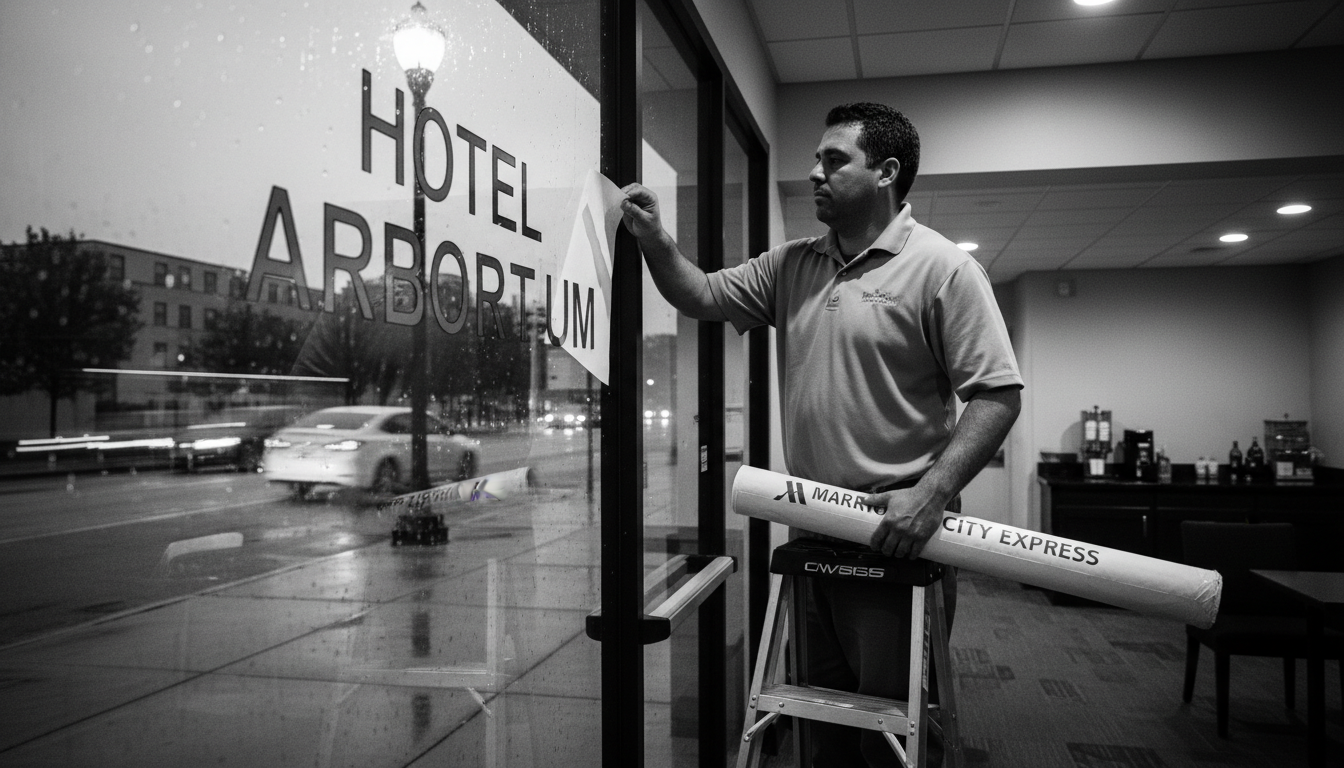
Marriott's City Express Just Landed in D.C. And the Real Story Isn't the Sign Change.

Marriott's City Express Just Landed in D.C. And the Real Story Isn't the Sign Change.

A 125-room independent near Capitol Hill is swapping its boutique identity for Marriott's midscale conversion play... and what it tells you about where the brand war is actually heading is more interesting than the press release suggests.

Let me tell you what I see when I read this headline, because it's not what Marriott wants you to see. PM Hotel Group just moved a 125-room property near Union Station in Washington, D.C.... the Hotel Arboretum... under Marriott's City Express flag. And if you're reading that as a routine conversion announcement, you're missing the chess move. This is Marriott planting its midscale conversion brand in the nation's capital, a market driven by government contracts and group business, on a property owned by Rocks Hospitality and managed by a Top-15 management company. That's not a test. That's a statement. Marriott hit 100 signed City Express agreements in the U.S. and Canada by December 2025, opened six properties last year, and is now pushing the brand into Asia Pacific. They are not experimenting anymore. They are executing.

And here's where my brand brain starts buzzing (and not in a good way). City Express was born in Latin America. Marriott bought the portfolio in 2023 for $100 million... roughly 17,000 rooms across Mexico, Costa Rica, Colombia, and Chile. The DNA of this brand is affordable midscale transient. Modern rooms, free breakfast, fast WiFi, get in, get out, no fuss. That works beautifully in markets where Marriott had almost no midscale presence. But Washington, D.C.? A market already saturated with select-service flags from every major company, where the guest mix skews heavily toward government per diem rates and association groups? The question isn't whether City Express can exist here. The question is whether the brand promise means anything different from the Courtyard three blocks away... or the Hilton Garden Inn around the corner... or the 47 other options a government travel booker is scrolling through on FedRooms. "Affordable midscale transient" is not a differentiator in D.C. It's the default setting.

Now, I want to be fair to the ownership group here, because the conversion math can absolutely work even when the brand positioning is muddy. If you're Rocks Hospitality, you're looking at a 125-key independent that probably needed a loyalty pipeline boost, especially for that government and group business. Marriott Bonvoy is the biggest loyalty engine in the industry. Plugging into it could genuinely move your occupancy needle. But... and this is the part the press release skips entirely... at what cost? Total brand cost for a Marriott flag isn't just the franchise fee. It's loyalty assessments, reservation system fees, marketing contributions, brand-mandated vendor requirements, and whatever PIP capital they negotiated. For many owners I've worked with, that total cost lands somewhere between 15% and 20% of revenue. So the real question for Rocks Hospitality isn't "will we get more bookings?" It's "will the incremental revenue exceed the total cost of being in the Marriott system?" And if the answer depends on projections rather than actuals... well, I have a filing cabinet full of franchise projections that aged very poorly. I sat across from an ownership group once... multi-generational family, beautiful property, trusted the brand's revenue projections completely. Actual loyalty contribution came in 13 points below what was promised. Thirteen points. The math broke so badly they couldn't service their PIP debt. That's not a spreadsheet problem. That's a family's future.

Here's what really interests me about this move, though. PM Hotel Group's president said at ALIS three weeks ago that their priority is organic growth, and he openly acknowledged how saturated the U.S. market is with Marriott and Hilton operating north of 60 brands between them. Sixty brands. Let that number sit with you for a second. And now one of those 60-plus brands is City Express, competing in the "affordable midscale" space alongside Marriott's own Four Points Flex, Fairfield, and the new StudioRes concept. Meanwhile Hilton is pushing Spark into the same segment. So if you're an owner being pitched City Express today, the first thing you should ask is: "How does Marriott plan to differentiate THIS flag from its own portfolio, let alone the competition?" Because "conversion-friendly" is an operational convenience, not a guest-facing brand promise. And guests don't book based on how easy your conversion was. They book based on what the stay feels like. If it feels like a Fairfield with a different sign... you've spent conversion capital to be interchangeable. That's not brand strategy. That's brand theater.

The bigger signal here is actually about where the industry is heading. The midscale conversion war is now fully engaged... Marriott, Hilton, Wyndham, Choice, everyone fighting for the same pool of independent and underperforming branded properties. If you're an independent owner, you've never had more suitors. That's the good news. The bad news is that more options doesn't mean better options. It means more sales teams with more projections and more pressure to sign before you've done the math. So do the math. Pull the actual performance data on City Express properties that opened in 2025. Not the projections... the actuals. Ask for the loyalty contribution percentage at comparable properties after 12 months of operation. Ask what happens to your rate positioning when the Courtyard down the street runs a Bonvoy promotion that undercuts you. And for the love of everything, stress-test the downside. What does your P&L look like if loyalty contribution comes in at 22% instead of the 35% they're projecting? Because I've seen that movie, and the ending is not the one in the franchise sales deck.

Operator's Take

If you're an independent owner getting pitched City Express (or any midscale conversion flag right now), do one thing before your next meeting: ask for actual loyalty contribution data from properties that have been open 12+ months, not projections. If they can't provide it or won't... that tells you everything. And if you're a management company running a newly converted property, build your budget on the low end of that loyalty range, not the midpoint. I've seen too many owners get upside down on PIP debt because the pro forma used the best-case number. The math doesn't lie... but the sales deck might.

— Mike Storm, Founder & Editor
Read full analysis → ← Show less
Source: Google News: Marriott
Marriott's "Outstanding" Growth Year Has a Question Nobody's Asking the Owners

Marriott's "Outstanding" Growth Year Has a Question Nobody's Asking the Owners

Marriott added nearly 100,000 rooms and returned $4 billion to shareholders in 2025. But when you decompose the numbers by who actually benefits, the story gets more complicated... especially if you're the one writing the PIP check.

Let me tell you what "outstanding" looks like from the other side of the franchise agreement.

Marriott's 2025 numbers are genuinely impressive at the corporate level. Over 4.3% net rooms growth. Nearly 100,000 rooms added. Gross fee revenues of $5.4 billion, up 5%. Adjusted EBITDA of $5.38 billion, an 8% jump. The stock hit an all-time high of $359.35 in February. Anthony Capuano called it a "defining year." And from the brand's perspective... from the shareholder's perspective... he's right. $4 billion returned to shareholders through buybacks and dividends. That's not a talking point. That's real money flowing to the people who own Marriott International stock.

Now. Who owns the hotels?

Because here's where I start pulling at the thread. U.S. and Canada RevPAR grew 0.7% for the full year. In Q4, it actually declined 0.1%. Business transient was flat. Government RevPAR dropped 30% in Q4 from the shutdown. Meanwhile, Marriott's projecting 1.5% to 2.5% worldwide RevPAR growth for 2026 and planning to spend over $1.1 billion on technology transformation... replatforming PMS, central reservations, and loyalty systems. That investment is Marriott's. The implementation burden lands on property teams. If you've been through a brand-mandated PMS migration (and I've watched three unfold from the owner advisory side), you know that the stated timeline and the actual timeline are two very different animals. Training costs alone for a 300-key full-service property can run $40,000-$60,000 when you factor in productivity loss, and that's before you discover the integration with your POS doesn't work the way the demo said it would.

The conversion engine is the part of this story that deserves the most scrutiny. Conversions accounted for over 30% of organic room signings... nearly 400 deals, over 50,800 rooms. And Marriott proudly notes that roughly 75% open within 12 months of signing. That speed is the selling point. But speed of conversion and quality of integration are not the same thing. Changing the sign takes weeks. Changing the service culture, retraining staff on Marriott Bonvoy standards, renovating to brand spec... that takes 6 to 18 months on the low end. I sat across the table from an ownership group last year that converted a 180-key independent to a major flag. They were "open" within nine months. They were actually delivering the brand experience closer to month 16. The gap between those two dates? That's where guest reviews suffer, where loyalty members complain, and where the brand sends you a deficiency letter while you're still waiting on FF&E shipments that are eight weeks late.

And then there's the portfolio question that nobody at brand headquarters wants to answer honestly. Marriott now has City Express, StudioRes, Four Points Flex, Series by Marriott, Outdoor Collection... layered on top of an already sprawling portfolio. At what point does brand proliferation stop being "filling white space" and start being internal cannibalization? When two Marriott-flagged properties in the same market are competing for the same Bonvoy member at similar price points, the system doesn't create incremental demand. It redistributes existing demand and charges both owners a franchise fee for the privilege. The 271 million Bonvoy members number sounds massive until you ask what the active rate is, what the average redemption frequency looks like, and whether loyalty contribution at your specific property justifies the assessment you're paying. Those are the numbers that matter at the ownership level, and they're conspicuously absent from the earnings call.

Here's my position, and I'll be direct about it. Marriott is executing its strategy brilliantly... for Marriott. The asset-light model means fee revenue grows whether your individual property thrives or struggles. The $16.2 billion in total debt (up from $14.4 billion in 2024) funds buybacks that boost EPS, which drives the stock price, which makes the earnings call sound like a victory lap. None of that is wrong. It's just not your victory lap if you're the owner staring at a flat domestic RevPAR environment, a PIP that's going to cost you seven figures, and a technology migration you didn't ask for. Before you sign that next franchise agreement or renewal, pull the FDD. Compare the Item 19 projections from five years ago against what your property actually delivered. If there's a gap... and there usually is... that's not a conversation for your franchise sales rep. That's a conversation for your lawyer.

Operator's Take

If you're a franchisee in the Marriott system right now, do two things this week. First, pull your loyalty contribution numbers for the last 12 months and calculate what you're paying in total brand cost (fees, assessments, mandated vendors, PIP amortization) as a percentage of total revenue. If it's north of 15% and your RevPAR index against comp set isn't outperforming... you have a math problem, not a brand problem. Second, if you're anywhere near a PMS migration timeline, get the implementation scope in writing from your brand rep and add 40% to whatever timeline they give you. That's not cynicism. That's 40 years of watching these rollouts.

— Mike Storm, Founder & Editor
Read full analysis → ← Show less
Source: Google News: Hotel Industry
Hotel Brands Wading Into Politics Is a Franchise Problem, Not a Marketing One

Hotel Brands Wading Into Politics Is a Franchise Problem, Not a Marketing One

When travel and tourism brands take public political positions, the person who pays the price isn't the CMO drafting the statement. It's the franchisee in a divided market whose guests just got a reason to book somewhere else.

Let's talk about what happens when brand headquarters decides to have an opinion.

The conversation about travel and tourism companies entering political territory isn't new, but it's accelerating. And the framing is almost always wrong. Media coverage treats this as a corporate communications dilemma: should the brand speak up or stay quiet? That's the wrong question. The right question is: who absorbs the cost when they get it wrong?

The answer is the owner. Every single time.

A brand can issue a statement from corporate headquarters in a coastal city, get applause from one segment of the market, generate fury from another, and then move on to the next news cycle. The franchisee operating a 140-key property in a market where the political sentiment runs opposite to that statement doesn't get to move on. They live there. Their staff lives there. Their local corporate accounts have opinions. Their youth sports tournament organizers have opinions. And unlike brand headquarters, the franchisee can't distance themselves from the flag on the building. That flag IS the statement. I sat in a franchise advisory council meeting once where an owner from the Mountain West stood up and said, very plainly, that a brand's public position on a cultural issue had cost him a state government contract worth six figures annually. The brand's response was to send talking points. The owner needed revenue, not talking points.

This is where the franchise agreement becomes the critical document. Most franchise agreements give the brand broad discretion over marketing, communications, and "brand standards" without giving the franchisee any meaningful input on public statements that affect local market perception. The franchisee pays the marketing assessment, the loyalty surcharge, the reservation fee, all of it. And in exchange, they get a brand identity they cannot control and cannot opt out of when that identity becomes polarizing. If you're an owner paying 12-18% of gross revenue in total brand cost, you should be asking a very specific question: does my franchise agreement give me any recourse when brand-level communications damage my local market positioning? For most owners, the answer is no. And that's a problem that should be addressed before the next controversy, not during it.

Here's what I think brands actually owe their franchise networks: a formal communication protocol that includes franchisee input before any public statement that isn't directly related to operations. Not a veto. Input. A process. Because right now, most brands treat franchisees the way a parent company treats a subsidiary, not the way a licensor should treat the people who actually own the real estate and carry the debt. The brands that figure this out will retain their best operators. The ones that don't will find owners increasingly attracted to soft brands, collections, and independent positioning where they control their own narrative. That migration is already happening. Political brand risk is going to accelerate it.

Operator's Take

If you're a franchised owner in a politically divided market, pull your franchise agreement this week and find the clause on brand communications. Understand exactly what rights you have and don't have. Then get your franchise advisory council to push for a formal pre-communication protocol before the next news cycle forces the issue. Don't wait for headquarters to figure this out. They won't. They don't have your mortgage.

— Mike Storm, Founder & Editor
Read full analysis → ← Show less
Source: Google News: Hotel Industry
End of Stories