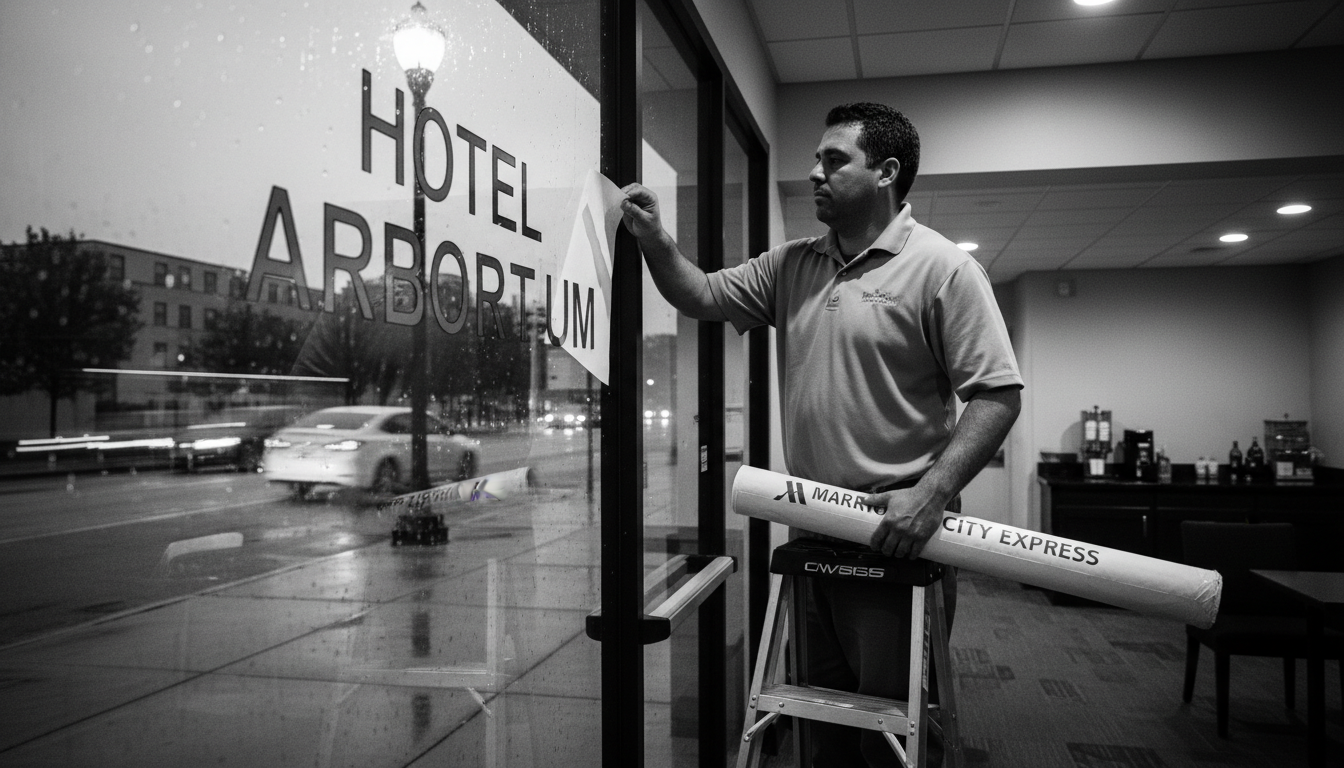
Marriott's City Express Just Landed in D.C. And the Real Story Isn't the Sign Change.
A 125-room independent near Capitol Hill is swapping its boutique identity for Marriott's midscale conversion play... and what it tells you about where the brand war is actually heading is more interesting than the press release suggests.
Let me tell you what I see when I read this headline, because it's not what Marriott wants you to see. PM Hotel Group just moved a 125-room property near Union Station in Washington, D.C.... the Hotel Arboretum... under Marriott's City Express flag. And if you're reading that as a routine conversion announcement, you're missing the chess move. This is Marriott planting its midscale conversion brand in the nation's capital, a market driven by government contracts and group business, on a property owned by Rocks Hospitality and managed by a Top-15 management company. That's not a test. That's a statement. Marriott hit 100 signed City Express agreements in the U.S. and Canada by December 2025, opened six properties last year, and is now pushing the brand into Asia Pacific. They are not experimenting anymore. They are executing.
And here's where my brand brain starts buzzing (and not in a good way). City Express was born in Latin America. Marriott bought the portfolio in 2023 for $100 million... roughly 17,000 rooms across Mexico, Costa Rica, Colombia, and Chile. The DNA of this brand is affordable midscale transient. Modern rooms, free breakfast, fast WiFi, get in, get out, no fuss. That works beautifully in markets where Marriott had almost no midscale presence. But Washington, D.C.? A market already saturated with select-service flags from every major company, where the guest mix skews heavily toward government per diem rates and association groups? The question isn't whether City Express can exist here. The question is whether the brand promise means anything different from the Courtyard three blocks away... or the Hilton Garden Inn around the corner... or the 47 other options a government travel booker is scrolling through on FedRooms. "Affordable midscale transient" is not a differentiator in D.C. It's the default setting.
Now, I want to be fair to the ownership group here, because the conversion math can absolutely work even when the brand positioning is muddy. If you're Rocks Hospitality, you're looking at a 125-key independent that probably needed a loyalty pipeline boost, especially for that government and group business. Marriott Bonvoy is the biggest loyalty engine in the industry. Plugging into it could genuinely move your occupancy needle. But... and this is the part the press release skips entirely... at what cost? Total brand cost for a Marriott flag isn't just the franchise fee. It's loyalty assessments, reservation system fees, marketing contributions, brand-mandated vendor requirements, and whatever PIP capital they negotiated. For many owners I've worked with, that total cost lands somewhere between 15% and 20% of revenue. So the real question for Rocks Hospitality isn't "will we get more bookings?" It's "will the incremental revenue exceed the total cost of being in the Marriott system?" And if the answer depends on projections rather than actuals... well, I have a filing cabinet full of franchise projections that aged very poorly. I sat across from an ownership group once... multi-generational family, beautiful property, trusted the brand's revenue projections completely. Actual loyalty contribution came in 13 points below what was promised. Thirteen points. The math broke so badly they couldn't service their PIP debt. That's not a spreadsheet problem. That's a family's future.
Here's what really interests me about this move, though. PM Hotel Group's president said at ALIS three weeks ago that their priority is organic growth, and he openly acknowledged how saturated the U.S. market is with Marriott and Hilton operating north of 60 brands between them. Sixty brands. Let that number sit with you for a second. And now one of those 60-plus brands is City Express, competing in the "affordable midscale" space alongside Marriott's own Four Points Flex, Fairfield, and the new StudioRes concept. Meanwhile Hilton is pushing Spark into the same segment. So if you're an owner being pitched City Express today, the first thing you should ask is: "How does Marriott plan to differentiate THIS flag from its own portfolio, let alone the competition?" Because "conversion-friendly" is an operational convenience, not a guest-facing brand promise. And guests don't book based on how easy your conversion was. They book based on what the stay feels like. If it feels like a Fairfield with a different sign... you've spent conversion capital to be interchangeable. That's not brand strategy. That's brand theater.
The bigger signal here is actually about where the industry is heading. The midscale conversion war is now fully engaged... Marriott, Hilton, Wyndham, Choice, everyone fighting for the same pool of independent and underperforming branded properties. If you're an independent owner, you've never had more suitors. That's the good news. The bad news is that more options doesn't mean better options. It means more sales teams with more projections and more pressure to sign before you've done the math. So do the math. Pull the actual performance data on City Express properties that opened in 2025. Not the projections... the actuals. Ask for the loyalty contribution percentage at comparable properties after 12 months of operation. Ask what happens to your rate positioning when the Courtyard down the street runs a Bonvoy promotion that undercuts you. And for the love of everything, stress-test the downside. What does your P&L look like if loyalty contribution comes in at 22% instead of the 35% they're projecting? Because I've seen that movie, and the ending is not the one in the franchise sales deck.
If you're an independent owner getting pitched City Express (or any midscale conversion flag right now), do one thing before your next meeting: ask for actual loyalty contribution data from properties that have been open 12+ months, not projections. If they can't provide it or won't... that tells you everything. And if you're a management company running a newly converted property, build your budget on the low end of that loyalty range, not the midpoint. I've seen too many owners get upside down on PIP debt because the pro forma used the best-case number. The math doesn't lie... but the sales deck might.