Today · Sep 14, 2026
A Resort Lost Its Beach, Dropped "Beach" From Its Name, and Now Wants Both Back

A Resort Lost Its Beach, Dropped "Beach" From Its Name, and Now Wants Both Back

The Grand Cayman Marriott is betting nearly $1 million in waived permits and 8,000 cubic yards of sand that it can reverse five years of erosion and 40% business losses... and every coastal resort owner should be watching what happens next.

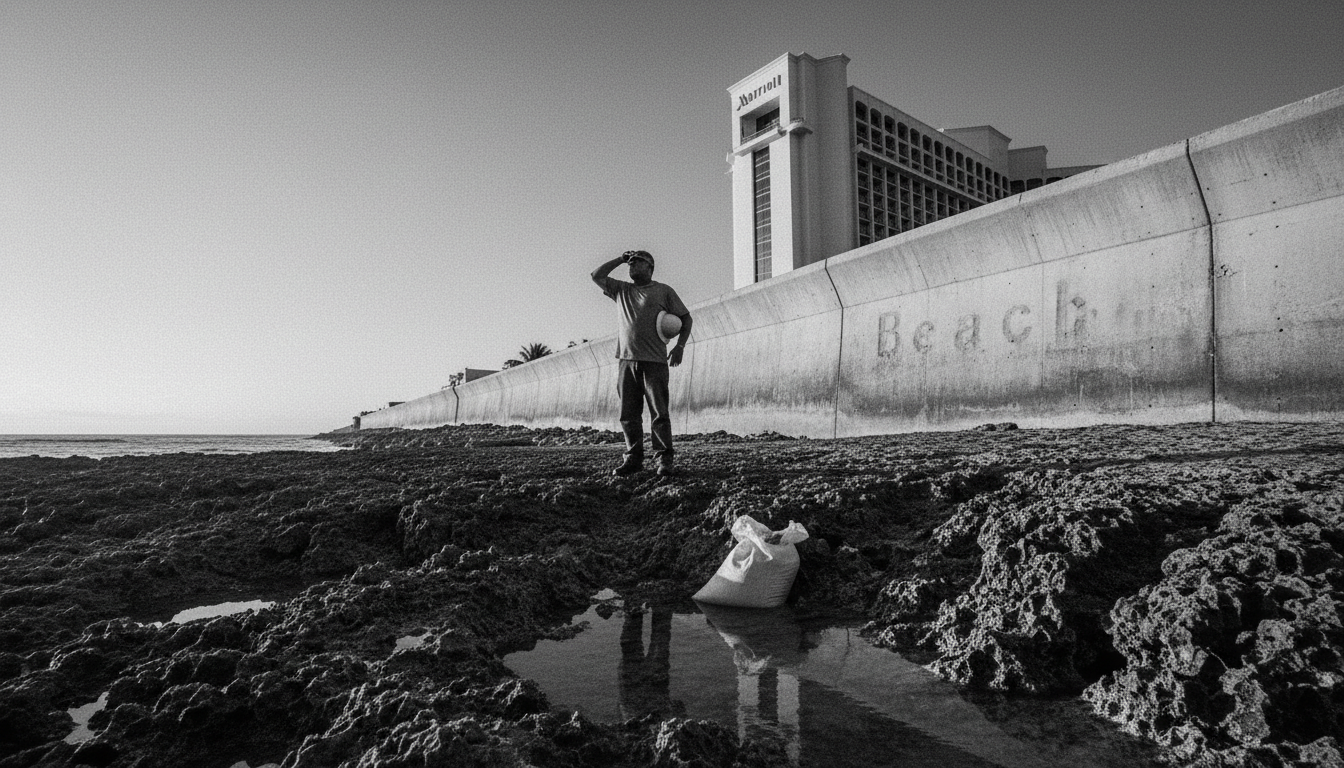
There's something almost poetic about a beach resort that had to take "Beach" out of its name. The Grand Cayman Marriott did exactly that in 2023, because the sand was gone, and you can only market a "beach experience" for so long when your guests are staring at exposed rock and seawall. Now the resort says the beach could be back by September, with construction starting in May, 8,000 cubic yards of fresh sand across a 60-foot stretch, two 135-foot rock groynes to hold it in place, and a government that waived close to $1 million in permit fees to make it happen. The GM has gone on record saying the property lost 40% of its business over the last four to five years because of this erosion. Forty percent. Let that number sit with you for a second, because that's not a dip... that's a near-death experience for any hotel's P&L.

And here's where the brand story gets interesting (and where my years brand-side start tingling). Marriott International just reported Q4 2025 earnings with global RevPAR up 2% for the full year and leisure RevPAR climbing over 3%. The company is leaning hard into luxury and leisure positioning. So you've got a flagship leisure property in one of the Caribbean's most iconic destinations hemorrhaging business because the physical product... the actual beach... doesn't exist anymore. The brand promise and the brand delivery aren't just misaligned. One of them literally washed away. I've sat in brand reviews where the gap between what's on the website and what the guest experiences at arrival is embarrassing. This is the most extreme version of that I've ever seen. You cannot Photoshop a beach in real life (though I'm sure someone in marketing considered it).

What nobody's talking about is the precedent problem. The Cayman Islands' Department of Environment flagged this project as "precedent-setting" and warned against "piecemeal solutions" that could shift erosion to neighboring properties. They're not wrong. Rock groynes don't create sand... they trap it. Which means the sand that accumulates in front of the Marriott might be sand that would have naturally replenished someone else's shoreline. I've watched three different coastal repositioning projects promise they were the fix, and in every case, the conversation five years later was about who got hurt downstream. The government had previously approved CI$21 million for a broader beach restoration initiative that stalled. So instead of a coordinated plan, you've got one property doing its own thing because it couldn't wait any longer. Understandable from the owner's perspective. Potentially catastrophic from a destination-planning perspective.

For owners and operators at coastal properties... and this is the part that should keep you up tonight... this is a preview of what climate risk looks like when it hits your top line. Not gradually. Not theoretically. A 40% revenue decline because the amenity your entire positioning depends on disappeared. The global beach hotel market is valued at $142 billion and projected to nearly double by 2034, but that growth assumes the beaches are still there. If you own or manage a coastal resort and you don't have a climate risk line item in your capital planning, you are building a budget on sand (and I wish that were only a metaphor). The Marriott's projected 150 new jobs post-restoration tells you everything about how much operational capacity they've already shed. That's not just beach erosion. That's organizational erosion.

Here's what I want every brand executive and franchise development officer to understand about this story. The Grand Cayman Marriott didn't lose 40% of its business because of bad management, or a weak loyalty program, or insufficient brand standards. It lost it because the ocean moved. And no amount of brand theater... no lobby renovation, no F&B concept refresh, no "elevated arrival experience"... fixes that. Sometimes the Deliverable Test isn't about staffing or training or design. Sometimes it's about whether the planet cooperates with your brand promise. That's a test none of us are prepared to fail, and we're all going to face it sooner than the ten-year capital plan assumes. The Marriott is spending a fortune to buy back what nature took. The question every coastal owner should be asking right now isn't whether this project works. It's what their plan is when the same thing happens to them.

Operator's Take

If you're running a coastal property anywhere... Caribbean, Gulf Coast, Southeast... pull your insurance policy and your franchise agreement this week. Look at what's covered for "natural erosion" versus "storm damage" (spoiler: the gap will make you nauseous). Then start a conversation with your ownership group about a dedicated climate reserve in the FF&E budget. The Grand Cayman Marriott waited until it lost 40% of its business and had to rename itself. Don't be the GM who has to explain that timeline to an owner. Get ahead of it now. The ocean doesn't negotiate.


— Mike Storm, Founder & Editor
Read full analysis → ← Show less
Source: Google News: Marriott
Hilton's Loyalty Math Just Changed. Most Owners Haven't Done the New Numbers Yet.

Hilton's Loyalty Math Just Changed. Most Owners Haven't Done the New Numbers Yet.

A travel blogger just squeezed 1.3 cents per point out of Hilton Honors... more than double the standard valuation. That's great for the guest. Now let's talk about what Hilton's 2026 loyalty overhaul actually costs the person who owns the building.

So someone figured out how to double their Hilton Honors point value on a hotel room booking, and The Points Guy ran a whole piece about it like they'd discovered fire. Good for them. Genuinely. But here's what caught my attention, and it wasn't the redemption hack... it was the architecture underneath it. Because when a guest redeems 45,000 points for a room and gets 1.3 cents per point in value instead of the program's baseline 0.5 cents, somebody is subsidizing that spread. And that somebody is the owner. Every single time.

Let's back up to January 1, 2026, because that's when Hilton flipped the loyalty switch and most owners I talk to are still catching up. New top tier (Diamond Reserve, requiring 80 nights AND $18,000 in spend). Lower thresholds for Gold and Diamond (Gold dropped from 40 nights to 25, Diamond from 60 to 50). Points earning slashed at Homewood Suites and Spark from 10 points per dollar to 5. Night rollover? Gone. And Hilton's projecting this whole package will generate "$500 million in incremental annual revenue" across the system. That is a very specific number. I'd love to see the model behind it, because in my experience, when a brand throws out a system-wide revenue projection that clean and that round, it means someone in corporate finance reverse-engineered the number they needed for the board presentation and then built assumptions to match. (I've sat in those rooms. The champagne is always the same.)

Here's what the press release framing misses. Lowering elite thresholds doesn't create new demand... it redistributes existing demand and increases the cost of servicing it. You now have more Gold members expecting the Gold experience. More Diamond members expecting upgrades, late checkouts, executive lounge access. Diamond Reserve members get confirmable suite upgrades at booking... AT BOOKING... which means your revenue manager just lost control of that inventory before the guest even arrives. If you're running a 250-key full-service and 15% of your arrivals on a Tuesday are now Diamond or above expecting complimentary upgrades, your ability to sell those room types at rack just got squeezed. The brand calls this "loyalty-driven occupancy." The owner calls it "rate compression I can't control." Both are accurate. Only one of them shows up in the franchise sales pitch.

And about those points redemptions... the reimbursement math is where owners really need to pay attention. When a guest books on points, the hotel gets reimbursed at a rate that is almost always below what that room would have sold for on a paid booking. The gap between what the brand reimburses and what the room was worth is the owner's contribution to Hilton's loyalty marketing. It's not listed as a fee. It doesn't appear as a line item labeled "loyalty subsidy." But it's real, and it compounds, especially at properties in markets where loyalty contribution is high (which is, of course, the exact scenario the brand uses to SELL you the flag). I watched a family lose their hotel because the loyalty contribution projections in their franchise agreement were fantasy. Twenty-two percent actual versus thirty-five projected. The math broke. They couldn't recover. That was a different brand, a different year, but the structure is identical. The brand projects high. The owner invests based on the projection. And when actual performance lands fifteen points below forecast, nobody from corporate shows up to sit across the table from the family.

Hilton has 243 million loyalty members. That's not a typo. Loyalty program costs industry-wide have risen 53.6% since 2022, outpacing revenue growth. So the system is getting more expensive to operate for owners while simultaneously making it harder to capture full rate on a growing percentage of room nights. If you're an owner being pitched a Hilton conversion right now and the development rep is leading with "access to 243 million Honors members," ask the follow-up question: what does it cost me to service those members, and what's the actual reimbursement rate on points stays versus my ADR? Then pull the FDD, find the performance data from properties in your comp set, and compare projected loyalty contribution to actual. The variance will tell you everything the sales pitch won't. And if the rep can't answer those questions with specifics? You already know what that silence means.

Operator's Take

Here's the move. If you're a branded Hilton owner, pull your last 90 days of loyalty reimbursement data and calculate the gap between what you received per redeemed room night and what that room would have sold for. That's your real loyalty cost... not the fee on the franchise agreement, the actual economic impact. Then look at your Diamond-and-above mix before and after January 1. If your complimentary upgrade rate is climbing and your ADR on those room types is softening, you've got a math problem that's going to show up in your GOP by Q2. Don't wait for the brand to quantify it for you. They won't.

— Mike Storm, Founder & Editor
Read full analysis → ← Show less
Source: Google News: Hilton
Harlem's George Hotel Is the Tapestry Collection Test Case Every Brand Strategist Should Be Watching

Harlem's George Hotel Is the Tapestry Collection Test Case Every Brand Strategist Should Be Watching

Hilton planted a flag in Harlem with a culturally immersive soft brand... and the early execution is either a masterclass in authentic positioning or a really expensive mood board. The answer depends on whether the promise survives past the press cycle.

Let me tell you what caught my eye about this property, and it's not the cabaret show or the Black History Month panel (though those are smart). It's that someone at Hilton looked at Harlem... a neighborhood with no existing Hilton presence, a complicated relationship with gentrification, and a community board that apparently wasn't even contacted about the opening... and said "yes, this is where we're going to test whether Tapestry Collection can be more than a conversion flag for tired independents." That's either brave or reckless, and I genuinely haven't decided yet. The George Manhattan is 139 keys, which is the right size for this kind of concept. It's named after a Harlem swing dancer (George "Shorty George" Snowden, for the culture nerds) AND King George II, which is the kind of layered storytelling that works beautifully in a brand deck and means absolutely nothing if the front desk team can't tell you who either George is when a guest asks. The restaurants aren't open yet. The pool isn't open yet. The hotel launched in October 2025, and we're four months in with the F&B and amenity story still unwritten. So right now, what we're actually evaluating is a lobby bar, a fitness center, 2,000 square feet of meeting space, and a promise. I've seen this before... a property that leads with cultural narrative and programming before the physical product is complete. Sometimes it works. Sometimes you're asking guests to pay upscale rates for a construction timeline wrapped in a storytelling bow.

Here's what's interesting from a brand architecture standpoint. Tapestry Collection exists to do exactly this... collect independent-feeling properties under the Hilton umbrella so owners get the distribution engine and loyalty contribution without the cookie-cutter standards. And culturally specific positioning is genuinely a smart play for a soft brand. The global theme hotel market hit $15.29 billion in 2024 and is projected to reach nearly $22 billion by 2033. Guests want stories. They want to feel like they're somewhere, not just anywhere with a Hilton Honors sign. But (and you knew there was a but) the Deliverable Test is brutal here. Can The George deliver a culturally immersive experience that feels authentic and not performative, seven days a week, 365 days a year, with whatever staffing reality New York City hands them? A NYFW panel during Black History Month is an event. An art exhibit with a cabaret show is programming. Those are moments. What happens on a random Wednesday in July when there's no programming and a guest from Des Moines wants to understand why this hotel costs $50 more than the Hampton Inn downtown? The experience has to live in the DAILY operation, not the Instagram-worthy activations.

The Columbia University branding controversy is a red flag I want to talk about because it tells you something about execution discipline. Columbia publicly stated it has no partnership with this property. When a major university has to issue a denial about an implied association with your hotel... that's a journey leak, and it's the kind that erodes credibility fast. You're building a brand on authenticity and cultural respect, and then you're getting called out for a branding implication that wasn't earned? That's exactly the kind of thing that makes community boards (the same ones who weren't contacted about the opening, by the way) go from neutral to hostile. Sam Martinez, the GM, is a Harlem native, and that's genuinely meaningful. A GM who IS the community rather than studying the community from a brand playbook is a significant asset. I sat in a franchise review once where an owner told me his biggest competitive advantage was that his GM had coached Little League with half the local business owners. That kind of embedded credibility can't be manufactured. It can only be hired. If Hilton is smart, they'll build the entire guest experience around what Martinez knows about this neighborhood and stop trying to borrow credibility from institutions that don't want to lend it.

The real question for the owners behind this property (and for anyone watching the Tapestry Collection pipeline, which now includes upcoming openings in Costa Rica and Argentina) is whether the economics justify the cultural ambition. A 139-key upscale hotel in Harlem is competing in a market where the Renaissance New York Harlem opened in 2023 and Marriott has already been testing these waters. Total brand cost for a Tapestry property... franchise fees, loyalty assessments, reservation system fees, marketing contributions... typically runs 10-14% of revenue once you add it all up. The owner's bet is that Hilton Honors drives enough demand to justify that cost versus going truly independent. In a neighborhood where the demand generators are cultural (Apollo Theater, Studio Museum, the restaurant scene), the question is whether Hilton's loyalty base overlaps with the guest who actively CHOOSES Harlem. Because the guest who books this hotel through Hilton Honors for the points might have a very different expectation than the guest who books it because they want a culturally immersive Harlem experience. Serving both of those guests authentically, in the same 139 rooms, without diluting the promise to either... that's the tightrope. And it's the tightrope every Tapestry property walks. Most of them just don't have the cultural stakes this high.

I want this to work. I really do. A hotel that takes its neighborhood seriously, hires from the community, names itself after a swing dancer, and tries to make cultural storytelling the actual product rather than a lobby mural... that's the version of hospitality I got into this industry for. But wanting it to work and believing the execution will hold are two different things, and I learned the hard way that potential is not a strategy. The restaurants need to open. The pool needs to open. The community board needs to be brought into the conversation (yesterday, not tomorrow). And the daily guest experience... not the panels, not the exhibits, the DAILY experience... needs to deliver on a promise that is extraordinarily ambitious for a 139-key property still finishing its amenity buildout. Watch this property at month twelve, not month four. That's when the brand either proves itself or becomes another beautiful lobby with a story nobody's telling anymore.

Operator's Take

If you're an independent owner being pitched Tapestry or any soft brand collection right now... pull The George's trajectory over the next year and study it. This is the test case for whether culturally specific positioning can survive inside a loyalty-driven distribution system without becoming wallpaper. And if you're already IN a soft brand collection, take a hard look at whether your "unique story" is actually showing up in guest reviews or just in the brand deck. The story has to live at the front desk at midnight, not just in the marketing materials. If your team can't tell the story without a script, you don't have a brand... you have a brochure.

— Mike Storm, Founder & Editor
Read full analysis → ← Show less
Source: Google News: Hilton
Hotel Brands Wading Into Politics Is a Franchise Problem, Not a Marketing One

Hotel Brands Wading Into Politics Is a Franchise Problem, Not a Marketing One

When travel and tourism brands take public political positions, the person who pays the price isn't the CMO drafting the statement. It's the franchisee in a divided market whose guests just got a reason to book somewhere else.

Let's talk about what happens when brand headquarters decides to have an opinion.

The conversation about travel and tourism companies entering political territory isn't new, but it's accelerating. And the framing is almost always wrong. Media coverage treats this as a corporate communications dilemma: should the brand speak up or stay quiet? That's the wrong question. The right question is: who absorbs the cost when they get it wrong?

The answer is the owner. Every single time.

A brand can issue a statement from corporate headquarters in a coastal city, get applause from one segment of the market, generate fury from another, and then move on to the next news cycle. The franchisee operating a 140-key property in a market where the political sentiment runs opposite to that statement doesn't get to move on. They live there. Their staff lives there. Their local corporate accounts have opinions. Their youth sports tournament organizers have opinions. And unlike brand headquarters, the franchisee can't distance themselves from the flag on the building. That flag IS the statement. I sat in a franchise advisory council meeting once where an owner from the Mountain West stood up and said, very plainly, that a brand's public position on a cultural issue had cost him a state government contract worth six figures annually. The brand's response was to send talking points. The owner needed revenue, not talking points.

This is where the franchise agreement becomes the critical document. Most franchise agreements give the brand broad discretion over marketing, communications, and "brand standards" without giving the franchisee any meaningful input on public statements that affect local market perception. The franchisee pays the marketing assessment, the loyalty surcharge, the reservation fee, all of it. And in exchange, they get a brand identity they cannot control and cannot opt out of when that identity becomes polarizing. If you're an owner paying 12-18% of gross revenue in total brand cost, you should be asking a very specific question: does my franchise agreement give me any recourse when brand-level communications damage my local market positioning? For most owners, the answer is no. And that's a problem that should be addressed before the next controversy, not during it.

Here's what I think brands actually owe their franchise networks: a formal communication protocol that includes franchisee input before any public statement that isn't directly related to operations. Not a veto. Input. A process. Because right now, most brands treat franchisees the way a parent company treats a subsidiary, not the way a licensor should treat the people who actually own the real estate and carry the debt. The brands that figure this out will retain their best operators. The ones that don't will find owners increasingly attracted to soft brands, collections, and independent positioning where they control their own narrative. That migration is already happening. Political brand risk is going to accelerate it.

Operator's Take

If you're a franchised owner in a politically divided market, pull your franchise agreement this week and find the clause on brand communications. Understand exactly what rights you have and don't have. Then get your franchise advisory council to push for a formal pre-communication protocol before the next news cycle forces the issue. Don't wait for headquarters to figure this out. They won't. They don't have your mortgage.

— Mike Storm, Founder & Editor
Read full analysis → ← Show less
Source: Google News: Hotel Industry

Marriott's Extended Stay Play in China Says More About Your Market Than Theirs

Marriott just launched Apartments by Marriott Bonvoy in Greater China — their first serviced apartment brand specifically built for Asia. If you think this is just a China story, you're missing what it signals about where the big brands see extended stay growth.

Here's what actually happened: Marriott created a new brand specifically for the Chinese market's serviced apartment segment. Not a license deal. Not slapping Bonvoy points on existing properties. A purpose-built brand for 30+ day stays in Asia's gateway cities.

Let me be direct — when a brand creates a regional product instead of importing what works in North America, they're seeing real demand they can't capture with their existing portfolio. Marriott already has Residence Inn, TownePlace, and Element. But those brands were built for US business travelers doing 5-14 night stays. The Asian serviced apartment guest is different — longer stays, more amenities, often corporate housing or relocation. You can't just translate the Residence Inn playbook into Mandarin and call it done.

The operational model matters here. Serviced apartments in Asia run at 30-40% higher labor costs than equivalent US extended stay because guests expect daily housekeeping options, concierge services, and often on-site F&B. Your US extended stay brands are built around minimal services — that's the whole economic model. Marriott knows they can't compete in Shanghai or Hong Kong with a product designed for cost-conscious stays in secondary US markets.

But here's what you need to watch: This signals where Marriott thinks extended stay growth is headed globally. Not budget. Not midscale. Premium long-stay with full services. They're building for corporate relocations, medical travel, executive assignments — guests who'll stay 60-90 days and expense it. That's a different animal than your 7-night insurance claim guest.

And if Marriott is creating regional brands instead of forcing global consistency, that's a crack in the "one brand, everywhere" model that's dominated the past 20 years. They're admitting that local market needs might matter more than brand uniformity. File that away — because if it works in China, you'll see it in other regions too.

Operator's Take

If you're running extended stay in a gateway market — think about this: when corporate relocation budgets come back strong, who's positioned to capture 60-90 day stays at premium rates? Not your budget competitors. Start building relationships with corporate housing brokers and relocation services now. The guest who stays three months at $180/night is worth six times your weekend leisure traveler, and they're stickier than you think.

Read full analysis → ← Show less
Source: Google News: Marriott
End of Stories