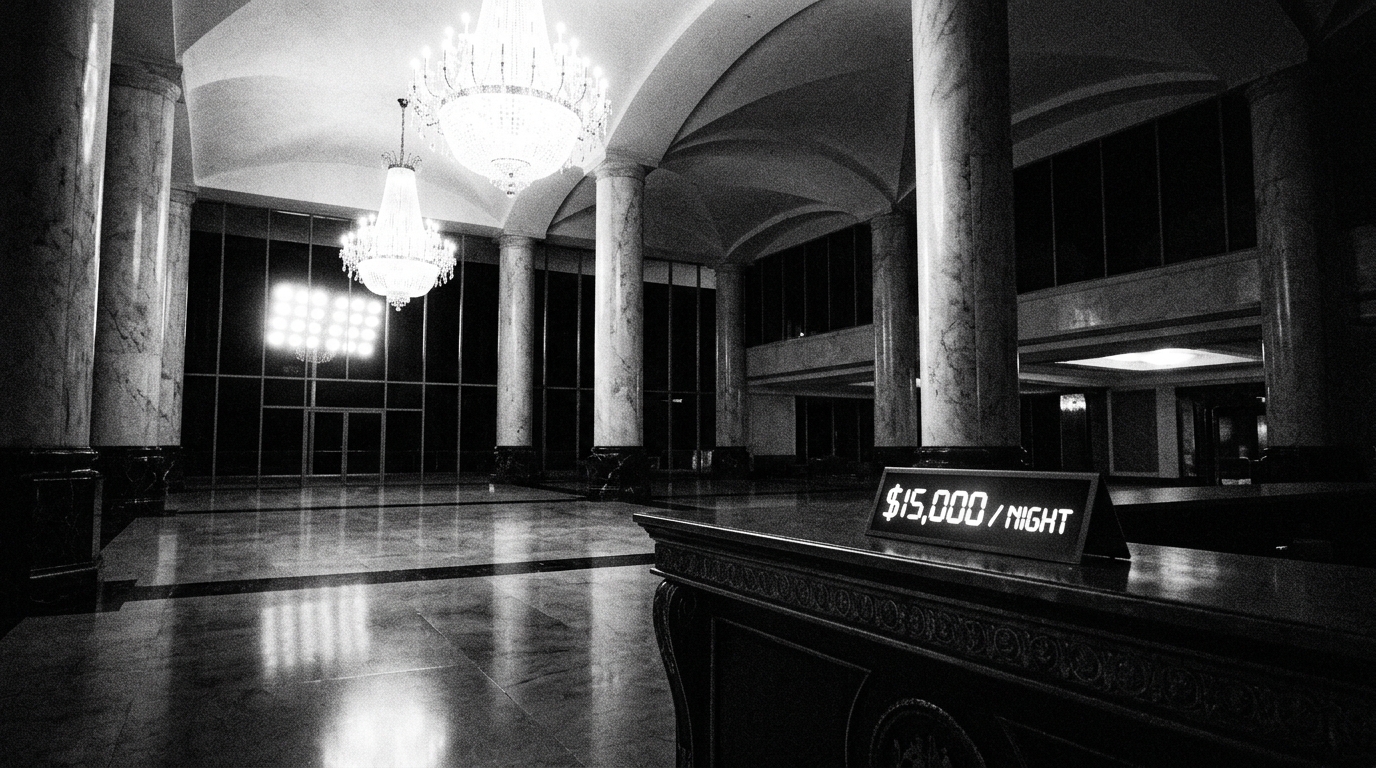
Toronto's World Cup Hotels Are Emptier Than Last June. Every Host City Should Be Watching.
FIFA released thousands of blocked hotel rooms, scared off corporate travelers, and left Toronto with lower occupancy than the same weeks last year. If you're a hotel tech vendor or revenue system selling "event optimization," this is the stress test your product just failed.
So here's a fun one. The biggest sporting event on the planet rolls into Toronto, and hotel occupancy actually goes DOWN. Not flat. Down. From 83% to 82% in the second week of June, and then from 86% to 72% in the third week. During the World Cup. Let that land for a second.
The mechanics of how this happened are genuinely interesting if you're a technology person, because every single revenue management system, every demand forecasting algorithm, every "AI-powered" pricing engine should have seen this coming... and based on some of the rate screenshots I've seen from Toronto hotels charging quadruple digits for a standard king, they clearly didn't. Or they did and nobody listened. FIFA blocked thousands of room nights across host cities months in advance, then released them back into the market in the spring. In Vancouver alone, that was roughly 15,000 room nights suddenly dumped back into available inventory. Meanwhile, the anticipation of World Cup chaos caused a classic displacement effect... corporate travelers rebooked elsewhere, conference organizers shifted dates, and the regular June business that Toronto hotels depend on just evaporated. The stadium only holds 45,000 people. That's not filling a city. That's filling a neighborhood.
Here's what actually bugs me about this. Every RMS on the market claims to handle demand spikes around major events. That's the pitch. "Our system automatically adjusts pricing based on market demand signals." Great. But what happens when the demand signal is wrong? What happens when your system sees "World Cup" and cranks rates to $1,000+ per night while the actual humans who would fill those rooms are booking Airbnbs in Mississauga or just staying home because tickets cost more than rent? The system optimized for a scenario that didn't exist. And the fallback... the thing that should have caught it... is a revenue manager looking at the pickup report and saying "wait, this doesn't match." But if your revenue manager trusts the algorithm more than the pickup report (and I've seen that happen at property after property), you end up exactly where Toronto ended up. High rates. Empty rooms. A 72% occupancy number that makes last year's 86% look like a different city.
The spending data tells the rest of the story. Foreign credit card transactions at restaurants and bars were up 34%. At hotels? Seven percent. Seven. The fans showed up. They just didn't stay where the systems thought they would, at the prices the systems thought they'd pay. Moneris data showing total restaurant and bar spending up only 3% overall means the economic multiplier that justified Toronto's $380 million hosting budget is... let's just say it's not multiplying the way the projections said it would. I talked to a consultant last month who builds event-impact models for hotel groups, and he told me something that stuck with me: "The models work great for Taylor Swift. They fall apart for anything where the venue holds less than 60,000 and the event spans more than a week." The World Cup is a distributed, multi-week, multi-city event in relatively small stadiums. It's the worst possible scenario for concentrated hotel demand, and the technology treated it like a Super Bowl.
Look, this isn't a Toronto problem. Boston, Philadelphia, San Francisco, Seattle, Vancouver... all reporting softer-than-expected hotel demand during their World Cup windows. This is a systems problem. The revenue management platforms, the demand forecasting tools, the pricing algorithms... they're built on historical patterns that don't account for what happens when a mega-event's organizational structure (FIFA blocking and releasing rooms), venue constraints (45,000-seat stadiums), and displacement effects (corporate travelers fleeing) all collide at once. If your RMS vendor is telling you their system "handles major events," ask them what happened in Toronto. Ask them about the gap between 86% and 72%. And if they blame the market instead of the model... that tells you everything about whether their system actually learns or just pattern-matches against scenarios that already happened.
If you're in any of the remaining World Cup host cities with matches still to come, pull your rate strategy out of the algorithm's hands right now and look at actual pickup. Not projected. Actual. Compare your pace to the same period last year and build your pricing around what's really booking, not what the system thinks should be booking. The displacement effect is real... your regular corporate base may have already rebooked elsewhere, and no amount of rate optimization recovers demand that left the market entirely. This is what I call the Rate Recovery Trap in reverse... hotels that jacked rates expecting World Cup demand are now sitting on empty rooms at prices nobody's willing to pay, and cutting rate mid-event looks desperate and retrains the market downward. If you're not in a host city but you're near one, this might actually be your moment. Those displaced corporate travelers went somewhere. Make sure they find you.
