Today · Aug 9, 2026
A Night Manager Died in a Hotel Lobby. We Need to Talk About Who's Working Alone at 2 AM.

A Night Manager Died in a Hotel Lobby. We Need to Talk About Who's Working Alone at 2 AM.

A 27-year-old night manager was shot and killed in the lobby of a Greater Cincinnati hotel, and police say it wasn't random. The industry spends $3 billion a year on security, but the person most exposed to danger is still the one working alone on the overnight shift with no backup and no plan.

Available Analysis

I've been staring at this story for a while. Not because the facts are complicated... they're not. A 27-year-old night manager, working the overnight at a La Quinta in Springdale, Ohio, was shot and killed in the lobby. Police say it was a directed crime, not random. A suspect is in custody. And somewhere, that young man's family got a phone call that changed everything.

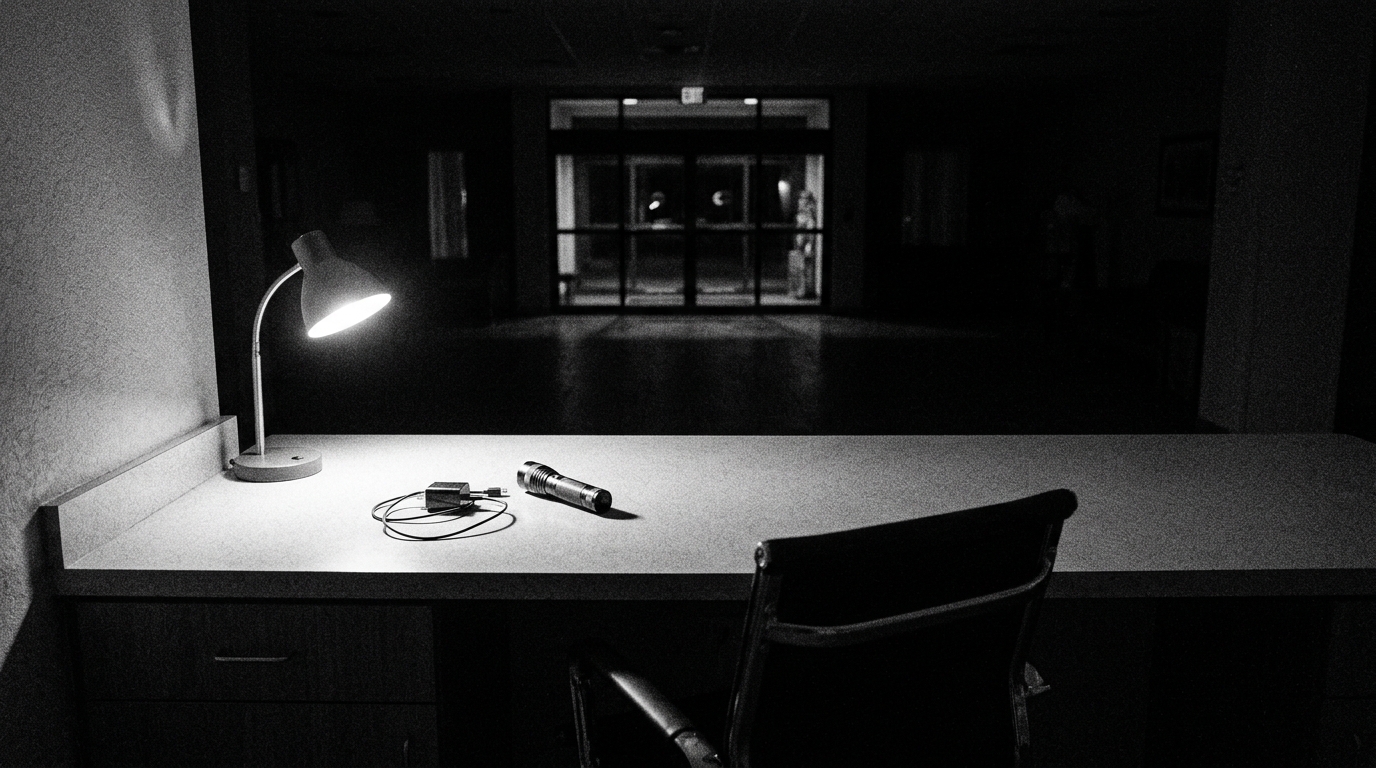
What I keep coming back to is the shift. The overnight. One person, sometimes the only person in the entire building, responsible for every guest, every door, every noise in the parking lot, every person who walks through that lobby between midnight and 6 AM. I've worked those shifts. I've managed people who worked those shifts. And I've had exactly one honest conversation with an owner about what we're really asking that person to do... which is run a 24-hour commercial operation, alone, for somewhere around $15-17 an hour, in a building where you can't control who walks through the front door. I remember a night auditor I managed years ago who kept a flashlight and a phone charger behind the desk. Not because of company policy. Because he'd figured out on his own that if something went wrong at 3 AM, those were the two things that might actually help him. That stuck with me. It still does.

This isn't the only incident. Another shooting happened at a different hotel in the same suburb days later... a guest shot through a hotel room window at a separate property. Cincinnati's violent crime rate runs more than double the national average. But here's the thing... this isn't a Cincinnati problem. This is an everywhere problem. Extended stay, select-service, economy tier... the properties with the thinnest staffing models are the ones with the highest exposure. The industry spends roughly $3 billion a year on security collectively, but most of that spend concentrates in full-service and luxury. A 90-key select-service with a $47 ADR isn't budgeting $5,000 for a security assessment. They're budgeting zero and hoping nothing happens.

The brand isn't going to fix this for you. Wyndham hasn't made a public statement about this incident (and honestly, they rarely do... brands are legally cautious about property-level events at franchised locations, and I understand why). Your management company might send a memo. Your insurance carrier might update a form. None of that changes what happens at 2 AM when your night auditor hears something in the parking lot and has to decide, alone, what to do about it. The panic button mandate that AHLA pushed... great idea. But a panic button assumes someone responds. In a select-service property in a suburban market, response time might be 8-12 minutes. A lot happens in 8 minutes.

What bothers me most is that we treat overnight staffing as a labor cost problem when it's actually a risk management problem. The person working alone overnight isn't just running the audit and handling late check-ins. They're your entire security infrastructure. Your liability exposure. Your brand reputation. And in the worst case, they're the person standing between a dangerous situation and every guest sleeping upstairs. We ask them to do all of that, and we pay them the least, train them the least, and check on them the least. That math has never made sense to me. After 40 years, it makes less sense than ever.

Operator's Take

If you're a GM at a select-service or extended-stay property, do something this week. Not next quarter. This week. Walk your overnight shift. Talk to your night auditor about what they're actually worried about... not what's in the safety manual, what keeps them looking over their shoulder. Check whether your panic button system actually works (test it... you'll be surprised how many don't connect). Audit your lobby camera angles... can you see the front door, the parking lot entrance, and the desk from the same feed? Look at your key access and entry points after midnight. A mag-lock on the lobby door that requires a room key after 11 PM costs a few hundred bucks and changes the risk profile overnight. And have the hard conversation with your owner: single-staffed overnight shifts are a liability calculation, not just a labor calculation. The cost of a second person on that shift is real. The cost of not having one, when something goes wrong, is worse. This is what I call the Invisible P&L... the costs that never appear on the financial statement destroy more margin than the ones that do. A wrongful death lawsuit, a viral news story, a complete collapse of your online reputation... none of that shows up on the P&L until it's too late to fix.

Read full analysis → ← Show less
Source: Google News: Extended Stay Hotels
Chatham's Preferred Shares Pay 6.625% Like Clockwork. The Interesting Part Is What's Underneath.

Chatham's Preferred Shares Pay 6.625% Like Clockwork. The Interesting Part Is What's Underneath.

Chatham Lodging Trust's preferred dividend is doing exactly what preferred dividends do... nothing surprising. But the Q1 2026 numbers underneath it tell a more useful story about what's actually working in upscale select-service right now, and what that 135-basis-point margin expansion means for operators watching their own expense lines creep.

So a hotel REIT's preferred shares paid the same fixed dividend they've always paid. That's... how preferred shares work. The coupon is 6.625% of a $25 liquidation preference, which means $0.41 per share every quarter, rain or shine, until the company either redeems them or stops being able to pay. This is not news. This is a calendar event. What IS worth paying attention to is the Q1 2026 earnings report that dropped on May 7, because the operating data underneath the dividend tells you something about where margin is actually coming from in this cycle.

Here's what caught my eye. Chatham reported comparable hotel RevPAR up just 1% to $128... 73% occupancy, $177 ADR across 39 hotels. That's barely a pulse on the top line. But hotel EBITDA margins expanded 135 basis points to 32%. And AFFO per diluted share jumped 18% year-over-year. So the revenue needle barely moved, but the profitability needle moved a lot. That gap between top-line growth and bottom-line improvement is the actual story here, and it's one that every operator running an upscale select-service or extended-stay property should be paying attention to.

Look, there are really only two ways you expand margins 135 basis points on 1% RevPAR growth. You either cut costs (which has a shelf life and eventually shows up in guest scores) or you get smarter about how you deploy labor and manage procurement. Chatham also just acquired six Hilton-branded hotels... 589 keys for $92 million, which works out to roughly $156K per key. These are described as newer, higher-margin properties, and management says they're immediately accretive to FFO. That's a calculated bet on buying margin rather than trying to squeeze it out of aging assets. It's a strategy that makes sense when rate growth is flat but expense pressure is real.

The part that gives me pause is the net loss. Chatham reported a net loss applicable to common shareholders of $6 million in Q1, compared to less than $1 million in Q1 2025. Some of that is acquisition-related, some is depreciation math, but it's a reminder that AFFO and net income are telling two different stories. AFFO strips out the noise that GAAP requires... depreciation, one-time charges, the stuff that doesn't reflect actual cash generation. For a REIT, AFFO is the more operationally honest metric. But if you're only reading the AFFO line and ignoring the GAAP loss widening from $1M to $6M, you're choosing which story to believe. Both numbers are real. They just describe different things.

The company's also buying back shares aggressively... 2.2 million shares at an average of $7.04 through Q1. When a REIT is buying its own stock at $7 while its preferred shares trade at a yield north of 8%, management is basically saying "our assets are worth more than the market thinks." That's either conviction or stubbornness, and the difference between those two things only becomes clear in a downturn. Chatham's guidance for full-year 2026... RevPAR growth of 0-2%, AFFO per share of $1.21 to $1.29... suggests they're not expecting a breakout year. They're expecting a grind-it-out year. And they're positioning accordingly. For operators watching this, the lesson isn't about Chatham specifically. It's about the gap between revenue growth and margin growth, and what that gap tells you about where the real operational work is happening right now.

Operator's Take

Here's what you should take from this if you're running an upscale select-service or extended-stay property. A REIT just expanded margins 135 basis points on 1% RevPAR growth. That means the margin improvement came from operations, not rate. Look at your own numbers... if your top line is flat but your expenses grew 2-3%, you're moving in the opposite direction from the portfolios that are winning right now. Pull your labor cost per occupied room for the last two quarters and compare it to your GOP flow-through. If revenue grew but less of it reached the bottom line, that's your problem to solve this month, not next quarter. This is what I call the Flow-Through Truth Test... revenue growth without margin improvement isn't growth, it's a treadmill. Get your procurement contracts in front of you this week. The operators expanding margins in a flat-rate environment aren't doing magic. They're doing the blocking and tackling on cost per occupied room that most of us put off when revenue was growing fast enough to cover the slack.

— Mike Storm, Founder & Editor
Read full analysis → ← Show less
Source: Google News: Chatham Lodging Trust
End of Stories