$74K Per Key for a Historic Luxury Hotel. Then $83K More to Fix It.
A Dallas hotelier just paid $4 million for a 54-room luxury property in Colorado Springs and plans to spend more on renovations than the acquisition itself. The per-key math tells a very specific story about where this buyer thinks value lives... and what the previous owner left on the table.
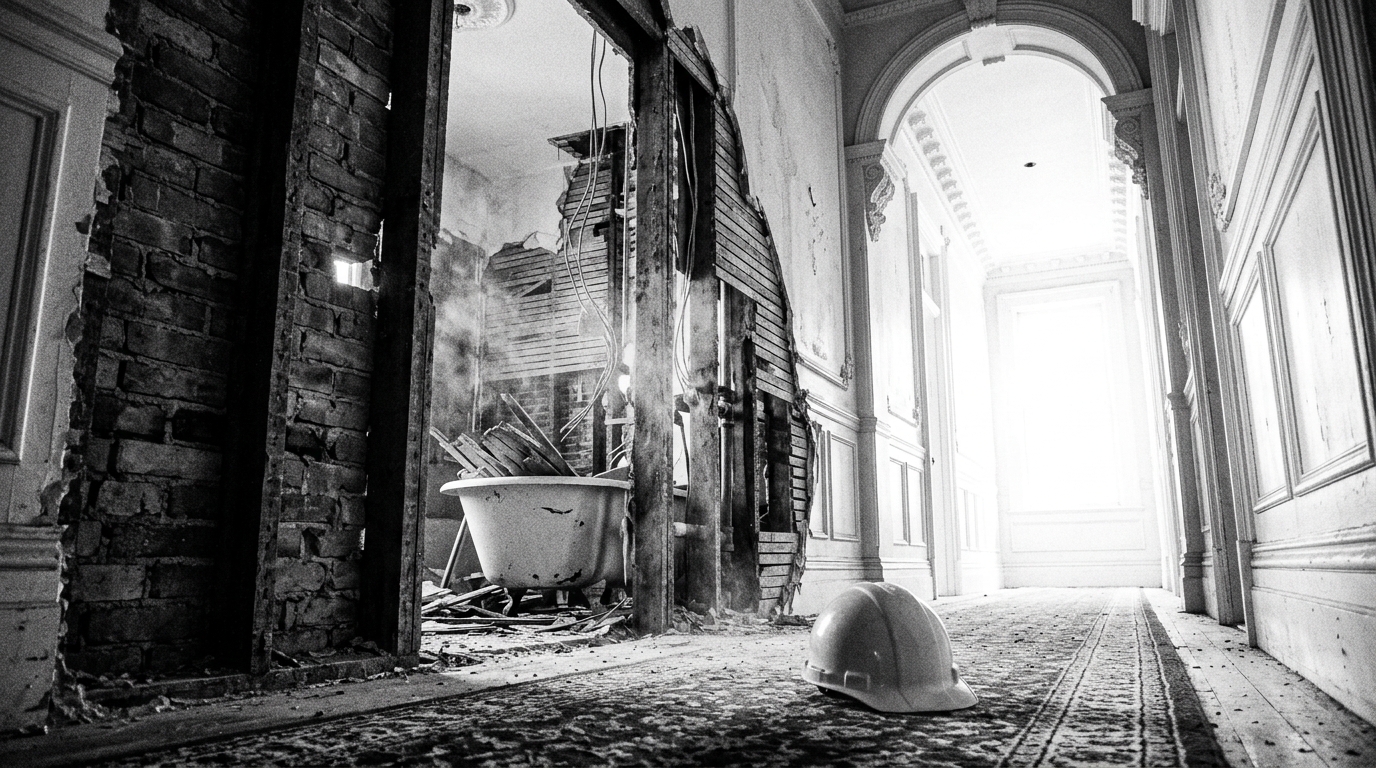
$74,074 per key. That's what a 54-room historic luxury hotel at the base of Pikes Peak just traded for. The buyer, a Dallas-based operator working through an entity called Glenbrook Lodging Corp, is planning an additional $4.5 million renovation on top of the $4 million acquisition. Total basis when the dust settles: $157,407 per key for a repositioned luxury asset in a mountain tourism market.
Let's decompose this. The previous ownership group held this property since 2007 and had been planning a $20 million expansion to add 79 rooms, a pool, and a ballroom. That project apparently died with the sale. So the seller went from a $20 million growth thesis to a $4 million exit. That's not a strategic disposition. That's a capitulation. Something broke between the vision and the execution, and whoever was underwriting that expansion either lost appetite or lost access to capital. The buyer is picking up the pieces at a fraction of replacement cost.
The renovation math is what interests me. $4.5 million across 54 keys is $83,333 per room. For context, a gut renovation of a luxury room in a secondary market typically runs $60K-$100K per key depending on the scope and the age of the building (and a property originally built in the 1800s has age in spades). Spending more on the renovation than the acquisition tells you the buyer priced the real estate at land-plus-structure value and is betting entirely on the repositioned operating performance. This is a classic value-add play... buy distressed, inject capital, capture the spread between current NOI and stabilized NOI.
The Colorado Springs luxury segment showed strong ADR and RevPAR growth in late 2025 even as the broader market softened. That's the micro-thesis here. The buyer isn't betting on Colorado Springs hotels generally. He's betting on a specific niche (historic luxury, tourism-driven, experiential positioning) in a market where that niche is outperforming. At $157K total basis per key, the stabilized yield only needs to hit $12K-$14K NOI per key to pencil at a reasonable return. For a luxury asset with ADRs presumably north of $250, that's achievable if occupancy stabilizes above 60% post-renovation.
One variable I can't quantify from the outside: renovation disruption. The property is reportedly staying open during 18 months of construction. I've analyzed enough renovation-during-operations scenarios to know that the revenue impact is almost always worse than the pro forma assumes. Noise complaints. Closed amenities. Construction staging visible from guest areas. A $250-per-night guest has lower tolerance for disruption than a $129-per-night guest. If the buyer's model doesn't haircut revenue by 20-30% during the renovation period, the model is lying to him.
Look... if you're an independent owner sitting on a historic property with deferred maintenance piling up, this deal is your case study. A seller who was planning a $20 million expansion walked away at $4 million. The gap between those two numbers is the gap between ambition and capital access. If your renovation keeps getting pushed to "next year," understand that every year you defer, your exit price moves closer to land value and further from operating value. That's what I call the CapEx Cliff... you cross from savings to asset destruction before you see it coming. If you're on the other side... looking at distressed historic assets in strong tourism markets... the playbook here is sound. Buy below replacement cost, inject capital, capture the repositioned spread. But budget your renovation disruption honestly. 18 months of construction in a 54-room luxury hotel means 18 months of one-star reviews about jackhammering at 8 AM. Model that or regret it.