Today · Sep 16, 2026
Your Delta in Utica Just Sold Out a Saturday to Anime Fans. Pay Attention.

Your Delta in Utica Just Sold Out a Saturday to Anime Fans. Pay Attention.

A $20-ticket anime convention filled a Marriott-branded property in a tertiary New York market on the last Saturday in February... which is exactly the kind of demand story most hotel operators are ignoring while they chase corporate group business.

Let me tell you what happened this weekend. A collector... some guy who loves anime and manga... rented out the Delta Hotels by Marriott in Utica, New York, brought in voice actors from shows like One Piece and Sailor Moon, charged twenty bucks a head, and packed the place. February 28th. Utica. A Saturday in the deadest month of the year in a market that most revenue managers couldn't find on a map without Google.

And that same Delta property? Already sold out for the New York State Tourism Conference in April. Overflow is spilling into the DoubleTree and the Fairfield. In Utica. Let that sink in for a minute.

I managed a property once in a market a lot like Utica. Secondary city, limited airlift, convention center that was "adequate" on its best day. My DOS kept chasing the big fish... state association meetings, regional corporate accounts, the stuff that looks impressive on a booking pace report. Meanwhile, our best weekends (and I mean best... highest ADR, highest F&B capture, lowest acquisition cost) came from niche events that nobody in the regional office had ever heard of. Vintage car shows. Quilting conventions. A reptile expo that I'm not making up. Those attendees didn't need rate negotiations. They didn't need 40-page RFPs. They showed up, they paid rack, they ate in the restaurant, and they told all their friends. The reptile people were, I swear, the most loyal repeat group we ever had.

Here's what nobody's talking about with these niche events. National occupancy hit 62.2% for the week ending February 21st. ADR was up 3% year over year at $164.56. RevPAR growth of 6.2%. Those are solid numbers for February. But they're national averages, which means they're hiding the reality for properties in markets like Utica, where you're fighting for every occupied room from November through March. A single-day anime convention with $20 tickets doesn't sound like a revenue strategy. But when it puts heads in beds on a Saturday in February, generates F&B revenue, creates social media content you couldn't buy (anime fans are prolific online... their engagement makes your Instagram strategy look like a fax machine), and costs you almost nothing in sales effort? That IS a revenue strategy. It's just not the one they taught in the brand's revenue management certification.

The broader trend here matters more than this one event. STR is projecting 0.7% supply growth for 2026 with just 0.6% RevPAR growth nationally. That's a tight margin environment. The properties that win in tight margin environments are the ones filling shoulder dates and dead weekends with creative demand sources. Meeting space compression is real... group demand is strong but capacity is getting squeezed by renovations and major events pulling inventory out of the market. That means niche events that used to bounce around looking for space are now valuable. The anime convention, the comic book show, the regional cosplay meetup... these aren't novelty bookings. They're demand generators in a supply-constrained world. The GM at that Delta in Utica figured this out. The question is whether you have.

Operator's Take

If you're a GM at a branded select-service or full-service property in a secondary or tertiary market, go find your local niche communities this week. Anime clubs, gaming groups, collector societies, hobbyist organizations... they all need event space and they all have members who will travel. Reach out directly. Don't wait for an RFP. Offer a simple package... meeting space, a room block, maybe a discounted F&B minimum... and get them locked in for your worst weekends. These groups book 12-18 months out once they trust a venue, and their acquisition cost is close to zero. Stop ignoring small-ball demand because it doesn't look sexy on the booking report. Sexy doesn't pay the mortgage. Occupied rooms do.

Read full analysis → ← Show less
Source: Google News: Marriott
Booking Holdings' $700M AI Bet Is Repricing the Stock. Here's What the Market Is Actually Telling You.

Booking Holdings' $700M AI Bet Is Repricing the Stock. Here's What the Market Is Actually Telling You.

BTIG reiterates a $6,250 price target while the stock sits near a 52-week low at $3,864. The gap between analyst conviction and market behavior is the real story.

BTIG's $6,250 price target on Booking Holdings implies 62% upside from the 52-week low of $3,863.65 hit two days ago. That's not a "Buy" rating. That's a declaration that the market has fundamentally mispriced the company. Let's decompose whether they're right.

The Q4 2025 numbers were clean. $6.35 billion in revenue, up 16% year-over-year. $48.80 EPS against a $47.96 consensus. 285 million room nights, up 9%. Full-year adjusted EBITDA of $9.9 billion on a 36.9% margin. Free cash flow of $9.1 billion. These are not the financials of a company in distress. The stock dropped 8% the day after earnings anyway. The reason: $700 million in incremental 2026 investment, primarily in generative AI and the "Connected Trip" platform. Management expects this to accelerate revenue growth by 100 basis points above their 8% long-term algorithm. The market looked at a 36.9% EBITDA margin company announcing $700 million in new spend and did the math on margin compression. That's the tension.

Here's what the headline doesn't tell you. Booking is simultaneously running $500-550 million in efficiency savings through a transformation program. Net new investment exposure is roughly $150-200 million. The market is pricing in the gross spend and discounting the offset. Meanwhile, the merchant model shift (now 61% of revenue) is structurally higher-margin than the agency model it's replacing. I've seen this pattern in REIT earnings before... management announces a capital program, the market punishes the near-term margin impact, and 18 months later the reinvestment thesis plays out and everyone pretends they saw it coming.

The analyst divergence is telling. BTIG at $6,250. Morgan Stanley upgrades to Overweight but drops target to $5,500. BofA maintains Buy at $5,900. Piper Sandler holds Neutral and cuts. Twenty-four of 37 analysts maintain Buy or Outperform. The consensus isn't bearish. It's confused. Confused about whether AI spend is offensive (Booking capturing more of the trip) or defensive (Booking protecting itself from AI-native competitors who could disintermediate OTAs entirely). The 25-for-1 stock split effective April 2 is noise... it changes the per-share price, not the enterprise value. Ignore it.

For hotel owners and asset managers, the real question isn't whether BKNG stock is a buy. It's what Booking's strategic direction means for your distribution cost. A Booking Holdings that successfully builds an "agentic AI" travel platform capturing flights, ground transport, insurance, and attractions alongside hotels becomes stickier for consumers and harder for hotels to circumvent. Their investment in Connected Trip is an investment in making the guest relationship belong to Booking, not to you. The 9% room night growth on 16% revenue growth means average revenue per room night is increasing... which means Booking is extracting more value per transaction. That's the number hotel owners should be watching. Not the stock price.

Operator's Take

Here's the thing nobody in our industry wants to say out loud... Booking spending $700M on AI isn't about making YOUR hotel more visible. It's about making their platform more indispensable to the traveler. If you're an independent or soft-branded property relying on OTA channels for 30%+ of your bookings, this is the quarter to get serious about direct booking infrastructure and guest data ownership. Every dollar Booking invests in "Connected Trip" is a dollar invested in keeping your guest THEIR guest. Your owners are going to see the stock drop and think Booking's in trouble. They're not. They're building the moat deeper. Act accordingly.

— Mike Storm, Founder & Editor
Read full analysis → ← Show less
Source: Google News: Booking Holdings
China's Hotel Boom Looks Great on Paper. I've Seen This Movie Before.

China's Hotel Boom Looks Great on Paper. I've Seen This Movie Before.

Every market research firm on the planet is projecting China's hotel market to double by 2033. The numbers are real. The question is whether the operators chasing those numbers understand what "8% CAGR" actually feels like at property level.

I sat in a conference room about fifteen years ago with an ownership group that was convinced the next great hotel market was going to be the one that saved them. They had projections. They had graphs. They had a consultant who could make a PowerPoint deck sing. What they didn't have was any experience operating in a market where the rules change at 2 AM because someone in a government office decided they should. They built the hotel. The market shifted. The projections were right about the demand and wrong about everything else... the cost to capture it, the regulatory surprises, the local competition that materialized overnight. That hotel still exists. It changed hands twice.

So when I see headlines about China's hotel market hitting $170 billion by 2033, growing at 8.23% annually, I don't dismiss it. The numbers are probably directionally correct. Domestic tourism spending hit 5.9 trillion yuan last year. International visitor spending surged 66% year-over-year and is now running above 2019 levels. Shanghai alone is adding 7,457 new rooms this year. Beijing another 3,991. H World Group is targeting 9,000 new hotels by 2030. Marriott has 18% of its global pipeline sitting in China. IHG has 1,400-plus hotels across 200 cities there. The capital is flowing. The demand is real. None of that is the part that worries me.

Here's what worries me. China's hotel penetration rate is 4 rooms per 1,000 people. The US is at 20. The UK is at 10. That gap is the single data point powering every bullish thesis you'll read this year... and it's the most dangerous number in the room. Because "room to grow" and "profitable growth" are not the same thing. When everybody sees the same gap, everybody builds into it. Shanghai is already leading global hotel development. That's not a sign of opportunity. That's a sign that the opportunity is being priced in by everyone simultaneously. I've watched this exact dynamic play out in US markets three times in my career... supply catches the demand curve, then overshoots it, and the operators who got in at the top of the cycle spend the next five years fighting for rate in an oversupplied market. The 8% CAGR looks beautiful until you're the GM trying to hold ADR with four new competitors within a mile radius who all opened in the same 18-month window.

The other thing nobody's talking about is the OTA dependency. Online travel agencies represent nearly 44% of China's hospitality market. That's not a distribution channel. That's a landlord. If you're an operator in that market and almost half your bookings are coming through platforms that control the customer relationship and take 15-25% for the privilege, your RevPAR growth is someone else's margin. I've managed properties where OTA dependency crept above 35% and the conversations with ownership got very uncomfortable very fast. At 44%, you don't have a hotel business. You have a fulfillment operation for someone else's platform.

Look... I'm not saying don't pay attention to China. You should. 165 to 175 million outbound Chinese travelers in 2026 is a number that matters to every gateway city operator in the world. If you're running a property in Los Angeles, Vancouver, Sydney, Bangkok, or any major European capital, that wave of demand is coming and you should be ready for it. But if you're evaluating investment in China's domestic market, or if your brand is telling you their China pipeline is the growth story that justifies your franchise fees, ask the harder questions. What's the actual RevPAR performance in markets where new supply has already landed? What's the flow-through after OTA commissions? What happens to that 8% growth rate when 7,400 new rooms open in one city in one year? The projections are always beautiful. The P&L is where reality lives.

Operator's Take

If you're a GM or operator at a US property in a major gateway market, start building your Chinese traveler strategy now. That means Mandarin-capable staff or translation technology, UnionPay and Alipay acceptance, and partnerships with the right inbound tour operators. The outbound numbers are real and the operators who capture that demand early will own it. If your management company or brand is pitching you on China as their big growth story to justify fee increases... ask them to show you same-store RevPAR performance in Chinese markets where supply has already ramped. Not projections. Actuals. The difference will tell you everything.

Read full analysis → ← Show less
Source: Google News: Hotel Development
Expedia's AI Bet Is Working... But the Real Question Is What It Costs You Per Booking

Expedia's AI Bet Is Working... But the Real Question Is What It Costs You Per Booking

Expedia just posted double-digit growth and is pouring money into AI everything. Before you celebrate the demand, ask yourself: is the cost of that booking going up, and are you the one paying for it?

Let's talk about what Expedia actually just told us. Q4 2025: revenue up 11% to $3.5 billion. Gross bookings up 11% to $27 billion. Booked room nights up 9% to 94 million. Adjusted EBITDA up 32%. Those are real numbers. That's not a company struggling to find its footing... that's a company executing.

But here's what caught my attention. Their B2B gross bookings jumped 24% to $8.7 billion in Q4 alone, while B2C only grew 5%. Read that again. The business-to-business side is growing almost five times faster than the consumer-facing side. That's not a footnote. That's a strategic pivot. Expedia is becoming the pipes, not just the storefront. They consolidated from 21 different tech stacks down to one, cut cloud costs by more than 10%, and now they're pushing Vrbo's 900,000+ vacation rentals through their Rapid API to partner networks. They're embedding themselves into distribution at the infrastructure level. And when a platform becomes your infrastructure, switching costs go up. Way up.

Now let's talk about the AI piece, because that's where it gets interesting (and by interesting I mean complicated for anyone running a hotel). CEO Ariane Gorin is saying generative AI is "reshaping how travelers do trip discovery." Okay. What does that actually mean for your property? It means Expedia is building conversational tools, natural-language search, AI-powered filters, and an AI agent inside Hotels.com. They're also making sure their brands show up in AI-powered search and work with agentic browsers... the kind of tools that book a trip for you based on a conversation rather than a search query. Here's the thing nobody's talking about: if a traveler says to an AI agent "find me a clean hotel near downtown Nashville under $180 with free parking," the ranking factors that determine whether YOUR hotel shows up in that response are completely opaque. At least with traditional OTA search, you could see where you sat in the results and game the system a little. With AI-mediated discovery, you're trusting the model. And you have no idea what the model weighs. I talked to a revenue manager last month who told me she's already seeing booking patterns she can't explain... rate sensitivity that doesn't match her comp set, sudden spikes from channels she didn't even know were active. She said it felt like "someone else is driving my car." That's what AI-mediated distribution feels like at property level.

And Expedia knows AI is a double-edged sword. Their own 10-K filing now lists "generative and agentic AI" as a competitive threat and explicitly names companies offering AI agents as a competitor category. They're simultaneously building AI into their product AND admitting that AI could disintermediate them. That's not paranoia... that's accurate. The worldwide spend on AI in travel is projected to hit nearly $14 billion by 2030 (up from about $3.4 billion in 2024). Expedia is betting they can ride the wave instead of getting crushed by it. Their direct selling and marketing expenses were $1.7 billion in Q4 2025 alone... up 10% year-over-year. Somebody's paying for that marketing spend, and if you think it's not flowing through to your cost per acquisition, check again.

Here's what this means if you're running a hotel. Expedia's growth is demand. Demand is good. But demand through an increasingly AI-opaque, increasingly consolidated distribution partner comes with strings. The B2B growth means more bookings are flowing through white-label and API channels where you might not even know Expedia is the originator. The AI tools mean guest discovery is shifting from search-and-compare to ask-and-receive, and the algorithms deciding which properties get recommended are black boxes. And the 100-125 basis points of EBITDA margin expansion Expedia is guiding for 2026? That margin has to come from somewhere. Either they're getting more efficient (possible... they've done real work on their tech consolidation), or the economics of being a hotel on their platform are shifting. Look at your channel mix. Look at your cost per acquisition by channel. Look at the percentage of bookings coming through paths where you can't see the full funnel. If those numbers are moving in a direction you don't like, you need to act now... not after the next contract renewal. Because once you're the infrastructure, they set the terms.

Operator's Take

Here's what I'd do this week. Pull your OTA production report for the last 90 days and break out Expedia-sourced bookings by channel... direct consumer, B2B, API-originated. If you're seeing growth in channels you can't trace clearly, that's the infrastructure play in action and you need to understand your true cost per acquired room night, not just the commission rate on paper. For independents especially: the AI discovery shift means your direct booking strategy just became survival strategy. Every dollar you spend making your own website bookable, fast, and mobile-optimized is a dollar you won't spend fighting an algorithm you can't see.

— Mike Storm, Founder & Editor
Read full analysis → ← Show less
Source: Google News: Hotel AI Technology
Expedia's B2B Machine Is Growing Twice as Fast as Consumer. Here's Why That Hits Your P&L.

Expedia's B2B Machine Is Growing Twice as Fast as Consumer. Here's Why That Hits Your P&L.

Expedia just posted a quarter where its B2B business grew 24% while consumer bookings crawled at 4%. If you don't understand what that split means for your distribution costs, you're about to learn the hard way.

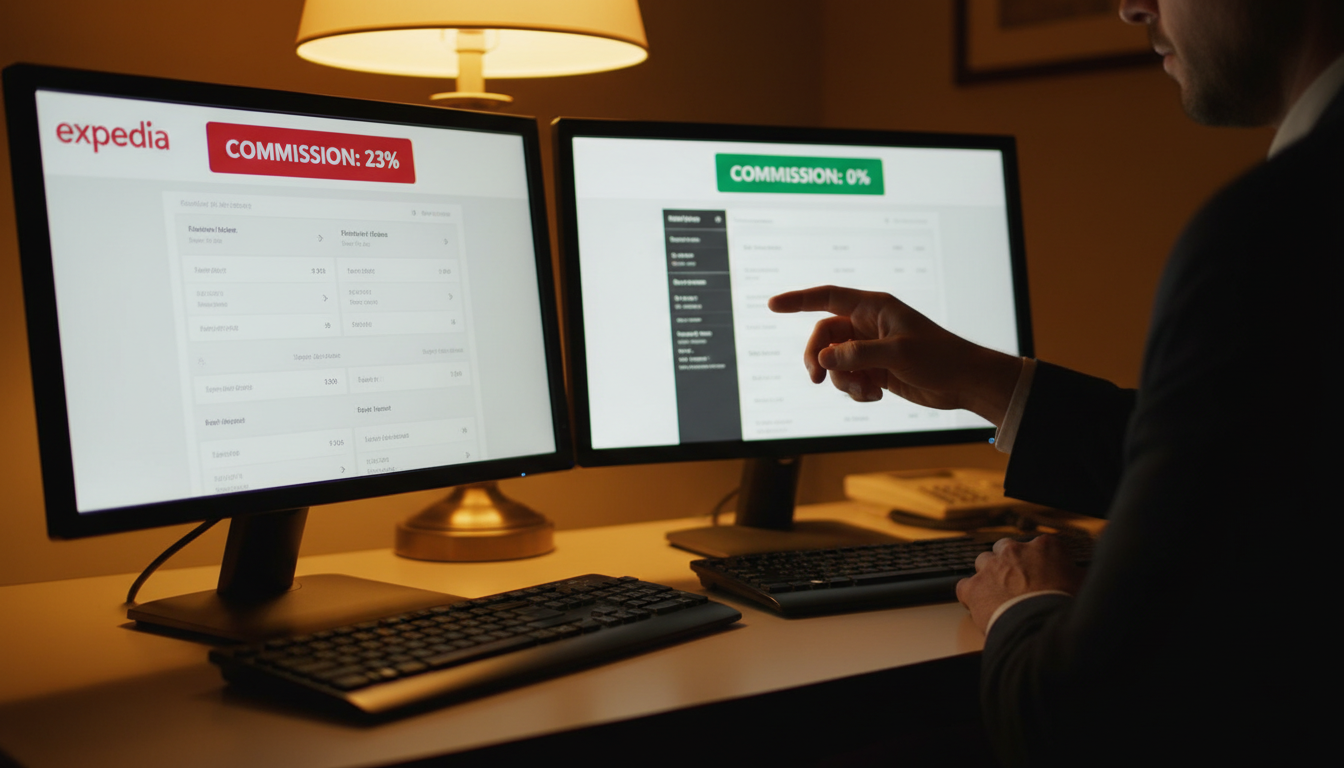
Expedia dropped Q4 numbers on February 12th that Wall Street liked for about five minutes. Revenue hit $3.5 billion, up 11%. Adjusted EBITDA jumped 32% to $848 million. Adjusted EPS of $3.78 crushed the $3.25 estimate. Then Citigroup slashed the price target from $281 to $225 and the stock dropped 7.2%. The Street's concern: margin expansion guidance for 2026 is only 100-125 basis points. Translation for us hotel people: Expedia is growing fast but spending a lot to do it. Where's that spend going? Into the B2B engine that's quietly reshaping how your rooms get sold.

Here's the number that should have every revenue manager's attention: B2B revenue hit $1.3 billion in Q4, up 24% year over year. Consumer revenue grew 4%. The B2B segment, which includes Expedia Partner Solutions and white-label distribution, now accounts for 37% of total revenue. That was closer to 25% three years ago. This isn't a side business. It's becoming the business. And when Expedia's B2B president says the goal is to be the "one stop shop" for distribution partners, what he's really saying is that your rooms are being sold through channels you may not even recognize as Expedia. That airline website bundling a hotel? Expedia back-end. That credit card travel portal? Expedia back-end. That regional OTA in Southeast Asia? Probably Expedia back-end.

Why should you care? Because B2B distribution is opaque by design. When a guest books through a white-label partner powered by Expedia Partner Solutions, the commission structure, the rate parity implications, and the data ownership all get murkier. You might see the booking show up as a third-party channel in your PMS and assume it's a standard OTA transaction. It's not. The economics can be different, and often worse, because there's an additional intermediary taking a cut. I talked to a revenue director last month who spent two weeks tracing bookings back to their actual source and found that 14% of what she thought were "direct" bookings from a corporate travel platform were actually flowing through an Expedia B2B pipe with a blended commission north of 20%.

Expedia's also pushing hard on AI and their One Key loyalty program, and they're telling investors these tools drive marketing efficiency and guest retention. Let me translate that too. "Marketing efficiency" means they're getting better at bidding on your brand name in search. "Guest retention" means they want travelers loyal to Expedia's ecosystem, not to your hotel. The 94 million room nights booked in Q4 alone tells you the scale of demand they're aggregating. Every room night booked through their loyalty program is a guest relationship you don't own.

For 2026, Expedia's guiding to 6-9% revenue growth and 6-8% gross bookings growth. That's not blowout growth, but it doesn't need to be. The shift toward B2B means they're embedding deeper into the distribution stack, making themselves harder to displace. If you're an independent operator, this is the competitive environment you're up against. If you're a branded operator, your brand's own loyalty program is in a street fight with One Key for the same traveler. Either way, the cost of getting a guest into your hotel is going up, not down. The math doesn't lie. Pull your channel mix report this week. Trace every booking back to its actual source. Know what you're paying. Because Expedia sure as hell knows what they're charging.

Operator's Take

If you're a revenue manager or GM at any property doing meaningful OTA volume, pull your source-of-business report for January and February right now. Don't look at channel categories. Look at actual booking sources. If your PMS lumps white-label and B2B bookings into generic buckets, call your rep and demand a breakdown. Then calculate your true blended commission rate per channel, not the rate in your contract, the actual net rate after every intermediary takes their piece. You can't manage distribution cost you can't see.

Read full analysis → ← Show less
Source: Google News: Expedia Group
Airbnb's Q4 Numbers Look Great. Here's Why That's Your Problem to Solve.

Airbnb's Q4 Numbers Look Great. Here's Why That's Your Problem to Solve.

Airbnb just posted strong fourth-quarter bookings and an optimistic 2026 outlook. If you're running a hotel and not paying attention to what's actually driving their growth, you're fighting the wrong battle.

Airbnb's Q4 results came in strong, and management is projecting continued momentum into 2026. The headlines will focus on gross booking value and nights booked. Fine. But if you operate hotels, the number that should keep you up is the one they don't put in the press release: the percentage of their bookings that directly overlap with your comp set.

Here's what most hotel operators get wrong about Airbnb. They still think of it as a leisure-only, extended-stay alternative. That was true in 2016. It's not true now. Airbnb has been quietly building out its business travel segment, its urban short-stay inventory, and its "experiences" platform for years. Their product is no longer a couch in someone's apartment. In a lot of markets, it's a renovated one-bedroom with a kitchen, a dedicated workspace, and a check-in process that's smoother than what half the branded select-service properties in America offer. When their bookings grow, it's not just vacation rentals eating into resort demand. It's urban supply pulling midweek corporate travelers who used to book your 150-key Courtyard.

The technology angle matters here, and it's the piece most operators miss entirely. Airbnb's search and matching algorithms are genuinely sophisticated. They personalize results based on past behavior, trip context, group size, and price sensitivity in ways that most hotel booking engines simply don't. I consulted with an independent property group last year that was losing 12% of its repeat guests to short-term rentals in the same zip code. When we dug into it, the guests weren't choosing Airbnb because of price. They were choosing it because the booking experience felt more intuitive and the listing photos were better than the hotel's own website. That's a technology and distribution problem, not a rate problem.

What should concern you about the 2026 forecast isn't the top-line growth. It's the signal that Airbnb's supply acquisition engine is accelerating. More hosts, more inventory, more market coverage. Every new listing in your market is a room that doesn't show up in STR data, doesn't get tracked in your comp set, and doesn't play by the same rules on taxes, safety codes, or ADA compliance. You're competing against supply you can't even measure accurately. If your revenue management strategy doesn't account for alternative accommodation supply in your market, your rate optimization model is running on incomplete data. Period.

Look, Airbnb isn't going away, and the "hotels vs. short-term rentals" framing is tired. The real question is whether your property's technology stack, your direct booking experience, and your guest data strategy are good enough to compete for the traveler who now has three times as many options as they did a decade ago. If your website takes four clicks to book, if your PMS doesn't capture guest preferences that personalize the next stay, if your WiFi still drops on the third floor because nobody's touched the access points since 2019, you're handing market share to a platform that does all of those things better. Fix what you can control. Start with the booking experience. Then fix the in-stay technology. Then make sure your rate strategy reflects the real competitive set, not just the hotels across the street.

Operator's Take

If you're a GM at an independent or soft-branded property in an urban market, pull your AirDNA data this week. Not next month. This week. Know exactly how many active short-term rental listings are within a mile of your property and what they're charging. Then look at your own direct booking conversion rate. If it's below 3%, your website is the problem, not Airbnb. Call your web vendor, call your PMS rep, and ask them what it takes to get a two-click mobile booking flow live within 60 days. That's your counter-punch.

— Mike Storm, Founder & Editor
Read full analysis → ← Show less
Source: Google News: Airbnb
Wall Street's AI Bet Is Splitting Travel Stocks. Here's What It Actually Means for Your Hotel.

Wall Street's AI Bet Is Splitting Travel Stocks. Here's What It Actually Means for Your Hotel.

Investors are repricing travel and leisure companies based on perceived AI disruption risk, and the divide between "AI winners" and "AI losers" is starting to show up in valuations that will eventually trickle down to your franchise fees, your tech stack costs, and your negotiating power with OTAs.

Here's what's happening. Wall Street has decided that some travel companies are going to be AI winners and some are going to be AI losers, and they're pricing stocks accordingly. Companies with massive proprietary data sets and the engineering talent to build AI-native products, think Booking Holdings, Airbnb, and the major OTAs, are getting rewarded. Companies that are primarily physical-asset operators or franchise platforms without clear AI strategies are getting discounted. This isn't new. It's the same pattern we saw in 2015-2016 when "mobile-first" became the dividing line. Companies that had mobile booking figured out saw their multiples expand. Everyone else got punished until they caught up. The difference now is that AI capability gaps are harder to close. You can build a mobile app in six months. You can't build a proprietary large language model trained on billions of booking interactions in six months.

What does this mean at the property level? Three things. First, the OTAs that are "winning" the AI trade are going to use that capital advantage to build even stickier consumer products. Booking's AI trip planner, Expedia's conversational search, Airbnb's AI-powered matching. These tools are designed to own the guest relationship before that guest ever sees your property name. If you're an independent operator or a soft-branded property relying on direct bookings, the competitive moat around the OTAs just got deeper. Second, the brands that are being discounted by Wall Street for lacking AI strategy are going to respond with mandates. I've consulted with enough hotel tech teams to know the playbook: brand headquarters announces an "AI-powered guest experience platform," rolls out a mandate, charges you $2-4 per room per month for it, and the actual product is a chatbot that can't handle a late checkout request. Third, and this is the one nobody's talking about, the valuation gap creates acquisition dynamics. AI-rich companies with inflated stock prices can use that currency to buy AI-poor companies at a discount. If you're an owner with a management agreement tied to a company that gets acquired in this cycle, your contract just became someone else's problem to honor.

The practical question is: does any of this AI investment actually change how a guest books a room? Right now, partially. Booking Holdings has been quietly deploying AI-assisted search that personalizes results based on past behavior, not just price and location. That's real. It changes conversion rates. It changes which properties show up first. If your property data, your photos, your rate structure, your review scores aren't optimized for algorithmic discovery, you're already losing. This isn't theoretical anymore. A property I consulted with last year saw a 14% drop in OTA conversion after a platform algorithm update, and they couldn't figure out why for three weeks. Turned out their room-type descriptions hadn't been updated since 2019 and the new AI-powered search was deprioritizing listings with stale content.

Here's my position: ignore the stock prices, but don't ignore what they signal. The signal is that capital is flowing toward companies building AI-native distribution. That means the cost of customer acquisition through those channels is going up, not down. Every dollar Booking spends on AI that makes their platform stickier is a dollar that makes your direct booking strategy more important. If you're still running the same website you launched in 2021 with the same booking engine and the same SEO strategy, you're bringing a knife to a gunfight. Update your OTA listing content quarterly. Invest in your direct channel. And when your brand comes to you with an AI mandate and a per-room fee, ask one question: show me the data on incremental revenue this generates at comparable properties. If they can't answer that with actual numbers, you know what you're buying.

Operator's Take

If you're a GM at a branded select-service property, your brand is going to announce some kind of AI initiative in the next 12 months and ask you to pay for it. Before you sign anything, demand comp set data showing revenue lift at properties already using the tool. Not projections. Actuals. If you're an independent, block out two hours this month to audit your OTA listings and your direct booking funnel. The AI-powered search algorithms these platforms are rolling out reward fresh, detailed content and punish stale listings. That's free money you're leaving on the table.

— Mike Storm, Founder & Editor
Read full analysis → ← Show less
Source: Google News: Booking Holdings

Expedia's BNPL and Activity Play Is Coming For Your Direct Revenue

Expedia just added Buy Now Pay Later through Affirm and activities booking via Tiqets. While Wall Street analysts debate moats, here's what this means on the floor: the OTAs are building a complete trip ecosystem that makes your direct booking engine look like a relic.

Let me be direct — Expedia's integration of Affirm's Buy Now Pay Later and the Tiqets activities platform isn't just another tech partnership press release. This is a calculated move to own the entire guest wallet, and most of you are still thinking this is just about room nights.

Here's the thing nobody's telling you: when a guest books your property through Expedia and can finance it interest-free over four payments, then immediately add dinner reservations, theater tickets, and a food tour all in the same cart, you've lost control of the guest relationship before they ever check in. Your front desk upsell opportunities? Your concierge revenue? Your lobby restaurant capture rate? All of it gets squeezed when the guest has already planned and paid for their entire trip through the OTA.

I've seen this movie before. It started with flight bundles, then rental cars, now it's activities and flexible payment. The commission you're paying Expedia isn't 15-18% anymore when you factor in the total guest spend they're capturing. They're becoming the travel bank, the concierge, and the payment plan provider all at once. And with BNPL, they're removing the last friction point for booking — the guest who was going to wait two weeks until payday and maybe book direct? Expedia just gave them four clicks to book everything right now.

The operators who think "well, at least I'm getting the room night" are missing the point entirely. You're getting the room night at the highest commission rate in the channel mix, losing the guest data, and watching someone else monetize every other dollar that guest spends in your market. If you're running a 150-key property in a leisure destination and you're sitting at 40% OTA mix, you need to do the math on what Expedia capturing activities and offering payment plans is actually costing you in total revenue per booking.

Operator's Take

If you're over 30% Expedia mix right now, this should be your wake-up call. You need a loyalty program with real benefits, a booking engine that doesn't look like it's from 2019, and preferably your own partnership with a local activities provider. Start tracking not just ADR and RevPAR, but total guest spend capture. Because Expedia sure as hell is.

Read full analysis → ← Show less
Source: Google News: Expedia Group

Delhi's AI Summit Price Surge Shows Why You Need Event-Based Revenue Strategy Now

Five-star hotels in Delhi are gouging rates for a 2026 AI conference — and if you're not doing the same thing in your market when demand spikes, you're leaving serious money on the table.

Here's what's happening: Delhi luxury properties are jacking up rates — we're talking 3x to 4x normal pricing — because the India AI Impact Summit is bringing thousands of tech executives and government officials to town. The Taj, ITC, and Oberoi properties are all playing the same game. Standard rooms that normally run $200-250 are suddenly $600-800. Suites are going for north of $1,500.

And you know what? They're absolutely right to do it.

I've seen this movie before. CES in Vegas. Dreamforce in San Francisco. Any major medical conference in a secondary market. The operators who win are the ones who saw it coming six months out, adjusted their rate strategy, put blackout dates on corporate contracts, and went hard on minimum length of stay requirements.

But here's the thing nobody's telling you: most independent and midscale operators don't have the systems or the guts to do this properly. They're still honoring their Expedia merchant rates while the Marriott down the street closed all OTA inventory 90 days out and is selling direct at 250% ADR. They're letting their corporate accounts book at contracted rates because "we have a relationship" while leaving $30,000 in RevPAR on the table.

The Delhi situation isn't about AI technology — it's about revenue management discipline. These properties identified a compression event, forecasted demand correctly, and priced accordingly. Every GM reading this should be asking: what events are coming to my market in the next 12 months that I can exploit the same way?

Operator's Take

If you're running anything larger than a 100-key property, you need to map out every major event in your market for the next year right now. Pull chamber of commerce calendars, convention center schedules, sports tournaments, everything. Then build rate strategies around each one — close OTA channels 60-90 days out, implement 2-3 night minimums, and don't be afraid to go 2-3x your normal rate when real compression hits. The revenue you're not capturing during these 10-15 nights per year is the difference between a good year and a great one.

Read full analysis → ← Show less
Source: Google News: Hotel AI Technology
Expedia's 2026 Struggles Mean Higher Direct Booking Opportunities

Expedia's 2026 Struggles Mean Higher Direct Booking Opportunities

While investors question Expedia's future, smart hoteliers are seeing the cracks in OTA dominance as their best chance to reclaim guest relationships in years.

Here's what I'm seeing on the floor — and what the financial press won't tell you. When a major OTA like Expedia starts showing weakness to Wall Street, that's not just an investment story. That's your signal that the commission game is shifting.

I've watched this cycle three times in 40 years. First with traditional travel agents in the '90s, then with early booking sites in 2008, and now we're seeing round three. When the big boys stumble, it's because travelers are changing how they book faster than these platforms can adapt. And that creates openings.

The numbers I'm tracking tell the real story. Properties that invested in their direct booking engines over the past 18 months are seeing 12-15% higher direct conversion rates compared to 2024. Meanwhile, Expedia's commission demands haven't dropped — they're still pulling 15-25% on most bookings while delivering fewer qualified leads.

But here's the thing nobody's telling you: this isn't about Expedia going away. It's about their grip loosening just enough for operators who know what they're doing to grab more direct business. The hotels winning right now are the ones treating OTAs like expensive advertising, not their primary revenue source.

Operator's Take

If you're still depending on Expedia for more than 30% of your bookings, you're leaving money on the table. Start tracking your direct booking conversion rates weekly, not monthly. And test dropping your OTA rates 5-10% below your direct rates — force guests to call you for the best deal.

Read full analysis → ← Show less
Source: Google News: Expedia Group
Gaming Operations Are Writing Your Hospitality Playbook — Pay Attention

Gaming Operations Are Writing Your Hospitality Playbook — Pay Attention

While hotels chase points and elite status complexity, Corona Resort just cracked the code on premium mass market players. Their approach should make every GM rethink guest segmentation.

Here's the thing nobody's telling you: casinos have been light-years ahead of hotels when it comes to understanding and monetizing mid-tier guests. Corona Resort's new premium mass strategy isn't just gaming news — it's a masterclass in revenue optimization that hotels are completely missing.

I've seen this movie before. Gaming properties identify their sweet spot customers — not the whales, not the penny slot players, but that meaty middle segment that generates 60-70% of revenue. They build entire operational strategies around keeping these guests happy and spending. Meanwhile, most hotels still think in binary terms: leisure or business, loyalty member or walk-in.

Corona's betting on premium mass players because they've done the math. These guests gamble $200-500 per visit, stay 2-3 nights, eat at the restaurants, and come back monthly. Sound familiar? That's your weekend leisure guest who books the $180 rate, hits the spa, and returns quarterly. But you're probably treating them like any other leisure booking.

The operational difference is everything. Gaming properties track player behavior in real-time, adjust comp formulas by segment, and train staff to recognize and respond to premium mass preferences. Your PMS can't even tell you which guests hit your restaurant twice during their stay.

If you're running a full-service property in a leisure market, this should wake you up. Gaming operations are proving that the middle segment — properly identified and cultivated — delivers better lifetime value than chasing high-roller corporate accounts that disappeared during COVID anyway.

Operator's Take

Stop obsessing over elite tier guests and start identifying your premium mass segment. Pull 12 months of PMS data and find guests who book 2+ times annually at $150+ ADR with F&B spend. Build specific retention programs for this group — they're your Corona premium mass equivalent.

Read full analysis → ← Show less
Source: Google News: Casino Resorts
End of Stories