Today · Jul 25, 2026
A "Watchlist" Built on Trading Volume Is Not Investment Analysis

A "Watchlist" Built on Trading Volume Is Not Investment Analysis

MarketBeat's algorithm flagged five hotel stocks for high dollar volume and called it a watchlist. The actual fundamentals tell a more complicated story.

Hilton is trading at a 50.97 P/E ratio with a $71.5 billion market cap. That's the number worth starting with, because it tells you everything about where public hospitality equity is priced right now... and what the market is assuming about future earnings growth to justify that multiple.

MarketBeat published a list of five hotel stocks (Marriott, Hilton, IHG, H World Group, Las Vegas Sands) selected not by fundamental analysis but by an automated screener filtering for highest dollar trading volume. High volume means institutional activity and liquidity. It does not mean "add to your watchlist." An asset manager I worked with years ago had a line I've never forgotten: "Volume tells you who's moving. Price tells you why. Most people confuse the two." This article confuses the two.

Let's decompose what's actually happening. Zacks raised Marriott's near-term EPS estimates for Q1 through Q4 2026, citing recovery momentum. The same week, Zacks published a separate piece warning about persistent industry headwinds. Marriott's stock traded lower on February 28 despite the earnings upgrade... mixed analyst commentary overwhelmed the positive revision. That's not a "top stock to watch." That's a stock where the market can't decide what the next 12 months look like. Two research notes from the same firm pointing in opposite directions within 48 hours should make you pause, not buy.

The real story underneath the volume data is valuation compression risk. Public hotel companies are priced for continued rate growth in an environment where ADR gains are decelerating and expense pressure (labor, insurance, property taxes) is accelerating. RevPAR growth without margin expansion is a treadmill. I've audited enough hotel management company financials to know that the line between "record revenue" and "declining owner returns" is thinner than most retail investors realize. Hilton at 51x earnings requires a very specific set of assumptions about net unit growth, fee revenue acceleration, and macro stability. If any one of those assumptions breaks, the multiple contracts fast.

For anyone allocating capital to public hospitality equities right now, the question isn't which stocks had the most volume last Tuesday. The question is what cap rate is implied by the current stock price, and does that match your view of where hotel asset values are heading in a rising-cost environment. Run that math before you run the screener.

Operator's Take

Look... if your ownership group or asset manager forwards you an article like this and asks "should we be worried about our brand parent's stock price?"... here's what to tell them. Stock price follows earnings, and earnings follow what happens at property level. Your job is flow-through. Control your GOP margin, manage your labor costs, and deliver on your RevPAR index. That's what protects everyone's investment, regardless of what the trading algorithms are doing on any given Tuesday.

— Mike Storm, Founder & Editor
Read full analysis → ← Show less
Source: Google News: Marriott
A Resort Lost Its Beach, Dropped "Beach" From Its Name, and Now Wants Both Back

A Resort Lost Its Beach, Dropped "Beach" From Its Name, and Now Wants Both Back

The Grand Cayman Marriott is betting nearly $1 million in waived permits and 8,000 cubic yards of sand that it can reverse five years of erosion and 40% business losses... and every coastal resort owner should be watching what happens next.

There's something almost poetic about a beach resort that had to take "Beach" out of its name. The Grand Cayman Marriott did exactly that in 2023, because the sand was gone, and you can only market a "beach experience" for so long when your guests are staring at exposed rock and seawall. Now the resort says the beach could be back by September, with construction starting in May, 8,000 cubic yards of fresh sand across a 60-foot stretch, two 135-foot rock groynes to hold it in place, and a government that waived close to $1 million in permit fees to make it happen. The GM has gone on record saying the property lost 40% of its business over the last four to five years because of this erosion. Forty percent. Let that number sit with you for a second, because that's not a dip... that's a near-death experience for any hotel's P&L.

And here's where the brand story gets interesting (and where my years brand-side start tingling). Marriott International just reported Q4 2025 earnings with global RevPAR up 2% for the full year and leisure RevPAR climbing over 3%. The company is leaning hard into luxury and leisure positioning. So you've got a flagship leisure property in one of the Caribbean's most iconic destinations hemorrhaging business because the physical product... the actual beach... doesn't exist anymore. The brand promise and the brand delivery aren't just misaligned. One of them literally washed away. I've sat in brand reviews where the gap between what's on the website and what the guest experiences at arrival is embarrassing. This is the most extreme version of that I've ever seen. You cannot Photoshop a beach in real life (though I'm sure someone in marketing considered it).

What nobody's talking about is the precedent problem. The Cayman Islands' Department of Environment flagged this project as "precedent-setting" and warned against "piecemeal solutions" that could shift erosion to neighboring properties. They're not wrong. Rock groynes don't create sand... they trap it. Which means the sand that accumulates in front of the Marriott might be sand that would have naturally replenished someone else's shoreline. I've watched three different coastal repositioning projects promise they were the fix, and in every case, the conversation five years later was about who got hurt downstream. The government had previously approved CI$21 million for a broader beach restoration initiative that stalled. So instead of a coordinated plan, you've got one property doing its own thing because it couldn't wait any longer. Understandable from the owner's perspective. Potentially catastrophic from a destination-planning perspective.

For owners and operators at coastal properties... and this is the part that should keep you up tonight... this is a preview of what climate risk looks like when it hits your top line. Not gradually. Not theoretically. A 40% revenue decline because the amenity your entire positioning depends on disappeared. The global beach hotel market is valued at $142 billion and projected to nearly double by 2034, but that growth assumes the beaches are still there. If you own or manage a coastal resort and you don't have a climate risk line item in your capital planning, you are building a budget on sand (and I wish that were only a metaphor). The Marriott's projected 150 new jobs post-restoration tells you everything about how much operational capacity they've already shed. That's not just beach erosion. That's organizational erosion.

Here's what I want every brand executive and franchise development officer to understand about this story. The Grand Cayman Marriott didn't lose 40% of its business because of bad management, or a weak loyalty program, or insufficient brand standards. It lost it because the ocean moved. And no amount of brand theater... no lobby renovation, no F&B concept refresh, no "elevated arrival experience"... fixes that. Sometimes the Deliverable Test isn't about staffing or training or design. Sometimes it's about whether the planet cooperates with your brand promise. That's a test none of us are prepared to fail, and we're all going to face it sooner than the ten-year capital plan assumes. The Marriott is spending a fortune to buy back what nature took. The question every coastal owner should be asking right now isn't whether this project works. It's what their plan is when the same thing happens to them.

Operator's Take

If you're running a coastal property anywhere... Caribbean, Gulf Coast, Southeast... pull your insurance policy and your franchise agreement this week. Look at what's covered for "natural erosion" versus "storm damage" (spoiler: the gap will make you nauseous). Then start a conversation with your ownership group about a dedicated climate reserve in the FF&E budget. The Grand Cayman Marriott waited until it lost 40% of its business and had to rename itself. Don't be the GM who has to explain that timeline to an owner. Get ahead of it now. The ocean doesn't negotiate.

— Mike Storm, Founder & Editor
Read full analysis → ← Show less
Source: Google News: Marriott
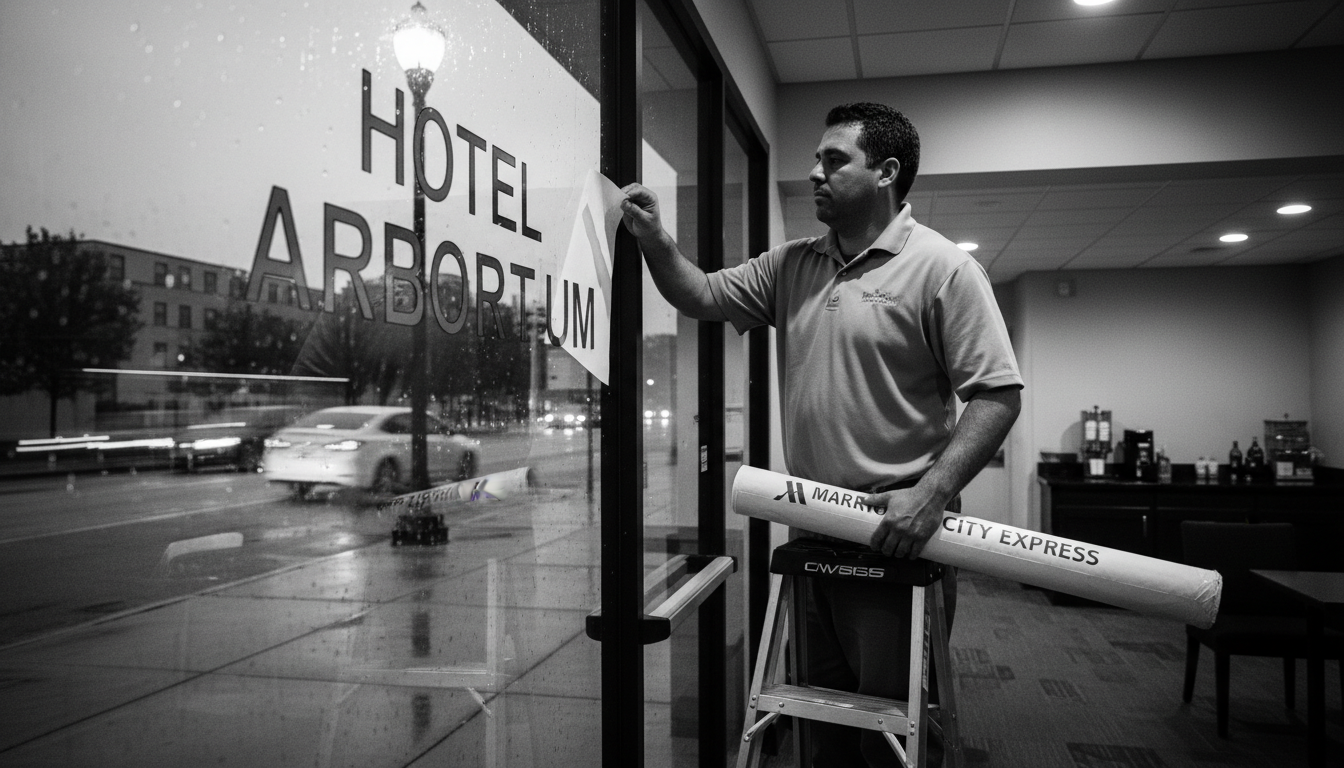
Marriott's City Express Just Landed in D.C. And the Real Story Isn't the Sign Change.

Marriott's City Express Just Landed in D.C. And the Real Story Isn't the Sign Change.

A 125-room independent near Capitol Hill is swapping its boutique identity for Marriott's midscale conversion play... and what it tells you about where the brand war is actually heading is more interesting than the press release suggests.

Let me tell you what I see when I read this headline, because it's not what Marriott wants you to see. PM Hotel Group just moved a 125-room property near Union Station in Washington, D.C.... the Hotel Arboretum... under Marriott's City Express flag. And if you're reading that as a routine conversion announcement, you're missing the chess move. This is Marriott planting its midscale conversion brand in the nation's capital, a market driven by government contracts and group business, on a property owned by Rocks Hospitality and managed by a Top-15 management company. That's not a test. That's a statement. Marriott hit 100 signed City Express agreements in the U.S. and Canada by December 2025, opened six properties last year, and is now pushing the brand into Asia Pacific. They are not experimenting anymore. They are executing.

And here's where my brand brain starts buzzing (and not in a good way). City Express was born in Latin America. Marriott bought the portfolio in 2023 for $100 million... roughly 17,000 rooms across Mexico, Costa Rica, Colombia, and Chile. The DNA of this brand is affordable midscale transient. Modern rooms, free breakfast, fast WiFi, get in, get out, no fuss. That works beautifully in markets where Marriott had almost no midscale presence. But Washington, D.C.? A market already saturated with select-service flags from every major company, where the guest mix skews heavily toward government per diem rates and association groups? The question isn't whether City Express can exist here. The question is whether the brand promise means anything different from the Courtyard three blocks away... or the Hilton Garden Inn around the corner... or the 47 other options a government travel booker is scrolling through on FedRooms. "Affordable midscale transient" is not a differentiator in D.C. It's the default setting.

Now, I want to be fair to the ownership group here, because the conversion math can absolutely work even when the brand positioning is muddy. If you're Rocks Hospitality, you're looking at a 125-key independent that probably needed a loyalty pipeline boost, especially for that government and group business. Marriott Bonvoy is the biggest loyalty engine in the industry. Plugging into it could genuinely move your occupancy needle. But... and this is the part the press release skips entirely... at what cost? Total brand cost for a Marriott flag isn't just the franchise fee. It's loyalty assessments, reservation system fees, marketing contributions, brand-mandated vendor requirements, and whatever PIP capital they negotiated. For many owners I've worked with, that total cost lands somewhere between 15% and 20% of revenue. So the real question for Rocks Hospitality isn't "will we get more bookings?" It's "will the incremental revenue exceed the total cost of being in the Marriott system?" And if the answer depends on projections rather than actuals... well, I have a filing cabinet full of franchise projections that aged very poorly. I sat across from an ownership group once... multi-generational family, beautiful property, trusted the brand's revenue projections completely. Actual loyalty contribution came in 13 points below what was promised. Thirteen points. The math broke so badly they couldn't service their PIP debt. That's not a spreadsheet problem. That's a family's future.

Here's what really interests me about this move, though. PM Hotel Group's president said at ALIS three weeks ago that their priority is organic growth, and he openly acknowledged how saturated the U.S. market is with Marriott and Hilton operating north of 60 brands between them. Sixty brands. Let that number sit with you for a second. And now one of those 60-plus brands is City Express, competing in the "affordable midscale" space alongside Marriott's own Four Points Flex, Fairfield, and the new StudioRes concept. Meanwhile Hilton is pushing Spark into the same segment. So if you're an owner being pitched City Express today, the first thing you should ask is: "How does Marriott plan to differentiate THIS flag from its own portfolio, let alone the competition?" Because "conversion-friendly" is an operational convenience, not a guest-facing brand promise. And guests don't book based on how easy your conversion was. They book based on what the stay feels like. If it feels like a Fairfield with a different sign... you've spent conversion capital to be interchangeable. That's not brand strategy. That's brand theater.

The bigger signal here is actually about where the industry is heading. The midscale conversion war is now fully engaged... Marriott, Hilton, Wyndham, Choice, everyone fighting for the same pool of independent and underperforming branded properties. If you're an independent owner, you've never had more suitors. That's the good news. The bad news is that more options doesn't mean better options. It means more sales teams with more projections and more pressure to sign before you've done the math. So do the math. Pull the actual performance data on City Express properties that opened in 2025. Not the projections... the actuals. Ask for the loyalty contribution percentage at comparable properties after 12 months of operation. Ask what happens to your rate positioning when the Courtyard down the street runs a Bonvoy promotion that undercuts you. And for the love of everything, stress-test the downside. What does your P&L look like if loyalty contribution comes in at 22% instead of the 35% they're projecting? Because I've seen that movie, and the ending is not the one in the franchise sales deck.

Operator's Take

If you're an independent owner getting pitched City Express (or any midscale conversion flag right now), do one thing before your next meeting: ask for actual loyalty contribution data from properties that have been open 12+ months, not projections. If they can't provide it or won't... that tells you everything. And if you're a management company running a newly converted property, build your budget on the low end of that loyalty range, not the midpoint. I've seen too many owners get upside down on PIP debt because the pro forma used the best-case number. The math doesn't lie... but the sales deck might.

— Mike Storm, Founder & Editor
Read full analysis → ← Show less
Source: Google News: Marriott

Marriott's Extended Stay Play in China Says More About Your Market Than Theirs

Marriott just launched Apartments by Marriott Bonvoy in Greater China — their first serviced apartment brand specifically built for Asia. If you think this is just a China story, you're missing what it signals about where the big brands see extended stay growth.

Here's what actually happened: Marriott created a new brand specifically for the Chinese market's serviced apartment segment. Not a license deal. Not slapping Bonvoy points on existing properties. A purpose-built brand for 30+ day stays in Asia's gateway cities.

Let me be direct — when a brand creates a regional product instead of importing what works in North America, they're seeing real demand they can't capture with their existing portfolio. Marriott already has Residence Inn, TownePlace, and Element. But those brands were built for US business travelers doing 5-14 night stays. The Asian serviced apartment guest is different — longer stays, more amenities, often corporate housing or relocation. You can't just translate the Residence Inn playbook into Mandarin and call it done.

The operational model matters here. Serviced apartments in Asia run at 30-40% higher labor costs than equivalent US extended stay because guests expect daily housekeeping options, concierge services, and often on-site F&B. Your US extended stay brands are built around minimal services — that's the whole economic model. Marriott knows they can't compete in Shanghai or Hong Kong with a product designed for cost-conscious stays in secondary US markets.

But here's what you need to watch: This signals where Marriott thinks extended stay growth is headed globally. Not budget. Not midscale. Premium long-stay with full services. They're building for corporate relocations, medical travel, executive assignments — guests who'll stay 60-90 days and expense it. That's a different animal than your 7-night insurance claim guest.

And if Marriott is creating regional brands instead of forcing global consistency, that's a crack in the "one brand, everywhere" model that's dominated the past 20 years. They're admitting that local market needs might matter more than brand uniformity. File that away — because if it works in China, you'll see it in other regions too.

Operator's Take

If you're running extended stay in a gateway market — think about this: when corporate relocation budgets come back strong, who's positioned to capture 60-90 day stays at premium rates? Not your budget competitors. Start building relationships with corporate housing brokers and relocation services now. The guest who stays three months at $180/night is worth six times your weekend leisure traveler, and they're stickier than you think.

Read full analysis → ← Show less
Source: Google News: Marriott
New Orleans Extended-Stay Battle: Marriott Just Raised the Stakes

New Orleans Extended-Stay Battle: Marriott Just Raised the Stakes

Marriott's 216-room Element property in the CBD signals extended-stay is no longer just about corporate housing. The brands are coming for your monthly business.

Let me be direct: when Marriott opens a 216-room extended-stay property in downtown New Orleans — not in some suburban office park — they're betting big that extended-stay demand has fundamentally shifted. This isn't your grandfather's Residence Inn tucked away near an airport. This is prime CBD real estate competing directly with traditional hotels for both transient and extended business.

Here's the thing nobody's telling you about Element specifically. They've cracked the code on dual-market appeal. Full kitchens and separate living areas pull extended-stay guests. But throw in those Westin Heavenly beds and daily hot breakfast, and suddenly you're competing for regular business travelers who want more space. I've seen this movie before with Homewood Suites — they started stealing 60-70% of their business from traditional hotels, not other extended-stay brands.

The New Orleans market makes this even more interesting. You've got oil and gas workers doing 2-3 week rotations, film production crews, disaster recovery teams, plus your standard corporate relocations. But now you're also pulling leisure travelers who want to cook their own meals and spread out. A family of four spending five nights? They're looking at $400-500 savings versus separate hotel rooms plus restaurant meals.

If you're running a traditional hotel in any major market, Element's kitchen advantage just became your problem. And if you're operating an older extended-stay property without the wellness positioning and modern finishes, Marriott's loyalty program and brand recognition just made your life harder.

Operator's Take

If you're running a traditional hotel competing for extended-stay business, start partnering with local apartment-style services for kitchen access or consider a limited renovation adding kitchenettes to select floors. If you're operating older extended-stay inventory, your ADR advantage is about to disappear — focus on superior local market knowledge and personalized service the big brands can't match.

Read full analysis → ← Show less
Source: Lodging Magazine
End of Stories