Today · Jun 15, 2026
Hyatt Just Decided to Demolish a 189-Key Kyoto Icon. The Replacement Will Tell Us Everything.

Hyatt Just Decided to Demolish a 189-Key Kyoto Icon. The Replacement Will Tell Us Everything.

ORIX is tearing down the Hyatt Regency Kyoto rather than renovating it, and the math behind that decision reveals exactly where Japan's luxury hotel market is headed. What replaces it will say more about Hyatt's ambitions than any earnings call.

Available Analysis

There's a moment in every property's life where someone sits down with a spreadsheet, looks at the renovation estimate, looks at the building's bones, and says the thing nobody wants to say out loud: "It's cheaper to start over." That moment just arrived for the Hyatt Regency Kyoto, and if you understand what's underneath this decision, you understand where international luxury hospitality is moving for the next decade.

The building dates to 1980. It became a Hyatt in 2006, so we're talking about a structure that was already 26 years old when the flag went up. By the time it closes in May 2027, it'll be 47. ORIX Real Estate, the owner, looked at what it would cost to bring that building up to where it needs to be... structurally, mechanically, aesthetically... and decided demolition was the smarter play. And here's the context that makes this fascinating: Japan Hotel REIT just paid approximately $830 million for the Hyatt Regency Tokyo last month, a 46-year-old property that underwent a ¥9.4 billion renovation in 2025. So you've got two owners looking at two aging Hyatt properties in Japan and making opposite decisions. One renovated. One is demolishing. Same brand, same country, same vintage of building, completely different calculus. The difference is the market underneath. Kyoto hit 90% occupancy in October 2025 with an ADR of roughly ¥24,859 and foreign guests accounting for over 72% of overnight stays. That's not a market where you bring a 1980s building up to code and hope for the best. That's a market where you tear it down and build something that commands the rate the demand is begging to pay.

This is where it gets interesting for anyone watching Hyatt's playbook. They closed a ¥22 billion fund last September specifically to develop luxury hot spring hotels under their Atona brand. They've got a Park Hyatt Sapporo coming in 2029. They're rolling Unbound Collection properties into Tokyo and Nara. The pattern isn't subtle... Hyatt is methodically upgrading its Japan portfolio from upper-upscale workhorses to luxury and lifestyle positioning. So when the Hyatt Regency Kyoto comes back online around 2029 or 2030, the question every brand strategist should be asking is: does it come back as a Regency? Or does ORIX and Hyatt use this as the opportunity to reposition the site entirely? Because if I'm sitting in that room (and I've been in versions of that room more times than I can count), I'm looking at Kyoto's structural undersupply of true luxury rooms, I'm looking at the Imperial Hotel Kyoto that just opened in Gion this March eating into the premium segment, and I'm saying... why would you rebuild the same thing? The site earned a second life. That second life should be a higher-tier product commanding a fundamentally different rate.

I sat in a brand strategy session once where an owner wanted to rebuild a teardown as the same flag, same tier, same positioning. The brand team politely listened, and then one of the development people said, "You're spending $90 million to be the same hotel in a market that's moved past you." The room got very quiet. The owner rebuilt as a different brand within the same family. Opened 14 months later at a 40% ADR premium. That's the conversation I suspect is happening right now about this Kyoto site, whether anyone's saying it publicly or not.

The bigger signal here is for owners everywhere sitting on aging assets in high-demand markets. The renovate-or-rebuild question isn't theoretical anymore... it's becoming the defining capital decision of this cycle. And the answer increasingly depends not on what the building needs, but on what the market will pay for what replaces it. Kyoto's numbers are screaming for more luxury supply. ORIX heard it. The next owner staring at a 40-year-old building in a market with that kind of demand trajectory should be listening too.

Operator's Take

Here's what I want you to take from this if you're managing or owning an aging asset in a market that's moved upscale around you. Don't wait for the building to make the decision for you. Run the numbers now... what does a full PIP renovation cost versus a teardown and rebuild, and what's the rate differential between your current positioning and what the market actually wants? I've seen too many owners pour $4-5M into a renovation that buys them 8 years and a 12% rate bump when a rebuild would have repositioned them into a segment paying 40% more. This is what I call the Renovation Reality Multiplier... the true cost isn't just the construction number, it's the opportunity cost of rebuilding the same thing when the market is telling you it wants something different. If you're sitting on a property north of 35 years old in a market where demand has outgrown your product tier, get your asset manager and your brand rep in the same room this quarter. Not next year. This quarter.

— Mike Storm, Founder & Editor
Read full analysis → ← Show less
Source: Google News: Hyatt
Nikki Beach Is Betting on Marrakech. The Brand Promise Is Bigger Than the Building.

Nikki Beach Is Betting on Marrakech. The Brand Promise Is Bigger Than the Building.

Nikki Beach just announced a 100-suite, 50-villa integrated resort in Marrakech with a 2028 opening, and the concept reads like a lifestyle brand's dream pitch. Whether it survives contact with reality depends on questions the press release very carefully didn't answer.

Available Analysis

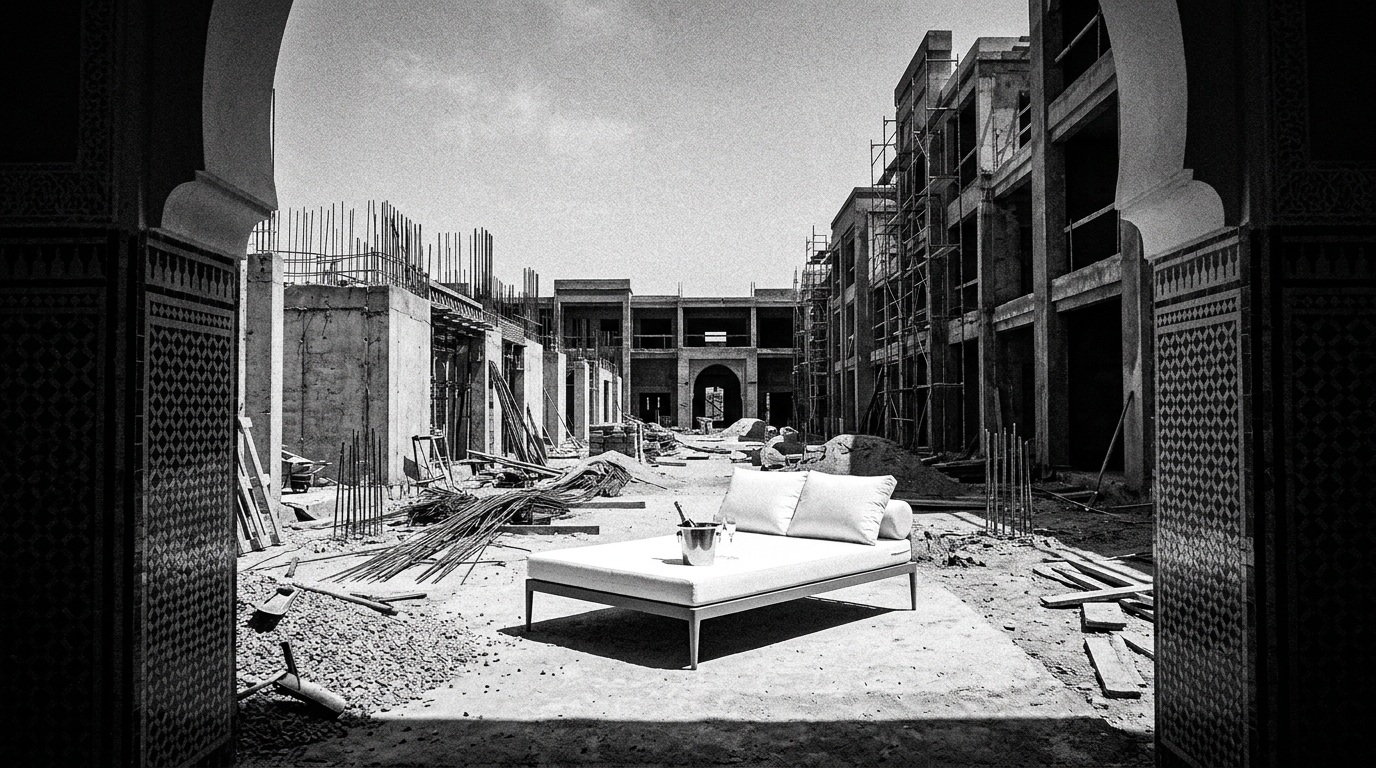
Let me tell you what caught my attention about this announcement, and it's not the sunken bars or the golf simulator or the underground sports complex (though, points for ambition). It's the word "integrated." Nikki Beach isn't announcing a hotel. They're announcing a lifestyle destination... resort, branded residences, beach club, wellness, dining, entertainment, retail, all wrapped around a brand identity that was built on champagne-soaked daybeds in Miami. And now they want to bring that energy to the Route de l'Ourika, 20 minutes from the Marrakech airport, in a market where the Moroccan government has poured over $3 billion into tourism infrastructure with a target date of 2030 for its national tourism vision. The timing is deliberate. The ambition is enormous. The question, as always, is whether the brand can actually deliver what it's promising at property level... because "fully integrated lifestyle ecosystem" is the kind of phrase that sounds incredible in a brand deck and becomes a staffing nightmare on a Tuesday afternoon in July.

Here's what the announcement tells you if you read between the lines. Nikki Beach doesn't franchise. They manage. That's significant, because it means someone ELSE is writing the check for 100-plus suites and 50-plus villas, each with a private pool, jacuzzi, sunken gardens, and walk-in wardrobes (every one of those amenities is a maintenance line item that compounds over time, by the way). The development partner wasn't named, which is common at this stage... and the owner who funds this vision is the one who absorbs the downside if the brand's "lifestyle-first, experience-led model" doesn't translate into the occupancy and ADR required to service the capital cost. And that capital cost, for a resort of this scope in Marrakech? It's not small. I've sat across the table from owners who fell in love with a brand concept and didn't stress-test the numbers until the debt service showed up. (That story doesn't end at the rendering. It ends at the P&L.)

What makes this genuinely interesting, not just another luxury resort announcement, is the tension between what Nikki Beach IS and what it's trying to BECOME. The brand was built on beach clubs. Party energy, beautiful people, bottle service, music. That's a real identity, a clear promise, a specific guest. Now they're layering on 500-square-meter celebration suites, traditional hammams, therapy rooms, kids' clubs, indoor squash courts, and private cinema. That's not one guest anymore. That's four or five different guests, and the service delivery model for a family with kids at "The Reef" is fundamentally different from the service model for the couple at the sunken bar expecting a DJ set at sunset. Can one property do both? Sure. Can one BRAND do both without diluting the thing that made it distinctive in the first place? That's the Deliverable Test, and most lifestyle brands fail it precisely at the moment they try to be everything to everyone. You can't be exclusive and inclusive simultaneously... the word "curated" doesn't solve that problem, no matter how many times it appears in the press materials.

And then there's the Miami situation, which the Marrakech announcement conveniently overshadows. Nikki Beach's original location, the one that BUILT the brand, is potentially closing because the ground lease expires in May 2026 and there's a competing bid for the site. So the brand is simultaneously losing its origin story and announcing its most ambitious project to date. That's either visionary forward momentum or a company running from a foundation crack. I don't know which yet. But if I were the unnamed development partner in Marrakech, I'd want to understand whether the brand's expansion pipeline (Antigua, Ras Al Khaimah, Baku, Muscat, and now Marrakech) is driven by strategic positioning or by the need to replace the revenue and identity anchor that Miami represented for three decades.

Marrakech is a smart market. Luxury and boutique hotels already represent 25% of Morocco's total hotel capacity, the government is actively investing in tourism infrastructure, and the city draws the kind of affluent international traveler that Nikki Beach's brand speaks to. The bones are good. But the brand promise here... the promise of a "complete lifestyle ecosystem"... is the kind of promise that either becomes the standard for how integrated resorts work, or becomes the case study I pull out of my filing cabinet in five years when the actual performance data tells a very different story than today's rendering. I've seen this movie. I know which ending is more common. I'm rooting for the good one. But my filing cabinet has taught me to watch the numbers, not the mood boards.

Operator's Take

Here's what I want anyone watching this space to pay attention to. If you're an independent luxury operator in a resort market... Marrakech, the Mediterranean, the Gulf... this kind of integrated lifestyle development changes your competitive landscape in ways that a traditional hotel opening doesn't. The branded residence component generates capital that subsidizes the resort, and the beach club creates a non-room-revenue stream that lets them play with rate in ways you can't match. Start understanding what your total revenue per available square foot looks like against properties that have three or four revenue engines, not just rooms and F&B. And if you're an owner being pitched a management deal by any lifestyle brand right now, I want you to do one thing before you sign: ask for actual performance data from their existing managed properties, not projections. Projections are someone's optimism with a spreadsheet attached. Actuals are reality. The gap between those two things is where owners get hurt, and I've watched it happen too many times to stay quiet about it.

— Mike Storm, Founder & Editor
Read full analysis → ← Show less
Source: Google News: Resort Hotels
India's First Ritz-Carlton Will Cost Less Than ₹3 Crore Per Key. Let's Talk About What That Buys.

India's First Ritz-Carlton Will Cost Less Than ₹3 Crore Per Key. Let's Talk About What That Buys.

Mindspace REIT and Chalet Hotels just locked in a 330-key luxury development in Hyderabad at a per-key cost that would make most Western developers do a double take. The real story isn't the Ritz-Carlton sign... it's the deal structure underneath it and what it tells us about where luxury hotel development actually pencils right now.

I grew up watching my dad open brand binders from corporate, flip straight to the cost page, and close the binder before he even got to the renderings. "Show me the math first," he'd say. "The pretty pictures are for the people who don't have to pay for it." So when I read that Chalet Hotels and Mindspace REIT are building India's first Ritz-Carlton in Hyderabad for less than ₹3 crore per key (roughly $350K USD depending on your conversion date), my first instinct was the same one he drilled into me... what does the cost actually buy, and who's holding the bag when assumptions meet reality?

Here's what's genuinely interesting about this structure. Total project investment is reported at circa ₹900-940 crore, with Mindspace REIT funding the core shell and warm shell delivery and Chalet Hotels carrying the interiors and operationalization. The REIT controls the real estate risk and the hotel operator controls the execution risk. The REIT gets a long-tenure lease with built-in escalations (revenue visibility without operating exposure), and Chalet gets to put a Ritz-Carlton flag on a campus that already has corporate demand baked in because it sits inside a major tech business park. Both parties are doing what they're best at. That's rarer than you'd think in hotel development deals, where the entity holding the real estate often ends up absorbing operating risk it has no business touching.

The Hyderabad market context matters here, and it's favorable. The city posted 23.3% RevPAR growth in Q4 2024... the highest among India's top six markets, driven primarily by ADR growth, not just occupancy. Corporate demand from the tech sector, a growing MICE segment, and a genuine scarcity of luxury product in the market create the kind of supply-demand imbalance that makes a 330-key luxury property look less like a bet and more like filling a hole. But here's where I'd slow down if I were advising the ownership group: Hyderabad's growth has been spectacular, and spectacular growth attracts spectacular competition. Every developer in the country is reading the same RevPAR numbers. The question isn't whether this hotel works in 2029's market. It's whether it works in 2032's market, when every other luxury flag with a pulse has noticed that Hyderabad is underserved and started building too.

There's another layer here that most coverage will skip entirely. Chalet Hotels is backed by K Raheja Corp. Mindspace REIT is sponsored by K Raheja Corp. This isn't two independent parties discovering a shared opportunity over coffee... this is a group-level strategic play where the real estate arm and the hospitality arm are coordinating to maximize value across their combined portfolio. That doesn't make it a bad deal (it might actually make it a better deal, because aligned ownership reduces the friction that kills most hotel development partnerships), but it does mean you should read the lease terms differently than you would a true arm's-length transaction. The "built-in escalations" on that long-tenure lease? I'd want to see whether they're benchmarked to market or structured to optimize inter-company cash flow. Because those are two very different things for outside investors evaluating either entity.

What I keep coming back to is that sub-₹3 crore per key number. For a Ritz-Carlton. In a market with this kind of demand trajectory. If the execution matches the concept (and that's always the "if" that separates brand theater from brand delivery), this is the kind of development that validates the premiumization thesis Chalet Hotels has been building its strategy around. But I've sat in enough franchise review meetings to know that the distance between a stunning rendering and a stunning guest experience is measured in operational discipline, staffing depth, and about 10,000 decisions that nobody at the corporate level will ever see. The Ritz-Carlton name opens a door. What happens after the guest walks through it is an entirely different question... and it's the only question that matters for the long-term economics of this property.

Operator's Take

Here's what I'd take from this if I'm running hotels in a high-growth Indian market or frankly anywhere that's seeing this kind of luxury development heat. The deal structure here... REIT holds the shell, operator holds the fit-out and execution... is a model worth studying because it separates risk in a way that protects both parties. If you're an owner being pitched a luxury conversion or new-build right now, ask yourself: are you absorbing ALL the risk (real estate, construction, operations, brand delivery) while the franchisor absorbs none? Because that's how most of these deals work and it's not how this one works. Also, that sub-₹3 crore per key figure is your benchmark now. If someone's showing you a luxury development pro forma at significantly higher per-key costs without significantly better demand fundamentals, make them explain the gap. The math on this one is tight for a reason. Tight math is a choice, and it's the right one.

— Mike Storm, Founder & Editor
Read full analysis → ← Show less
Source: Google News: Hotel REIT
$4.3B for 78 Hotel Suites. That's $55M Per Key. Check Again.

$4.3B for 78 Hotel Suites. That's $55M Per Key. Check Again.

One Beverly Hills just locked in the largest hospitality financing package in a decade for a 78-suite Aman hotel and luxury residential complex. The per-key math on the hotel component alone should make every asset manager in the country recalibrate what "luxury" means as an investment thesis.

Available Analysis

$4.3 billion in total financing. $2.8 billion senior from J.P. Morgan. $1.5 billion mezzanine from VICI Properties (up from a $450 million position... they more than tripled down). The project's developers now peg completed market value at $10 billion. Those are the headline numbers. Let's decompose this.

The hotel component is 78 suites. Seventy-eight. Even if you generously allocate only 20% of the total project cost to the hotel (the rest being residential towers, retail, club, gardens), you're looking at roughly $860 million attributable to a 78-key property. That's $11 million per key on a cost basis. If you allocate based on the $10 billion projected completed value, the per-key figure climbs past anything I've seen outside of a sovereign wealth fund vanity project. For context, the most expensive hotel transactions in recent history have closed in the $2-3 million per-key range. This isn't the same math. This isn't even the same sport.

The real story is the capital stack structure. VICI Properties, a net-lease REIT that built its portfolio on gaming assets, just committed $1.5 billion in mezzanine debt to an ultra-luxury mixed-use play. That's not a passive investment. VICI, Cain International, and Eldridge Industries have signed a non-binding letter of intent to form what they're calling an "Experiential Cross-Capital Venture" for future deals. Translation: VICI is betting its thesis on experiential real estate extends well beyond casinos. The mezzanine position means VICI is subordinate to $2.8 billion in senior debt. In a downside scenario (and every deal has one), VICI absorbs losses before J.P. Morgan takes a haircut. The question isn't whether VICI's underwriters modeled that scenario. The question is what occupancy and ADR assumptions they used, because at this basis, the breakeven math requires rate levels that essentially don't exist yet in the U.S. hotel market.

The residential pre-sales provide some comfort. The first Aman-branded tower is approaching $1 billion in contracted sales, with units priced from $20 million to north of $40 million. That's real capital coming in the door, and it de-risks the overall project significantly. But the hotel has to stand on its own economics eventually. Seventy-eight suites generating enough NOI to justify even a fraction of this basis requires sustained ADR in a range that maybe five or six hotels globally achieve consistently. The comp set for this property doesn't really exist in the U.S. You're looking at Aman Tokyo, Aman Venice... properties operating in markets with fundamentally different supply constraints and buyer profiles.

The 30-year economic impact projection of $40 billion is the kind of number that belongs in a municipal approval presentation, not a financial analysis. I'll leave that one alone. What I won't leave alone: this deal tells you exactly where institutional capital believes the margin is in hospitality. Not in select-service. Not in upper-upscale conversions. In ultra-luxury mixed-use where the hotel is the amenity, the residences are the revenue engine, and the brand is the multiplier on both. If you're an investor or asset manager watching this, the signal isn't "go build an Aman." The signal is that the smartest capital in real estate is pricing hotel keys as components of larger experiential ecosystems, not as standalone cash-flow assets. That repricing has implications for how every luxury hotel deal gets underwritten from here.

Operator's Take

Look... this deal lives in a universe most of us will never operate in. But the structural lesson applies everywhere. VICI tripling its mezzanine position tells you that gaming-focused REITs are coming for experiential hospitality assets. If you're an owner of a luxury or upper-upscale property in a major gateway market, your asset just became more interesting to a wider pool of buyers than it was 12 months ago. That's worth a conversation with your broker this quarter... not to sell, but to understand where your valuation sits now that the capital pool is expanding. And if you're sitting on mixed-use potential (hotel plus residential, hotel plus entertainment), start modeling it. The days of institutional capital evaluating hotel assets in isolation are ending. The smart money wants the ecosystem. Make sure you know what yours is worth.

— Mike Storm, Founder & Editor
Read full analysis → ← Show less
Source: Google News: Hotel Industry
St. Regis Is Coming to Queenstown. Let's Talk About What That Actually Costs an Owner.

St. Regis Is Coming to Queenstown. Let's Talk About What That Actually Costs an Owner.

Marriott just signed its first New Zealand St. Regis in a market where luxury lodges are crushing it... but the gap between "luxury brand promise" and "luxury brand delivery" has destroyed owners before, and 145 keys in Queenstown is a very specific bet.

Available Analysis

So Marriott finally got its luxury flag into Queenstown. The St. Regis Queenstown, 145 rooms, slated for late 2027, new-build on a central site with views of The Remarkables and Lake Wakatipu. The developer, PHC Queenstown Limited (part of the Pandey family portfolio of 30-plus hotels, and already a three-time Marriott partner), is building what will be New Zealand's first St. Regis. And look... the site tells you everything about how long this play has been in the works. That same corner was acquired back in 2018 for $12.9 million with plans for a Radisson. A Radisson. The pivot from Radisson to St. Regis is basically the market screaming "luxury or go home," and someone finally listened.

The timing isn't accidental. CBRE data from mid-2025 showed luxury lodges as the strongest performing segment in the New Zealand and Australian hotel markets, with total RevPOR up 59% since 2018. Horwath HTL has been beating the same drum... 5-star properties in Queenstown are posting RevPAR growth while lower-tier segments are declining. JLL flagged Queenstown as an outperformer. Marriott's own development chief for the region has been saying publicly that they're "under-represented in New Zealand" and that luxury in Queenstown was a strategic priority. Fine. The demand signal is real. I don't argue with the data. But I've been in this industry long enough to know that a strong market and a strong deal are two very different conversations, and the press release only wants to have one of them.

Here's where my brain goes, and where I wish more owners' brains would go before signing: what does it actually cost to deliver St. Regis? This isn't a Courtyard conversion where you're bolting on a breakfast bar and updating the signage. St. Regis Butler Service. The Drawing Room. The St. Regis Bar (which is a specific concept with specific staffing requirements). A full-service spa with hydrothermal facilities, heated indoor pool, relaxation lounge. An all-day dining venue plus event spaces. In a market like Queenstown, where labor is seasonal, where you're competing with every adventure tourism operator in the region for the same workers, where the cost of living makes staffing a genuine operational challenge... can you staff a 145-key ultra-luxury hotel to the standard that St. Regis requires? Because I've watched brand promises collide with labor reality before. I sat in a franchise review once where the owner pulled out his staffing model and said, "Show me where the butlers come from in January." Nobody had an answer. The rendering was gorgeous. The operational plan was a sketch on a napkin.

The Pandey family clearly isn't new to this... 30 hotels is a real portfolio, and a third collaboration with Marriott suggests a relationship with institutional memory on both sides. That matters. But institutional memory doesn't change the math. A new-build luxury hotel with this amenity package, in a market where the previous plan was a $70 million Radisson, is going to cost substantially more than $70 million. (I'd love to see the updated pro forma. I'd love it even more if the loyalty contribution projections have been stress-tested against actual St. Regis performance data from comparable resort markets, not against the optimistic deck that franchise sales loves to present over dinner.) The question isn't whether Queenstown can support luxury... it obviously can. The question is whether Queenstown can support THIS luxury, at THIS cost basis, with THIS brand's fee structure and operational requirements, and deliver a return to the owner that justifies the risk. That's always the question. It's the question that doesn't make it into the press release.

I want this to work. I genuinely do. Queenstown deserves a world-class luxury hotel, and St. Regis at its best is a genuinely differentiated brand... the butler program, when properly staffed and trained, creates moments that guests remember for years. But "at its best" is doing a lot of heavy lifting in that sentence. If you're an owner watching this announcement and thinking about your own luxury conversion or new-build, do the math backward. Start with what it costs to deliver the promise... every butler, every spa therapist, every mixologist, every 2 AM room service request handled flawlessly... and then check whether the rate and occupancy assumptions support that cost. If the numbers only work in the base case, the numbers don't work. My filing cabinet is full of FDDs where the projections were beautiful and the actuals were devastating.

Operator's Take

If you're an owner being pitched a luxury flag right now... St. Regis, Waldorf, Ritz-Carlton, any of them... do not sign until you've stress-tested the staffing model against your actual local labor market. Not the corporate staffing guide. YOUR market. Call three operators already running luxury in that destination and ask what turnover looks like in housekeeping and F&B. Then run the pro forma at 80% of projected loyalty contribution and see if the deal still pencils. If it doesn't survive that haircut, you're betting on best-case. And best-case is not a strategy... it's a prayer.

— Mike Storm, Founder & Editor
Read full analysis → ← Show less
Source: Google News: Marriott
London's Luxury Hotel Boom Looks Gorgeous. The Operating Math Tells a Different Story.

London's Luxury Hotel Boom Looks Gorgeous. The Operating Math Tells a Different Story.

Six thousand new rooms flooding London by 2028, headlined by heritage conversions carrying nine-figure price tags. Everyone's talking about the renderings. Nobody's talking about what happens when the business rate hikes land in April.

I sat across from an owner once who'd just sunk everything into converting a historic building into a boutique hotel. Beautiful property. Jaw-dropping lobby. The kind of place that gets a two-page spread in a design magazine before it even opens. Six months after launch, he looked at me and said, "The pictures are gorgeous. The P&L is bleeding." He wasn't wrong. The gap between what a luxury conversion looks like in a press release and what it looks like on a monthly operating statement is something this industry never wants to talk about honestly.

So here comes London with roughly 6,300 new hotel rooms hitting between now and 2028. A 4% bump in total supply. And the headliners are exactly the kind of projects that make investors swoon... a 195-key St. Regis carved out of a £90 million Mayfair redevelopment. A 100-key Waldorf Astoria inside Admiralty Arch, a Grade I-listed landmark. Six Senses opening with 109 rooms and a 25,000-square-foot spa. Auberge making its UK debut. These are stunning projects. Genuinely. The heritage conversion play is smart for a lot of reasons... you sidestep London's brutal zoning, you reduce material cost exposure, and you get a building with a story that no new-build can replicate. I get it. I've been around long enough to know that a great building with real bones can be an operator's best friend.

But here's where the narrative falls apart. PwC is projecting London RevPAR will tick up 1.8% to about £159. That's not exactly a moonshot. And that modest topline growth is running headfirst into a cost wall that nobody putting out these breathless opening announcements wants to acknowledge. National Insurance Contributions are up. National Minimum Wage is up. And there's a business rates revaluation hitting in April 2026 that's going to land hardest on exactly these kinds of large hospitality footprints. You're talking about properties with massive public spaces, enormous spas, dedicated F&B operations... all of which are labor-intensive and all of which just got more expensive to run. The analysts are saying the quiet part out loud: operating margins are getting squeezed even at luxury price points. RevPAR growth doesn't mean profit growth. I've seen this movie before. Beautiful hotels that generate impressive revenue numbers while the owner watches their actual return shrink quarter after quarter.

And let's talk about timelines, because this is the part that always gets glossed over. Six Senses London was originally supposed to open in 2023. Maybe 2024. It's now targeting spring 2026. The Admiralty Arch project has been in some stage of development for six years. Heritage conversions are gorgeous in concept and brutal in execution... you're retrofitting modern hotel systems into buildings that were never designed for them, dealing with preservation requirements that add cost and time at every turn, and hoping the construction timeline holds while your carrying costs pile up. Some of these "2026 openings" are going to quietly slide into 2027. That's not speculation. That's pattern recognition from watching luxury projects in historic buildings for decades.

The real question nobody in the trade press is asking: what happens to the middle of the London market when all this ultra-luxury supply arrives? The smart money is already telling you... 74% of hospitality leaders expect acquisition competition to increase, but investment is polarizing toward ultra-luxury and economy. The middle is getting hollowed out. If you're operating a four-star property in central London that isn't distinctive enough to compete with a Waldorf Astoria in a landmark building but is too expensive to compete on value, you're about to have a very uncomfortable 18 months. That's the story behind the story. These gorgeous openings don't exist in a vacuum. Every one of them reshapes the competitive set for properties that were already there.

Operator's Take

If you're running a branded upper-upscale or luxury property in London right now, stop admiring the renderings and start stress-testing your rate strategy against 6,300 new rooms. Pull your comp set data this week and model what happens when two or three of these properties actually open and start competing for your guest. If you're an owner being pitched a heritage conversion investment anywhere... London or otherwise... demand a pro forma that includes realistic construction delay assumptions (add 18 months to whatever the developer tells you) and run the operating costs against current labor market reality, not last year's numbers. The buildings are beautiful. The math has to be beautiful too, or you're just buying expensive art.

Read full analysis → ← Show less
Source: Google News: Hyatt
End of Stories