A $147 Million Casino Resort Is Booking Classic Rock Acts. That's the Whole Strategy.
Walker's Bluff Casino Resort spent $147 million to build a 113-room destination property in rural Southern Illinois, and their entertainment play is a 1,200-seat event center filling seats with legacy touring acts. The question is whether concerts and slot machines are enough to justify the bet when you're 300 miles from Chicago and competing for the same drive-in market as every other regional casino.
I worked with a casino resort operator years ago who had a beautiful 1,000-seat showroom and absolutely no idea what to do with it. Every month was a scramble. Book a tribute band, run a radio promotion, hope for 600 seats filled, do it again. The entertainment was supposed to be the magnet that pulled bodies past the slot machines. Instead it became its own cost center that needed its own justification. He told me once... "I thought the showroom would feed the casino. Turns out the casino feeds the showroom. And neither one is feeding me."
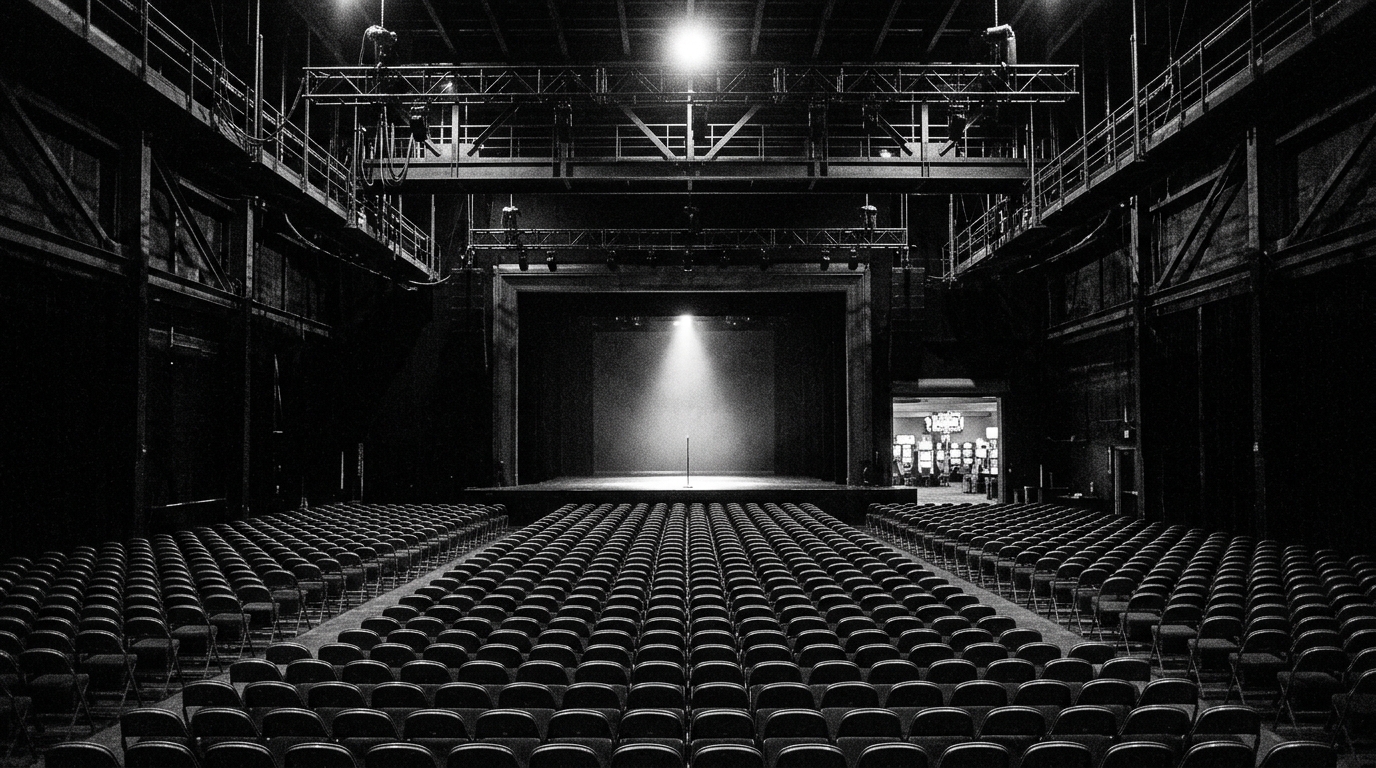
That's the story I keep thinking about with Walker's Bluff Casino Resort in Carterville, Illinois. This is a $147 million property that opened in August 2023 with 113 rooms, 650 slot machines, 14-20 table games, and a 1,200-seat event center. The headline this week is that Little River Band is playing there in October. And look... no disrespect to Little River Band. They've been filling seats for decades and they're professionals. But when your $147 million investment's news cycle is a classic rock booking seven months out, that tells you something about the operating model.
Here's what I mean. Walker's Bluff is owned by Elite Casino Resorts out of Iowa. It's the first Illinois property for them. They positioned this as a "destination gaming resort experience" in Southern Illinois, which is about 300 miles from Chicago and roughly 100 miles from St. Louis. The Illinois casino market hit nearly $1.94 billion in adjusted gross revenue in 2025, up 15% over the prior year. That's a real number. But a lot of that growth is coming from newer venues and expansions cannibalizing the same regional drive-in customer. When everybody builds a bigger mousetrap in the same field, you don't get more mice. You get more empty mousetraps.
The entertainment center is supposed to be the differentiator. Tickets for the Little River Band show run $62.77 to $94.95. If they fill all 1,200 seats at an average of $78, that's about $94K in gross ticket revenue for one night. Against a property that cost $147 million to build. The math on entertainment as a loss leader only works if those concert attendees are actually converting to gaming revenue, hotel stays, and F&B spend at rates that justify the production costs, artist guarantees, marketing, and labor to run a show night. I've seen this model work brilliantly at larger casino resorts with 500-plus rooms in markets with enough population density to sustain it. At 113 rooms in rural Southern Illinois, you're running a much tighter margin of error.
The piece nobody's writing is about what happens between concert nights. A 1,200-seat venue sitting dark on a Wednesday is a 1,200-seat cost center. The infrastructure doesn't care whether anyone's in the seats... you're still carrying the HVAC, the maintenance, the staffing model built around having that space operational. Walker's Bluff contributed $25.3 million in one-time licensing fees to the state and the county kicked in $13.1 million for road improvements just to get people to the property. That's a lot of public and private capital counting on a steady stream of visitors to a location that isn't exactly on anyone's way to anywhere else. The 2025 Illinois casino revenue numbers look great at the state level. The question that matters is whether Walker's Bluff is getting its share or watching newer, closer-to-population properties take the growth.
If you're running an entertainment program at a casino resort or any hotel with a performance venue, here's the discipline that separates the properties that make it work from the ones that bleed. Track your cost-per-occupied-seat for every event... not just ticket revenue, but total incremental spend per attendee including gaming, F&B, and room nights. If that number isn't at least 3x your production cost per seat, you're subsidizing entertainment instead of using it as a revenue driver. And for the GMs at smaller regional properties watching casino resorts pop up nearby with big showrooms and national acts... don't panic. This is what I call the Three-Mile Radius. Your revenue ceiling is set by what's around you, not by the size of the building down the road. A 113-room casino resort booking legacy touring acts is fighting for the same weekend drive-in customer you are. Know your guest, know your cost to acquire them, and let the big properties figure out whether $147 million in steel and concrete pencils out at 650 slot machines and a classic rock show.