Your Housekeeping Contractor Just Became Your Employee. You're Paying the Difference.
The NLRB's expanded definition of "employee" means hotels running housekeeping through gig platforms may owe 20-35% more in labor costs overnight. The properties that kept their teams in-house just became the smartest operators in the comp set.
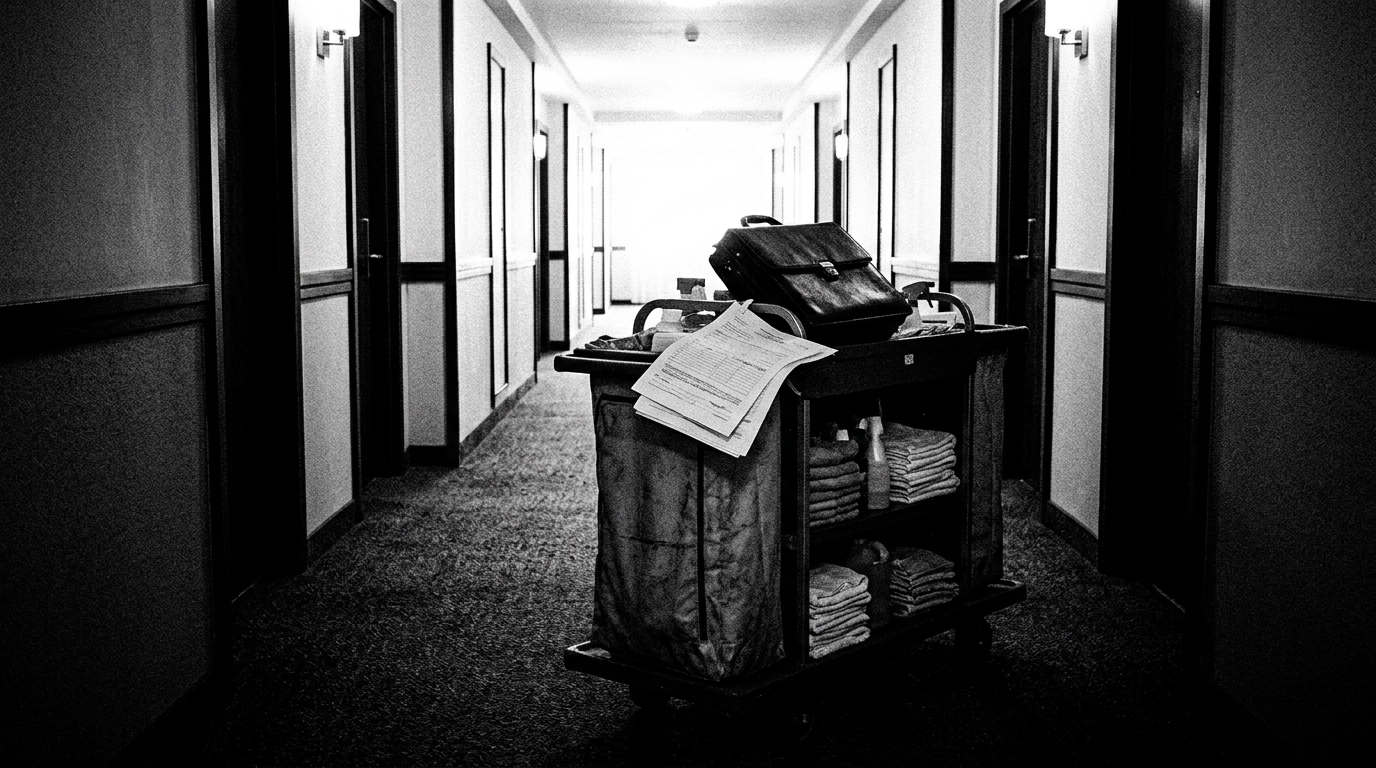
I worked with a controller once who had a saying I've never forgotten. Every time we'd find a clever workaround to a labor problem... some staffing arrangement that saved us money on paper... she'd look at me and say, "That's a great deal until someone with a briefcase shows up and tells you it isn't." She was right about 90% of the things she warned me about.
Someone with a briefcase just showed up.
The NLRB's shift back to a broader, multi-factor test for who counts as an "employee" under federal labor law isn't new news if you've been paying attention. The groundwork was laid back in 2023, and the DOL followed with its own tightened standard in 2024. But here's what IS new: enforcement is catching up to policy. Instawork settled a misclassification case late last year... agreed to treat all workers in Colorado as employees and paid $400,000 in back premiums. Denver's auditor flagged nearly $2.4 million in wage violations from a single platform. These aren't theoretical risks anymore. They're checks being written. And if you're a 200-key select-service running 60% of your housekeeping through a gig app because it gave you "flexibility" on the labor line, your P&L just absorbed a hit that wasn't in anyone's 2026 budget. The math is straightforward: converting contractor arrangements to employee status adds 20-35% in total burden... payroll taxes, workers' comp, overtime protections, benefits contributions. On a property spending $180K annually through a staffing platform, you're looking at $36K to $63K in additional cost. That's not a rounding error. That's your entire margin cushion on a soft occupancy month.
Now here's the part that makes this complicated. The regulatory picture isn't moving in one direction. The NLRB actually reinstated its more employer-friendly joint employer standard back in February of this year. The DOL has proposed reverting to the 2021 contractor test. So on one hand, the government is tightening who counts as an employee. On the other hand, it's loosening who counts as a joint employer with that staffing company. If that sounds contradictory... it is. And if you're waiting for clarity before you act, you're going to be waiting a long time while your exposure grows. The states aren't waiting. Colorado moved. Other states will follow. The federal pendulum swings every four years, but the enforcement actions and the settlements... those create precedent that doesn't swing back.
Here's what I've seen play out at three different properties over the years, and it's always the same story. Management finds a staffing platform. Labor costs drop 15-20% on paper. Everybody's happy for about 18 months. Then quality starts slipping because the workers rotating through your property have no attachment to your standards, your guests, or your building. Then a regulatory action or a lawsuit lands, and suddenly that 15-20% savings turns into a 30% cost increase once you factor in back payments, legal fees, and the scramble to rebuild a team you dismantled. The properties that never went down that road... the ones that invested in direct-hire teams, trained them, kept them... they're sitting in a much better position right now. Their costs were always visible. Their quality was always consistent. And they don't have a briefcase problem.
This is one of those moments where the operator who spent more to do it right gets vindicated. I've been saying for years that the cheapest labor model is almost never the most durable one. Gig platforms sold flexibility, and flexibility is real... I'm not going to pretend it isn't. But what they actually sold was the transfer of employment risk from the hotel to the platform, and the platform priced that risk as if nobody would ever challenge the classification. Well, people are challenging it now. And if the platform's pricing model breaks, your operating model breaks with it. The independent hotel with a stable housekeeping team just got relatively cheaper than the franchise property that outsourced its entire variable labor strategy. Let that land for a second. The operator who "couldn't afford" to staff up might be the only one who can afford what's coming.
This is what I call the Invisible P&L... the costs that never appear on your financial statements until they hit all at once. If you're running any housekeeping, banquet, or stewarding labor through a third-party gig platform, pull every one of those vendor contracts this week. Not next month. This week. Look at how the platform classifies its workers. If they're classified as independent contractors, you need to understand your exposure under both federal and your state's standards right now. Call your employment attorney and get a written opinion on your specific arrangements. Then run the scenario: what does your labor cost look like if every one of those workers becomes an employee overnight? Build that number into a contingency line and bring it to your next ownership meeting. Don't wait to be asked. Be the operator who already has the answer.
