Today · May 23, 2026
56 Workers Voted to Unionize. Three Weeks Later the Restaurant Closed. Coincidence Is a Hell of a Word.

56 Workers Voted to Unionize. Three Weeks Later the Restaurant Closed. Coincidence Is a Hell of a Word.

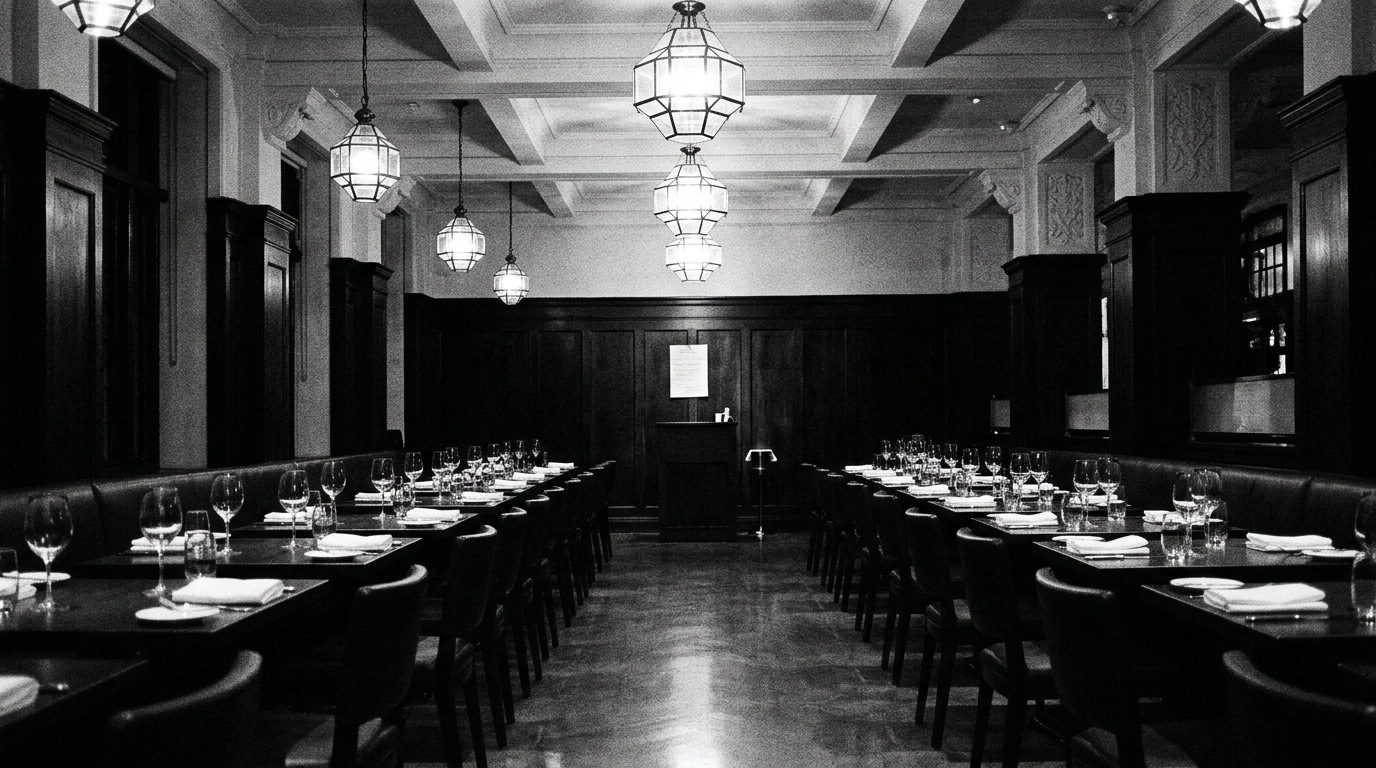
A seafood restaurant inside Encore Boston Harbor shut down less than a month after its staff voted 38-7 to join UNITE HERE Local 26, and the official explanation is "economic challenges." If you've ever sat across the table from a labor attorney, you already know how this story reads.

Available Analysis

I worked with a GM once who had a restaurant inside his casino that was bleeding money. Not a little. Real money. Every month he'd sit with the F&B director and stare at the P&L and they both knew the answer was to close it, rebrand the space, try something else. They kicked the can for over a year. You know why? Because the moment you close a restaurant that just unionized, you're not making a business decision anymore. You're making a headline. He waited. He ate the losses for another eight months until the timing was clean. Smart man.

Whoever made the call at Encore Boston Harbor didn't wait.

Here's what we know. Seamark Seafood & Cocktails opened in April 2024 with a James Beard Award-winning chef attached and a Las Vegas-based hospitality group running the operation. Less than two years later, it's done. The 56 employees who voted 38-7 to join UNITE HERE Local 26... they got their layoff notices roughly three weeks after the vote. The operator, Carver Road Hospitality, says economic challenges. The union says union-busting. And the truth is probably messier than either version, because the truth in these situations always is.

Look... was the restaurant struggling? Almost certainly. Boston's high-end dining scene has been rough. Time Out Market in Fenway closed in January. Wynn Resorts missed Q4 earnings ($1.17 EPS versus $1.42 expected) and reported revenue declines in Boston specifically. A two-year-old seafood concept inside a casino that isn't hitting its numbers... that's a real business problem. I'm not going to sit here and pretend the economics don't matter because they do. But here's the thing. If the economics were bad enough to close in March 2026, they were bad enough to close in January 2026. Or November 2025. They were bad enough to close BEFORE the union vote. And they didn't. The restaurant was open the day those 56 people walked into the voting room. It was open the day the results came back 38-7. And then, three weeks later, the economics suddenly became insurmountable. I've seen this movie before. The plot is always the same. The ending is always a labor attorney's phone ringing.

What makes this particularly loaded is the context inside Encore itself. This isn't a property that's anti-union as a matter of principle. Twelve hundred workers are already organized under UNITE HERE Local 26. Two hundred more are Teamsters. Eighty-five cage cashiers voted to unionize with the Teamsters just last September. Wynn Resorts cut a five-year deal with the Culinary Union in Vegas back in 2023 that included real wage increases and AI protections. So the parent company knows how to work with organized labor. Which makes the timing of this closure even harder to explain as pure coincidence. You've got a property where unionization is established, a parent company with a track record of negotiating contracts, and a restaurant operator who looked at a 38-7 vote and decided... now is when the economics are fatal? The workers themselves said the sticking point was wage parity with other unionized Encore employees. That's not an unreasonable ask when the people working next to you in the same building are making more because they're organized and you weren't. Until you were. And then you were closed.

I don't know what was in Carver Road Hospitality's books. Maybe the numbers really were that bad. Maybe this was genuinely a mercy killing that happened to land at the worst possible moment. But I've negotiated union contracts. I've sat in those rooms at 2 AM when both sides are exhausted and the lawyers are the only ones still fresh. And I can tell you that in 40 years, I've never once seen a closure three weeks after a union vote that didn't end up in front of the NLRB. The legal exposure here isn't theoretical. It's a calendar. Somebody at Wynn Resorts is going to spend the next 18 months explaining this timeline to people who are paid to be skeptical of timelines. And "coincidence" is going to be a very expensive word to defend.

Operator's Take

For those of you running F&B operations inside casino or resort properties... this is the cautionary tale you should be studying right now, and not for the reason you think. If you've got a restaurant underperforming and labor organizing simultaneously, you have exactly two choices and no good ones. Close before the vote and you look like you're retaliating against organizing activity. Close after and you look like you're retaliating against the result. The only clean path is the one that GM I knew took... you document the financial deterioration in real time, you build a paper trail that predates any organizing activity by months, and if you have to close, the decision memo is dated before anyone filed a petition. If you're sitting on a struggling outlet right now and you hear even a whisper about organizing, call your labor attorney today. Not next week. Today. Because three weeks from now, your options get a lot more expensive and a lot less defensible.

Read full analysis → ← Show less
Source: Google News: Wynn Resorts
The NLRB Gig Ruling Is Already Dead. Your Staffing Problem Isn't.

The NLRB Gig Ruling Is Already Dead. Your Staffing Problem Isn't.

The original NLRB guidance that was supposed to make gig workers easier to unionize has been gutted by the new administration. But if you're a GM who's been leaning on staffing platforms to run your banquet operation, the underlying exposure hasn't gone anywhere... it's just wearing a different suit.

Available Analysis

I sat in a labor strategy meeting once with a director of operations who had a beautiful spreadsheet showing how much money he was saving by running 65% of his banquet staff through a platform provider. Gorgeous numbers. Clean columns. He'd basically turned his entire events operation into a variable cost line, and on paper it looked like genius. I asked him one question: "What happens when you can't get the bodies?" He blinked at me. He didn't have an answer because he'd never modeled for it. He'd built his entire group pricing around the assumption that cheap, flexible labor would always be there when he needed it.

Here's the thing about this NLRB story that most people are getting wrong. The headline says the feds just made gig work more like a job. And technically, there was a moment in 2023 when the Board's Atlanta Opera decision did exactly that... broadened the definition of who counts as an employee, made it easier for platform workers to organize. Real teeth. Real implications for hotels running half their event labor through apps.

But that was two administrations ago in NLRB years. The current Board fired the general counsel who drove that agenda. Her replacement has already rescinded 29 of her guidance memos. The joint employer rule that would have made hotels co-liable for staffing platform workers? Withdrawn. Replaced with the old standard requiring "substantial direct and immediate control." The DOL is actively trying to roll back its own 2024 independent contractor test. And as of last year, the Board lost its quorum entirely... meaning it can't even issue new decisions right now. The regulatory apparatus that was supposed to transform gig work is, for the moment, a car with no engine.

So why am I writing about it? Because the regulatory threat was never your actual problem. Your actual problem is that you built your labor model on a platform that could change, shrink, or reprice at any time, and you treated it like permanent infrastructure. Over 87% of hotels report staffing shortages. The gig platforms filled a gap. But a gap-filler is not a foundation, and too many operators... especially at large convention and full-service properties... stopped being able to distinguish between the two. When you're running 60-70% of your peak banquet labor through a third party, you haven't solved your labor problem. You've outsourced it. And outsourced problems have a way of coming back at the worst possible moment, whether the trigger is a union drive, a regulatory shift, a platform price hike, or just a Saturday night when the app can't fill your pull.

The pendulum will swing again. It always does. The Atlanta Opera standard still exists as precedent. A future Board with a quorum could revive every one of those rescinded memos. UNITE HERE hasn't stopped organizing just because the federal machinery slowed down. And the state-level action on worker classification (California, New York, Illinois) doesn't care what the NLRB quorum looks like. If you're in a major convention market and you've let your permanent banquet team atrophy because the platform was cheaper and easier... you are one labor market hiccup away from a crisis that no app is going to solve at 2 AM on a Saturday.

Operator's Take

If you're a GM or director of operations at a full-service or convention hotel running more than 30% of your event labor through staffing platforms, pull your actual numbers this week. Not the budgeted split... the real hours, by department, by shift type. Model what happens to your group margins if platform rates go up 15% or if fill rates drop by 20% on peak nights. Then take that to your DOS before your next round of group pricing goes out. The regulatory threat is dormant right now, but the operational dependency is real and it's priced into promises you're making to clients six months from now. This is what I call the Labor Window... you've got a moment of regulatory calm to rebuild your permanent bench strength before the next shift hits. Use it to recruit, not to coast. The hotels that come out of this with the strongest teams will be the ones that treated the staffing platform as a supplement, not a strategy.

Read full analysis → ← Show less
Source: The Washington Post
The NLRB Didn't Get Stronger. But Your Employees Still Might Organize Tomorrow.

The NLRB Didn't Get Stronger. But Your Employees Still Might Organize Tomorrow.

Everyone's treating the new union organizing rules like a tidal wave. The reality is messier... some of those rules just got kneecapped in court, and the ones that survived are the ones most operators aren't paying attention to.

I sat across from a GM about ten years ago... non-union full-service property in a gateway city, 400-plus keys, running a $2-per-hour labor cost advantage over the unionized house down the street. He was proud of it. Had it on his monthly dashboard like a trophy. I asked him one question: "What are you doing with that $2 that your people can actually feel?" He looked at me like I'd asked him to explain gravity. The answer was nothing. The savings went to the bottom line. His team got the same vending machines and the same busted break room chairs as everybody else. That property organized 14 months later.

Here's what I need you to understand about this NLRB story, because the headline is doing about 60% of the work and the details matter. Yes, there are new rules that make organizing faster. The "quickie" election rules have been in effect since December 2023... pre-election hearings now happen 8 calendar days from the notice instead of 14 business days, and elections can happen roughly 3-4 weeks after a petition is filed. That's real. That compresses your response window dramatically. But two other pieces that everyone assumed were coming? They got stopped. The expanded joint employer rule... the one that would have made brands co-employers with franchisees... was formally withdrawn by the NLRB on February 26th of this year. Gone. And the Cemex decision, which was the big stick that let the NLRB impose a bargaining order if an employer committed any unfair labor practice during organizing... the Sixth Circuit rejected that on March 6th. Said the Board exceeded its authority. So the landscape is not the pro-union steamroller some people are writing about. It's a faster election timeline bolted onto a legal framework that's actually more fractured than it was a year ago.

But here's the thing that matters more than any of those legal details, and it's the thing I keep coming back to after 40 years of managing in both union and non-union environments. The timeline was never the problem. Nobody ever lost a union election because they didn't have enough weeks to prepare. They lost because when the organizer showed up, the employees already knew the answer. Your housekeeper making $17 an hour with unpredictable scheduling and no clear grievance process doesn't need four weeks of card-signing to know she wants representation. She decided six months ago when her shift got cut without explanation and nobody in management returned her call. The quickie rules just mean you have less time to pretend that wasn't happening.

The markets the source material identifies are right... New York, Chicago, LA, San Francisco, Vegas, Boston, Seattle. Those are the cities where organizing infrastructure already exists, where UNITE HERE has 300,000 members and established relationships, where the playbook is proven. If you're running a non-union property in one of those markets, you should assume organizing is possible at any time, regardless of what the NLRB does. But I'd add this: secondary markets with growing hotel supply and tight labor are vulnerable too, especially where a successful organizing campaign at one property creates momentum. I've seen it happen in cities nobody expected. One property goes union, and suddenly the organizer has a case study three miles from your front door.

The financial reality is this. The union wage premium nationally runs about 17.5%... median weekly earnings of $1,337 for union workers versus $1,138 for non-union. In hospitality, the gap varies by market, but in the gateway cities we're talking about, it can be wider. Add benefits, work rules, grievance procedures, and the management time to administer a CBA, and you're looking at a meaningful shift in your labor cost structure. This is what I call the Invisible P&L... the costs that don't appear on your current P&L but are sitting right underneath it, waiting to surface. The delta between your current non-union labor cost and what it would be under a CBA is a number you should know today. Not because organizing is inevitable, but because the gap between those two numbers tells you exactly how much exposure you're carrying and how much room you have to invest in making the union unnecessary.

Operator's Take

If you're a GM at a non-union property in a high-density market, stop reading legal analyses and start walking your building this week. Talk to your housekeeping supervisors. Ask your front desk leads what complaints they're hearing that never make it to you. The properties that organize are the ones where management lost touch with the floor... not the ones that ran out of time on an election calendar. And if you're an owner or asset manager, build the union labor cost scenario into your 3-year model now. Know the number. If the delta between your current labor cost and union scale is $2-3 per hour per employee, figure out where even a portion of that gap can go toward retention, scheduling transparency, or benefits that your people can actually feel. The cheapest union avoidance strategy in the world is being the kind of employer people don't want to organize against.

Read full analysis → ← Show less
Source: InnBrief Analysis — National News
End of Stories