Today · Apr 8, 2026
Vietnam Is Now the World's Fourth-Largest Branded Residence Market. Most Owners Don't Know What That Costs.

Vietnam Is Now the World's Fourth-Largest Branded Residence Market. Most Owners Don't Know What That Costs.

Vietnam's hospitality market is racing toward $38 billion by 2031, and 50-plus branded residential projects are already in the ground with 30 more coming. The question nobody in the development pipeline is asking loudly enough is what happens when the brand promise meets a Tuesday afternoon in Da Nang.

Available Analysis

I grew up watching my dad deliver on promises that someone in a corporate office made without asking him first. So when I see a market ranked fourth globally in branded residential development... behind only the US, Saudi Arabia, and Mexico... with 50 projects already attached to 34 international flags and another 30 in the pipeline, my first instinct isn't excitement. It's "okay, who's making the promise and who's delivering it?"

Vietnam's hospitality market is projected to hit $38 billion by 2031, growing at better than 8% annually. RevPAR is up 15% over last year. The country is targeting 25 million international visitors in 2026, an 18% jump. Marriott, IHG, and Accor collectively account for about 40% of the branded residence projects in the country. And here's the number that should make every developer sit up: Vietnam represents 41% of all branded residences under development across Asia. Not a small share of a small market. A dominant share of a massive one. The money is moving, the flags are going up, and the renderings look gorgeous (they always look gorgeous... that's what renderings are for).

But here's where my brand brain starts itching. Branded residences are not hotels. They're a fundamentally different promise. When you sell someone a branded residence, you're not selling them a three-night stay where a lukewarm breakfast gets forgotten by checkout. You're selling them a lifestyle they're going to live in, potentially for decades, under a flag that has to deliver service standards without the revenue engine of nightly room rates subsidizing operations. The brand gets its licensing fee. The developer gets the sales premium. And the buyer gets... what, exactly? That depends entirely on whether the operator can execute the brand's service concept in perpetuity with residential HOA economics. I sat in a brand review once where the residential team couldn't answer a basic question about long-term staffing models for a branded residence tower. They had the design package. They had the sales projections. They had a beautiful 40-page brand book. They did not have a plan for what happens in year five when the novelty wears off and the residents start asking why they're paying premium fees for services that feel increasingly generic.

The shift from coastal resort developments to urban projects in Ho Chi Minh City and Hanoi adds complexity. Urban branded residences compete not just against other branded projects but against the entire luxury rental and ownership market in those cities. The positioning has to be specific enough to justify the premium and deliverable enough to survive contact with local labor markets, local vendor networks, and local expectations. "Elevated lifestyle for the discerning urban dweller" is a mood board, not a brand. And when three major global operators control 40% of the pipeline, the differentiation question gets sharper. What makes your Marriott-branded residence meaningfully different from your IHG-branded residence in the same city, at the same price point, drawing from the same labor pool? If the answer requires more than one sentence, the positioning isn't clear enough.

Vietnam's growth is real. The demand fundamentals are real. The expanding affluent class, the infrastructure investment, the government's commitment to tourism as an economic driver... all of it supports a market that is genuinely moving. But 80 branded residential projects across a single market, attached to 34 different flags, with more coming? That's not a strategy. That's a gold rush. And gold rushes have a very specific pattern: early movers make money, fast followers do okay, and the last 30% of entrants discover that the brand premium they were sold in the development pitch doesn't materialize when every building on the block is waving a different international flag. I've read enough FDDs to know that the variance between what developers project during sales and what owners experience three years later should come with a warning label. The filing cabinet doesn't lie. And the filing cabinet for branded residences is getting very, very thick.

Operator's Take

Here's what I'd tell you if you're an owner or developer looking at Vietnam's branded residential pipeline. This is a Brand Reality Gap situation... the brands are selling promises at scale, and individual properties are going to deliver them unit by unit, resident by resident, with whatever staffing model the local economics support. Before you sign a licensing agreement, get the actual performance data from existing branded residence projects in Southeast Asia... not the projections, the actuals. What are the service charges? What's the resident satisfaction? What's the resale premium (or discount) after year three? If the brand can't produce that data, you're buying a rendering, not a strategy. And if you're already in the pipeline, start building your staffing and service delivery model now... not after the units close. The day a resident moves in is the day the brand promise becomes your problem, and "we're still finalizing the service program" is not something you want to say to someone who just wrote a seven-figure check.

— Mike Storm, Founder & Editor
Read full analysis → ← Show less
Source: Google News: Hotel Industry
Hyatt's Essentials Push Is a Loyalty Play Wearing a Growth Story's Clothes

Hyatt's Essentials Push Is a Loyalty Play Wearing a Growth Story's Clothes

Hyatt signed 70 Hyatt Studios deals and 20-plus Hyatt Select deals in barely a year, with 65% of new U.S. signings coming from its three youngest brands. That's impressive pipeline math... until you ask what happens to the owner in a tertiary market when the loyalty contribution doesn't match the franchise sales deck.

Available Analysis

I grew up watching my dad deliver on brand promises that someone else made. So when I see a major company announce that its newest, least-tested brands are driving the majority of its domestic growth, my first instinct isn't excitement. It's to open the FDD.

Let's be clear about what Hyatt is doing here, because the framing matters. They reorganized their entire portfolio into five buckets... Luxury, Lifestyle, Inclusive, Classics, and Essentials... and then announced that the Essentials bucket is where the growth is happening. Over 65% of new U.S. deals in 2025 came from Hyatt Select, Hyatt Studios, and Unscripted. Half of their executed domestic Essentials deals were in markets where Hyatt had no previous presence. They're calling this "capital-efficient, conversion-friendly growth," which is the polite way of saying "we're going after secondary and tertiary markets with lower barriers to entry and owners who are hungry for a flag." And you know what? That's a legitimate strategy. Hyatt has 63 million World of Hyatt members and a pipeline of 138,000 rooms, and the way you feed that loyalty engine is by putting dots on the map where your members actually travel for work and family. The strategy makes sense for Hyatt. The question I keep circling is whether it makes sense for the owner in Dothan, Alabama.

Here's where my filing cabinet starts talking. Hyatt Studios has 70 deals signed and a pipeline north of 4,000 rooms. That's fast. Really fast for a brand that didn't exist two years ago. And fast is where things get dangerous, because fast means the franchise sales team is outrunning the operations team, the training infrastructure, and most importantly, the performance data. There is no five-year trailing performance history for Hyatt Studios. There are no mature comp sets. There are projections, and there are early adopters whose properties are still in ramp-up, and there's a lot of optimism dressed up as evidence. I've been in rooms where franchise sales decks showed projected loyalty contribution numbers that made the deal look like a no-brainer. Then I've sat across from families three years later when actual loyalty delivery came in 30-40% below projection. The brand wasn't lying (usually). The sales team was projecting optimistically because that's what sales teams do. And nobody stress-tested the downside because nobody at headquarters has to sit across from the owner when the numbers don't work.

The "conversion-friendly" positioning deserves scrutiny too. Conversion-friendly means lower PIP costs, which is genuinely attractive when construction costs are where they are right now. But conversion-friendly can also mean inconsistent product, which means inconsistent guest experience, which means the brand promise starts leaking before the paint dries. You can't build a brand reputation on conversions alone... at some point the guest in Tuscaloosa needs to have an experience that rhymes with the guest in Nashville, or the brand means nothing and the loyalty members stop booking. I've watched three different flags try to grow primarily through conversions in secondary markets. The first two years look like a growth story. Year three is when the quality variance catches up and the brand starts quietly tightening standards, which means the PIP costs the owner thought they'd avoided show up after all, just on a delay. This is what I call the Brand Reality Gap... brands sell promises at scale, and properties deliver them shift by shift. When you're growing this fast into markets where you've never operated, that gap gets wide in a hurry.

What I want to see (and what no press release will ever tell you) is the actual loyalty contribution data from the earliest Hyatt Studios and Hyatt Select properties that have been open long enough to stabilize. Not projections. Not "early traction." Actual booking mix. Actual loyalty percentage. Actual rate premium over unbranded comp set. Because if the World of Hyatt engine delivers 35-40% of room nights in these tertiary markets, the economics probably work and the owners will be fine. If it delivers 18-22%... and in markets where Hyatt has never had a presence, that's a real possibility... then the owner is paying franchise fees, loyalty assessments, reservation system fees, and marketing contributions for a brand whose primary value proposition isn't showing up on the revenue line. An owner I talked to last year put it perfectly: "I'm not paying for a flag. I'm paying for heads in beds. Show me the heads." That's the conversation Hyatt needs to be ready for in year three of this growth push. The pipeline is impressive. The signings are real. But a signed deal is a promise, not a performance metric. And I've learned (professionally and personally) that being in love with what something could be is not the same as evaluating what it is.

Operator's Take

Here's the move if you're an owner being pitched Hyatt Studios or Hyatt Select right now. Ask for actual performance data from stabilized properties... not pro formas, not "comparable brand" projections, actual numbers from hotels that have been open 18+ months. If they can't provide it, that tells you everything about where this brand is in its lifecycle. Get the loyalty contribution guarantee in writing or negotiate a fee ramp that protects you during the first 24 months of operation. And run your own stress test at 20% loyalty contribution (not the 35% in the sales deck) against your total brand cost... franchise fee, loyalty assessment, reservation fees, marketing fund, all of it. If the deal still works at 20%, sign it. If it only works at 35%, you're not investing... you're hoping. Hope is not a line item.

— Mike Storm, Founder & Editor
Read full analysis → ← Show less
Source: Google News: Hyatt
IHG Trimmed Its Outlook. The Question Is What They're Not Trimming.

IHG Trimmed Its Outlook. The Question Is What They're Not Trimming.

IHG's Middle East exposure is only 5% of its system, but the real tension isn't regional... it's between a company promising $1.2 billion in shareholder returns and the owners absorbing the demand shock on the ground.

Available Analysis

Let me tell you what's actually happening here, because the headline wants you to think this is a Middle East story. It's not. It's a priorities story.

IHG came out of 2025 swinging. Record openings... 443 hotels, 65,100 rooms. Operating profit from reportable segments up 13% to $1.265 billion. CEO on the record in February saying he wasn't "putting a ceiling on growth potential for 2026." A brand-new $950 million share buyback announced with a promise to return over $1.2 billion to shareholders this year. That's the energy of a company that believes the music isn't stopping. And then the music in one of their key growth corridors... a region they've operated in for 65 years, a region their CEO specifically identified as "where most of the growth is moving"... got very, very quiet. Dubai occupancy down to roughly 23%. Bahrain seeing year-over-year drops of 70%. Eighty thousand hotel reservations in Dubai cancelled in a single week. Tourism spending down $12 billion in the first 20 days of the conflict. Those aren't rounding errors. Those are owners watching their revenue evaporate while the corporate parent is still talking about "trajectory."

Here's the tension nobody's naming. IHG has 5% of its rooms in the Middle East. Analysts at Morgan Stanley called the direct exposure "relatively contained." And financially, at the corporate level, they're probably right. IHG collects fees. IHG doesn't own those buildings. The fee stream takes a hit, sure, but the existential pain lands on the owners and operators who flagged with IHG precisely because of the growth story... the "younger populations, rising middle class, GDP growth moving east" narrative that Elie Maalouf has been selling beautifully for the past two years. Those owners took on PIPs. They invested in brand standards. They bought the promise. And now the company is trimming outlook while simultaneously committing $1.2 billion to buying back its own stock. I've sat in franchise reviews where the brand representative told an owner group to "think long-term" while headquarters was absolutely, unambiguously thinking quarter-to-quarter. The dissonance is remarkable if you're paying attention. (Most owners are paying attention.)

And here's the part that should make every IHG franchisee outside the Middle East pay attention too. When a company trims outlook, the cost pressure doesn't stay regional. It migrates. Brand teams start looking harder at loyalty contribution numbers in every market. Development incentives might tighten. That "flexibility" on PIP timelines that your area director hinted at? It gets a lot less flexible when the corporate revenue forecast needs propping up. I watched a brand do exactly this during a previous regional disruption... the affected market got the press release about "supporting our partners," and every other market got a quiet memo about accelerating fee collection timelines. The CEO calls it "an interruption of a very strong trajectory, not a change in that trajectory." My filing cabinet full of old FDDs has heard that exact sentence before, from multiple brands, about multiple regions. The trajectory didn't always come back the way the press release promised. Sometimes the interruption became the new normal, and the owners who believed otherwise were the last to adjust.

What I want to know is this: if IHG is confident enough in 2026 to commit $1.2 billion to shareholders, are they confident enough to extend PIP deadlines for Middle East owners who are staring at 23% occupancy? Are they waiving any fees for the properties drowning in cancellations right now? "Supporting guests wishing to amend their bookings" is a sentence about the customer. I want to hear the sentence about the owner. Because when the demand comes back (and it will... travel always recovers, eventually), the owners who survive the gap are the ones who had a franchisor that treated partnership like a two-way obligation, not a one-way fee stream. That's not every franchisor. The filing cabinet tells me which ones mean it and which ones don't.

Operator's Take

Here's what I'd do if I were an IHG franchisee right now, regardless of your market. Pull your franchise agreement and re-read the force majeure and fee abatement provisions. Know exactly what you're entitled to ask for and what's discretionary. If you're in the Middle East or have sister properties there, document every cancellation, every rate concession, every cost increase tied to this conflict... you'll need that paper trail when you negotiate PIP extensions or fee relief. If you're stateside, don't assume this stays overseas. Watch your loyalty contribution numbers over the next 90 days. When corporate needs to offset a revenue shortfall somewhere, the pressure shows up everywhere. This is what I call the Brand Reality Gap... brands sell promises at scale, but properties deliver them shift by shift, and when the macro environment shifts, the gap between what corporate promises and what property-level economics can support gets real uncomfortable, real fast. Get ahead of it. Build your case now, not when you're already behind.

— Mike Storm, Founder & Editor
Read full analysis → ← Show less
Source: Google News: IHG
Hyatt's Unbound Collection Turns 10. The Question Nobody's Asking Is Whether Soft Brands Keep Their Promises.

Hyatt's Unbound Collection Turns 10. The Question Nobody's Asking Is Whether Soft Brands Keep Their Promises.

Hyatt is celebrating a decade of its Unbound Collection with four new Americas properties and a pipeline that sounds gorgeous on paper. The real test isn't whether these hotels are beautiful... it's whether the owners joining the collection are getting what they were sold five years ago.

Available Analysis

I grew up watching my dad deliver on brand promises that somebody else made. So when I see a soft brand celebrating its 10th anniversary with a press release full of words like "unmistakable individuality" and "story-worthy stays," my first instinct isn't to applaud. It's to open the filing cabinet.

Here's what Hyatt is announcing: four properties joining or coming soon to The Unbound Collection in the Americas... an 84-room restored gem in Santa Monica, a 120-room property in Seattle, a 218-suite private island resort in the Dominican Republic, and a new build in Niagara-on-the-Lake. Two more are slotted for 2027 in Savannah and Argentina. The collection is part of Hyatt's broader strategy to grow its luxury and lifestyle footprint through an asset-light model, with the company reporting 7.3% net rooms growth in 2025 and a record pipeline of roughly 148,000 rooms. Comparable system-wide RevPAR grew 4% in Q4 2025. The machine is humming. The question is... for whom?

Soft brands are seductive. And I mean that in every sense of the word. The pitch is irresistible: keep your identity, keep your name, keep the thing that makes your property special... but plug into our reservation system, our loyalty program, our global distribution. You get World of Hyatt members booking direct. You get the brand's marketing engine. You get to stay "independent" while playing on a much bigger field. It sounds like the best of both worlds because it's designed to sound that way. I spent 15 years on the side of the table designing those pitches. But here's what I learned sitting across from a family that lost their hotel because the loyalty contribution projections were fantasy: the pitch and the performance are two different documents. Always.

The Deliverable Test for soft brands is uniquely tricky. A traditional flag has standards you can audit... thread count, breakfast offering, lobby design, uniform specs. A soft brand's promise is more atmospheric. "Unmistakable individuality." How do you measure that? How do you hold the brand accountable when the whole value proposition is that they WON'T impose uniformity? What you CAN measure is what the owner actually gets in return for those franchise fees, loyalty assessments, reservation system charges, and marketing contributions. Total brand cost for properties in collections like this can easily push past 15% of revenue, and the question every independent owner considering a soft brand flag should be asking (but rarely does, because the champagne at the signing event is very good) is: what is my actual loyalty contribution percentage, and does it justify what I'm paying? Because Hyatt's all-inclusive resorts saw 8.3% growth in Net Package RevPAR last quarter. That's great. But a boutique 84-key property in Santa Monica and a private island in the Caribbean are not living in the same demand universe, and portfolio-level numbers are the brand's favorite way to avoid property-level conversations.

Ten years is a real milestone, and I'll give Hyatt this... the Unbound Collection has maintained a tighter curation than some of its competitors' soft brand portfolios (I've watched other companies dilute their "exclusive" collections to the point where "story-worthy" meant "has a lobby"). But curation at the top doesn't change the math at the property. If you're an independent owner being courted for a soft brand collection right now... any collection, not just this one... ask for actual performance data from comparable properties in the portfolio. Not projections. Actuals. Loyalty contribution percentage. Reservation system booking share. Net revenue impact after all fees. And then ask yourself: would I rather have that data, or another glass of champagne? (The champagne is always very good. The data is harder to get. That should tell you something.)

Operator's Take

Here's what I'd tell any independent owner getting the soft brand pitch right now. Before you sign anything, demand trailing 12-month loyalty contribution data from at least three comparable properties already in the collection... comparable meaning similar key count, similar market tier, similar ADR range. Not the flagship. Not the private island. YOUR comp. Then calculate your total brand cost as a percentage of revenue... franchise fees, loyalty assessments, reservation fees, marketing fund, all of it. If that number exceeds 12-15% and the loyalty contribution isn't delivering at least that much in net new revenue you wouldn't have captured independently, you're paying for a logo and a reservation system. That might still be worth it. But know the number before you pop the cork. This is what I call the Brand Reality Gap... brands sell promises at scale, but properties deliver them (and pay for them) shift by shift. The math either works at YOUR property or it doesn't.

— Mike Storm, Founder & Editor
Read full analysis → ← Show less
Source: Google News: Wyndham
Choice Hotels Stock Just Crossed a Technical Threshold. The Franchise Math Underneath Tells a Different Story.

Choice Hotels Stock Just Crossed a Technical Threshold. The Franchise Math Underneath Tells a Different Story.

Wall Street is watching Choice Hotels clear its 200-day moving average on the back of record EBITDA and an international expansion push. But if you're an owner paying into this system, the question isn't whether the stock is up... it's whether your property is seeing any of that profitability trickle down to your P&L.

Available Analysis

There's a particular kind of headline that makes franchise owners feel a very specific kind of nauseous, and it's the one where your franchisor's stock price is climbing while your RevPAR is flat or falling. Choice Hotels just crossed above its 200-day moving average, trading around $106, and the financial press is doing what financial press does... asking "what's next?" like this is a game show and not someone's business model. Record adjusted EBITDA of $625.6 million for 2025. Adjusted EPS that beat estimates. Revenue that came in $20 million above consensus. If you're a shareholder, you're having a wonderful Tuesday. If you're an owner whose U.S. RevPAR declined 2.2% in Q4 while the company posted record profits, you might be asking a different question entirely.

And that question is the one nobody on the earnings call is eager to answer: where is the money coming from? Because when a franchisor posts record profitability during a period of declining domestic RevPAR, the math has a limited number of explanations. Either international growth is carrying the load (it's growing... 3.2% RevPAR on a currency-neutral basis, and international rooms saw double-digit growth), or fee structures are doing the heavy lifting regardless of what's happening at property level, or both. Choice's guidance for 2026 projects U.S. RevPAR somewhere between down 2% and up 1%. That's not a forecast. That's a shrug with a range attached to it. Meanwhile, they're projecting adjusted EBITDA of $632 to $647 million... which means the company expects to grow its profitability even if domestic owners tread water. You don't need me to tell you who's funding that growth. (You're funding that growth.)

I grew up watching my dad deliver brand promises while the brand counted the fees. I spent 15 years on the other side of that table, building those promises, defending those PIPs, presenting those projections. And the thing I've learned that I wish I'd learned earlier is this: a franchisor's stock price is not a report card on how well they're serving their owners. It's a report card on how well they've structured their fee model. Those are very different things. Choice has been strategic... the Ascend Collection crossing 500 hotels is real momentum, the extended-stay push makes sense in this cycle, and the portfolio optimization (removing underperforming properties, adding conversions) is the right move structurally. But portfolio optimization is a polite way of saying "we're replacing the owners who can't keep up with owners who can." If you're one of the ones being optimized out, that record EBITDA number stings differently.

Let's also talk about what's not in the stock chart. The failed Wyndham acquisition is still hanging in the air like smoke after a kitchen fire. Choice walked away from that $8 billion bid in March 2024 after AAHOA came out hard against it (and they should have... the consolidation would have squeezed owner options in economy and midscale segments where margins are already razor-thin). So now Choice is back to organic growth, and organic growth in a flat U.S. RevPAR environment means international expansion, fee optimization, and net rooms growth of approximately 1%. One percent. That's not a growth engine. That's a maintenance program dressed in a press release. The Q1 2026 earnings call is April 30, and I'd pay real attention to what they say about conversion velocity and franchise application volume, because those are the numbers that tell you whether owners are buying what Choice is selling... or whether the pipeline is getting quietly thinner while the stock price gets quietly fatter.

Here's what I keep coming back to. A brand's stock crossing a technical threshold is a Wall Street story. It is not an operations story. It is not a franchisee story. The owner in a secondary market whose Choice flag is costing them 15-18% of top-line revenue in total brand cost doesn't care about the 200-day moving average. They care about whether their loyalty contribution justifies the fee. They care about whether the PIP they took on three years ago has paid for itself yet. They care about whether their rate parity restrictions are costing them direct bookings they could have captured cheaper. And if the answer to those questions is "not yet" while the franchisor is posting record profits... well, that's the gap I've spent my whole career trying to close. The brand promise and the brand delivery are two different documents. They always have been.

Operator's Take

Here's what I'd do this week if I'm a Choice franchisee reading this headline. Pull your total brand cost... every fee, every assessment, every mandated vendor charge, every loyalty program contribution... and calculate it as a percentage of your total revenue. Not your franchise fee alone. Everything. If that number is north of 16% and your loyalty contribution is south of 30%, you have a math problem, and it's not getting better while domestic RevPAR sits flat. This is what I call the Brand Reality Gap... the brand is selling the promise at portfolio level, and you're delivering it shift by shift at property level, and the gap between those two realities is where your margin disappears. Before that April 30 earnings call, sit down with your numbers and know exactly what you're paying versus what you're getting. Don't wait for someone to hand you a report. Build the report yourself. That's how you walk into a franchise review with something to say instead of something to sign.

— Mike Storm, Founder & Editor
Read full analysis → ← Show less
Source: Google News: Choice Hotels
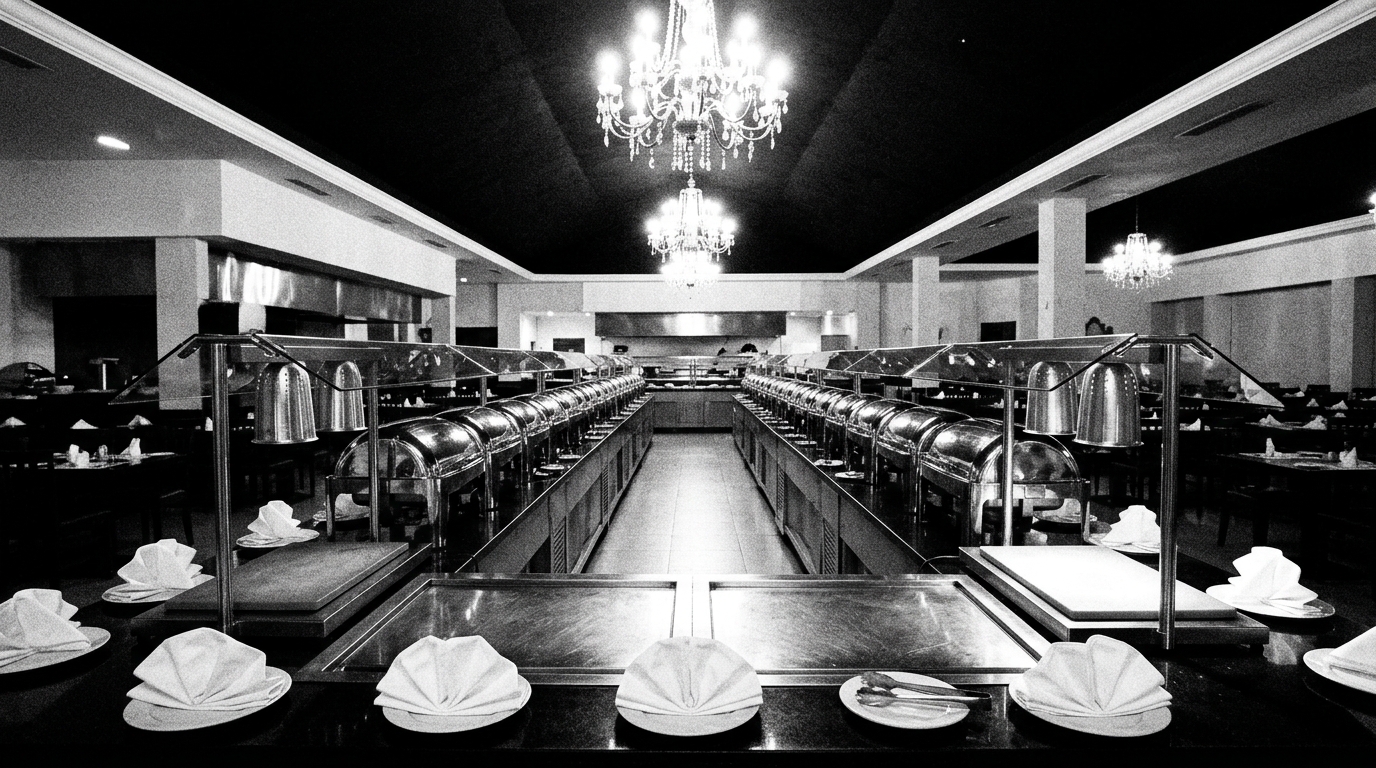
Marriott Just Promised 4,500 Rooms Across Eight Brands in Two Vietnamese Cities. That's Not Strategy. That's a Buffet.

Marriott Just Promised 4,500 Rooms Across Eight Brands in Two Vietnamese Cities. That's Not Strategy. That's a Buffet.

Marriott and Sun Group are dropping ten hotels into Phu Quoc and Vung Tau by 2030, spanning everything from Moxy to W Hotels. The question isn't whether Vietnam is a growth market... it's whether eight brands in one destination is a portfolio or a pile-up.

Available Analysis

Let me paint the picture for you. One island. Seven hotels. Six different Marriott brands. A W, a Westin, a Marriott, a Le Méridien, a Courtyard, a Moxy, and a Fairfield... all within what is essentially the same destination ZIP code. And then three more in Vung Tau for good measure. Nearly 4,500 rooms total, phased in over four years, all flying the Marriott flag, all feeding from the same pool of inbound tourism demand.

Now, I've sat in enough brand development meetings to know exactly how this pitch went. Someone at headquarters pulled up the Vietnam demand curve (strong... genuinely strong), pointed at the country's trajectory from $7.8 billion in hospitality revenue toward a projected $21.9 billion by 2034, overlaid the APEC 2027 hosting opportunity in Phu Quoc, and said "we need to be everywhere before our competitors are." And the room nodded. Because that math, at 30,000 feet, is compelling. Vietnam's hotel performance has been outpacing the region. ADRs are clustering around $100. Occupancy is climbing. Marriott's own portfolio in the country has doubled since 2022. The macro story is real.

But here's where I start asking questions the press release doesn't answer. When you put a W (526 keys) and a Westin (527 keys) and a Le Méridien (432 keys) on the same island, you're asking three upscale-to-upper-upscale brands to carve out distinct positioning in a market that is still, fundamentally, being built. Who is the W guest in Phu Quoc versus the Le Méridien guest in Phu Quoc? Because I've read hundreds of FDDs, and the differentiation between those two brands on paper is already thin in mature markets like Miami or Bangkok. In an emerging destination where airlift is still ramping, where the international traveler base is still forming habits and preferences, those brand lines blur into vapor. Add a Marriott Resort at 826 keys (the largest of the bunch) and you're now asking Bonvoy's algorithm to sort three tiers of "premium island vacation" on the same search results page. The loyalty engine doesn't differentiate mood boards. It sorts by price. And when three of your own brands are within $30 of each other on the same island, you haven't built a portfolio... you've built a comp set with yourself.

The Moxy and Fairfield on Hon Thom island (501 and 353 keys respectively, opening as early as this year) tell a different story, and honestly, a more interesting one. Those are volume plays aimed at the domestic and regional budget traveler, positioned on a secondary island within the Phu Quoc archipelago. The demand thesis is clearer: Vietnam's domestic tourism is massive, younger travelers want branded experiences at accessible price points, and Sun Group's integrated destination development model (think theme parks, cable cars, the whole resort ecosystem) creates its own demand generator. I buy that thesis more than I buy a six-brand luxury spread on the main island. The Vung Tau trio (Marriott, Moxy, Four Points, all 2030) benefits from proximity to the new Long Thanh International Airport, which changes the access equation for that market entirely. That's infrastructure-driven demand, and infrastructure is harder to argue with than brand positioning decks.

What I keep coming back to, though, is who holds the bag when seven hotels on one island are competing for the same guest during the same shoulder season. Sun Group is the developer and owner across this entire portfolio. Marriott collects management and franchise fees on nearly 4,500 keys regardless of whether brand differentiation actually materializes at property level. This is what I call the Brand Reality Gap... Marriott sells the promise of eight distinct brand experiences, each with its own identity, its own guest, its own reason for being. But the delivery happens shift by shift, in a market where the labor pool to staff one luxury resort is still developing, let alone seven branded properties simultaneously. A brand VP once told me "the owners will adjust." I asked how many owners he'd actually talked to. The silence was informative. Sun Group is sophisticated enough to know what they're signing up for. But I'd love to see the demand model that shows how a W, a Westin, and a Le Méridien all hit stabilized occupancy on the same island without cannibalizing each other's rate. Because the brand promise and the brand delivery are two different documents... and in Phu Quoc, they're about to be ten different documents.

Operator's Take

Here's what this means if you're already operating in Southeast Asia or watching this region for your next deal. Nearly 4,500 Marriott-flagged rooms hitting two Vietnamese destinations by 2030 is a supply event. If you're running a property in Phu Quoc right now, or anywhere in southern Vietnam competing for the same inbound traveler, your comp set just changed. Don't wait for these hotels to open to feel the pressure... rate compression starts the moment they go on sale. Pull your forward-looking demand data for 2027 specifically (APEC will spike it, but post-event is where the real picture lives) and stress-test your rate strategy against a market that just added this much branded inventory. For owners evaluating development opportunities in emerging Asian resort markets, this deal is a masterclass in the difference between macro demand (real) and micro brand differentiation (theoretical). The question isn't whether Vietnam is growing. It's whether your specific flag, in your specific submarket, can deliver enough rate premium to justify the fees and the PIP when five other flags from the same parent company are selling the same loyalty points three miles away.

— Mike Storm, Founder & Editor
Read full analysis → ← Show less
Source: Google News: Marriott
Choice Hotels' 2026 Guidance Is Basically Flat. And Wall Street Already Noticed.

Choice Hotels' 2026 Guidance Is Basically Flat. And Wall Street Already Noticed.

Choice Hotels reports record EBITDA and projects... more of the same. When your own analysts have a "reduce" consensus and your growth guidance barely moves the needle, the real question isn't what Q1 looks like. It's whether your franchisees are getting enough back for what they're putting in.

Available Analysis

Let me tell you what this earnings preview is actually about, because it's not about April 30th. It's about a company that just posted record numbers and is guiding investors to expect essentially the same thing next year... and a Wall Street that responded with a collective shrug. Adjusted EBITDA hit $625.6 million in 2025 (a record, they'll remind you). The 2026 guidance? $632 million to $647 million. That's a midpoint increase of about 2%. After a record year. In an industry that's supposedly booming. If your franchisee economics grew 2% while your costs grew 6%, you'd have some questions. Your owners definitely would.

Here's what caught my eye, though. It's not the earnings number. It's the capital outlay swing. Choice spent $103.4 million on hotel development-related activities in 2025. The 2026 projection? $20 million to $45 million. That is a dramatic pullback. Now, Choice will frame this as disciplined capital allocation, and fine, maybe it is. But when a franchisor that's been spending aggressively on development suddenly drops that line item by 60-80%, I want to know what changed. Did the deals dry up? Did the returns not pencil? Or did the Wyndham pursuit (which officially ended in March 2024) burn more development capital than anyone wants to talk about? The press release won't tell you. The conference call might, if someone asks the right question.

The analyst consensus tells its own story. Fourteen analysts covering Choice Hotels, and the breakdown is brutal: 4 sells, 8 holds, 2 buys. A "reduce" consensus for a company at record EBITDA. That doesn't happen because analysts are being dramatic. That happens because the growth story isn't convincing. Morgan Stanley dropped their target to $83 (from $91) with an "Underweight" rating. Truist went the other direction, bumping to $129 with a "Buy." That's a $46 spread between the bull and the bear case, which tells you nobody agrees on where this company is headed. And when nobody agrees, franchisees are the ones left holding the uncertainty.

The international expansion numbers look impressive in isolation... 12.5% international net rooms growth, 130 newly onboarded international hotels, the Ascend Collection crossing 500 properties globally. But here's the question I'd be asking if I were sitting across from Patrick Pacious: what's the loyalty contribution rate at those international properties versus domestic? Because growing your flag count in Poland and Chile is a development story. Growing your franchisees' revenue in Topeka and Tallahassee is an economics story. And the franchisee sitting in Tallahassee paying her monthly fees doesn't get a dividend check because the Ascend Collection opened in Santiago. She gets a dividend check when the loyalty program actually puts heads in her beds at a rate that justifies the total brand cost. Choice's own research from March says travelers prioritize trust, transparency, and loyalty rewards. Great. So show the owners the actual contribution numbers, market by market, and let them decide if the trust is being earned.

I sat in a franchise review once where the brand executive spent 40 minutes on global expansion statistics and pipeline projections. Beautiful slides. Impressive numbers. And then an owner in the back row raised his hand and said, "That's wonderful. Can you tell me why my loyalty mix went down three points last year?" The room got very quiet. That's the question that matters on April 30th. Not the record EBITDA. Not the global rooms count. The question is whether the owners funding this system are getting a return that justifies what they pay into it... and whether a 2% growth guide after a record year is the company telling you, very quietly, that the easy gains are behind them.

Operator's Take

If you're a Choice franchisee, pull your total brand cost as a percentage of revenue right now. Franchise fees, loyalty assessments, reservation fees, marketing contributions, PIP costs amortized... all of it. Then compare that to your actual loyalty contribution rate year over year. If total cost is climbing and loyalty contribution is flat or declining, you have a conversation to have with your franchise business consultant before the Q1 call, not after. For owners evaluating a Choice flag for a new project, that development capital pullback from $103M to $20-45M tells you something about the deal environment. The incentive packages may not be what they were 18 months ago. Get your numbers in writing now. And if you're in an FDD review, pull the Item 19 from two years ago and compare the projections to your actuals. My filing cabinet doesn't lie, and neither should theirs.

— Mike Storm, Founder & Editor
Read full analysis → ← Show less
Source: Google News: Choice Hotels
St. Regis Returns to Hawaii. The Brand Promise Just Got a Lot More Expensive to Keep.

St. Regis Returns to Hawaii. The Brand Promise Just Got a Lot More Expensive to Keep.

Marriott is converting a 146-residence Maui resort into a St. Regis, bringing the brand back to Hawaii after a quiet exit in 2022. The interesting part isn't the flag change... it's what "St. Regis service standards" means inside 4,000-square-foot residences on an island with a 2.5% unemployment rate.

Available Analysis

Let me tell you what I noticed first about this announcement, and it wasn't the gorgeous Kapalua Bay renderings or the words "discerning luxury traveler" appearing three times in the press release. It was the silence around one very specific number: what the renovation is going to cost. Marriott signed the agreement. Kemmons Wilson Hospitality Partners keeps ownership. The property is already operating under Marriott management as of mid-March. And the St. Regis flag goes up sometime in 2027. But nobody... not Marriott, not the owner, not the asset management team... has publicly said what it costs to turn 146 multi-bedroom ocean-view residences into something that earns the right to say "St. Regis" on the porte-cochère. That's not an oversight. That's a negotiation still in progress, or a number nobody wants in print yet. Either way, it tells you something.

Here's what I keep coming back to. St. Regis left Hawaii in 2022 when the Princeville resort rebranded. That exit wasn't random... it was a signal that maintaining St. Regis standards in a remote island market with constrained labor, eye-watering supply chain costs, and seasonal demand volatility was harder than the brand economics justified. Now Marriott is going back. And I genuinely want to understand why THIS property, at THIS moment, changes that calculus. The bull case writes itself: Maui is one of the most coveted leisure destinations on the planet, the property already has enormous residences (1,774 to 4,050 square feet... these aren't hotel rooms, they're homes), and Marriott Bonvoy's loyalty engine drove 75% of US and Canada room nights in 2025. Parking 146 keys of ultra-luxury inventory inside that ecosystem is a growth play for a loyalty program that needs aspirational product at the top of the funnel. I get it. But getting the loyalty math right and getting the service delivery right are two very different problems, and only one of them shows up in the investor presentation.

The Deliverable Test on this one keeps me up. St. Regis is not a sign you hang. It's a butler service. It's a specific F&B standard. It's a level of personalization that requires deeply trained, deeply committed staff... the kind of staff that is extraordinarily difficult to recruit and retain on Maui right now. The island is still recovering from the 2023 wildfires. Housing costs for hospitality workers are brutal. And you're not staffing a 146-key select-service... you're staffing multi-bedroom residences where guests paying St. Regis rates expect St. Regis presence in every interaction, from arrival to the last coffee service before checkout. Can Marriott deliver that? Maybe. They operate roughly 30 properties in Hawaii already, so they know the labor market. But knowing the labor market and solving the labor market are different things. (I sat in a brand review once where someone said "we'll recruit from the existing hospitality talent pool." I asked how deep they thought that pool was. The room got very quiet.)

What fascinates me is the tension between what makes this property perfect for St. Regis on paper and what makes it complicated in practice. The residences are enormous. That's a selling point for the guest and a staffing nightmare for the operator. A 4,050-square-foot residence requires housekeeping time that makes a standard luxury hotel room look like a studio apartment. You need butlers who can manage multi-bedroom layouts. You need in-unit dining capabilities. You need maintenance teams who can handle the infrastructure of what are essentially luxury condominiums. And you need all of that on an island where every vendor relationship, every supply delivery, every emergency repair carries a premium that mainland properties never think about. The brand promise of St. Regis is exquisite. The question I'd be asking if I were the owner is: what does "exquisite" cost per occupied unit on Maui, and does the rate premium over operating as a Marriott-managed independent (which is essentially what the property is right now) justify the franchise fees, the PIP, the loyalty assessments, and the standard compliance requirements that come with the St. Regis flag?

I want this to work. I genuinely do. Maui deserves a St. Regis, and the bones of this property... oceanfront, 25 acres, those extraordinary residences... are the right bones. But I've watched too many luxury conversions where the brand announcement got the standing ovation and the owner got the bill. Marriott's luxury segment had strong RevPAR growth in 2025, over 6%. That's real. But strong segment performance and strong individual property performance are not the same data point, especially when the individual property is on an island still healing from disaster, carrying renovation costs nobody will disclose, and committing to a service standard that requires a labor force that doesn't yet exist in sufficient numbers. The filing cabinet in my office has a whole drawer for luxury conversions where the projections were beautiful and the actuals were... educational. I'll be watching this one closely. If they pull it off, it'll be a masterclass. If they don't, the owner will feel it long before the brand does.

Operator's Take

Here's what I want every owner evaluating a luxury brand conversion to do this week. Pull your total brand cost... not just the franchise fee, all of it... and calculate it as a percentage of revenue. Fees, PIP amortization, loyalty assessments, mandated vendor premiums, marketing contributions, reservation system fees, the whole stack. If that number exceeds 18-20% and your brand isn't delivering a rate premium that clears that hurdle with room to spare, you're paying for a name and subsidizing someone else's loyalty program. This is what I call the Brand Reality Gap... brands sell promises at portfolio scale, but properties deliver them shift by shift, and the cost of delivery lands on your P&L, not theirs. If you're in a leisure market with labor constraints, run your projected staffing costs against the brand's service standards before you sign anything. Not the staffing model that works in the presentation. The staffing model that works on a Tuesday in shoulder season when two people called out. That's the number that matters.

— Mike Storm, Founder & Editor
Read full analysis → ← Show less
Source: Google News: Resort Hotels
Marriott Just Partnered With Africa's Biggest Airline. The Brand Promise Better Follow.

Marriott Just Partnered With Africa's Biggest Airline. The Brand Promise Better Follow.

Marriott Bonvoy's new loyalty partnership with Ethiopian Airlines connects 10,000 hotels to 145 African destinations, and the press release is gorgeous. The question is whether the 50-plus properties Marriott plans to open across Africa by 2027 can actually deliver an experience that matches the expectation this partnership is about to create.

Available Analysis

Let me tell you what I love about this deal on paper, and then let me tell you what keeps me up at night about it.

Marriott Bonvoy and Ethiopian Airlines just linked their loyalty programs... ShebaMiles members can convert points into Bonvoy stays, Bonvoy members can earn miles on hotel stays, and suddenly the largest airline on the African continent is feeding guests directly into Marriott's funnel across a region where the company is planning to add more than 50 properties and 9,000 rooms by the end of 2027. The conversion ratios are standard (3:1 Bonvoy to ShebaMiles, 2:1 the other direction), the enrollment is frictionless (no account linking required), and the strategic logic is obvious. Ethiopian flies to 145 destinations. Marriott wants to be the hotel brand that catches those passengers when they land. Partnership signed, press release issued, champagne poured.

Here's where my brand brain starts asking uncomfortable questions. Marriott is entering five entirely new African markets... Cape Verde, Côte d'Ivoire, DRC, Madagascar, Mauritania... while expanding aggressively in Egypt, Morocco, Kenya, and Tanzania. That is an enormous operational footprint to build in under two years, in markets where supply chains are unpredictable, where trained hospitality labor pools vary wildly, and where the infrastructure gap between a beautiful rendering and an actual Tuesday night at the front desk can be... significant. I've watched brands sprint into new markets before because the development pipeline looked irresistible and the loyalty math penciled out. The pipeline always looks great. The execution is where the promise meets the guest, and the guest doesn't care about your strategic plan. The guest cares about whether the room is clean, the WiFi works, and somebody smiles at them when they check in at 11 PM after a six-hour connection through Addis Ababa.

And that's the tension nobody in the press release is talking about. This partnership is going to create expectation. A ShebaMiles member who converts points into a Bonvoy stay is arriving with the full weight of the Marriott brand promise in their head. They've seen the website. They've read the tier benefits. They expect a certain experience because Marriott has spent billions training them to expect it. Now multiply that by a portfolio of brand-new properties in developing markets, many of which are conversions and adaptive reuse projects (which I know intimately, and which are gorgeous when they work and a journey-leak nightmare when they don't). The brand promise and the brand delivery are two different documents, and the distance between them gets wider the faster you expand.

I want to be clear... I'm not saying this is a bad deal. The strategic logic is sound. Ethiopian Airlines is a Star Alliance member with access to 25 partner airlines and over 1,150 destinations. Marriott being their only U.S. hotel partner is a meaningful competitive position. Africa's travel growth is real, not speculative, and being early with distribution infrastructure matters. But being early with distribution infrastructure while being late with operational readiness is how you create a generation of guests whose first Marriott experience in Africa is disappointing. And first impressions in hospitality aren't like first impressions in retail... you don't get a return policy. You get a TripAdvisor review and a loyalty member who quietly switches to Hilton.

The real test of this partnership won't be how many points get converted. It'll be whether the properties on the ground can deliver an experience worthy of the expectation this partnership creates. I've seen this exact movie before... brilliant distribution strategy, beautiful loyalty mechanics, and then a guest walks into a hotel that isn't ready and the whole narrative collapses one stay at a time. Marriott has the brand architecture. They have the pipeline. What they need now is an obsessive, market-by-market focus on operational readiness that moves at the same speed as the development team. Because the development team is clearly moving fast. And in my experience (professional and personal), moving fast only works if everyone's running in the same direction.

Operator's Take

Here's what I'd tell any GM who's about to be running one of these new African properties, or any owner who just signed a franchise agreement expecting this partnership to drive demand. The loyalty pipeline is real... Ethiopian moves serious volume across the continent, and point-conversion partnerships do generate bookings. But those bookings arrive with brand expectations baked in. Before you celebrate the distribution win, pressure-test your operation against the Marriott standard your guests are expecting. Can your team deliver the brand experience with the labor pool you actually have, not the one the pro forma assumed? If you're a conversion property, map every touchpoint where the old identity leaks through and fix it before the first ShebaMiles redemption guest walks through your door. The partnership creates the demand. You create the experience. And if the experience doesn't match, no amount of loyalty math saves you.

— Mike Storm, Founder & Editor
Read full analysis → ← Show less
Source: Google News: Marriott
Wyndham's Second Hotel in Nepal Has 81 Rooms and a Whole Country's Worth of Questions

Wyndham's Second Hotel in Nepal Has 81 Rooms and a Whole Country's Worth of Questions

Wyndham just opened an 81-key Ramada in a transit city in Eastern Nepal, its second property in the country after a five-year gap. The franchise math for an upper-midscale brand in a secondary market with no established international demand tells you more about Wyndham's growth strategy than any investor deck ever will.

Let me tell you what I noticed first about this announcement, and it wasn't the hotel. It was the timeline. This property was supposed to open in Q2 2024. It opened in March 2026. Nearly two years late. And nobody in the press release mentioned it. They never do. The ribbon gets cut, the photos get taken, and the construction delays that probably doubled the owner's carry costs just... vanish into the narrative of a "grand opening." I've sat in enough of those ribbon-cutting moments to know that the smile on the owner's face is sometimes genuine pride and sometimes just relief that the bleeding finally stopped.

Here's what we're actually looking at. An 81-key Ramada by Wyndham in Itahari, a commercial hub in Eastern Nepal near the Indian border. The owner is a local business group, Grand Central Hotel Private Limited, that financed the project with bank term loans and working capital. This is Wyndham's second property in all of Nepal (the first, a Ramada Encore in Kathmandu, opened in 2021), and it's part of the company's broader push into South Asian secondary markets. They now operate about 100 hotels across South Asia and have a strategic alliance to add 60-plus properties in the region over the next decade. The ambition is clear. The question is whether the economics work for the person who actually owns the building.

And this is where I want to talk about something I see over and over again in emerging market franchise deals. The brand gets a franchise fee and a flag on a building in a new country with essentially zero operational risk. The local owner gets a name that carries weight in the domestic market, a reservation system, and a loyalty program. Sounds like a fair trade until you start doing the math on what "loyalty contribution" actually means in a market where Wyndham Rewards penetration is, let's be generous, nascent. I sat across from an ownership group once in a market not unlike this one... secondary city, regional travel demand, limited international awareness. The brand projected 30% loyalty contribution. Actual delivery in year two was 11%. The owner was financing a flag, not a distribution engine. That's a distinction that matters enormously when you're servicing bank debt in a market with seasonal demand and limited corporate travel.

Here's the other thing that jumped out at me. Local reporting describes this as a "five-star category hotel." Ramada by Wyndham is an upper-midscale brand. Globally, that's the equivalent of a solid three-and-a-half to four-star product. The disconnect tells you everything about how brands get repositioned in emerging markets... the international flag carries aspirational weight that exceeds the brand's actual positioning in its home portfolio. Which is great for the franchise sale and potentially devastating for guest expectations. You're promising five-star to a domestic market while delivering upper-midscale service standards, and when that gap becomes visible (and it always becomes visible), the TripAdvisor reviews don't say "well, technically Ramada is positioned as upper-midscale globally." They say "this was not what we expected." The brand promise and the brand delivery are two different documents, and in markets where the brand is new, that gap is wider than anyone in franchise development wants to admit.

What Wyndham is doing strategically makes complete sense from their side of the table. They're the world's largest hotel franchisor with roughly 8,300 properties, and secondary cities in high-growth South Asian markets represent real white space. India's domestic travel spending hit $186 billion last year. Nepal's infrastructure is improving. The demand fundamentals are trending in the right direction. But "trending in the right direction" and "justifying the total cost of a branded franchise today" are different conversations. For the owner in Itahari carrying bank debt on a project that ran two years past its original timeline, the question isn't whether Nepal's hospitality market will grow over the next decade. It's whether the Ramada flag generates enough incremental revenue over an unbranded alternative to cover the franchise fees, the brand-mandated standards, the technology requirements, and the loyalty assessments... starting now, with the loans already accruing. That's always the question. And it's the one the press release never answers.

Operator's Take

This one's for owners being pitched international franchise agreements in emerging or secondary markets. Here's what I'd tell you if we were sitting down together. Get the brand's actual loyalty contribution data for properties in comparable markets... not the projections, the actuals from year two and year three of operation. If they won't share them, that silence tells you everything. Calculate your total brand cost as a percentage of revenue... franchise fees, technology mandates, loyalty assessments, marketing contributions, all of it. If that number exceeds 12-14% and the brand can't demonstrate a revenue premium that more than offsets it versus operating as a quality independent, you're financing their growth strategy with your debt. And if your project timeline has already slipped, rework your pro forma with the actual carry costs before you sign anything else. The flag doesn't service your loans. Cash flow does.

— Mike Storm, Founder & Editor
Read full analysis → ← Show less
Source: Google News: Wyndham
Wyndham's Q1 Call Is April 30. Here's What the Franchise Owners in the Room Already Know.

Wyndham's Q1 Call Is April 30. Here's What the Franchise Owners in the Room Already Know.

Wyndham's about to report Q1 results with a shiny new CFO, a record pipeline, and a 5% dividend bump. What they probably won't spend much time on is the 8% U.S. RevPAR decline from last quarter and what that means for the owner paying 15-20% of revenue back to the brand.

Available Analysis

Every brand has a rhythm to its earnings calls. There's the opening statement about "continued momentum" and "global growth." There's the pipeline number, which always goes up because letters of intent are cheap and make great slides. There's the adjusted EBITDA figure, which strips out whatever they'd rather you not think about. And then there's the Q&A, which is where the real story lives... if the analysts ask the right questions. Wyndham's April 30 call is going to follow that rhythm to the letter, and I'd bet my filing cabinet on it.

Here's what we know going in. Full-year 2025 net income dropped 33%, from $289 million to $193 million, largely because a major European franchisee filed for insolvency and created $160 million in non-cash charges. Wyndham will tell you to look at adjusted net income instead, which rose 2% to $353 million, and adjusted EBITDA, which climbed 3% to $718 million. Fine. But the U.S. RevPAR story is the one that matters to the people actually writing franchise fee checks. Q4 2025 saw an 8% RevPAR decline domestically. Eight percent. For an economy and midscale portfolio where margins are already razor-thin, that's not a blip... that's the difference between an owner making money and an owner subsidizing the brand's growth story. The 2026 outlook projects 4-4.5% net room growth and fee-related revenues between $1.46 billion and $1.49 billion. The pipeline hit a record 259,000 rooms. All of which sounds terrific if you're the one collecting fees. If you're the one paying them while your RevPAR contracts, the math feels very different.

And this is what I keep coming back to... the structural tension between Wyndham's corporate narrative and the franchisee experience. The company returned $393 million to shareholders in 2025 through buybacks and dividends. The board just bumped the quarterly dividend 5%. The stock is down nearly 11% over the past year, sure, but the message to Wall Street is clear: we're generating cash and we're returning it. Meanwhile, at property level, owners are absorbing brand-mandated technology costs (Wyndham Connect PLUS, whatever that ultimately requires), marketing assessments for a new portfolio-wide campaign, loyalty program costs, and PIP requirements... all while RevPAR declines eat into the revenue those fees are calculated against. I sat in a franchise review once where the owner pulled out a calculator mid-presentation and just started doing the math on total brand cost as a percentage of his actual revenue. The room got very quiet. That's the moment brands don't prepare for, and it's the moment that's coming for a lot of Wyndham owners if U.S. RevPAR doesn't recover.

The new CFO, Amit Sripathi, is stepping into this call less than two months into the job. He'll get a honeymoon. But the questions he needs to answer aren't about adjusted EBITDA growth or ancillary revenue increases (which rose 15% in 2025... lovely for corporate, but ancillary revenue doesn't flow to the franchisee). The questions are: What is the actual loyalty contribution rate at property level versus what was projected in the FDD? What is the total cost of brand affiliation as a percentage of gross revenue for the median U.S. franchisee? And when RevPAR declines 8% but franchise fees don't decline at all, who exactly is absorbing that pain? (Spoiler: it's not the publicly traded company buying back shares.) The "OwnerFirst" branding is clever. I'd like to see it in the numbers, not just the tagline.

Here's the thing about Wyndham that makes them fascinating and frustrating in equal measure. They are genuinely good at what they do on the development side. Record pipeline. Global expansion into underserved markets. Branded residences in the mid-price segment. Trademark Collection crossing 100 U.S. hotels. That's real execution. But development success and franchisee success are not the same metric, and the gap between them is where trust erodes. You can grow the system by 4% annually while your existing owners are watching their returns compress, and if you do that long enough, the owners stop renewing. I've seen this brand movie before with other companies. The sequel is never as good as the original.

Operator's Take

If you're a Wyndham franchisee, don't wait for the April 30 call to do your own math. Pull your trailing 12-month total brand cost... every fee, assessment, technology mandate, and marketing contribution... and calculate it as a percentage of your gross room revenue. If it's north of 18%, you need to know exactly what that flag is delivering in revenue you couldn't get on your own. Look at your loyalty contribution percentage versus what your FDD projected. If there's a gap of more than 5 points, that's a conversation you should be having with your franchise business consultant now, not at renewal time. And for the love of everything, run your 2026 budget against a scenario where U.S. RevPAR stays flat or drops another 3-5%. Don't budget on hope. This is what I call the Brand Reality Gap... brands sell promises at scale, but properties deliver them shift by shift, and when RevPAR contracts, that gap becomes a canyon. Know your numbers before the brand tells you theirs.

— Mike Storm, Founder & Editor
Read full analysis → ← Show less
Source: Google News: Wyndham
Every Brand Is a Wellness Brand Now. Most of Them Are Lying.

Every Brand Is a Wellness Brand Now. Most of Them Are Lying.

The "health hotel" market is supposedly racing toward $102 billion by 2032, with major flags scrambling to slap wellness onto everything from lobby design to breakfast buffets. The question nobody's asking is whether the property-level team can actually deliver a wellness promise that survives checkout.

Available Analysis

I sat through a brand pitch last year where a development VP used the word "wellness" fourteen times in a twenty-minute presentation. I counted. By slide eight, he was describing a continental breakfast with a yogurt station as a "curated wellness amenity." I looked around the room to see if anyone else was laughing. Nobody was. They were nodding. That's when I knew we had a problem.

So here we are. Market research firms are projecting the global health hotel segment will hit $102.4 billion by 2032, growing at nearly 11% annually. Taj is opening wellness resorts in Bhutan with Ayurvedic programming. Hyatt launched "Retreats by World of Hyatt" last year with immersive wellbeing journeys. Accor's running a "Blue Welldays" campaign promoting holistic wellness across its portfolio. And the stat that's making every brand strategist salivate is this one: hotels with integrated wellness offerings are reportedly achieving 20-35% higher ADRs than comparable traditional properties, with wellness guests staying 5-7 nights versus 2-3 for standard leisure. Those numbers are real and they're seductive and they are going to cause an enormous amount of damage to owners who chase them without understanding what "integrated wellness" actually requires at property level.

Here's what I mean. There are maybe 200 hotels in the world that can genuinely deliver an immersive wellness experience... the kind that commands that ADR premium and that extended length of stay. They have dedicated programming staff. They have purpose-built facilities. They have F&B operations designed around nutritional philosophy, not around a Sysco delivery schedule. They have spa operations generating $150-plus per treatment with 60%+ margins because they invested in therapists who are practitioners, not employees who completed a weekend certification. That's the product that earns the premium. What most brands are actually going to deliver is a meditation app QR code on the nightstand, a "wellness" section on the room service menu that's just the salads they were already serving, and maybe a yoga mat in the closet that hasn't been cleaned since the last guest used it. (You know I'm right. You've stayed at this hotel.) The gap between the promise and the delivery is where owners get hurt, and I've watched this exact movie before with "lifestyle" and "boutique" and "experiential" and every other brand adjective that started as a real concept and got diluted into a marketing label.

The Deliverable Test is brutal here. Can a 150-key select-service in a secondary market deliver a "wellness experience" with its current staffing model, its current F&B infrastructure, and its current training budget? Of course it can't. But the brand is going to suggest it can, because wellness is where the ADR premium lives, and franchise fees are calculated on revenue, and nobody at headquarters has to explain to the guest why the "signature morning ritual" is actually just coffee and a laminated card with stretching instructions. I've read hundreds of FDDs at this point, and the variance between projected lifestyle and actual delivery should be criminal... and wellness is about to become the biggest variance category of the next five years. If you're an owner being pitched a wellness-adjacent conversion or a PIP with "wellness enhancements," pull out your calculator and ask one question: what specific, measurable revenue does this wellness investment generate that I wouldn't capture with a clean room, a good mattress, and a competent front desk? If the answer involves the word "halo effect," protect your wallet.

The brands that will actually win in wellness are the ones willing to say no. No, this property isn't right for wellness positioning. No, this market can't support the staffing model. No, we're not going to dilute the concept by putting a wellness label on a property that can't deliver it. Taj seems to understand this... their Bhutan openings are purpose-built, destination-specific, and programmatically distinct. That's real. But for every Taj Bhutan, there will be fifty franchise conversions where "wellness" means a diffuser in the lobby and a 15% increase in the owner's PIP obligation. The $102 billion market projection isn't wrong. The question is how much of that $102 billion represents genuine wellness hospitality and how much represents brand theater with a yoga mat.

Operator's Take

Here's what I'd tell anyone right now who's getting pitched a wellness concept or a brand conversion with wellness elements built into the PIP. Run the Deliverable Test yourself before the brand does it for you (they won't). Take every wellness amenity in the proposal and assign it three numbers: capital cost, annual operating cost including dedicated labor, and projected incremental revenue with actual evidence, not projections from a sales deck. If the brand can't show you three comparable properties where the wellness investment generated measurable ADR premium and occupancy lift after 24 months of operation... not before photos and renderings, actual trailing performance data... then you're buying a story, not a strategy. This is what I call the Brand Reality Gap. Brands sell promises at scale. Properties deliver them shift by shift. And "wellness" is about to become the widest gap between promise and delivery that this industry has seen since the lifestyle gold rush. Get the math right before you sign anything. Your filing cabinet will thank you in three years.

— Mike Storm, Founder & Editor
Read full analysis → ← Show less
Source: Google News: Accor Hotels
Hilton Wants 100 Hotels in Africa. The Owners Building Them Are the Ones Taking the Risk.

Hilton Wants 100 Hotels in Africa. The Owners Building Them Are the Ones Taking the Risk.

Hilton's announcement of 100-plus new hotels across Africa sounds like a bold bet on the continent's future. But when you look at who's actually writing the checks, the strategy looks a lot more familiar... and a lot more comfortable for Hilton than for the developers signing those franchise agreements.

Available Analysis

Let me tell you what I heard when I read this announcement: the sound of a franchise machine doing what franchise machines do best. Hilton currently operates 70 hotels across Africa. They want to nearly triple that to over 180. They signed 29 deals in 15 African countries last year alone. And the way they're doing it... management and franchise agreements with local development partners... means Hilton gets the flags, the fees, and the Honors enrollment data, and someone else gets the construction risk, the currency exposure, and the 3 AM phone call when the generator fails in a market where replacement parts take six weeks to arrive. This is asset-light expansion at its most textbook, and I say that as someone who spent 15 years on the brand side watching this exact playbook get deployed in every "emerging market" that made it onto a strategy deck.

The growth thesis isn't wrong, by the way. International tourist arrivals across Africa were up 9% year-over-year in early 2025 and have surpassed 2019 levels by 16%. There's a rising middle class. Governments are investing in tourism infrastructure and loosening visa requirements. Business travel corridors are expanding. The demand signal is real. But here's the part the press release left out (and they never include this part): demand signal and operational feasibility are two completely different conversations. I've read hundreds of FDDs. I've sat across the table from developers who took on millions in debt because the franchise sales team showed them a projection that assumed best-case loyalty contribution in a mature market... and then delivered those projections in a market that was anything but mature. The question I'd be asking every single one of those development partners listed... FB Group in Gabon, Net Worth Properties in South Africa, Zebra Manufacturing in Zambia, all of them... is this: what loyalty contribution number did they show you, and what happens to your debt service when the actual number comes in 30% below the projection?

This is what I call the Brand Reality Gap. The brand sells the promise at a conference (this one launched at the Future Hospitality Summit Africa in Nairobi, naturally), and the property delivers it shift by shift in markets where supply chains are unpredictable, where trained hospitality labor pools are thin, where infrastructure can be genuinely unreliable, and where the brand's operational support is an ocean away. Hilton is talking about creating 20,000 jobs across these properties. That's wonderful. But who's training those 20,000 people? At what cost? In how many languages and across how many regulatory frameworks? The brand standard manual that works in Orlando does not work in Libreville, and the distance between "we'll adapt our training for local markets" in a press release and actually doing it at property level is... vast. I grew up watching my dad deliver brand promises that were designed by people who had never set foot in his building. Scale that to a continent with 54 countries and wildly different operating conditions and you start to understand the gap I'm worried about.

And then there's Marriott, which announced plans to add 50 new sites in Africa by 2027. So now you've got the two biggest hotel companies in the world racing to plant flags across the same continent, targeting many of the same business hubs and tourism corridors. For the developers caught in the middle, this is a double-edged sword (and I've seen this movie in every emerging market expansion cycle). Competition for deals means franchise terms might be more favorable right now... brands want the signings, they want the pipeline numbers for their earnings calls, they'll negotiate. But competition for guests in markets where demand is still developing means the revenue projections that justified those franchise agreements might be optimistic. Possibly very optimistic. I keep annotated FDDs organized by year specifically for moments like this, because the projections from today are the actual performance data of 2029, and the variance between projected and actual is where families lose hotels.

None of this means Africa isn't a genuine growth opportunity. It is. The demographics are real, the infrastructure investment is real, and the demand trajectory is real. But I've watched too many brand expansions celebrate the signing and ignore the delivery. The 100-hotel headline is the easy part. The hard part is the Tuesday night in Lusaka when the PMS goes down and the closest Hilton regional support team is in Dubai. The hard part is the owner in Lagos who took on $6M in development costs and is waiting for that loyalty contribution to materialize. If Hilton is serious about Africa (and the history suggests they are... they've been on the continent since 1959), then the investment that matters isn't the hotel count. It's the operational infrastructure that makes those hotels actually work. And that part doesn't fit in a press release.

Operator's Take

Here's what I want you to take from this if you're a developer or owner being pitched an Africa deal right now... by Hilton, Marriott, or anyone else. Get the actual performance data from comparable properties already operating in your market or similar markets. Not the projections. The actuals. If they can't provide actuals because there aren't enough comparable properties yet, that tells you something important about the maturity of the market you're entering. Stress-test your proforma against a loyalty contribution that's 30-40% below what the franchise sales team is showing you, and make sure the deal still services your debt at that number. And negotiate your PIP timeline hard... in markets with unpredictable supply chains, a 24-month construction timeline is a fantasy, and every month of delay is a month of debt service with no revenue. The brands want pipeline numbers right now. That gives you leverage on terms. Use it before the signing, because after the ink dries, you're the one holding the risk.

— Mike Storm, Founder & Editor
Read full analysis → ← Show less
Source: Google News: Hilton
Wall Street Is Picking Winners in Hospitality. The Criteria Should Worry You.

Wall Street Is Picking Winners in Hospitality. The Criteria Should Worry You.

Hilton, Marriott, and Hyatt stocks are surging while Wyndham, Choice, and hotel REITs lag behind, and the market's logic reveals a growing bet that luxury scale matters more than the owners who built the industry's middle.

Available Analysis

I sat in a brand pitch last year where the development VP pulled up a stock chart instead of a pipeline map. That was the moment I knew the conversation had changed. He wasn't selling a franchise opportunity. He was selling a thesis... that the capital markets had already decided which tier of hospitality deserved to exist, and everything else was fighting for scraps. I wanted to argue with him. I couldn't.

Here's what's happening right now, and it's worth paying attention to even if you never touch a stock ticker. The three companies surging... Hilton, Marriott, Hyatt... share a strategy that Wall Street finds irresistible: asset-light models with expanding luxury and lifestyle portfolios, fat fee revenue projections, and capital return programs that make shareholders feel warm inside. Marriott is guiding 13-15% adjusted EPS growth for 2026, projecting nearly $6 billion in fee revenue and planning $4.3 billion in shareholder returns. Hilton is targeting $4 billion in adjusted EBITDA with 6-7% net unit growth. Hyatt just posted a record pipeline of 148,000 rooms, with over 10,000 of those in luxury alone. These are companies that have figured out how to grow without owning the buildings, and the market is rewarding that clarity with a premium.

Now look at the other side of the ledger. Wyndham and Choice... the two companies that collectively represent the largest share of independently owned hotels in America... are trading in a fog of "mixed conditions." Both are scheduled to report Q1 earnings at the end of April, so the market is in wait-and-see mode. But the structural story is less about one quarter and more about positioning. When PwC is forecasting 0.9% RevPAR growth for 2026 and supply is expected to outpace demand, the economy and midscale segments feel the squeeze first. Wyndham bumped its dividend 5% to $0.43 per share, and Choice's Ascend Collection just crossed 500 openings... these aren't companies in trouble. But they're companies whose growth stories don't give Wall Street the same dopamine hit as "luxury wellness brand acquisition" or "record lifestyle pipeline." And REITs? High interest rates continue to make the math punishing for anyone who actually owns the physical hotels that the asset-light companies collect fees from. The irony is thick enough to furnish a lobby with.

This is the part the press release left out, and it's the part that should matter most to anyone who operates or owns a hotel below the luxury line. The capital markets are creating a self-reinforcing cycle. When Marriott's stock surges, it gets cheaper access to capital, which funds more brand development, more loyalty investment, more marketing muscle... all of which makes its flags more attractive to developers, which grows the pipeline, which impresses Wall Street, which pushes the stock higher. Meanwhile, if you're a 150-key midscale franchisee watching your brand parent's stock flatline, you're watching the investment in YOUR competitive positioning stagnate relative to the companies trading at a premium. You're paying franchise fees into a system that the market has decided is less valuable. Your brand didn't get worse. The spotlight just moved.

And here's what really keeps me up (besides old fashioneds and annotated FDDs): the industry's middle is where most hotels actually live. The 80-key select-service outside Nashville. The 120-room conversion property in suburban Phoenix. The family-owned portfolio scattered across the Southeast. These properties don't show up in luxury pipeline announcements or analyst day presentations about "emotional return on investment" for affluent travelers. But they employ the most people, serve the most guests, and represent the most ownership diversity in American hospitality. When Wall Street decides that the only story worth telling is luxury scale plus asset-light fees, it doesn't just affect stock prices. It affects where development capital flows, which brands invest in innovation at your tier, and whether your franchise parent is building for your future or optimizing for their multiple. That's not a stock market story. That's a brand strategy story. And if you're an owner in the midscale or economy space, it's YOUR story, whether your brand parent is telling it or not.

Operator's Take

Look... if you're an owner franchised with a company whose stock is "mixed" while competitors surge, don't panic, but don't ignore it either. Pull your brand's actual loyalty contribution numbers for the last 12 months and compare them to what was projected when you signed. Then look at what your total brand cost is running as a percentage of revenue... franchise fees, marketing fund, loyalty assessments, reservation fees, all of it. If you're north of 15% and the brand isn't delivering rate premium over your unbranded comp set, that's a conversation you need to have before your franchise agreement renews, not after. For GMs at branded select-service properties, this is the time to document every instance where brand investment (or lack of it) directly impacts your ability to compete... because when the renewal conversation happens, that documentation is the only thing that separates negotiation from surrender. This is what I call the Brand Reality Gap. Brands sell promises at scale. You deliver them shift by shift. When the capital markets reward the promise-makers and ignore the promise-keepers, you'd better know exactly what you're getting for your money.

— Mike Storm, Founder & Editor
Read full analysis → ← Show less
Source: Google News: Hotel REIT
Marriott Just Added Its 33rd Brand. And This One Comes With a Spa Robe.

Marriott Just Added Its 33rd Brand. And This One Comes With a Spa Robe.

Marriott's joint venture with Italy's Lefano family brings a "luxury wellness" brand into a portfolio that already has eight luxury flags. The question isn't whether wellness travel is real — it's whether brand number 33 actually fills a gap or just gives someone at headquarters a promotion.

Available Analysis

So let me get this straight. Marriott, which already operates The Ritz-Carlton, St. Regis, W Hotels, The Luxury Collection, Edition, JW Marriott, Bvlgari, and the Ritz-Carlton Reserve... looked at that lineup and said "you know what we're missing? A ninth luxury brand. But this one has eucalyptus." I say this as someone who genuinely believes in the power of brand strategy, who has spent her career building and evaluating brand portfolios, and who would love nothing more than to be excited about this. And I'm trying. I really am. But when I read that this new partnership with an Italian family's two-property wellness resort concept is going to be the vehicle for Marriott's entry into "luxury wellness," the first thing I thought was: which of their existing eight luxury brands was incapable of adding a spa program?

Here's what's actually happening. Marriott is licensing a small, beautiful Italian brand called Lefay (currently two eco-resorts, three more in the pipeline) through a joint venture where the founding family keeps the real estate and Marriott gets long-term management agreements. The Leali family gets access to Marriott Bonvoy's 200+ million members and global distribution. Marriott gets to say "luxury wellness" in investor presentations and development pitches. Anthony Capuano himself said luxury is "increasingly defined by wellbeing, purpose, and meaningful experiences," which is the kind of sentence that sounds profound until you realize it could describe a Whole Foods. The real play here isn't guest-facing... it's development-facing. Marriott needs to keep feeding the franchise and management fee machine, and "luxury wellness" is a new slide in the development pitch deck for owners in Mediterranean and Alpine markets where the existing flags may not fit.

I'll give them this: the structure is smart. A joint venture with the founders means the brand DNA stays intact (at least initially), and management agreements are the most capital-efficient way to grow. No real estate risk for Marriott. The Leali family gets scale they could never achieve independently. With only five total properties (two open, three pipeline) in Italy and Switzerland, this is a micro-brand by Marriott standards. And micro-brands can work beautifully when they're protected from the gravitational pull of brand standardization. The Ritz-Carlton Reserve has what, seven or eight properties? That's the model. The question is whether Marriott can resist the temptation to scale this into 40 properties by 2030, at which point "luxury wellness" becomes "select-service with a better lobby diffuser."

But let's talk about what worries me more than the brand itself. Marriott now has 33 brands. Thirty-three. At some point, portfolio strategy becomes portfolio confusion, and I'd argue we passed that point about six brands ago. When a development team pitches an owner on Lefay versus Edition versus The Luxury Collection versus W versus JW Marriott, what is the actual decision framework? Because I have sat in franchise presentations where the development officer couldn't articulate the positioning difference between three brands in the same company's luxury tier without reading from a slide. (And the slide used the word "curated" four times. I counted.) Every new brand added to the portfolio makes differentiation harder for every existing brand. That's not a theory. That's math. And when two brands from the same parent company compete for the same guest in the same market, the only winner is the OTA that sells the room to the person who couldn't tell the difference.

The wellness trend itself is real... no argument from me. Marriott's own research says 65% of high-net-worth travelers are actively planning for a healthier future, and luxury RevPAR grew over 6% in 2025. But "wellness" as a brand identity is a different proposition than "wellness" as a programming layer. Ritz-Carlton already has spa programming. Edition already has a design-forward wellness ethos. The Luxury Collection has properties in the exact same Mediterranean markets where Lefay operates. What specific experience will a Lefay guest have that a Luxury Collection guest at a comparable Italian resort cannot? If the answer is "the brand name on the bathrobe," that's not differentiation. That's merch.

Operator's Take

If you're an owner being pitched a Lefay management agreement, here's what I'd want to know before I signed anything. First: what does Marriott Bonvoy loyalty contribution actually look like for a two-property micro-brand with no recognition outside Italy? The 200 million member number is real. The percentage of those members who will specifically seek out Lefay is a projection, and projections are where owners get hurt. Ask for actuals from comparable micro-brand launches in the portfolio, not the portfolio average. Second: what are the brand standards requirements, and how do they interact with the founding family's operational philosophy? Joint ventures with founders are wonderful until the brand standards manual arrives and the founder realizes "luxury wellness" now means a 47-page F&B specification written by someone in Bethesda who has never run an eco-resort. Third: what's the exit? Management agreements are long. If Marriott decides in year four that Lefay needs to scale faster than the concept can support, you want to know what your options are before you need them. The structure here is genuinely interesting. The execution risk is real. And the filing cabinet doesn't lie... I'll be watching the variance between what gets promised in the development pitch and what actually delivers in year three. That's when the story gets told.

— Mike Storm, Founder & Editor
Read full analysis → ← Show less
Source: Google News: Marriott
Marriott Just Signed Nine Hotels in Greece. The Owners Better Hope the Projections Age Better Than Most.

Marriott Just Signed Nine Hotels in Greece. The Owners Better Hope the Projections Age Better Than Most.

Nearly 1,000 new rooms across nine properties sounds like a vote of confidence in Greek tourism. But when you've watched franchise projections destroy a family, you learn to ask what happens when the actual numbers come in 30% below the deck.

Available Analysis

Let me tell you what I see when I read a press release about nine new hotel signings in a leisure market that just had a record year. I see a beautiful PowerPoint with aerial drone shots of Crete, a slide about "sustained demand" and "growing traveler segments," and a room full of owners nodding along because the numbers look gorgeous... in the base case. They always look gorgeous in the base case. I've sat in that room. I've been the person presenting those slides. And I've been the person who had to sit across from an ownership group when the base case turned out to be fiction.

Marriott just announced nine new hotels in Greece... nearly 1,000 rooms spanning everything from a 57-room Residence Inn in Athens to a 314-room resort in Crete. Two brand debuts for the market (Residence Inn and Le Méridien), plus Autograph Collection, Tribute Portfolio, and Luxury Collection additions. The headline framing is pure brand theater: Greece outshines Europe, tourism boosted like never before, tremendous confidence from owners and franchisees. And look, the fundamentals aren't wrong. Greece welcomed 37 million international arrivals through November 2025, tourism revenue hit €22.38 billion through October (up 8.9% over 2024), and average visitor spending climbed to €602 per trip. That's a market with real momentum. I'm not disputing the momentum. I'm questioning whether momentum is the same thing as a guarantee, because here's what the announcement doesn't mention: bookings for Greek hotels declined nearly 5% year-over-year through March 30, 2026, revenue growth dropped roughly 2% following Middle East tensions in late February, and searches for "Is Greece safe" surged almost 600%. That's not a catastrophe. But it's a crack in the narrative, and cracks in narratives are where owners get hurt.

Here's what I want every owner being pitched a Marriott flag in Greece (or anywhere in a hot leisure market) to internalize. The brand is making a portfolio play. Nine signings across island, coastal, and urban destinations, multiple brand tiers, different traveler segments... that's diversification. Smart diversification, honestly. If Crete softens, Athens holds. If luxury pulls back, extended-stay absorbs. Marriott's risk is distributed. YOUR risk is not. You own one hotel in one location with one flag and one set of projections, and if your loyalty contribution comes in at 22% instead of the 35-40% someone put on a slide, your math breaks. I've watched exactly this happen. A multi-generational ownership group, a flag they trusted, projections that were "optimistic" (which is franchise sales code for "aspirational"), and when actual performance landed 30% below the deck, the hotel was gone. The brand moved on. The family didn't.

The mix here matters too. A 40-room Autograph Collection on Paros and a 40-room Tribute Portfolio in Heraklion are boutique conversions... likely existing independents getting a flag. That can work beautifully if the brand actually delivers incremental demand the property couldn't capture on its own. But the Deliverable Test is brutal for soft brands in island markets. What does an Autograph Collection flag get you on Paros that a well-marketed independent with strong OTA presence doesn't? The loyalty program, yes. But at what total cost when you add franchise fees, loyalty assessments, reservation system fees, brand-mandated standards, and the rate parity restrictions that limit your ability to price dynamically in a market that's inherently seasonal? For a 40-key property, those fees as a percentage of revenue can be punishing. Run the real number. Not the franchise sales number... the number that includes everything you'll actually pay.

I want to be clear: I don't think this is a bad expansion. Greece is a real market with real demand and genuine upside. Marriott's brand portfolio is legitimately well-suited to the range of experiences Greek destinations can deliver. But "the market is good" is not a substitute for "the deal is good for THIS owner at THIS property." Over 450 new four- and five-star hotels have opened in Greece in the last five years. That's a lot of supply chasing the same traveler. When the next disruption hits (and something always hits... geopolitics, pandemics, economic slowdowns, a bad TripAdvisor cycle), the properties that survive are the ones whose owners stress-tested against the downside, not the ones who signed because the drone footage was stunning and the CDO said "significant opportunities." My filing cabinet full of FDDs doesn't lie. The variance between what gets projected and what gets delivered should keep every prospective franchisee up at night. And if it doesn't, they haven't been paying attention.

Operator's Take

If you're an owner being pitched a flag in a leisure market right now... Greece, Southern Spain, Portugal, the Caribbean, anywhere that just had a record year... here's what I need you to do before you sign anything. Pull the actual loyalty contribution data for comparable properties in that market. Not the projection. The actual. Then stress-test your pro forma against a 25% revenue decline in year two, because something will happen that nobody predicted. Run total brand cost as a percentage of revenue, including every fee, assessment, and mandate, not just the royalty line. If that number exceeds 15% and the brand can't demonstrate a revenue premium that justifies it with actuals (not projections), you're paying for a promise that may not arrive. This is what I call the Brand Reality Gap... brands sell promises at scale, properties deliver them shift by shift, and the distance between the two is where owners lose money. Get the real numbers. Then decide.

— Mike Storm, Founder & Editor
Read full analysis → ← Show less
Source: Google News: Marriott
Marriott Has 39 Brands Now. Can Your Franchise Sales Rep Explain the Difference Between All of Them?

Marriott Has 39 Brands Now. Can Your Franchise Sales Rep Explain the Difference Between All of Them?

Marriott just added its 39th brand with a luxury wellness resort joint venture, and the "capture every travel wallet" strategy sounds brilliant in a boardroom. The question is whether anyone at property level can articulate why a guest should choose brand 27 over brand 31... and what happens to your owner's fee load when they can't.

Available Analysis

I sat in a franchise development presentation once where the sales VP spent 45 minutes walking an ownership group through the company's brand portfolio. Beautiful slides. Gorgeous positioning maps with little bubbles showing where each brand lived on the price-experience spectrum. When he finished, the owner's daughter (she was maybe 25, sharp as a tack, running their books) raised her hand and asked: "Can you explain the difference between these three?" She pointed at three brands that were practically overlapping on the map. The VP smiled and started talking about "psychographic targeting" and "occasion-based travel personas." The daughter looked at her dad. Her dad looked at the ceiling. I looked at my drink and wished it were stronger.

That moment lives in my head every time a major flag announces brand number... whatever we're on now. Marriott just hit 39 with the addition of a European luxury wellness concept, a joint venture bringing an Italian resort brand into the portfolio alongside citizenM (acquired last year for $355 million), Series by Marriott for the midscale-upscale space, and StudioRes for extended-stay. Four new or newly acquired brands in roughly 18 months. The company's pipeline sits at approximately 610,000 rooms. Net room growth exceeded 4.3% in 2025. The machine is working. The question is: working for whom?

Here's where I need you to think about this from two completely different chairs. If you're Marriott corporate, 39 brands is a fee engine. Every brand is a franchise agreement. Every franchise agreement is a royalty stream. The asset-light model (they own about 20 of their 9,000-plus hotels) means the risk of building and operating sits with owners while Marriott collects management and franchise fees. When Anthony Capuano says this isn't "growth for the sake of growth" but about capturing the entire "travel wallet," he's telling you exactly what the strategy is... every trip purpose, every price point, every psychographic segment gets a Marriott flag, and every flag gets a fee. From corporate's chair, this is elegant. From an owner's chair, it's a different conversation entirely. Your total brand cost... franchise fees, loyalty program assessments, reservation system fees, marketing fund contributions, PIP capital, mandated vendor costs, rate parity restrictions... is already pushing 15-20% of revenue at many properties. Every new brand that overlaps your positioning is a new competitor sharing your loyalty pool. Every "lifestyle" concept that can't clearly differentiate itself from the one launched 18 months ago dilutes the promise you're paying to deliver. I've read hundreds of FDDs. The variance between projected loyalty contribution and actual delivery three to five years later should be criminal. And it gets worse, not better, when the portfolio gets this crowded.

The real issue isn't whether Marriott can manage 39 brands at a corporate level (they can... they have the infrastructure). The issue is whether the guest can tell the difference, and whether the owner gets enough incremental revenue from their specific flag to justify the total cost of carrying it. I grew up watching my dad operate branded hotels. He used to say that a flag is only worth what it puts in beds that wouldn't otherwise be there. When you have 39 flags and a loyalty program serving all of them, the question becomes: is the guest choosing YOUR brand, or are they choosing Marriott Bonvoy and landing on your property because the algorithm sorted them there? Because those are very different value propositions for the person writing the PIP check. A wellness resort in Italy and a midscale extended-stay in suburban Texas are different enough to coexist. But three "lifestyle" brands targeting the same upper-upscale traveler in the same gateway market? That's not portfolio strategy. That's internal cannibalization with a positioning map that nobody at the front desk can explain.

The stock trades at about 30 times forward earnings, analysts are rating it a hold, and the growth narrative is baked into the price. Which means the pressure to keep adding brands, keep adding rooms, keep growing that pipeline number isn't going to ease up. It's going to accelerate. And the people who absorb the cost of that acceleration aren't the shareholders. They're the owners who take on PIP debt based on projections that assume brand differentiation actually translates to rate premium. I've watched a family lose their hotel because the projections were fantasy and nobody stress-tested the downside. So when I hear "39 brands," I don't hear innovation. I hear a question: can the person selling this franchise explain, in one sentence, why a guest would choose this brand over the 38 others in the same portfolio? If they can't, and the owner signs anyway, that's not a brand decision. That's a bet. And the house always keeps the fees.

Operator's Take

This is what I call the Brand Reality Gap. Brands sell promises at scale. Properties deliver them shift by shift. And when there are 39 promises floating around the same loyalty ecosystem, the gap between what was sold and what gets delivered widens every time a new flag goes up. If you're an owner currently flagged with Marriott, pull your actual loyalty contribution numbers for the last 24 months and compare them to what was projected in your FDD. Then calculate your total brand cost as a percentage of total revenue... fees, assessments, PIP amortization, mandated vendors, all of it. If that number is north of 16% and your loyalty contribution is south of what was promised, you have a conversation to initiate with your franchise rep, not to complain, but to get real numbers on how the newest brands in the portfolio are going to affect demand allocation to YOUR property. Don't wait for the next brand conference to ask. Ask now, in writing, and keep the response in your file. The filing cabinet doesn't lie, even when the positioning map does.

— Mike Storm, Founder & Editor
Read full analysis → ← Show less
Source: Google News: Marriott
Caption by Hyatt Opens in Chattanooga. Third Property for a Brand Still Proving Its Thesis.

Caption by Hyatt Opens in Chattanooga. Third Property for a Brand Still Proving Its Thesis.

Hyatt's lifestyle-meets-select-service experiment just planted its third flag in a secondary Southern market, and the brand promise sounds gorgeous on paper. Whether a 123-key property can actually deliver "curated local connection" with select-service staffing is the question the press release conveniently skips.

Available Analysis

Let me tell you what I love about this opening before I tell you what worries me. A Chattanooga-based developer bringing the first Hyatt flag to his hometown... that's a story with real emotional stakes. Hiren Desai and 3H Group built this in the Southside District, a neighborhood that's been gaining creative energy for years, and they paired it with LBA Hospitality out of Alabama to run it. The bones are good. A 123-key property with an Asian-inspired restaurant, a rooftop bar with a pool, an all-day café-market-bar concept, and dog-friendly policies up to 75 pounds. Floor-to-ceiling windows. Smart storage. Chromecast. It photographs beautifully, I'm sure. But I grew up watching my dad deliver brand promises that looked beautiful in the binder and then had to survive a short-staffed Tuesday, so let me put on that hat for a minute.

Caption by Hyatt is positioned inside what Hyatt now calls its "Essentials Portfolio" (formerly select-service, rebranded because "select-service" doesn't look great on a mood board). The brand's whole thesis is that you can deliver lifestyle energy... local culture, social connection, community-driven design... with select-service operational efficiency. And I want that to be true. I genuinely do. Because if someone cracks that code, it opens a lane for developers in secondary markets who want to offer something more interesting than beige without taking on full-service labor models. But "lifestyle with select-service efficiency" is one of those phrases that sounds like strategy and might actually be a contradiction. The rooftop lounge with a pool requires staffing. The Asian-inspired restaurant requires culinary talent. The "all-day social hub" that's simultaneously a café, market, and bar requires someone who can work all three concepts without the property carrying three teams. In a market like Chattanooga (not exactly overflowing with experienced hospitality labor), that's not a brand question... it's a math question and a recruiting question, and the developer is the one holding the answer sheet.

Here's what makes me lean forward, though. This is only the third Caption by Hyatt in the U.S., after Memphis in 2022 and Nashville in 2024. Three properties in four years is not aggressive growth... it's deliberate. And deliberate is actually what I want to see from a brand that's still figuring out what it is at property level. Hyatt just appointed a new Head of Americas Growth and reported a 30% year-over-year increase in U.S. signings with 50% in new markets, plus plans for 30-plus new properties across the Southeast. So the pipeline is filling. The question is whether Caption specifically scales without diluting the thing that's supposed to make it special. Every lifestyle brand in history has faced this moment... the tension between "each property reflects its unique community" and "we need 40 of these open by 2030 to justify the brand infrastructure." I've watched three different flags try this same balancing act. The ones that scale too fast end up with the same lobby playlist in every city and a "local" menu designed by someone in brand HQ who Googled the destination. The ones that stay too small never generate enough loyalty contribution to justify the fee. Caption is in the sweet spot right now. Three properties, each in a distinctive Southern city, each with room to be genuinely local. Enjoy it. This is the part of the brand lifecycle where the concept still matches the execution.

What I'd want to know if I were the owner... and this is the conversation that matters... is what the actual loyalty contribution projection looks like versus what the franchise sales team presented. Hyatt's World of Hyatt program is smaller than Marriott Bonvoy or Hilton Honors, which can be a feature (less commoditized, more engaged members) or a vulnerability (fewer heads in beds from the loyalty engine). In a market like Chattanooga, where leisure and weekend demand are strong but midweek corporate is the real revenue question, that loyalty contribution number is the difference between a franchise fee that's an investment and one that's a tax. I keep annotated FDDs in a filing cabinet organized by year (the most honest thing in this industry), and the variance between projected loyalty delivery and actual loyalty delivery across lifestyle brands would make you queasy. The developer here has an existing relationship with Hyatt, which means he's not going in blind. But "not blind" and "eyes wide open" are two different things, and I'd want to see the actuals from Memphis and Nashville before I'd sleep well at night.

The Southside location is smart. Genuinely smart. Chattanooga has been building something real in that neighborhood, and a hotel that plugs into an existing creative ecosystem has a much better shot at delivering "local connection" than one that has to manufacture it. But the Deliverable Test still applies... can this team execute the brand promise on a Wednesday night in January with whoever's actually on the schedule? The rooftop bar is gorgeous in April. What is it in February? The restaurant concept requires consistency that select-service kitchens historically struggle with. And the "Talk Shop" all-day concept only works if the person behind the counter can shift from barista energy at 7 AM to bartender energy at 7 PM without the guest feeling the seam. That's a hiring challenge, a training challenge, and a culture challenge, and it lands squarely on the operator's shoulders while the brand collects the fee. I'm rooting for this one. The developer's personal connection to the market, the operator's regional knowledge, the brand's restraint in growth so far... it has the ingredients. But ingredients aren't a meal until someone cooks them, and the cooking happens every single shift.

Operator's Take

Here's the framework I keep coming back to with lifestyle-adjacent brands in secondary markets... what I call the Brand Reality Gap. The brand sells the promise at portfolio level. The property delivers it shift by shift. If you're an owner or GM being pitched Caption by Hyatt (or any lifestyle-select hybrid) for a secondary market, do three things before you sign. First, get the actual loyalty contribution numbers from existing Caption properties... not projections, actuals, broken out by day of week. Second, staff-model every F&B and social space concept against your local labor reality at realistic wage rates, not against the brand's "ideal staffing guide" that assumes a labor market that doesn't exist. Third, walk your building at 10 PM on a slow Wednesday and ask yourself honestly: does this concept hold together with whoever is actually going to be here? The press release is written for the best night. Your P&L is written by the worst ones.

— Mike Storm, Founder & Editor
Read full analysis → ← Show less
Source: Google News: Hyatt
Marriott's Wellness Play Is a 5-Property JV. The Valuation Bet Is the Story.

Marriott's Wellness Play Is a 5-Property JV. The Valuation Bet Is the Story.

Marriott just entered a joint venture with an Italian wellness resort family to add a dedicated luxury wellness brand to its portfolio. The real question is what Marriott thinks five properties and a brand name are worth when the comparable set includes Hyatt's $2.7B Miraval bet.

Marriott's joint venture with the Leali family brings Lefay, a two-property Italian wellness brand with three in the pipeline, into Marriott's luxury portfolio. No acquisition price disclosed. No per-key economics released. What we know: Marriott gets the brand and IP through a JV structure, the Leali family keeps the real estate, and all five properties (two operating, three pipeline) will run under long-term management agreements with the new entity.

Let's decompose what's actually happening. This is an asset-light entry into luxury wellness where Marriott contributes distribution (270 million Bonvoy members) and global scale, and the Leali family contributes a brand built over 20 years across two Italian resorts. The comp here is Hyatt's acquisition of Miraval in 2017 for roughly $375M (three properties at the time), and IHG's acquisition of Six Senses in 2019 for $300M (then operating 16 resorts with 15 in pipeline). Marriott is getting into this space later, smaller, and through a structure that keeps real estate risk entirely with the family. That's not an accident. That's Marriott pricing the risk of a two-property brand with no operating history outside Italy.

The strategic logic tracks. The global wellness economy hit $6.8 trillion in 2024, projected near $10 trillion by 2029. Wellness tourism alone is forecasted at $2.1 trillion by 2030, up from $815 billion in 2022. Marriott had a gap here. Hyatt owns Miraval. IHG owns Six Senses. Marriott had... spa suites at existing brands. The gap was real. The question is whether five properties (two operating in northern Italy, three pipeline in Tuscany, southern Italy, and the Swiss Alps) constitute a global wellness brand or a European boutique collection with a Bonvoy sticker on it.

I've analyzed JV structures like this before, where a major platform partner contributes distribution and a founder contributes brand equity. The economics hinge entirely on how quickly the pipeline converts and whether the brand can scale beyond the founder's direct involvement. Lefay's identity is deeply tied to the Leali family's vision and to specific Italian locations. Scaling that to 15 or 20 properties across different continents, with different operators, different labor markets, different guest expectations... that's where founder-driven wellness brands either evolve or dilute. The management agreement structure means Marriott's downside is limited (no real estate exposure), but the upside is also capped until the pipeline meaningfully expands beyond Europe.

Morgan Stanley's price target nudged to $331 from $328. Goldman went to $398 from $355. The market is treating this as marginally positive, not transformational. That's the right read. Five properties don't move the needle on a 9,000+ property portfolio. What this does is give Marriott a positioning answer when owners and developers ask about wellness. The fee economics of a five-property luxury wellness brand are negligible today. The value is optionality... the right to scale if the segment performs. Marriott paid for a seat at the table. Whether the meal is worth it depends on a pipeline that doesn't exist yet.

Operator's Take

Here's the thing about luxury wellness brand launches... they make for beautiful press releases and they don't change your Tuesday. If you're a Marriott-affiliated luxury owner, this doesn't affect your property today. What it might affect is the next development conversation. If you're an owner exploring luxury wellness development, Marriott now has a flag to offer you... but with two operating properties in Italy and zero outside Europe, there's no performance data to underwrite against. Ask for actual operating metrics from the existing resorts before you model anything. Projected loyalty contribution from Bonvoy on a wellness resort in, say, Scottsdale or Bali is a guess until there's a comparable. Don't be the test case that proves the model... or disproves it. I've seen too many owners get excited about being "first" with a new brand flag. Being first means you're the one generating the data everyone else uses to decide if it works.

— Mike Storm, Founder & Editor
Read full analysis → ← Show less
Source: Google News: Resort Hotels
IHG Is Returning $5 Billion to Shareholders. Ask Your Franchisor What They're Returning to You.

IHG Is Returning $5 Billion to Shareholders. Ask Your Franchisor What They're Returning to You.

IHG just announced a $950 million buyback on top of $1.2 billion in total shareholder returns for 2026, and the pipeline keeps growing. The question every franchisee should be asking is whether any of that capital discipline is flowing back to the people who actually deliver the brand promise every night.

Available Analysis

There's a moment in every franchise relationship where you realize the priorities have been made very clear... you just weren't reading them correctly. IHG's latest round of SEC filings is one of those moments. The company is buying back its own shares at prices between $125 and $134 a pop, canceling them as fast as Goldman Sachs can execute the trades, and shrinking its share count to 150.3 million. This is the second year of a buyback program that's only gotten bigger... $900 million last year, $950 million this year, over $1.2 billion in total returns to shareholders in 2026 alone. Five billion dollars returned over five years. That is a staggering number. And if you're an owner flying an IHG flag, you need to sit with what that number means for a minute.

It means the machine is working exactly as designed. IHG's asset-light model generates enormous fee revenue... $5.19 billion in total revenue last year, with reportable segment operating profit up 13% to $1.265 billion... and because they don't own the buildings (you do), the capital requirements are minimal. They collect fees. They grow the pipeline (2,292 hotels, 340,000 rooms in the hopper, representing a third of the existing system). They return the surplus to shareholders. Adjusted EPS climbed 16% to 501.3 cents. The stock performs. The cycle repeats. This is not a criticism... it's elegant corporate finance. But elegant for whom? Because I've sat across the table from owners running IHG-flagged properties who are staring at PIPs they didn't budget for, loyalty assessments that keep climbing, and brand-mandated vendor costs that show up as "optional" in the FDD and "required" at property level. The franchisor is returning $5 billion to its investors. The franchisee is trying to figure out how to fund a soft goods refresh and keep housekeeping staffed through the summer.

Let me be very specific about the tension here, because it's not theoretical. Global RevPAR was up 1.5% in 2025. In the Americas... where the majority of franchised owners are grinding it out... it was up 0.3%. Point three percent. That's functionally flat. EMEAA was up 4.6%, which is lovely if you own a hotel in Dubai, less lovely if you're running a 150-key Holiday Inn Express outside of Nashville. So the system is growing, the fees are compounding, the corporate financial story is fantastic... and the owner in a secondary U.S. market is looking at flat RevPAR, rising costs, and a brand that just launched another new collection (Noted Collection, announced in February, because apparently 21 brands wasn't quite enough). Every new brand in the portfolio is another set of standards, another PIP pathway, another reason your loyalty contribution gets diluted across more flags competing for the same guest. I've watched three different companies run this playbook. The pipeline number gets bigger. The per-property value proposition gets thinner.

Here's what I want every IHG franchisee to think about. That $950 million buyback is funded by your fees. Not exclusively, obviously... but the fee stream from your property, multiplied across nearly 7,000 hotels, is the engine that makes all of this possible. You are entitled to ask what the return on YOUR investment looks like. Not IHG's return to its shareholders (that's their job and they're doing it brilliantly). Your return. After franchise fees, loyalty assessments, reservation system charges, marketing contributions, PIP capital, and brand-mandated vendor costs... what's left? And is it more or less than it was five years ago? I have a filing cabinet full of FDDs, and the variance between what gets projected during franchise sales and what actually shows up in owner returns should be criminal. (It's not criminal. But it should make you deeply uncomfortable.)

The Noted Collection launch tells you something specific because of timing. You announce a new brand the same week you file paperwork showing nearly a billion dollars in share buybacks. That tells you everything about where the growth strategy lives. More flags, more keys, more fees... and the capital gets returned to shareholders, not reinvested at property level. I'm not saying this is wrong. I'm saying you need to see it clearly. Because the next time a development rep shows up with projections for a conversion, and those projections look really exciting, and the lobby rendering is beautiful... remember that the company pitching you just told its investors, very publicly, that the best use of its capital is buying its own stock. Not investing in your property. Not funding your PIP. Not subsidizing your loyalty program. Buying stock and canceling it. They've made their priorities clear. Now make yours.

Operator's Take

Here's what I want you to do if you're an IHG-flagged owner or operator. Pull your total brand cost as a percentage of revenue... not just the franchise fee, but everything. Loyalty assessments, reservation fees, marketing fund, brand-mandated vendors, the whole number. I've seen it exceed 18% at some properties. Then pull your actual loyalty contribution... not what was projected, what actually came through the door. If you're in the Americas at 0.3% RevPAR growth and your total brand cost is climbing, you need to have a real conversation about whether the flag is earning its keep. This isn't about leaving... it's about negotiating from a position of knowledge. When the brand is returning $5 billion to its shareholders over five years, you'd better be able to answer what it's returning to you. If you can't answer that question with a number, that's your project this week.

— Mike Storm, Founder & Editor
Read full analysis → ← Show less
Source: Google News: IHG
End of Stories