Penn Entertainment's Stock Just Became Everyone's Favorite Casino M&A Homework Assignment
Stifel raised Penn's price target to $25, arguing that the Caesars and MGM takeover bids have created a valuation floor for the largest regional casino operator in America. For the thousands of hotel and F&B employees inside Penn's 43 properties, the real question isn't the stock price... it's what happens to operations when Wall Street starts shopping your company.
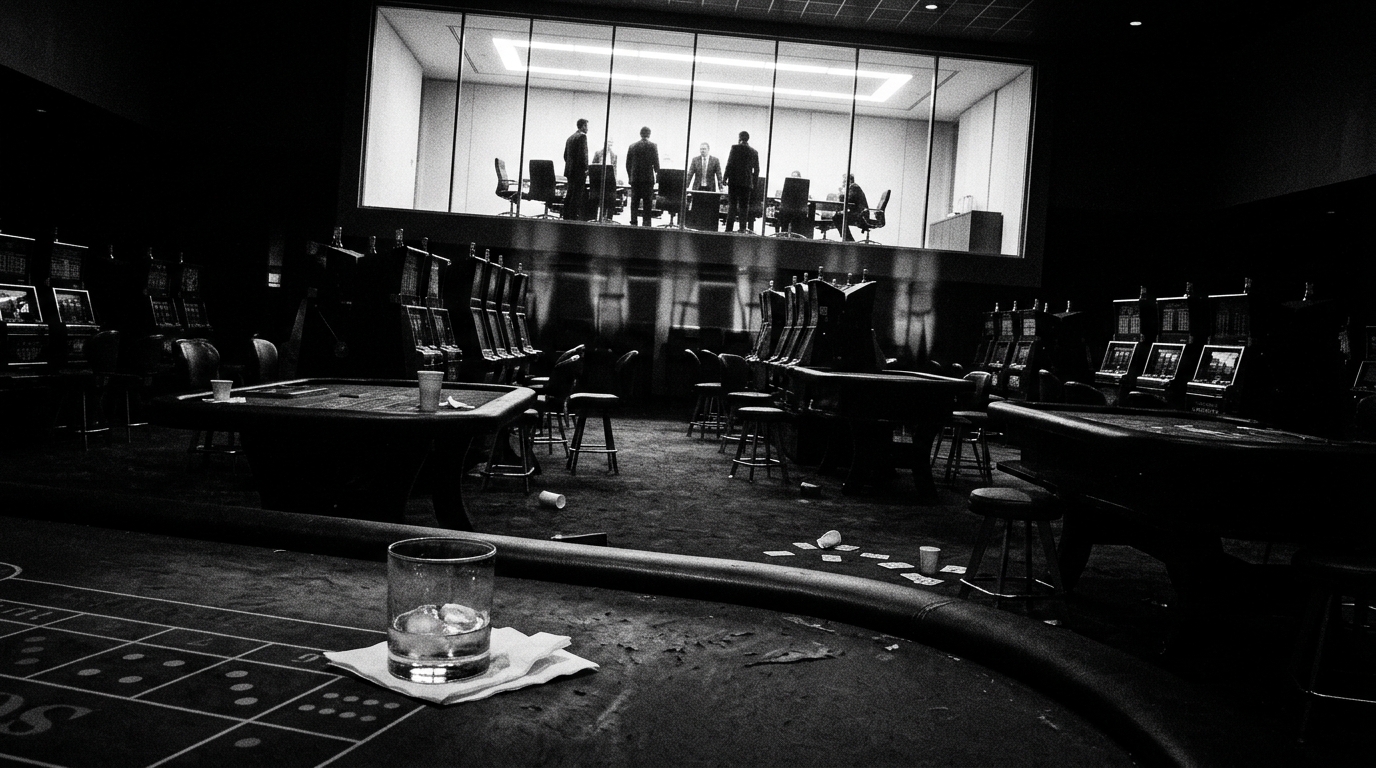
I've seen this movie before. Every single time.
A couple of big fish in the gaming world attract acquisition interest, and suddenly every analyst on the Street starts running comps on every operator within spitting distance. That's exactly what Stifel's Jeffrey Stantial did this week... he looked at the proposed takeout multiples for Caesars and MGM, applied those same free cash flow metrics to Penn Entertainment, and came up with a price target of $25. The math he's using isn't complicated. If someone's willing to pay 10-11% FCF yield for MGM and 14-15% for Caesars, then Penn's guided FY26 numbers suggest a fair value range of $20 to $30 per share. For FY27, that stretches to $25 to $37. Penn's stock closed around $21.21 on Thursday. It's already up nearly 48% this year. And now every hedge fund analyst with a Bloomberg terminal is running the same exercise Stantial just published.
Here's what nobody in the investment community is talking about, and it's the part that matters if you actually work inside one of these buildings. Penn Entertainment operates 43 properties. That's thousands of hotel rooms, thousands of restaurant seats, tens of thousands of employees. When M&A speculation heats up... when a company goes from "operating entity" to "potential acquisition target"... something changes in the hallways. I worked through an ownership transition at a casino property once where the rumors started six months before any deal was announced. You know what happened? The capital request pipeline froze. Not officially. Nobody sent a memo saying "stop submitting CapEx requests." But every project that wasn't already approved just... stopped moving. The FF&E reserve sat there. The rooms renovation that was supposed to start in Q3 got pushed to "pending strategic review." Meanwhile, the front desk team is checking guests into rooms with soft mattresses and dated bathrooms, and the TripAdvisor scores start sliding, and nobody at the top is paying attention because they're all watching the stock ticker instead.
Penn's CEO Jay Snowden has been disciplined about this, I'll give him that. The company ended Q1 with $1.7 billion in liquidity. They're actively deleveraging... targeting at least one full turn reduction in lease-adjusted net leverage and two turns on traditional net leverage by year-end. They just opened a new hotel tower at Hollywood Casino Columbus and they're about to cut the ribbon on a brand new Hollywood Casino Aurora on June 24th. That's real capital being deployed into real properties. But Snowden also told Stantial he'd consider "opportunistic acquisitions" if the bar is high enough. And that's the sentence that should make every GM inside a Penn property pay attention. Because when the C-suite starts talking about being both a buyer and a potential target in the same conversation, the operational focus gets split. It just does. I've never seen it not happen.
The broader context here is wild if you step back and look at it. Tilman Fertitta is trying to buy Caesars for $17.6 billion (and New Jersey regulators are already giving that deal the side-eye). Pansy Ho just dumped $140 million in MGM shares. Bally's is buying the owner of William Hill for $328 million. There is more M&A activity in gaming right now than at any point since the post-recession consolidation wave. And Penn... which spent roughly $551 million on the Barstool Sports experiment, sold it back for a dollar, burned through a $1.5 billion ESPN Bet deal that lasted barely two years, and is now pivoting to iCasino... Penn is sitting right in the middle of all of it with a $2.9 billion market cap and an activist shareholder (HG Vora) who already got board seats last year. If you're a property-level leader inside this company, you need to understand that the decisions affecting your building might not be coming from operations anymore. They might be coming from a boardroom where the conversation is about per-share value, not per-room revenue.
The thing that gets me is this... Penn's Q1 revenue came in at $1.4 billion, which actually missed expectations. But they beat on earnings at $0.11 per share versus the $0.05 consensus. You know how you beat on earnings while missing on revenue? You cut. You optimize. You find margin. And sometimes that's smart operator discipline. But sometimes that's the early signal that the company is dressing up the financials for a different audience than the guest walking through the front door. I'm not saying that's what's happening here. I'm saying I've seen it happen enough times to know what the early warning signs look like. And the combination of M&A speculation, activist board members, a digital strategy that's been ripped up and rewritten twice in three years, and an earnings beat built on margin rather than topline growth... that combination should have every operations leader inside Penn's portfolio paying very close attention to what's being prioritized and what's being deferred.
If you're running a property inside Penn's portfolio right now, do one thing this week: pull your outstanding CapEx requests and check the status. Every single one. If anything that was moving has quietly stalled, that's your signal that the strategic uncertainty is already filtering down to your building. Document the guest impact of every deferred project... not in operational language, but in revenue language. "Deferred rooms renovation is contributing to a 4-point decline in guest satisfaction scores, which correlates to X% of repeat booking erosion." That's the language that survives a management transition, regardless of who ends up owning the company. And if you're at one of the newer properties like Columbus or Aurora, understand that you're the showcase right now... the proof that Penn is still investing in its physical product. Your performance in the next two quarters is going to show up in somebody's acquisition model whether you like it or not. Run your property like it's being evaluated, because it is.