One in Five Hotel Photos on Booking Sites Show Signs of AI Manipulation. Your Guests Notice the Gap.
A study of 25,550 hotel images across European booking platforms found nearly 19% flagged for AI generation or editing. With the EU's AI Act mandating disclosure labels starting August 2, the properties that leaned hardest into fake perfection are about to get exposed.
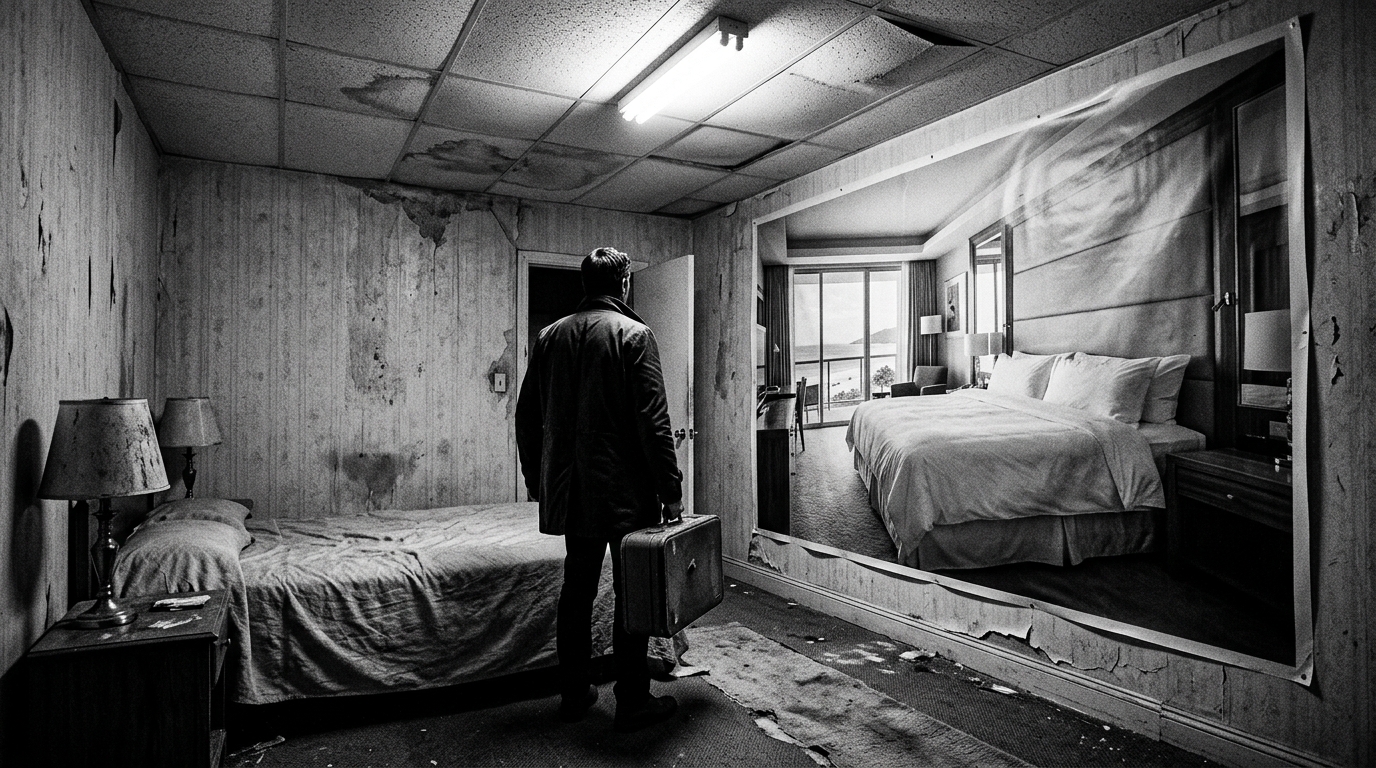
So here's a fun experiment. Pull up your property on any major OTA right now. Look at the photos. Now walk into the actual room they're supposed to represent. If those two things don't match... congratulations, you're part of the problem this study just quantified.
A Berlin-based forensic AI verification firm called ContentGuard.me partnered with marketing agency ABCD Agency to analyze 25,550 hotel photos from 700 properties across seven European destinations. The finding: 4,778 images... roughly 19%... showed at least one signal consistent with AI generation or significant AI editing. And the distribution isn't even. Hamburg clocked in at 36% flagged. Berlin at 27%. Crete at 23%. Meanwhile Mallorca sat at 9%. The city properties are leaning harder into AI-generated imagery, likely because it's easier to fabricate a skyline than it is to fake a specific beach. But the trend is everywhere, and it's accelerating. Here's what bothers me about this from a technology perspective: the tools to do this are getting cheaper and easier every month. We're not talking about Photoshop experts spending hours compositing images. We're talking about anyone with a laptop and a generative AI subscription turning a tired 1990s bathroom into something that looks like it belongs in an Architectural Digest spread. The barrier to visual deception is basically zero now.
Look, I understand the economics. Professional hotel photography is expensive. You're looking at $2,000-$5,000 for a proper shoot, plus the logistics of clearing rooms, timing for natural light, hoping the weather cooperates. AI-enhanced imagery costs a fraction of that and you can generate seasonal variations in minutes. For an independent owner watching every dollar (and trust me, I grew up watching every dollar), the temptation is real. But the Talker Research survey from late June found that only 5% of travelers could correctly identify AI-generated destination photos in a side-by-side test. That sounds like AI is winning... until you flip it. The guests can't spot it BEFORE they book. They absolutely spot it when they walk into the room. That's when the one-star review gets written. That's when the trust breaks. The guest doesn't think "oh, the AI enhancement was sophisticated." They think "this hotel lied to me."
What actually concerns me from a systems perspective is the EU AI Act taking effect August 2, 2026. This isn't a suggestion. It's a mandate requiring AI-generated or significantly AI-edited images to be labeled on booking platforms. That means OTAs are going to need detection and labeling infrastructure, which means properties using AI-enhanced images are about to have a little flag next to their photos announcing "this image was AI-modified." I talked to a hotel group last month that had invested heavily in AI-generated property renderings for their OTA listings... beautiful stuff, genuinely impressive from a technical standpoint. When I asked what their plan was for the EU disclosure requirement, there was a long silence. They hadn't thought about it. The technology made it so easy to enhance that nobody stopped to ask what happens when the enhancement has to be disclosed.
The real technology question nobody's asking: what happens to AI-generated content when detection tools get good enough to flag it automatically? Because that's where this is heading. ContentGuard.me just proved the detection capability exists. The EU is about to mandate its deployment. And once booking platforms have detection algorithms running on every uploaded image, the properties that leaned hardest into AI manipulation are going to be the ones with the most flags... which is essentially a trust penalty baked into your listing. The photographer Stefano Pinci nailed it when he said AI's biggest risk is creating a "frictionless, anonymous visual average" where every property looks the same. That's the irony here. Hotels are using AI to look better, but the technology is actually making them look more generic. Same blue-enhanced pools. Same impossibly green landscapes. Same rooms that are suspiciously spacious with suspiciously perfect lighting. You're not differentiating. You're blending into a sea of artificial sameness... and the platforms are about to start labeling you for it.
Here's what actually works, and I say this as someone with an engineering background who has built visual content systems: invest in authentic photography and supplement with honest enhancement. Color correction, exposure adjustment, cropping... that's post-production. That's fine. Generating a pool that doesn't exist or making a 280-square-foot room look like 400 square feet... that's fraud with extra steps. The independents who are investing in distinctive, real visual content are actually positioned better for the AI-referral era. Lighthouse data from earlier this month showed AI referral traffic to hotel websites surged over 50% after ChatGPT expanded outbound links, with independents capturing a disproportionate share specifically because their content was distinctive and machine-readable. Authentic beats artificial when the algorithms start caring about trust signals. And they're about to start caring.
Here's what I'd do this week if I'm running a property. Pull every image on every OTA listing you control and ask one question: does this photo represent what the guest will actually experience? Not what you wish they'd experience. What they WILL experience. If you've been using AI-enhanced images (and with 19% of listings flagged, the odds aren't small), start planning your transition now because the EU disclosure mandate hits August 2 and the platforms will follow with detection tools. Budget for a professional photo shoot... yes, it's $2,000-$5,000, but that's cheaper than the review damage from expectation gaps. And if you're an independent, this is actually your competitive advantage. The big brands are going to have the hardest time policing AI imagery across thousands of franchisees. You control your content directly. Use that. Real photos of a real property build more trust than a perfect rendering of something that doesn't exist. This is what I call the Price-to-Promise Moment... that instant when the guest walks into the room and decides whether the booking matched the promise. If your photos overpromise, you've already lost that moment before the guest even puts their bag down.