Hilton's Bahamas Debut Sounds Beautiful. Can 125 Keys Actually Deliver That Promise?
Hilton is bringing Curio Collection to Nassau with a stunning 125-key new-build resort packed with infinity pools, rooftop dining, and 15,000 square feet of spa space. The question nobody's asking is whether the brand promise survives contact with Bahamian labor reality and a franchise model that puts the owner on the hook for everything that goes wrong.
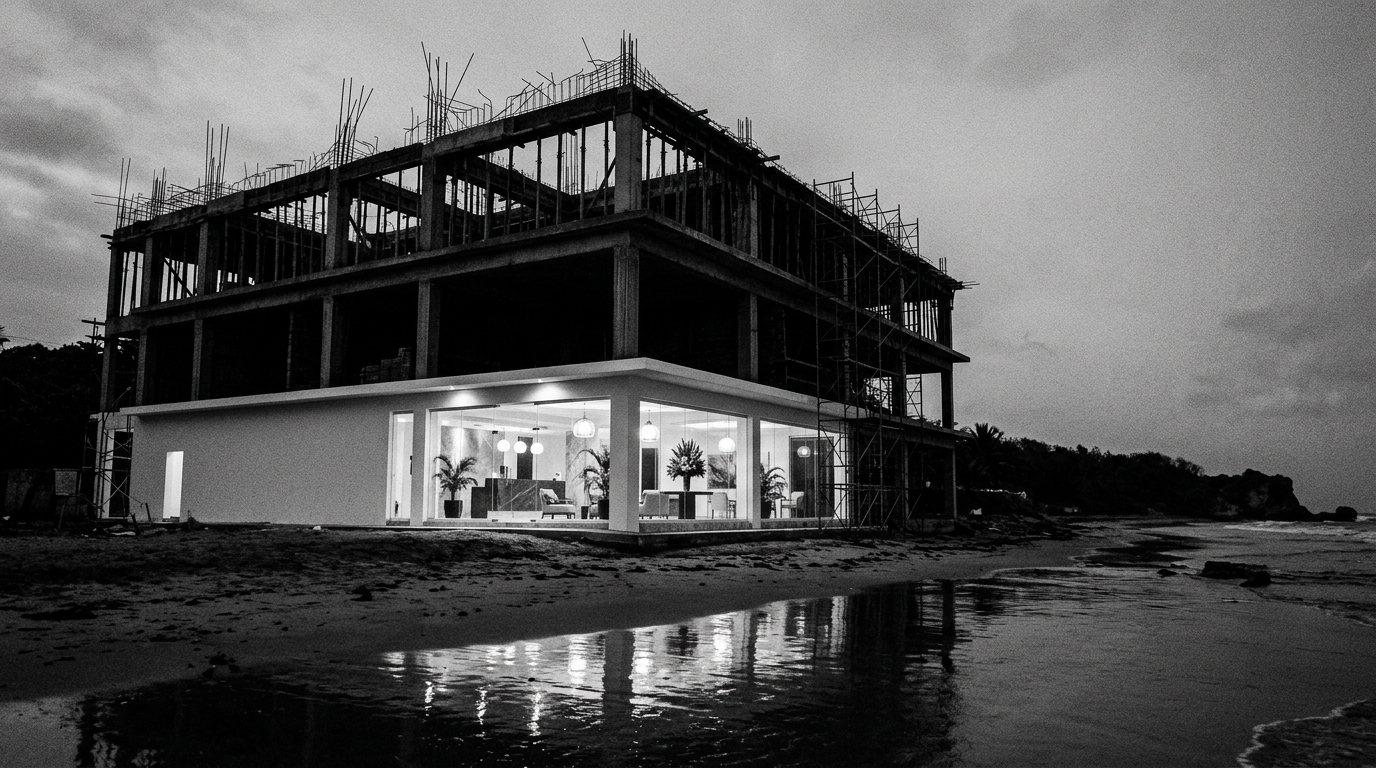
Let me tell you what I see when I read about Paradise Breeze Nassau, and it's not the infinity pool overlooking the sea or the artisanal bakery or the "curated market" (there's that word again... I have a physical reaction to it at this point). What I see is a 125-key new-build on West Bay Street with three restaurants, a rooftop specialty venue, a full spa with padel and squash courts, 4,000 square feet of event space, and a mixed-use residential component... all flying under a soft brand flag that gives the owner individual identity but requires Hilton-standard execution across every single one of those touchpoints. That is an enormous operational promise for a property that size. And the person who has to keep that promise isn't Hilton. It's B.P.G. LTD.
Here's where my brand brain starts doing the math that the press release conveniently skips. Curio Collection is Hilton's soft brand play, which means the property gets access to Hilton Honors (roughly 190 million members and growing) and Hilton's distribution engine, and in exchange, the owner pays franchise fees, loyalty program assessments, reservation system fees, and marketing contributions that, depending on the deal, can push total brand cost north of 15% of room revenue. For a resort in Nassau with that amenity load, the F&B operation alone is going to require serious staffing... three dining venues plus a bakery plus a coffee bar plus a pool bar is not a skeleton crew operation. You're looking at culinary talent, service staff, beverage programs, and supply chain logistics on an island where everything costs more and qualified hospitality labor is fiercely competitive (because Baha Mar and Atlantis are right down the road, paying premium wages and offering benefits that a 125-key independent-flagged resort may struggle to match).
I grew up watching my dad staff hotels, and the one thing he drilled into me was that the building doesn't matter if you can't staff it. You can design the most beautiful rooftop restaurant in the Caribbean, but if you can't find a sous chef who'll stay longer than one season, that restaurant becomes your biggest liability, not your differentiator. And this is where The Deliverable Test matters... can this concept, as designed, actually be executed on a Wednesday in August with the labor pool available in Nassau? Hilton's development team in the Caribbean is talking about doubling their footprint in the region (currently 300-plus hotels with 150 more in the pipeline), which is ambitious and probably smart given leisure demand trends. But pipeline numbers are press releases. Operational delivery is something else entirely. I've watched three different brands promise "distinctive, locally-inspired resort experiences" in Caribbean markets and end up delivering a lobby that photographs beautifully and a guest experience that reviews as "nice but nothing special." The journey leaks. It always leaks. And in a market like Nassau, where the competition includes mega-resorts with virtually unlimited programming budgets, the leak is fatal.
The residential component is the part I'd want to understand before I got anywhere near this deal. Mixed hotel-residential developments create a governance complexity that looks clean on paper and gets ugly in practice... shared amenities, HOA dynamics, different expectations from residents versus transient guests, maintenance allocation disputes. I sat in a brand review once for a mixed-use project in a resort market, and the owner spent the entire meeting talking about the residential sales velocity. Not the hotel operations. Not the guest experience. The condos. Because the condos were funding the construction. The hotel was almost an afterthought with a flag on it. I'm not saying that's what's happening here (I don't know B.P.G. LTD.'s capital structure or development philosophy). But when I see "combining hotel rooms and residences" in a 125-key footprint, I want to know how many of those 125 accommodations are actually hotel inventory versus branded residences, because that distinction changes the revenue model completely.
The 2028 opening target gives them runway, and Hilton's Curio collection is genuinely one of the better soft brand vehicles in the industry... it allows enough individuality to create something distinctive while plugging into a distribution system that independent resorts in the Caribbean desperately need. I'm not anti this project. I'm pro asking the questions that the announcement doesn't answer. What's the projected loyalty contribution, and is it based on comparable Curio properties in similar Caribbean markets or on portfolio averages that include urban properties with completely different booking patterns? What's the total brand cost as a percentage of projected revenue? What's the realistic staffing model for that amenity load in that labor market? And what happens to the owner's return when (not if) the construction timeline slides and the opening costs escalate? Because new-build resort construction in the Caribbean in 2026 through 2028 is not getting cheaper. It's getting more expensive, more complex, and more supply-chain dependent. This could be a beautiful property that makes money. It could also be a beautiful property that makes money for everyone except the owner. The filing cabinet has seen both outcomes. Many times.
Here's what matters if you're an owner being pitched a soft brand resort deal right now, in any leisure market. Before you fall in love with the rendering, run the total brand cost calculation... franchise fees, loyalty assessments, reservation fees, marketing fund, technology mandates... as a percentage of realistic (not projected) room revenue. If it's north of 15%, you need the loyalty contribution to be delivering at least 35-40% of your bookings to justify it. Ask for actuals from comparable properties, not portfolio averages. Then model your F&B staffing for the concept they're selling you, at local market wages, with realistic turnover. If the concept requires specialized talent you can't reliably source in your market, the concept needs to change before you break ground, not after. I've seen too many resort owners build the brand's dream and then spend five years trying to afford it.