Fertitta Just Bought Caesars. The Tech Stack Question Nobody's Asking Yet.
Fertitta Entertainment's $17.6 billion acquisition of Caesars creates a 60-property gaming empire with over 550 restaurant outlets. The integration challenge isn't the casinos... it's merging two massive, incompatible technology ecosystems while keeping loyalty programs running and guests checked in.
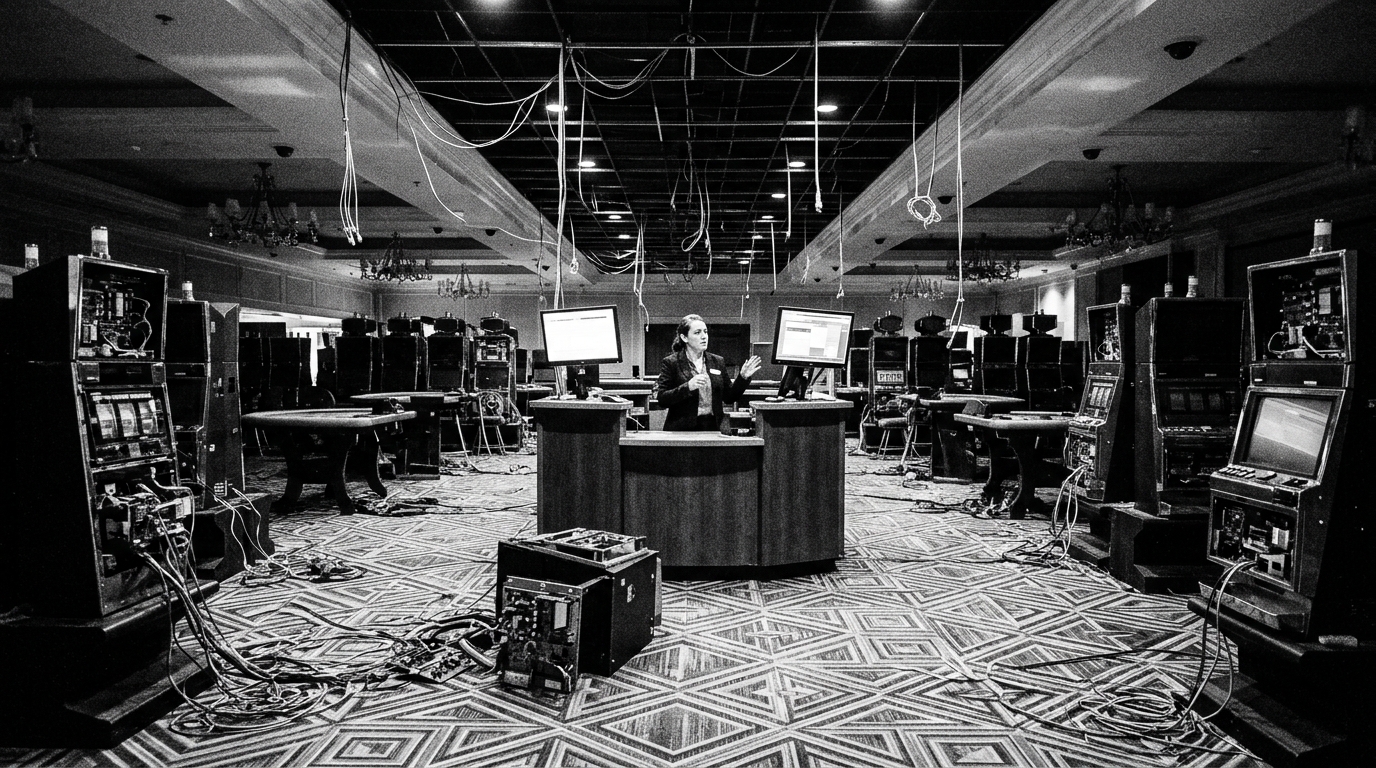
So here's what caught my attention about this deal, and it's not the $31 per share or the $11.9 billion in assumed debt. It's this: Fertitta Entertainment operates Golden Nugget's casino platform, Landry's restaurant tech stack across 600-plus outlets, and now inherits Caesars' entire technology infrastructure... including the Caesars Rewards loyalty program, which touches tens of millions of members across 50-plus properties. That's three completely different technology ecosystems that somebody has to make talk to each other. And if you've ever been anywhere near a PMS migration at even a single property, your stomach just tightened.
Look, I've consulted with hotel groups going through acquisitions a fraction of this size, and the technology integration timeline is always... always... longer and more expensive than anyone projects. A 200-key property switching PMS platforms loses 3-6 months of operational efficiency. Now multiply that by 60 casino resorts. The Caesars Rewards program alone is one of the most complex loyalty architectures in hospitality... millions of tier-qualified members, cross-property earning and redemption, integrated with gaming floors, hotel rooms, restaurants, entertainment venues. You don't just "merge" that with Golden Nugget's loyalty infrastructure. You rebuild it. Or you run two systems in parallel, which means two databases, two guest profiles, two sets of integration headaches, and front desk agents toggling between platforms at 2 AM while a guest wants to know why their points didn't transfer.
The press release talks about "enhancing the Caesars Rewards loyalty program" and offering guests "a broader array of destinations and experiences." That's the PowerPoint version. The actual version involves data migration across incompatible schemas, API integrations between systems that were never designed to communicate, and property-level staff who have to learn new workflows while simultaneously running a casino floor. I built rate-push systems for hotels. I know what happens when you push changes across dozens of properties simultaneously... and that was just rate data. Guest profiles, loyalty tiers, comp tracking, gaming history... the data complexity here is orders of magnitude greater.
What actually interests me is whether Fertitta's team understands that this is fundamentally a technology integration challenge disguised as a casino acquisition. Tilman Fertitta built Landry's by acquiring restaurants and centralizing operations. That playbook works when you're standardizing a kitchen management system across steakhouses. It does not work the same way when you're integrating casino management systems, hotel PMS platforms, loyalty engines, and revenue management tools across 60 properties in different regulatory jurisdictions (because gaming technology has state-by-state compliance requirements that make hotel tech look simple). The fact that Caesars' existing leadership team... CEO, CFO, COO... is reportedly staying suggests they know institutional knowledge matters here. Good. Because the technology migration decisions made in the first 12 months will determine whether this integration takes two years or five.
One more thing. Caesars posted a $502 million net loss in 2025 on $11.5 billion in revenue. When a company is already losing money, the instinct is to cut costs fast. And in my experience, technology budgets are always the first thing new ownership looks at with a knife. If Fertitta's team decides to "rationalize" the tech stack by ripping out Caesars' existing systems too quickly and replacing them with cheaper alternatives, the operational disruption at property level will dwarf whatever they save on licensing fees. The Dale Test applies at massive scale here... when this integration inevitably hits a failure point (and it will, probably during a holiday weekend, because that's how these things work), what's the recovery path for the team member standing in front of an angry guest at 1 AM?
Here's what I want you thinking about if you're running a property that competes with Caesars in any market. Integration like this creates a window... usually 12-18 months... where the acquired company is distracted. Their loyalty program will hiccup. Their booking engine will have rough patches. Their staff will be learning new systems instead of focusing on guests. That's your window to steal market share. If you're a GM at a competitive property in Vegas, Atlantic City, or any regional casino market, start tracking Caesars guest complaints on review platforms right now. When integration friction hits (and it will), be ready with targeted offers to loyalty members who just had a bad experience. The best time to acquire a competitor's guest is when the competitor is too busy merging databases to notice they're losing them.