A Viral Airbnb Trashfire Video. And Hotels Still Can't Figure Out How to Use This.
A video of a destroyed Airbnb is doing numbers online, and the debate it sparked matters less than the operational gap it exposes. Hotels have a built-in advantage over short-term rentals on exactly this issue... and most of them are wasting it.
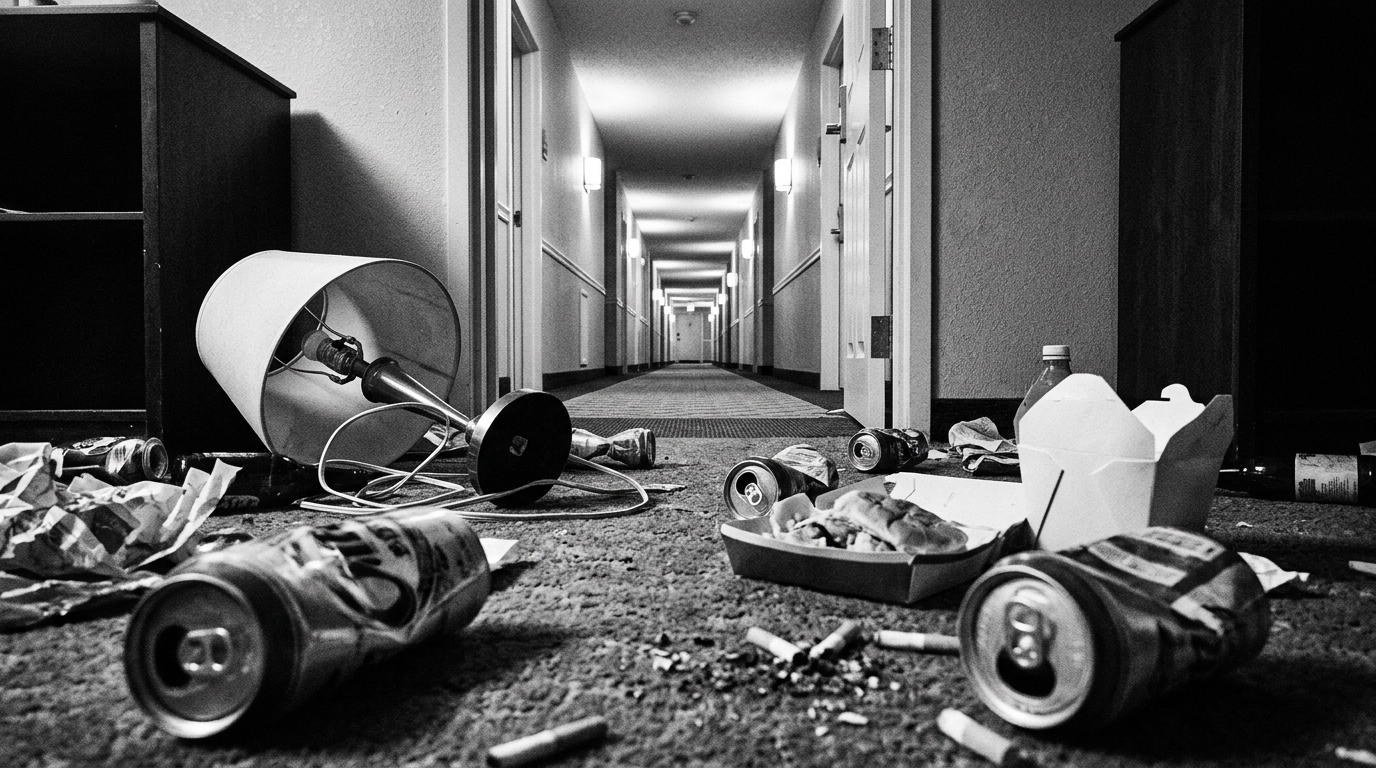
So a video went viral this week showing an Airbnb left looking like the aftermath of a frat party nobody wanted to claim. Half-eaten food, empty cans everywhere, dirt on every surface, broken charger plugs ground into the carpet. The internet did what the internet does... half the comments blame the guests, the other half blame the host for not screening better, and everyone has an opinion about cleaning fees. The average Airbnb cleaning fee in the U.S. is $161 per stay. Let that number sit for a second. That's supposed to cover turnover for an entire unit... laundry, sanitizing, vacuuming, restocking. A professional cleaner charges $25-60 an hour. So that $161 buys you, what, three hours of work on a good day? Now imagine what the host in this video is dealing with. That $161 didn't even cover the trash bags.
Look, this isn't a story about one bad guest. Bad guests exist everywhere... hotels, rentals, campgrounds, probably space stations eventually. This is a story about a structural gap in the short-term rental model that hotels have been staring at for a decade and still haven't figured out how to use as a competitive weapon. Airbnb's cleaning is decentralized by design. Individual hosts hire their own cleaners (or do it themselves), set their own standards, and hope for the best. There's no QA layer. There's no housekeeping supervisor doing spot checks. There's no brand standard that says "this is what clean means, and here's the 47-point checklist to prove it." Airbnb knows this is a problem... they've been talking about "perfecting our core service" and removing underperforming listings. But you can't centralize quality control on a platform built specifically to avoid centralization. That's not a bug they can patch. That's the architecture.
Here's what bugs me about the hotel industry's response to these moments. Every time a video like this goes viral, the reaction from hotel operators is basically "ha, told you so." And then... nothing. No campaign. No messaging. No aggressive retargeting of the travelers who just watched that video and thought "maybe I should book a hotel next time." I consulted with a hotel group last year that was losing 15-20% of their leisure weekend bookings to Airbnb in their market. They had better cleanliness scores, better location, consistent quality... and zero marketing that said any of that to the people actively comparing options. They were winning on product and losing on storytelling. That's a technology and marketing problem, not an operations problem.
The tech angle here is actually interesting if you dig past the outrage cycle. Airbnb is sending proactive messages to guests in certain markets about local etiquette... trash disposal, noise levels, house rules. That's a behavioral nudge system, and it's smart, but it's also an admission that the platform can't control the experience at the property level. Hotels can. Your PMS knows who's checking in. Your CRM knows their history. Your housekeeping system (if you actually use it properly, which... let's be honest, maybe 40% of properties do) tracks room condition in real time. The infrastructure to guarantee a consistent, clean experience already exists in most hotels. The question is whether anyone's actually connecting those systems to a guest-facing message that says "this is what you get when you book with us, and it's the same every single time." Because right now, most hotels are sitting on operational advantages they never bother to articulate.
What this video really exposes is something I think about a lot... the difference between a platform and a product. Airbnb is a platform. It connects supply and demand. But it doesn't control the product. Hotels ARE the product. Every room, every shift, every turnover is a controlled environment with trained staff and accountable management. That's not a small thing. That's the whole thing. And if you're an independent operator competing against short-term rentals in your market, you should be screaming this from every digital rooftop you can find. Not "Airbnb is dirty" (that's petty and also not universally true). But "here's what consistency actually looks like, and here's why it matters when you're traveling with your family." The technology to deliver that message... targeted, data-driven, across every booking channel... exists right now. Most operators just aren't using it.
Here's what I'd actually do with this if I were running a property competing against short-term rentals. First... if you don't have a cleanliness guarantee visible on your website and your OTA listings, fix that this week. Not buried in the FAQ. Front and center. "Inspected, cleaned, guaranteed. Every room. Every stay." Second... talk to your digital marketing team (or your management company's marketing team) about retargeting leisure travelers in your market. These viral moments create a 48-72 hour window where travelers are actively reconsidering their booking habits. That window is open right now. Third... and this is the one that actually moves the needle... audit your housekeeping QA process. If your rooms supervisor isn't spot-checking at least 20% of turnovers daily, your "consistency" advantage is theoretical, not real. You can't sell what you can't deliver. The hotels that win against STRs aren't the ones with the fanciest lobbies. They're the ones that can prove, every single day, that the product is exactly what they promised. That's not glamorous. It's the whole game.