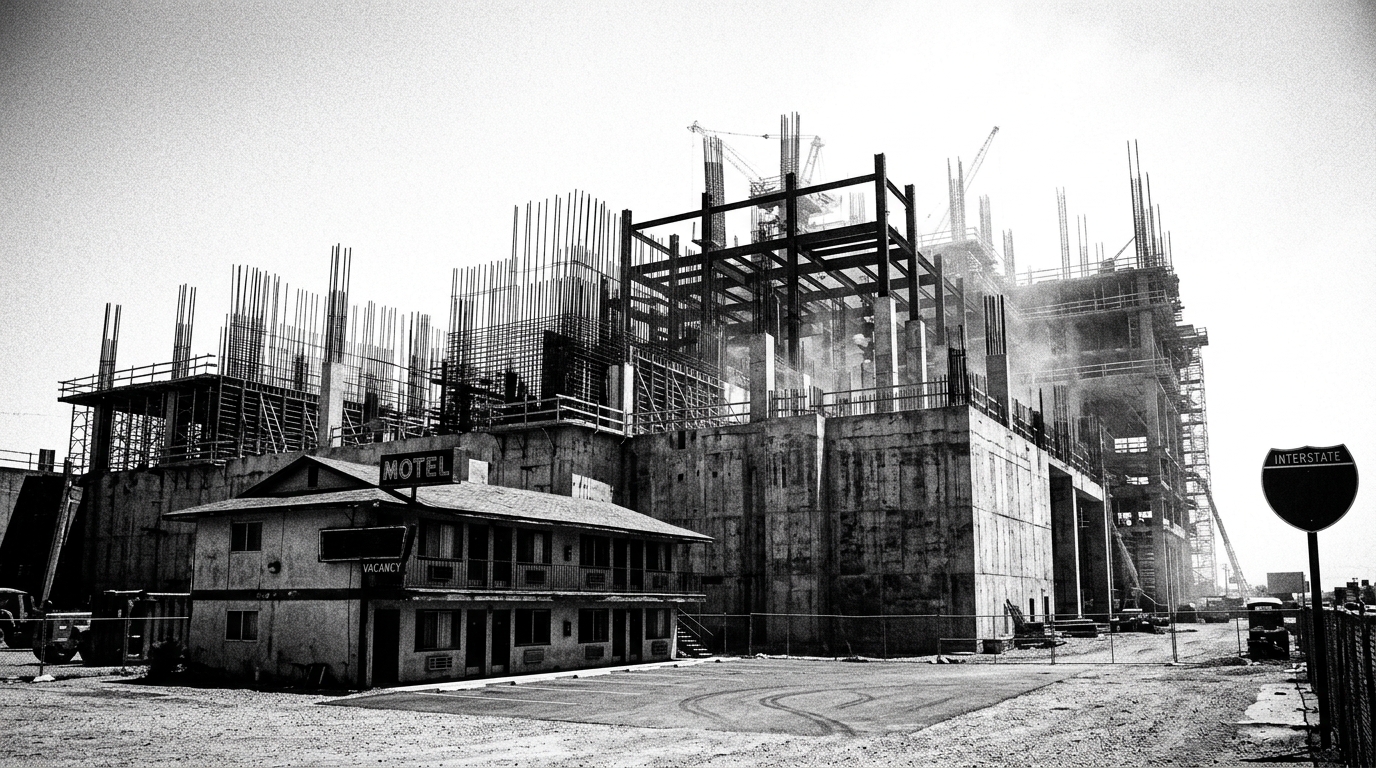
Win-River Is Building a 250-Room Casino Resort Off I-5. Every Hotel in Redding Should Be Doing Math Right Now.
A tribal casino in Northern California just got federal approval to double its gaming floor and add 250 hotel rooms, an 1,800-seat event center, and an outdoor amphitheater right off the interstate. If you're running a hotel within 30 miles of Redding, the competitive landscape just changed and nobody sent you a memo.
I worked at a property once that sat comfortably as the nicest room in a small market for about eight years. Good reviews. Solid ADR. Repeat corporate base. Then a tribal casino 20 minutes down the highway broke ground on a 200-room tower with a steakhouse, a spa, and an entertainment venue that could hold 1,500 people. Our GM at the time said "our guests aren't gamblers, this won't affect us." Within 18 months, our group business had dropped 22% and our weekend transient mix shifted entirely. The casino wasn't competing for gamblers. It was competing for attention. And attention is a zero-sum game in a small market.
That's exactly what's unfolding in the Redding, California corridor right now. The Redding Rancheria got federal approval in mid-2024 to relocate and massively expand Win-River Resort & Casino... right along Interstate 5. We're talking a jump from 600 slot machines to 1,200 electronic gaming devices and 36 table games. A 69,000-square-foot casino floor. A 250-room hotel. An 1,800-seat indoor event center and a 1,500-seat outdoor amphitheater. This isn't a renovation. This is the arrival of a full-scale destination resort in a market that has never had one.
And the entertainment programming tells you exactly what the strategy is. They're already booking country acts, running weekly DJ nights, building the kind of calendar that turns a casino into the default Friday night destination for a 90-mile radius. Chase Matthew in April. Ian Munsick tickets already on sale. This is how you build a demand generator that pulls leisure travel, group business, and food-and-beverage spend away from every independent hotel and branded select-service property in the market. The Redding Civic Auditorium is booking acts too (Jon Pardi, Jim Gaffigan), but they don't have 250 rooms attached to the venue. Win-River will. That changes the calculus completely.
Here's the part nobody in the local hotel community is talking about yet... California tribal casinos generated $12.1 billion in revenue in 2024. That's 27.5% of all tribal gaming revenue nationwide. Northern California alone has 42 tribal casinos with three more in development. The REITs are paying attention... VICI Properties and Gaming and Leisure Properties are financing large-scale tribal projects. This isn't a local story. This is a market structure shift happening across the entire northern half of the state, and Redding is about to feel it in a very concentrated way. When 250 rooms of new supply come online attached to a casino, entertainment venue, and F&B operation that doesn't need to make money on the rooms to survive... that's not competition. That's a different economic model operating in your comp set.
The opposition from other tribes and local activist groups tells you something too. When competitors fight to stop you, it's because they've done the same math you have and they don't like the answer. Every hotel operator within a 30-mile radius of that I-5 site should be running the same math right now. What happens to your weekend occupancy when there's a 1,500-seat amphitheater drawing regional traffic to a property with rooms, restaurants, and gaming all under one roof? What happens to your group sales pipeline when meeting planners discover they can book an 1,800-seat event center with hotel rooms attached? The answer isn't "nothing." And if you wait until the ribbon-cutting to find out, you're already behind.
If you're running a hotel in the Redding market or anywhere along the Northern California I-5 corridor, this is the conversation to bring to your owner now... not when the concrete is poured. Pull your forward-looking group pace and identify which segments are vulnerable to a casino resort with an entertainment calendar and 250 attached rooms. Look at your weekend transient mix specifically... leisure demand in small markets follows the most compelling reason to visit, and a destination casino resort is a very compelling reason. Start thinking about what makes your property the choice when you can't compete on amenities. That means doubling down on what a casino resort won't do well... quiet, personal service, loyalty to repeat guests, relationships with local corporate accounts who don't want to explain a casino hotel on their expense report. This is what I call the Three-Mile Radius at work. Your revenue ceiling is about to be redefined by a neighbor with a fundamentally different economic model, and the only operators who survive that kind of shift are the ones who saw it coming and repositioned before the market forced them to.