The Digital Nomad Wants Your Hotel Room for Three Months—And You're Pricing Like It's Three Nights
A massive market is asking hospitality for something different, and most operators are still running the same 72-hour playbook from 2019.
The GM looked at me like I'd suggested we start accepting chickens as payment.
"You want to give someone a *discount* for staying *longer*?" This was 2017, and I was trying to convince ownership at a downtown property to test monthly rates. The math was simple—guaranteed occupancy, less turnover labor, predictable revenue. But the resistance was visceral. Hotels don't do that. We're not apartments.
Fast forward to today, and that "we're not apartments" mindset is leaving serious money on the table.
The digital nomad economy isn't coming—it's here, it's massive, and it wants exactly what we claimed we couldn't provide. According to recent industry analysis, this isn't about a handful of laptop warriors bouncing between Bali and Barcelona. We're talking about a fundamental shift in how a growing segment of high-value guests want to use hotels.
Here's the thing nobody's saying out loud: *We already have the infrastructure for this.* The laundry facilities. The cleaning systems. The F&B operations. The wifi (well, mostly). What we don't have is the pricing model or the operational flexibility.
Most hotel revenue management systems are still optimized for 1-3 night stays. The entire yield management philosophy is built around maximizing ADR on short stays and driving weekend occupancy. But a digital nomad staying 4-12 weeks? That guest breaks every assumption in your RMS.
They don't care about your weekend rates. They're not booking around a conference. They're not checking TripAdvisor reviews about pillow firmness. They want: reliable wifi, a workspace, proximity to good coffee, and a monthly rate that doesn't require them to explain their credit card statement to their accountant.
The holy shit moment? Some operators are already cleaning up. Extended-stay concepts that figured this out years ago are posting occupancy numbers that make traditional hotels look anemic. But here's what's interesting—you don't need to be a Residence Inn to capture this.
I've watched boutique properties in secondary markets create "nomad packages" that are just rebranded monthly rates with dedicated workspace and better internet. Same rooms. Same operations. Different positioning. And those rooms are occupied while their competitors are chasing weekend leisure travelers with increasingly expensive OTA commissions.
The resistance comes from the same place it always does in hospitality: "But we've never done it that way." Revenue managers panic because monthly rates look like discounts. Operations teams worry about guests who "live" in the hotel. Ownership gets nervous about anything that smells like residential.
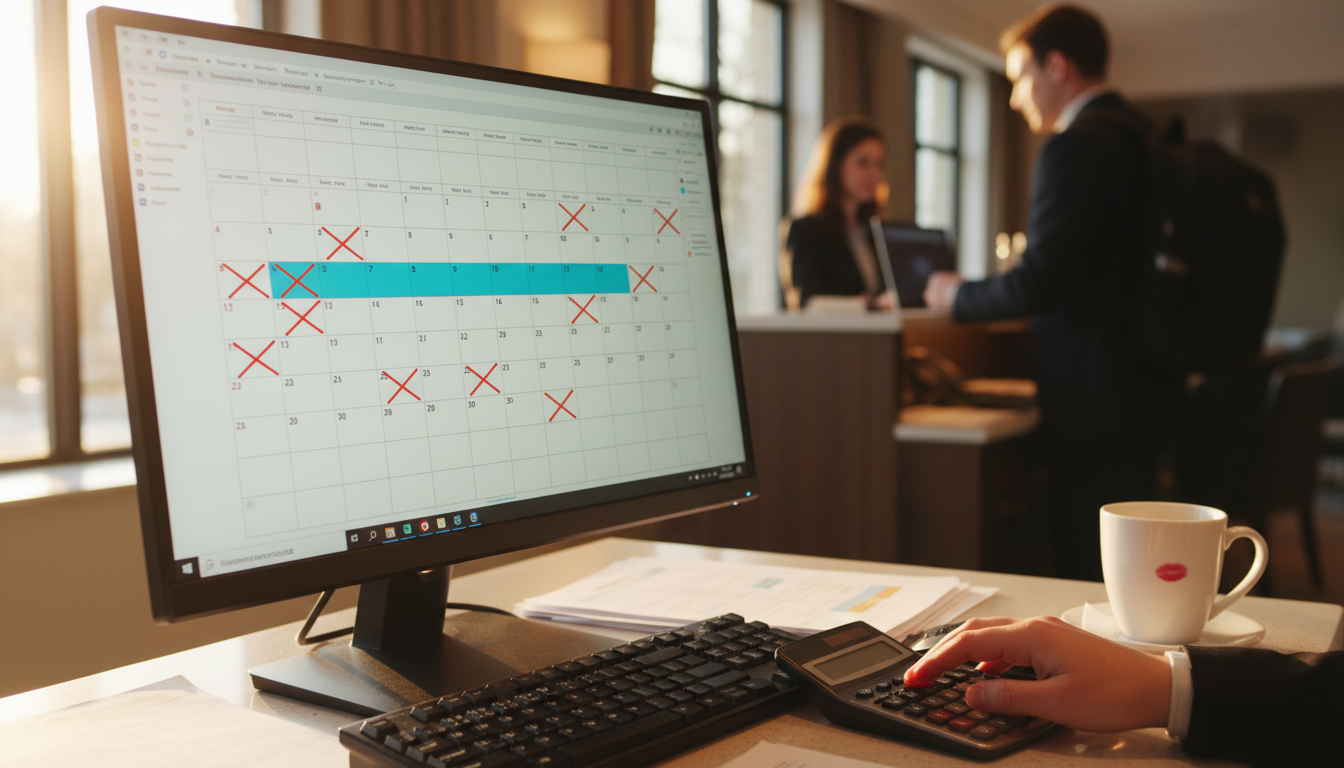
But here's what they're missing—a digital nomad paying $3,200 for a month is more profitable than that same room sitting empty for 8 nights and occupied for 22 at an average of $180. The math works. The labor costs are *lower* because you're not flipping that room every other day. The ancillary revenue opportunity is *higher* because they're using your F&B, your workspace, your amenities consistently.
The operators who get this aren't trying to become co-working spaces with beds. They're just recognizing that the traditional "every guest stays 2.3 nights" model isn't the only model anymore. They're creating rate structures that reward longer stays. They're marketing to remote workers instead of just leisure travelers. They're thinking about workspace ergonomics, not just bed thread counts.
Is this the future for every property? No. If you're running a 40-room boutique in Napa Valley, you're probably fine optimizing for weekend wine tourists. But if you're in a secondary market struggling with mid-week occupancy, or you're an urban property that lost all your corporate transient business, or you're anywhere that can't compete on price with the big boxes—this is your move.
The digital nomad market is asking us for something we already have. They just need us to package it differently and stop pretending that "hotel" means everyone checks out on Sunday.
FOR SELECT-SERVICE AND INDEPENDENT OPERATORS: Create a 30-day minimum "remote professional" rate at 60-70% of your average monthly rack revenue. Test it on 10% of inventory. Track your actual profitability per occupied room including labor and amenities. I'll bet you five bucks it outperforms those same rooms on your current pricing model. The nomads are already looking for places to stay—they're just booking Airbnbs because you haven't made it easy to book you.