Today · Jun 6, 2026
Your Kitchen Runs on Gas. Now Imagine It's Gone for Weeks.

Your Kitchen Runs on Gas. Now Imagine It's Gone for Weeks.

An LPG shortage in Odisha has hotels buying black market fuel at double the price, cutting menus, and watching tourists disappear. If you think supply chain disruption only means tariffs and linen costs, this is the version that shuts your kitchen down entirely.

I worked with a GM once who kept three days of propane reserve at his property. Three days. I asked him what happens on day four. He looked at me like I'd asked what happens when the sun doesn't come up. "I figure it out," he said. "That's the job."

Right now, about 8,000 hotels and restaurants across Odisha, India are figuring it out... and "it" is a full-blown commercial LPG shortage that's been grinding the hospitality industry there for over a month. The cause is geopolitical... the conflict in West Asia has choked the Strait of Hormuz, and India imports roughly 60% of its LPG through that corridor. The Indian government did what governments do in a crisis: prioritized domestic household supply and invoked the Essential Commodities Act, which effectively cut commercial users (hotels, restaurants, caterers) off at the knees. Hotels in some markets reported having two to four days of gas stock remaining. That was back in early March. It's mid-April now and the catering association is threatening statewide protests.

Here's where this gets operational. Hotels in Puri... one of Odisha's biggest tourist destinations... have jacked food prices 30% to 40% to cover costs. Tourist arrivals in response dropped 10% to 20%, hitting hardest among budget and middle-class travelers (which is most of the market). Some operators are buying domestic LPG cylinders on the black market at 1,300 to 2,000 rupees per cylinder, roughly double the normal price, just to keep the kitchen running. Others have switched to induction stoves, wood-fired ovens, kerosene. Think about that for a second. You're a hotel kitchen that was built around gas burners, your menu was designed around gas cooking, your staff was trained on gas equipment... and now you're improvising with kerosene and induction plates while trying not to lose your guest base. That's not a pivot. That's survival mode.

The state government bumped commercial LPG allocation to 50% (20% general commercial, 20% specifically for hotels and restaurants, 10% conditional). They're pushing piped natural gas as a long-term alternative. Both of those are fine on a policy slide. Neither one helps the guy whose banquet kitchen can't execute a wedding menu next Saturday. The hotel and restaurant association says 50,000 jobs are at risk across the state. The catering association puts the number at 100,000 workers across their 2,000-plus units. Even if those numbers are advocacy math (and they might be), cut them in half and you're still looking at a regional hospitality crisis that's barely making international headlines.

I'm writing about Odisha because the specific lesson is universal. Every hotel operation has a single-point-of-failure dependency that nobody thinks about until it breaks. In Odisha right now, it's cooking fuel. In your market, it might be water supply, electrical grid reliability, a single-source vendor for your HVAC parts, or the one internet provider that serves your building. The question isn't whether you have a vulnerability like this. You do. The question is whether you've identified it, stress-tested it, and built even a rough contingency plan... or whether your plan is the same as that GM I knew. "I figure it out." Because figuring it out when you're already in crisis is the most expensive way to solve any problem.

Operator's Take

This story is 7,000 miles away from most of you. Doesn't matter. Here's your homework this week: identify the one utility, supply, or vendor dependency that would force you to fundamentally change your operation within 72 hours if it disappeared. For most of you it's gas, electric, or water. For some of you it's your broadband provider or your laundry service. Whatever it is, ask yourself three questions. Do I have a backup? How long does the backup last? What does my operation look like on day four without it? This is what I call the Shockwave Response... know your floor and your breakeven before the shock arrives, because once it hits, panic is not a strategy. If you're an F&B-heavy property, talk to your chef this week about what the menu looks like without gas. Not because it's likely. Because the 30 minutes you spend on that conversation now saves you 30 hours of chaos if it ever happens.

Read full analysis → ← Show less
Source: Google News: Hotel Industry
Your Linen Vendor Isn't Answering the Phone. Now What.

Your Linen Vendor Isn't Answering the Phone. Now What.

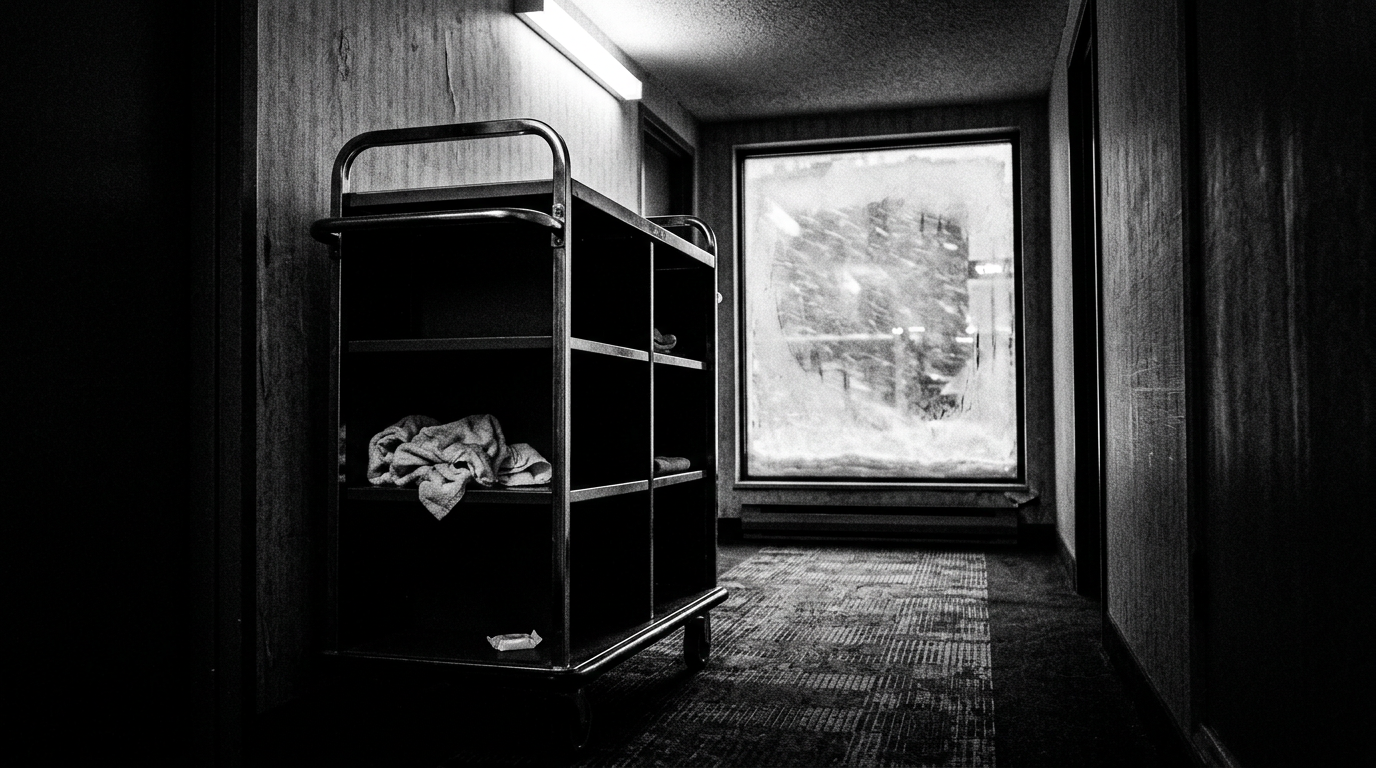
A Midwest blizzard just turned your supply chain into a guessing game and your staffing plan into fiction. The GMs who survive this week are the ones who stopped waiting for normal about 48 hours ago.

Available Analysis

I managed through a blizzard once where we ran out of bath towels on day two. Not low on towels. Out. The laundry service couldn't get a truck through, our on-premise machines could handle maybe 30% of daily volume, and I had 280 occupied rooms full of people who expected a clean towel when they stepped out of the shower. You know what we did? We bought every towel at the Target two miles away that was still open. They weren't white. They weren't our brand standard. Nobody cared. Guests got towels. That's the whole job sometimes.

This Midwest storm is doing what every major weather event does to hotel operations... it's exposing the difference between GMs who have a crisis playbook and GMs who assumed the supply chain would always just work. When Winter Storm Fern hit in January, national RevPAR dropped 4% for the week. But airport hotels saw demand jump 32% on the first day. That's the pattern. Overall market goes down, captive-audience properties go through the roof, and everybody in the middle scrambles. If you're sitting at a highway interchange property or near a regional airport right now, your phones are ringing. The question is whether you have the inventory, the staff, and the pricing strategy to capitalize on it... or whether you're turning away revenue because you can't make beds.

Let's talk about what's actually breaking. Food deliveries are the first thing to go because refrigerated trucks don't run in whiteout conditions. Your linen service is probably 24-48 hours behind already, and if you're outsourced (most select-service properties are), you have zero control over when that truck shows up. Toiletries, paper goods, cleaning supplies... all of it moves on the same roads that are closed. And here's the part that kills you quietly: your staff can't get to work either. I've seen properties try to operate a 200-key hotel with 40% of their housekeeping team unable to make the commute. You're not cleaning every room. You're triaging. So you better have already decided which rooms get serviced and which get a door-knock and fresh towels only (see above re: towels you may not have).

The energy cost piece is the one nobody talks about until the bill shows up. Heating demand in a blizzard can spike utility costs 25-40% for the week depending on your building envelope and system age. If you're running a property built before 1990 with original HVAC, you're hemorrhaging BTUs through every window and exterior wall. That's real money... money that comes straight off your bottom line in a month where your F&B revenue just cratered because your kitchen is working off a contingency menu of whatever didn't require a delivery truck. I've watched GMs celebrate capturing stranded-traveler revenue at premium rates and then give it all back in utility overage and emergency purchasing costs. You have to run the full math.

Here's what separates the operators who come out of this okay from the ones who spend March explaining a bad month to ownership. The good ones made three phone calls 48 hours before the storm hit: one to their primary food distributor to pull forward deliveries, one to their linen service to confirm contingency plans, and one to a local restaurant supply house to establish an emergency account. They texted every employee and asked who lives within walking distance. They identified which rooms they'd take out of inventory if staffing dropped below threshold. They already adjusted their PMS to extend lengths of stay and they set rate floors that capture the demand without gouging (because the internet remembers, and a $499 rate on a room that was $129 last Tuesday will end up on social media by Thursday). The ones who are struggling right now? They waited. They assumed it would be manageable. It's always manageable until it isn't.

Operator's Take

If you're a GM in the affected region and you haven't already called your backup suppliers, stop reading this and do it now. Every restaurant supply store, every Costco, every Sam's Club within driving distance of your property is your temporary vendor. Get linens on an extended cycle... two-night minimum before change-out, and tell guests proactively so they don't think you're just being cheap. If you're running below 60% staff, pull rooms out of inventory rather than sell what you can't service. And for the love of everything, document every incremental cost. Your owners or management company need a full storm impact report with line-item detail, not a shrug and a bad P&L. The GMs who come out of this looking good are the ones who can show exactly what it cost and exactly what they did about it.

Read full analysis → ← Show less
Source: CNN
End of Stories