Spirit Airlines Is Dead. Your Summer Forecast Just Broke.
Two million seats disappeared from May schedules when Spirit shut down last week, and the ripple hasn't hit most hotel forecasts yet. If you're running a fly-to leisure property and haven't stress-tested your summer assumptions, you're about to learn something the hard way.
I knew a GM once who ran a 280-key resort in a secondary fly-to market. Nice property. Good team. Solid group base in the winter, leisure-heavy in the summer. His whole revenue strategy from Memorial Day through Labor Day depended on one thing he never thought about... cheap airfare getting bodies to his market. He didn't sell rooms. Southwest and Spirit sold rooms for him. He just happened to have a hotel at the other end of the flight.
Then a route got cut. Not the airline going under. Just one route. Load factors were soft, so the carrier pulled the frequency from daily to three times a week. His July occupancy dropped 11 points that summer. Eleven points from one route adjustment on one carrier. He spent the rest of the season chasing it with rate cuts that took him 14 months to recover from.
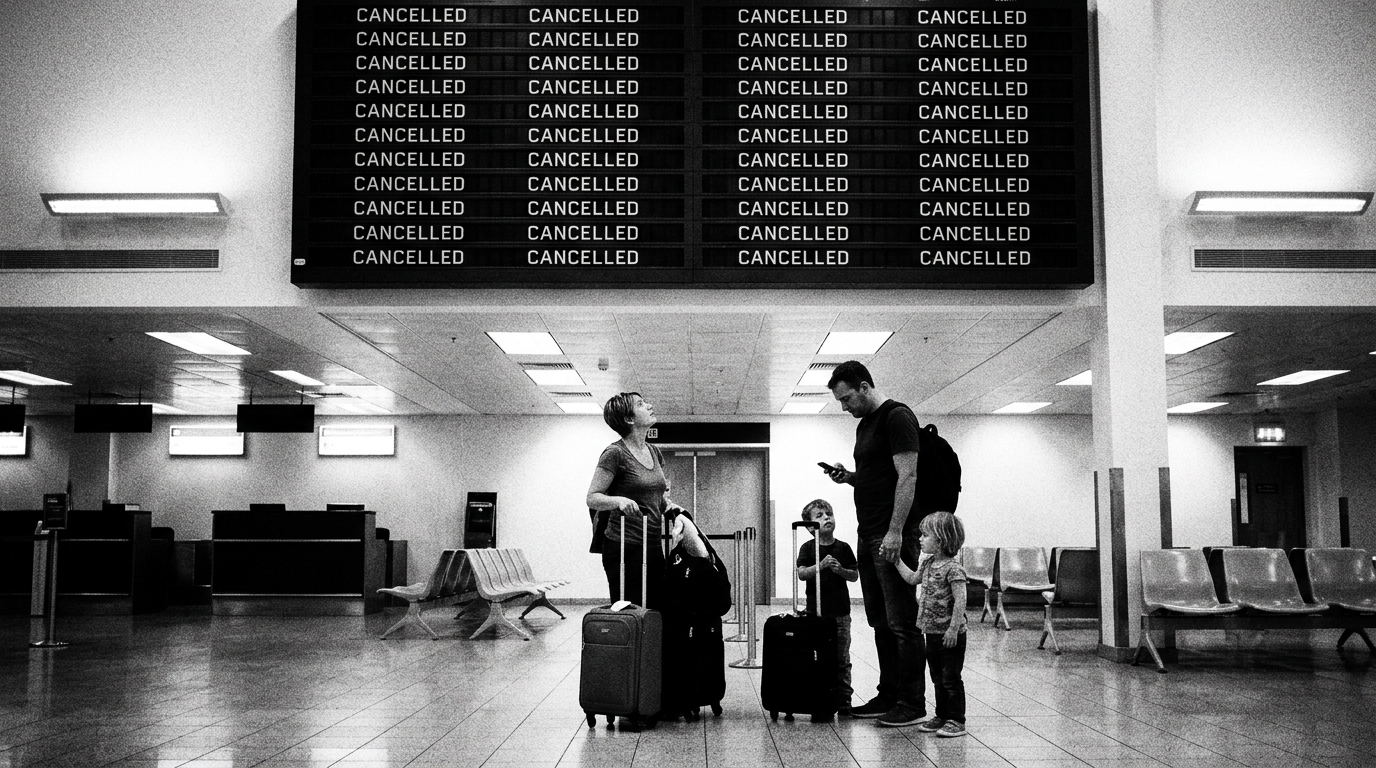
Spirit didn't cut a route. Spirit is gone. All of it. As of May 2nd, lights out, no customer service, no rebookings, nothing. They burned through $2.7 billion in losses in 2025 alone, tried to emerge from their second bankruptcy, and the fuel spike from the Iran situation finished them off. The $500 million federal lifeline fell apart when the creditors said no. Twenty-one million seats removed from the U.S. market between now and December. Not reduced. Removed.
Here's what nobody in our industry is talking about yet... Spirit wasn't just an airline. Spirit was a demand engine for a very specific guest segment. The family that was going to drive to Panama City Beach but saw a $49 fare to Orlando and changed the plan. The bachelorette group that picked Nashville over Asheville because the flight was cheap enough to make the math work. The budget-conscious retirees who turned Fort Lauderdale into a viable winter option instead of driving to Savannah. Those travelers aren't upgrading to Delta at $289 each way. A family of four looking at an additional $800-1,000 in airfare isn't saying "well, I guess we'll just pay it." They're saying "let's drive somewhere." Or they're saying "let's stay home." Either way, your fly-to resort market just lost a feeder pipeline that most revenue managers never quantified because it was always just... there. And now it's not. Meanwhile, if you're running a property within a four-to-six hour drive of Atlanta, Charlotte, Dallas, Chicago, or any major metro... pay attention. Those families are still taking a vacation. They're just loading up the minivan instead of checking bags. Gas at $4.53 a gallon hurts, but for a family of four, a 500-mile drive is still $120 in fuel versus $800 or more in incremental airfare. That's not even a close calculation. Drive-to markets are about to have a summer they weren't forecasting.
The markets I'd be watching hardest right now are the ones that lived on Spirit connectivity and don't have enough alternative low-cost capacity to absorb the loss. Fort Lauderdale. Baltimore. Detroit. Cleveland. Orlando just lost over 250,000 seats in May alone... a 40% capacity reduction at that airport compared to last year. If you're a convention hotel in any of those markets, your group attendance assumptions for summer are optimistic right now whether you know it or not. Attendees book their own air. When the cheapest option disappears and the next option costs twice as much, some percentage just don't come. You'll see it in your pickup reports before you see it in the headlines. This story has legs through Labor Day, and the GMs who figure that out this week instead of mid-June are the ones who'll have a plan instead of a problem.
If you're running a leisure-heavy property in a fly-to market, pull your booking pace report for June through August today and compare it to the same window last year. Then call your convention and visitors bureau and ask them what they're seeing on inbound air capacity since May 2nd. If you're in a Spirit-dependent market (Fort Lauderdale, Baltimore, Detroit, Cleveland, Orlando), get your sales director on the phone with your top ten group accounts this week... not to sell, but to ask one question: "Can your attendees still get here affordably?" You'd rather know now than discover it in your pickup report three weeks out. And if you're in a drive-to market within four to six hours of a major metro, this is the week to revisit your summer rate strategy. Demand is shifting your direction. Don't leave money on the table by holding rates you set before this happened. This is what I call the Rate Recovery Trap in reverse... you have a window to capture rate while the demand shift is fresh, but only if you move before your comp set figures it out.
