Today · Aug 26, 2026
Marriott's "Free" Nights Cost Up to $200. Hilton and Hyatt Charge Zero.

Marriott's "Free" Nights Cost Up to $200. Hilton and Hyatt Charge Zero.

Marriott Bonvoy is charging resort fees as high as $190 on points redemptions that competitors waive entirely, and a class-action lawsuit just made this every franchise owner's problem to explain at the front desk.

Available Analysis

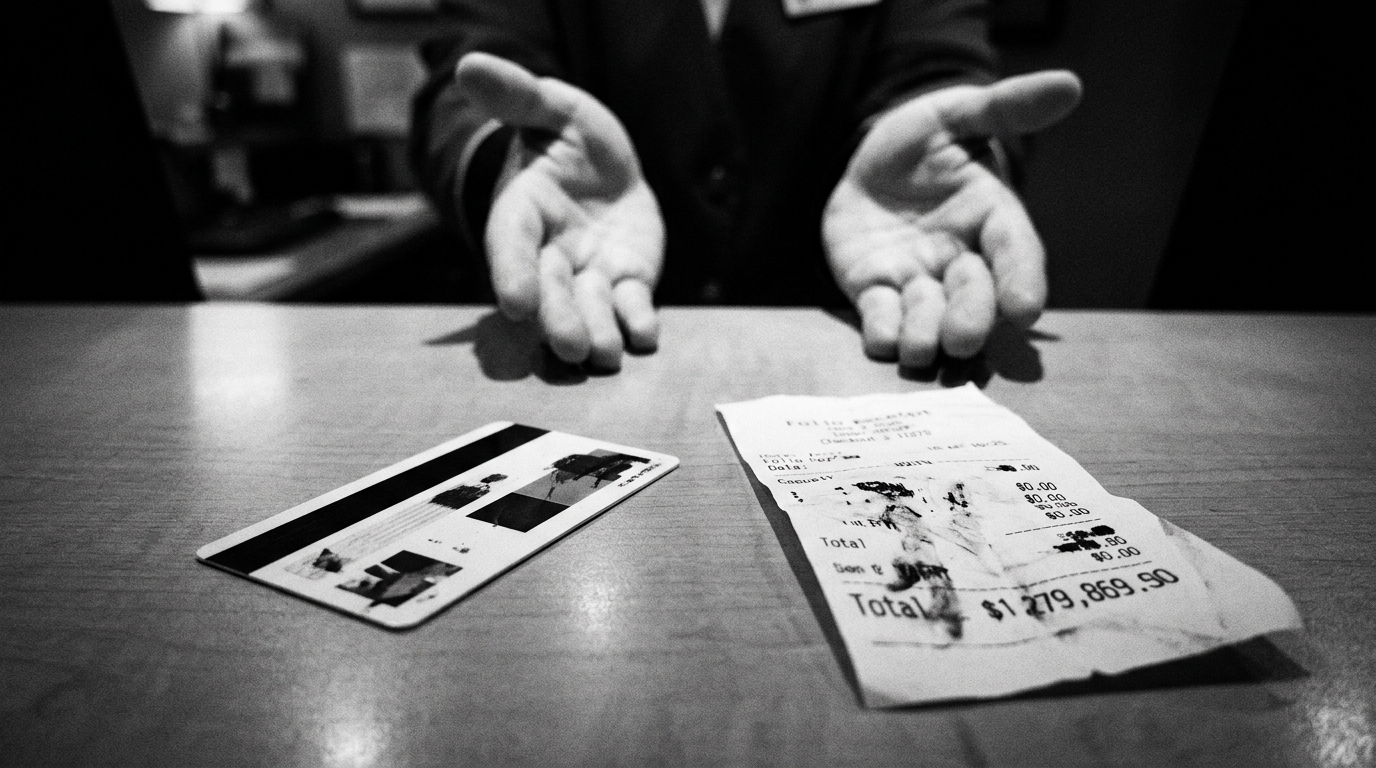
Let me tell you what happens when a brand promise cracks at the front desk. A guest walks in with a free night certificate... the one they earned after putting $40,000 on a co-branded credit card, the one the brand told them was a reward for their loyalty... and your front desk agent has to look them in the eye and say "that'll be $190.75 for the resort fee." The guest's face changes. You've seen that face. It's not anger yet. It's confusion, followed by betrayal, followed by a one-star review that mentions "bait and switch" and gets 47 helpful votes. And your front desk agent, who had nothing to do with any of this, absorbs the hit.

This is the contradiction that's finally catching up with Marriott Bonvoy, and honestly, it's been a long time coming. A class-action lawsuit is now targeting the program's failure to disclose resort fees upfront on points bookings, which is particularly awkward given that Marriott already settled with the Pennsylvania Attorney General in 2021 over the same transparency issue on cash bookings. Meanwhile, Hilton Honors and World of Hyatt waive resort fees entirely on award stays. Entirely. Their "free" nights are actually free. So when a 248-million-member loyalty program charges fees that its two biggest competitors don't, you're not looking at a pricing strategy. You're looking at a brand positioning problem disguised as a revenue line item. And the people who pay for that positioning problem aren't sitting in headquarters... they're standing behind your front desk wearing your name badge.

I grew up watching my dad deliver brand promises that someone else wrote. He was brilliant at it, and he never got credit for the impossible translation work between "what corporate said the experience would be" and "what the team could actually deliver on a Tuesday night." This resort fee situation is that same gap, just louder and with legal consequences. The brand sells "free nights" to drive credit card sign-ups and loyalty engagement (Marriott reportedly collected over $220 million in resort fees between 2012 and 2021, so the financial incentive to keep charging them is not subtle). The owner benefits because the resort fee revenue comes directly from the guest, not from the loyalty program's reimbursement... which, as owners have quietly noted for years, often doesn't cover the full cost of the stay anyway. So everyone at the corporate and ownership level has a reason to keep this structure in place. The only people who lose are the guest (who just learned their "free" night costs $200) and the front desk agent (who just became the face of that broken promise).

Here's what I keep coming back to, though, and it's the part that nobody in brand strategy wants to hear. This isn't just a fee transparency issue. It's a brand integrity issue. I've read hundreds of FDDs and sat through more brand presentations than I can count, and the single most valuable thing a loyalty program is supposed to deliver is trust. "Stay with us, earn points, get free nights." That's the deal. That's the promise. When your two largest competitors honor that promise completely and you charge up to $190 on top of it, you're not optimizing revenue. You're teaching your most loyal customers that your promises come with footnotes. And once a customer learns that about your brand, they don't unlearn it. They just start checking Hilton's app first. (I've watched three different brands erode trust this way over my career. The revenue looks fine for about 18 months. Then the booking mix starts shifting and nobody connects it back to the moment the promise cracked. But I do. The filing cabinet doesn't lie.)

The class-action lawsuit adds a new dimension because it forces this into public view in a way that internal brand discussions never do. A brand VP can rationalize resort fees on award stays in a conference room all day long. Try rationalizing them in a courtroom where the opposing counsel has screenshots of "FREE NIGHT" marketing next to a $190.75 charge. This is the kind of contradiction that doesn't survive contact with a jury... or with a TripAdvisor review page. The question for Marriott isn't whether this practice is technically defensible. It's whether the revenue from resort fees on award stays is worth more than the brand equity they're burning every time a loyal guest discovers their free night isn't free. My guess? They'll keep charging until a court or a competitor forces them to stop. By then, the guests they lost won't be coming back. That's not a prediction. That's pattern recognition.

Operator's Take

If you're a GM at a Marriott-flagged resort property, this is about to get louder before it gets quieter, and your front desk is ground zero. Here's what to do this week. First, pull your guest comment data for the last 90 days and search for "resort fee" and "free night" mentions... know your exposure before someone asks you about it. Second, script a response for your front desk team. Not the corporate boilerplate. A human response that acknowledges the frustration, explains what the fee covers, and gives the agent permission to empathize rather than defend. Your people shouldn't have to absorb brand-level failures without tools. This is what I call the Brand Reality Gap... the brand sells the promise at the portfolio level, but the promise breaks shift by shift at your property, and the person holding the bag is making $18 an hour. Third, if you're in a resort market competing against Hilton or Hyatt properties that waive these fees, track your loyalty redemption mix quarter over quarter. If it's declining, that's your early warning signal, and you want to bring that data to your ownership group before they read a headline and call you.
— Mike Storm, Founder & Editor
Read full analysis → ← Show less
Source: Google News: Marriott
The $40 Puppy Yoga Ticket Is Doing More Marketing Work Than Your $32 Resort Fee

The $40 Puppy Yoga Ticket Is Doing More Marketing Work Than Your $32 Resort Fee

Hilton Anatole is charging $40 for a "Puppies & Pilates" event on its lawn while charging guests $32 a day just to walk through the lobby. One of those numbers tells you everything about where experiential hotel marketing is heading... and which one your guests actually resent.

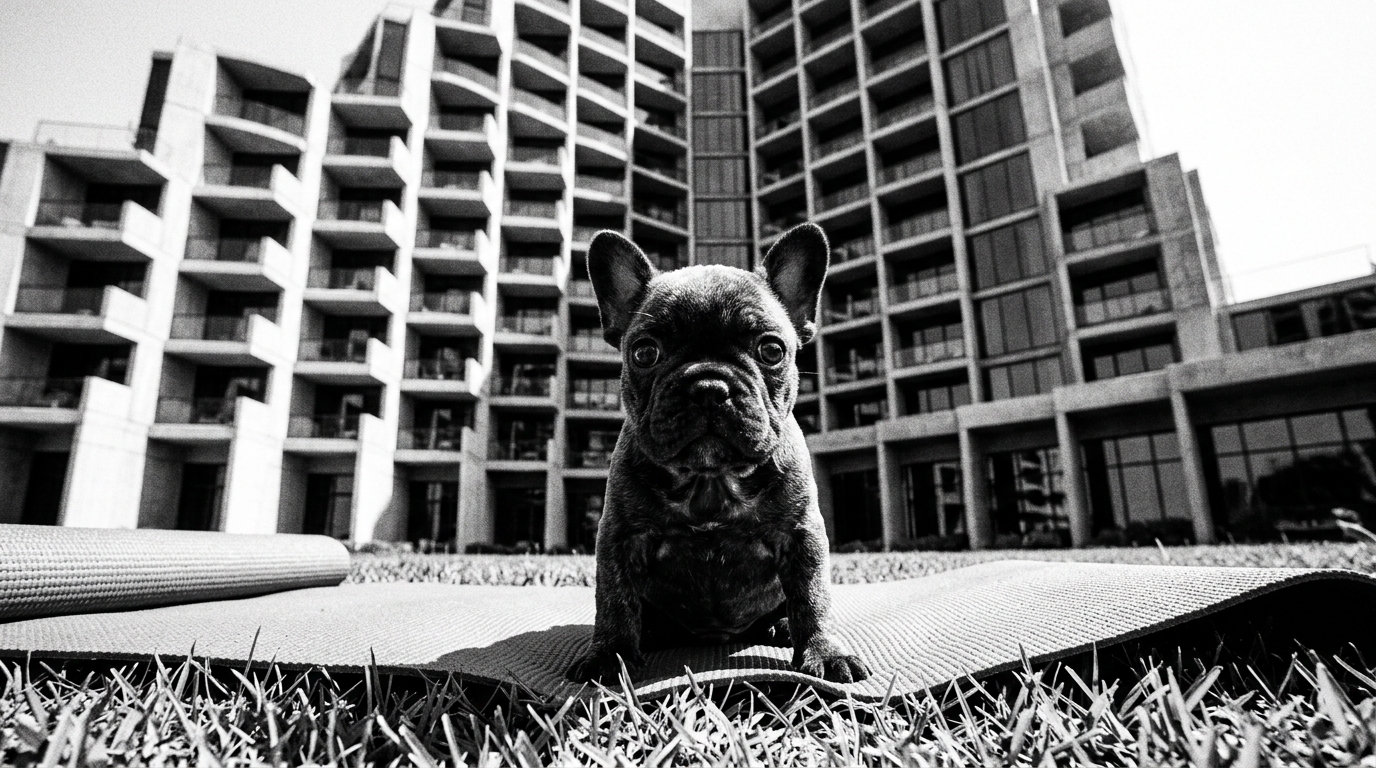
So the Hilton Anatole in Dallas is hosting a "Puppies & Pilates" event on July 12. Forty bucks. Forty-five minutes of mat Pilates on the lawn, then an hour of playing with adoptable French Bulldogs from a local rescue. All proceeds split between two wellness nonprofits. Kombucha sponsors. Juice sponsors. Dog hydration water sponsors (yes, that's a thing now). And every dollar of ticket revenue goes to charity.

Here's what caught my attention, and it's not the puppies. The Anatole charges a $32 daily resort fee that covers WiFi, pool access, a fitness club, and two bottles of water. Guests pay that whether they want it or not. Meanwhile, this event... which actually creates a memorable, shareable, specific experience... costs $40 and people are voluntarily buying tickets. Think about that for a second. The mandatory fee that guests resent generates less perceived value than a voluntary ticket to do yoga near some puppies. That's not a cute observation. That's a product design lesson. People will pay more, happily, for something they chose and something that gives them a story to tell. They will always resent paying for something they didn't ask for that includes "two bottled waters upon arrival" like that's a feature and not an insult.

Look, I'm not going to pretend this is a technology story. But it's adjacent to one. The Anatole is a 1,606-key property sitting on 45 acres with 600,000 square feet of meeting space and an 80,000-square-foot fitness club. That's serious infrastructure. And the most interesting marketing thing they're doing right now is... a lawn event with rescue dogs and a Pilates instructor named Taylor. No app required. No platform integration. No "AI-powered personalization engine." Just a genuinely good idea executed in physical space. I talked to a hotel tech consultant last month who told me his client spent $180,000 on a "guest experience platform" that sends automated text messages suggesting the hotel's own restaurant. Meanwhile the front desk team was already doing that... for free... and with better conversion because they could read the guest's face. Sometimes the best technology is no technology. Sometimes it's just... puppies.

The real play here is what this does for the Anatole's brand positioning without costing them anything meaningful. The charity angle means the hotel isn't trying to profit from the event directly. The sponsor activations (kombucha, juice, sunscreen, supplements) mean the event production cost is subsidized. The social media content writes itself... people will post photos with puppies from the lawn of a luxury hotel, geotagged, with the Anatole in every frame. That's user-generated content at scale, driven by an event that probably cost the hotel less to produce than one month of their digital ad spend. And here's the thing the Anatole probably isn't even tracking: the Pilates-and-puppies crowd skews heavily toward the 25-40 demographic, and that's a segment Hilton's loyalty program has been visibly courting. Every person at this event is a potential Honors member who now has an emotional memory attached to the property. That's worth more than a welcome email drip sequence. That's worth more than most things in the marketing stack, honestly.

The piece that makes this actually interesting from an industry perspective is the wellness angle. Hilton's own research (from their "Why We Gather" report earlier this year) says 67% of event attendees feel less engaged without downtime, and 60% prioritize breaks. They're building a corporate narrative around wellness as an organizing principle. But most of that narrative lives in branded Wellness Rooms and meditation app partnerships... stuff that requires technology integration, vendor contracts, and ongoing licensing fees. This event is the low-tech version of the same thesis, and it might be more effective precisely because it's simple. Would this work at a 90-key independent with no lawn and no marketing director? Probably not at this scale. But the principle... create a voluntary, shareable, community-connected experience that costs almost nothing to produce... that scales down to any property with a parking lot and a relationship with a local yoga instructor. The technology isn't the point. The experience is the point. The technology was never supposed to be the point.

Operator's Take

Here's what I want you to take from this, especially if you're running a property with any kind of outdoor space or community presence. Stop spending money trying to build digital experiences your guests don't want and start building physical ones they'll photograph for free. Call a local fitness instructor this week. Call your nearest animal rescue. Put together a simple event on your lawn, your pool deck, your parking lot... I don't care where. Charge $25-$40 and send the proceeds to charity so you're not trying to profit... you're trying to create a memory. Your total cost will be staff time and some bottled water. Your return will be social content, local press, community goodwill, and a room full of people between 25 and 40 who now associate your property with something they actually enjoyed instead of a resort fee they resented. This is what I call the Vendor ROI Sentence problem in reverse... sometimes the best ROI doesn't come from a vendor at all. It comes from a good idea and a phone call.

— Mike Storm, Founder & Editor
Read full analysis → ← Show less
Source: Google News: Hilton
End of Stories