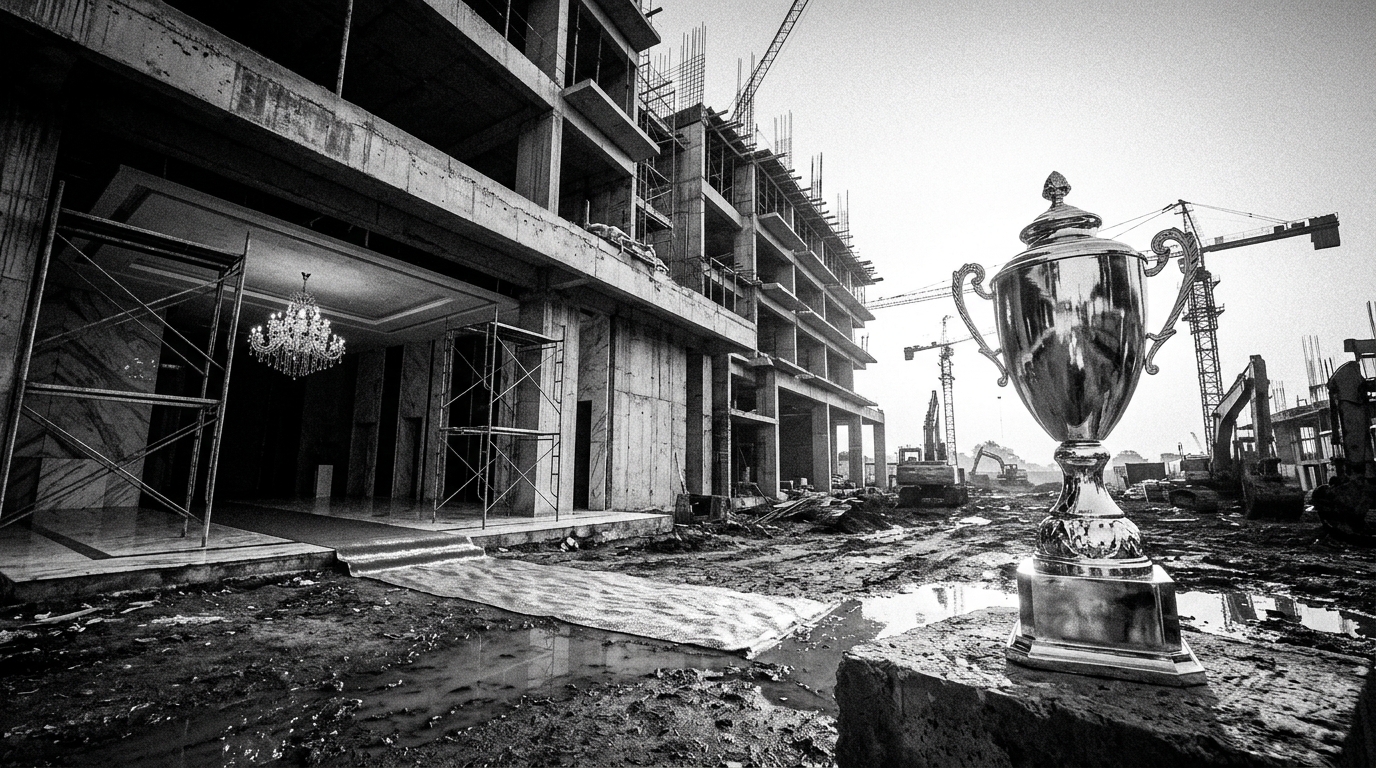
Award Shows Don't Build Hotels. The Philippines Expansion They're Celebrating Might.
The Philippines just added eight new property award categories to recognize development beyond Metro Manila. What's actually interesting isn't the trophies... it's what the category list tells you about where Southeast Asian hotel capital is flowing next.
I've never put an award on a P&L. Not once in 40 years. You can't deposit a plaque. Your lender doesn't care that you won "Best Lifestyle Hospitality Development" at a gala dinner in Bangkok. And yet... every couple of years, I see a development market where the award shows start multiplying, the categories start getting weirdly specific, and the real estate press starts treating the ceremony like a leading indicator. That's what's happening in the Philippines right now. And the awards themselves aren't the story. The story is what they're accidentally telling you about where money is moving.
PropertyGuru just launched 139 open categories for their 14th Philippines awards cycle, and they added eight new ones. Some of them are exactly what you'd expect ("Best Condo Developer"... groundbreaking stuff). But a few caught my eye. "Best Marina Development." "Best Golf Course View Housing Development." "Best Landmark Development." These aren't categories you create for a mature, consolidated market. These are categories you create when developers are building into new territory so fast that the old taxonomy can't keep up. When the award organizers have to invent new boxes because the projects don't fit the existing ones, that's a signal. Not about who wins the award. About what's getting built and where.
The "where" matters more than the "what." The Philippines property sector is pushing hard beyond Metro Manila into secondary and tertiary cities... Cebu, Davao, Iloilo, Bacolod, and several markets across Luzon that most American operators couldn't find on a map. New airports. Bus rapid transit systems. Railways. The infrastructure play is real, and it's pulling hospitality development behind it the way it always does. I watched this same pattern in parts of the Middle East 15 years ago, and in secondary Indian markets about a decade back. Infrastructure first, then residential, then commercial, then hospitality follows when the demand generators are in place. The question is always timing... are you building into demand that exists, or demand you hope shows up?
Here's what the award show won't tell you: mixed-use development in emerging Philippine markets carries a specific risk profile that pure hospitality people tend to underestimate. When a developer is building a residential tower, a hotel component, a marina, and a golf course in a market that didn't have a branded hotel five years ago, the hotel is usually the component subsidizing the residential sales pitch. "Buy a condo in our resort community with a five-star hotel on site." The hotel becomes an amenity for the real estate play. Which means the hotel's operating economics are secondary to the developer's exit on the condos. I've seen this movie in at least four different countries. Sometimes the hotel thrives because the community genuinely generates demand. Sometimes the hotel gets built to a standard the market can't support because the developer needed the renderings to sell units, and three years after the condos close, you've got a 200-key hotel doing 48% occupancy in a market that needed 80 keys at a lower price point.
None of this means the Philippine expansion is wrong. The economic fundamentals are legitimate... one of the fastest-growing economies in Southeast Asia, a young population, rising middle class, significant tourism potential. Robinsons Hotels and Resorts won "Best Hospitality Developer (Asia)" at the regional grand final last December, and they didn't get that by accident. Real operators are building real hotels for real demand. But if you're an investor or operator being pitched a hospitality component inside a mixed-use Philippine development outside Manila, you need to separate the award-show optimism from the operating reality. What's the demand generator? What's the comp set? What does this hotel look like in year three when the construction cranes are gone and the developer has moved on to the next project?
This one's not for most of you running hotels in North America, but if you're with a management company or investment group that's been getting pitched Southeast Asian deals... particularly Philippine mixed-use projects outside Metro Manila... here's your filter. Ask for the hotel proforma stripped from the residential component. If the hotel economics only work when cross-subsidized by condo sales or HOA fees, that's a real estate deal with a hotel attached, not a hotel deal. Know which one you're buying. And if someone puts an industry award in the pitch deck as evidence of project quality, smile politely and ask for the trailing 12-month operating data instead. Trophies look great on a shelf. They look terrible on a loan covenant.
