Today · Jul 25, 2026
St. Regis in Queenstown Is a Brand Bet That Actually Makes Sense (For Once)

St. Regis in Queenstown Is a Brand Bet That Actually Makes Sense (For Once)

Marriott just signed a 145-key St. Regis in one of the world's most proven luxury leisure markets, and for once, the math behind a splashy brand debut might actually hold up... if you ignore the part where the owner has to deliver butler service in a labor market that barely has bartenders.

Let me tell you what I noticed first about this announcement. It wasn't the rendering (though I'm sure it's gorgeous... they always are). It wasn't the press release language about "bringing a new level of luxury to New Zealand." It was this: Marriott's development VP called Queenstown a "strategic priority." Not an opportunity. Not an exciting market. A priority. That word choice matters because it tells you exactly how long they've been trying to plant a flag here, and how many conversations happened before this one stuck. I've sat in enough development meetings to know that when a brand finally gets the deal done in a market they've been circling for years, the champagne is real. The question is whether the hangover will be too.

Here's what makes Queenstown different from a lot of these luxury brand debuts: the demand data is genuinely strong. CBRE research from mid-2025 showed luxury lodges in New Zealand and Australia posted total revenue per occupied room up 59% since 2018, with profit margins climbing 54%. Queenstown's upper-tier properties ran RevPAR growth of over 15% year-to-date in the Horwath data. Two million visitors annually in a market with limited luxury branded supply. This isn't Marriott dropping a St. Regis into an oversaturated gateway city and hoping the flag does the work... this is a destination with genuine scarcity at the top end. That matters. Scarcity is the one thing you can't manufacture with a renovation and a press release.

The developer, PHC Queenstown Limited (this is their third property with Marriott, which tells you the relationship has survived at least two deals without someone walking away), is building new. 145 keys. Late 2027 opening. New-build is important because it means the physical product can actually be designed around the brand promise from day one instead of trying to retrofit St. Regis service standards into a building that was never meant for them. I've watched conversions where the brand required a dedicated butler pantry on every floor and the existing floor plates literally couldn't accommodate it without losing two rooms per floor. New-build eliminates that particular headache. It doesn't eliminate every headache (stay with me).

So here's my question, and it's the same question I ask every time a top-tier luxury brand announces in a market with extraordinary natural beauty and limited urban infrastructure: Can you staff it? St. Regis is not a flag you hang and forget. It requires butler service. It requires a level of F&B execution that goes way beyond a lobby bar and a breakfast buffet. It requires trained, experienced, hospitality-fluent humans who can deliver the kind of personalized, anticipatory service that justifies $800+ per night. Queenstown is a town of roughly 50,000 people that swells with tourists. Finding that caliber of talent... and retaining it in a seasonal market with housing costs that would make your eyes water... that's the Deliverable Test, right there. The brand promise is world-class luxury. The brand delivery depends entirely on whether an owner can build a team in one of the most remote luxury markets on earth. (A brand executive once told me staffing concerns were "an operational detail." I told him operational details are what kill brand promises. He didn't invite me to the next meeting.)

I'll give Marriott credit where it's earned: this deal fits the macro strategy cleanly. Their luxury and premium brands accounted for nearly a fifth of new room commitments in Asia Pacific last year. International RevPAR grew over 6% for the full year. The pipeline hit a record 610,000 rooms. They're pushing into leisure destinations beyond the obvious gateway cities, which is smart because that's where the rate ceiling is highest and the competition is thinnest. But if you're an owner being pitched a similar luxury brand debut in a comparable market... a resort destination with strong demand metrics but real labor and infrastructure constraints... do yourself a favor. Don't fall in love with the rendering. Don't fall in love with the RevPAR comps from 2025. Ask the brand: what is your plan for helping me staff this property 18 months from now? And if the answer is "that's an operational detail"... well. You already know how this ends.

Operator's Take

If you're an owner being courted for a luxury flag in a resort market right now, this deal is worth studying... but study the parts the press release skipped. Call the developer's other two Marriott properties and ask how long it took to fully staff to brand standard, what the turnover looks like, and what housing costs are doing to their labor line. The Queenstown market data is real. The demand is real. But a $800/night rate expectation with a staffing model that can't deliver consistent butler service is a recipe for a beautiful hotel with a 3.8 on guest satisfaction. The numbers don't lie... but neither does a one-star review from a guest who paid St. Regis prices and got Holiday Inn Express service at 11 PM because half the team called out.

— Mike Storm, Founder & Editor
Read full analysis → ← Show less
Source: Google News: Marriott
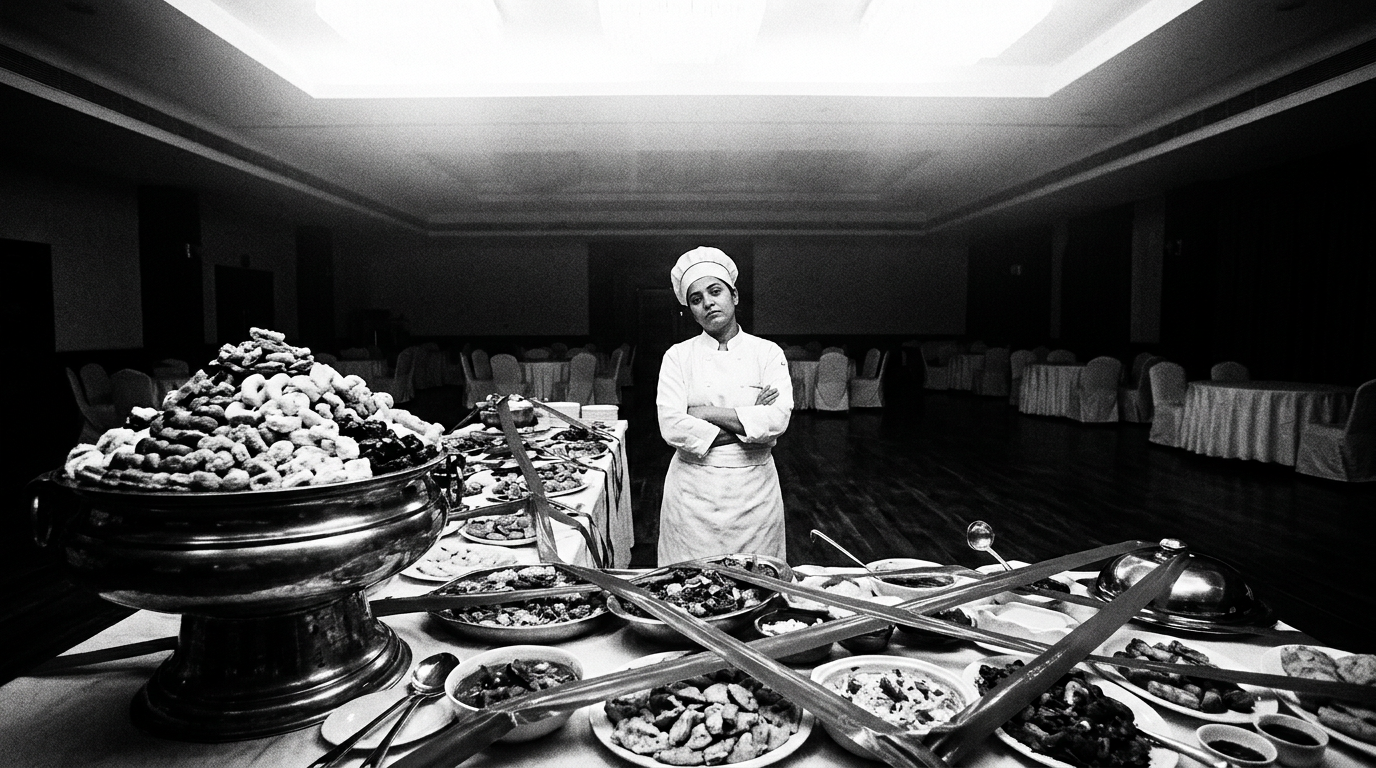
Marriott's Holi Dinner Is Cute. The Real Story Is F&B as a Brand Weapon in India.

Marriott's Holi Dinner Is Cute. The Real Story Is F&B as a Brand Weapon in India.

A single festive buffet at a Whitefield property isn't news. But when F&B accounts for up to half of total hotel revenue in India and Holi is projected to drive $9.6 billion in spending, the question isn't whether to throw a party... it's whether your brand strategy treats food as a line item or a positioning engine.

Let me tell you what I see when I read about a Holi-themed dinner buffet at a Marriott in Bengaluru. I don't see a press release. I see the tip of something much bigger, and I see a lot of hotel brands who are about to get this either very right or spectacularly wrong.

Here's the setup. Holi 2026 is projected to generate over ₹80,000 crore... roughly $9.6 billion... across India, up 25% from last year. Hotels and restaurants are nearly fully booked for celebrations. F&B in Indian hotels now contributes 35% to 50% of total revenue, which is a number that would make most American select-service operators fall out of their chairs. And Marriott just debuted "Series by Marriott" in India with 26 hotels, explicitly targeting domestic travelers with regional character. So when a Marriott property in Whitefield puts together a Holi night with regional North and South Indian specials, live interactive counters, live music, and a pet-friendly policy (yes, really), that's not just a dinner. That's a brand positioning move disguised as a buffet. And the question every owner in India should be asking is: does my brand give me the framework to do this, or does my brand get in the way?

I sat in a brand review once where an owner in a secondary Indian market wanted to run a Diwali festival package... local sweets, cultural programming, the works. The brand's regional team loved it. The global standards team flagged three violations in the proposed menu presentation alone. By the time the concept cleared compliance, Diwali was over. The owner ran the event anyway, off-brand, and it was his highest-revenue F&B night of the year. That tension... between brand consistency and local cultural relevance... is the real story here, and it's one that plays out in every market where festivals drive spending. Marriott's "Future of Food 2026" report talks about "casual luxury" and "dining rooted in local flavors." Beautiful language. The Deliverable Test question is whether the brand apparatus actually lets a property-level team execute that vision fast enough to capture a cultural moment that arrives on a specific date and doesn't wait for approval chains.

The math underneath is what matters. Festive F&B initiatives in India are showing 15-20% uplifts in overall revenue, with themed events seeing 40-50% more covers than a normal weekend. At roughly ₹2,500 per couple (about $30 USD) for a dinner at this particular café, you're not talking about fine dining margins. You're talking about volume, atmosphere, and repeat-visit loyalty. The real return isn't the one-night revenue... it's the guest who comes back three Saturdays later because they remember the experience. That's where F&B becomes a brand weapon instead of a cost center. But here's the part the press release leaves out: the labor, the training, the sourcing for regional specialties, the live music booking, the setup and teardown. If your F&B team is already stretched (and in India's current hospitality labor market, they are), a festive event isn't a revenue gift. It's a staffing puzzle wrapped in a P&L question. The properties that win are the ones where the GM and the F&B director have enough operational freedom... and enough brand support... to build these moments without drowning in either red tape or labor costs.

And this is where I get pointed. Marriott is pushing hard into India. International RevPAR grew 6.1% last year. The Series by Marriott launch signals they want the domestic travel segment badly. F&B is the differentiator... not the room, not the loyalty app, the FOOD. If you're an owner operating under a Marriott flag in India (or any full-service flag, frankly), your brand should be handing you a playbook for cultural programming that's pre-approved, locally sourced, and operationally realistic. Not a press release about one property's Holi dinner. A repeatable framework. Because every market in India has its own festival calendar, its own culinary identity, and its own version of the guest who will spend money on an experience that feels authentic. The brands that build the infrastructure for that... not the concept, the infrastructure... are the ones that will own Indian hospitality's next decade. The ones that just let individual properties figure it out and then take credit in the earnings call? You already know how that ends.

Operator's Take

If you're running a branded hotel in India... or honestly, any market with a strong cultural calendar... don't wait for your brand to hand you a festival playbook. Build one yourself. Map every major local festival to an F&B concept, cost it out (labor, sourcing, marketing, the whole thing), and present it to your brand team as a done deal, not a request. The properties making real money on cultural programming aren't asking permission. They're asking forgiveness. And their owners are too happy counting the revenue to complain.

— Mike Storm, Founder & Editor
Read full analysis → ← Show less
Source: Google News: Marriott
Marriott's Ritz-Carlton Bet in Hyderabad Is a $107M Signal You Should Be Reading

Marriott's Ritz-Carlton Bet in Hyderabad Is a $107M Signal You Should Be Reading

Chalet Hotels just committed roughly $107 million to build a 330-key Ritz-Carlton in one of India's hottest markets. The per-key math, the deal structure, and what it tells you about where luxury development money is actually flowing right now... that's the story worth unpacking.

Let me tell you what caught my eye about this deal. It's not the Ritz-Carlton name. It's not Hyderabad. It's the structure.

Chalet Hotels is putting up roughly INR 630 crore (call it $73 million) for interiors and operational infrastructure. Mindspace Business Parks REIT... which, not coincidentally, shares a parent company in K Raheja Corp... is kicking in another INR 300 crore for the building itself under a warm-shell lease arrangement. Total project: somewhere around $107 million for 330 keys. That's roughly $310,000 per key for a ground-up Ritz-Carlton. In the U.S., you'd be lucky to get a Courtyard built for that number in a secondary market. In Hyderabad, you're getting an ultra-luxury asset with 36,000 square feet of commercial and retail space thrown in. The math alone should make every owner who's been staring at a PIP estimate for a domestic renovation want to throw something.

I've seen this movie before, though. Not this exact deal, but the playbook. A well-capitalized operator with a strong relationship to the brand gets favorable terms nobody else would get. They pick a market that's running hot (Hyderabad was the RevPAR growth leader in India in Q2 2024). They structure the deal so the real estate risk gets split with a related-party REIT. And they announce it during a quarter where their financials look great (Chalet just posted 27% revenue growth and 28.5% net profit increase in Q3). This is textbook timing. You announce the big swing when the numbers make everyone feel good about you.

Here's the question nobody's asking. Marriott wants 50,000 rooms in India. They signed 99 hotels and over 12,000 rooms across the broader Asia Pacific region in 2025 alone. Radisson just inked a deal for 50 luxury hotels across India over the next decade. Everyone's rushing into the same thesis: India's luxury travel demand is exploding, the supply is thin, and first movers win. And that thesis is probably right... for the next three to four years. But this Ritz-Carlton won't open until 2029. That's 36 months of construction, during which every other major brand is also pouring rooms into these same markets. The supply picture in 2029 is going to look nothing like the supply picture today. I worked with an owner once who greenlit a luxury build based on three years of trailing data and opened into a market that had added 1,200 competitive keys during construction. His projections were perfect... for the year he approved them. Not for the year the doors opened.

What makes this deal interesting for operators outside India is the structure, not the geography. The warm-shell lease with a related-party REIT, the split capital stack, the brand relationship that apparently delivered "favorable terms" (Chalet's MD said it publicly)... this is a template. If you're an owner exploring luxury or upper-upscale development and you haven't looked at creative capital structures that separate the real estate from the operating investment, you're leaving money on the table. The days of one entity funding the whole thing from dirt to doorman are increasingly behind us, even in emerging markets.

The other thing worth noting. $310,000 per key for a Ritz-Carlton tells you something about where development costs are headed globally. When you can build ultra-luxury in a Tier 1 Indian city for what it costs to renovate a full-service property in a mid-tier U.S. market, capital follows. It just does. If you're competing for investment dollars against projects like this one... and if you're a U.S. owner pitching a deal to anyone with a global lens, you are... your return story has to be ironclad. Because the alternative just got a lot more attractive.

Operator's Take

If you're an owner or asset manager sitting on a domestic luxury or upper-upscale development pitch, pull this deal apart before your next capital committee meeting. The structure matters more than the headline. Look at how Chalet split the risk with a REIT partner, and ask your team whether a similar creative capital stack could change your project economics. And if you're competing for institutional capital, understand that deals like this... $310K per key for a Ritz-Carlton... are what your investors are comparing you against. Your pro forma better have an answer for that.

Read full analysis → ← Show less
Source: Google News: Marriott
Marriott's "Outstanding" Growth Year Has a Question Nobody's Asking the Owners

Marriott's "Outstanding" Growth Year Has a Question Nobody's Asking the Owners

Marriott added nearly 100,000 rooms and returned $4 billion to shareholders in 2025. But when you decompose the numbers by who actually benefits, the story gets more complicated... especially if you're the one writing the PIP check.

Let me tell you what "outstanding" looks like from the other side of the franchise agreement.

Marriott's 2025 numbers are genuinely impressive at the corporate level. Over 4.3% net rooms growth. Nearly 100,000 rooms added. Gross fee revenues of $5.4 billion, up 5%. Adjusted EBITDA of $5.38 billion, an 8% jump. The stock hit an all-time high of $359.35 in February. Anthony Capuano called it a "defining year." And from the brand's perspective... from the shareholder's perspective... he's right. $4 billion returned to shareholders through buybacks and dividends. That's not a talking point. That's real money flowing to the people who own Marriott International stock.

Now. Who owns the hotels?

Because here's where I start pulling at the thread. U.S. and Canada RevPAR grew 0.7% for the full year. In Q4, it actually declined 0.1%. Business transient was flat. Government RevPAR dropped 30% in Q4 from the shutdown. Meanwhile, Marriott's projecting 1.5% to 2.5% worldwide RevPAR growth for 2026 and planning to spend over $1.1 billion on technology transformation... replatforming PMS, central reservations, and loyalty systems. That investment is Marriott's. The implementation burden lands on property teams. If you've been through a brand-mandated PMS migration (and I've watched three unfold from the owner advisory side), you know that the stated timeline and the actual timeline are two very different animals. Training costs alone for a 300-key full-service property can run $40,000-$60,000 when you factor in productivity loss, and that's before you discover the integration with your POS doesn't work the way the demo said it would.

The conversion engine is the part of this story that deserves the most scrutiny. Conversions accounted for over 30% of organic room signings... nearly 400 deals, over 50,800 rooms. And Marriott proudly notes that roughly 75% open within 12 months of signing. That speed is the selling point. But speed of conversion and quality of integration are not the same thing. Changing the sign takes weeks. Changing the service culture, retraining staff on Marriott Bonvoy standards, renovating to brand spec... that takes 6 to 18 months on the low end. I sat across the table from an ownership group last year that converted a 180-key independent to a major flag. They were "open" within nine months. They were actually delivering the brand experience closer to month 16. The gap between those two dates? That's where guest reviews suffer, where loyalty members complain, and where the brand sends you a deficiency letter while you're still waiting on FF&E shipments that are eight weeks late.

And then there's the portfolio question that nobody at brand headquarters wants to answer honestly. Marriott now has City Express, StudioRes, Four Points Flex, Series by Marriott, Outdoor Collection... layered on top of an already sprawling portfolio. At what point does brand proliferation stop being "filling white space" and start being internal cannibalization? When two Marriott-flagged properties in the same market are competing for the same Bonvoy member at similar price points, the system doesn't create incremental demand. It redistributes existing demand and charges both owners a franchise fee for the privilege. The 271 million Bonvoy members number sounds massive until you ask what the active rate is, what the average redemption frequency looks like, and whether loyalty contribution at your specific property justifies the assessment you're paying. Those are the numbers that matter at the ownership level, and they're conspicuously absent from the earnings call.

Here's my position, and I'll be direct about it. Marriott is executing its strategy brilliantly... for Marriott. The asset-light model means fee revenue grows whether your individual property thrives or struggles. The $16.2 billion in total debt (up from $14.4 billion in 2024) funds buybacks that boost EPS, which drives the stock price, which makes the earnings call sound like a victory lap. None of that is wrong. It's just not your victory lap if you're the owner staring at a flat domestic RevPAR environment, a PIP that's going to cost you seven figures, and a technology migration you didn't ask for. Before you sign that next franchise agreement or renewal, pull the FDD. Compare the Item 19 projections from five years ago against what your property actually delivered. If there's a gap... and there usually is... that's not a conversation for your franchise sales rep. That's a conversation for your lawyer.

Operator's Take

If you're a franchisee in the Marriott system right now, do two things this week. First, pull your loyalty contribution numbers for the last 12 months and calculate what you're paying in total brand cost (fees, assessments, mandated vendors, PIP amortization) as a percentage of total revenue. If it's north of 15% and your RevPAR index against comp set isn't outperforming... you have a math problem, not a brand problem. Second, if you're anywhere near a PMS migration timeline, get the implementation scope in writing from your brand rep and add 40% to whatever timeline they give you. That's not cynicism. That's 40 years of watching these rollouts.

— Mike Storm, Founder & Editor
Read full analysis → ← Show less
Source: Google News: Hotel Industry
End of Stories