$300M Hilton in Guyana. A Land Dispute. And a Country Betting Its Future on Hotel Rooms.
A massive Hilton resort is rising on contested land in Georgetown, Guyana, backed by Qatari money and oil-boom optimism. The question isn't whether the hotel gets built... it's whether anyone stress-tested what happens when the oil math changes.
I knew a developer once who started pouring foundation before the title was clean. His attorney told him to wait. His lender told him to wait. He told both of them that momentum was more important than paperwork and that the government wanted the project too badly to let a land dispute stop it. He was right for about 14 months. Then he wasn't. The resolution cost him more than the delay ever would have.
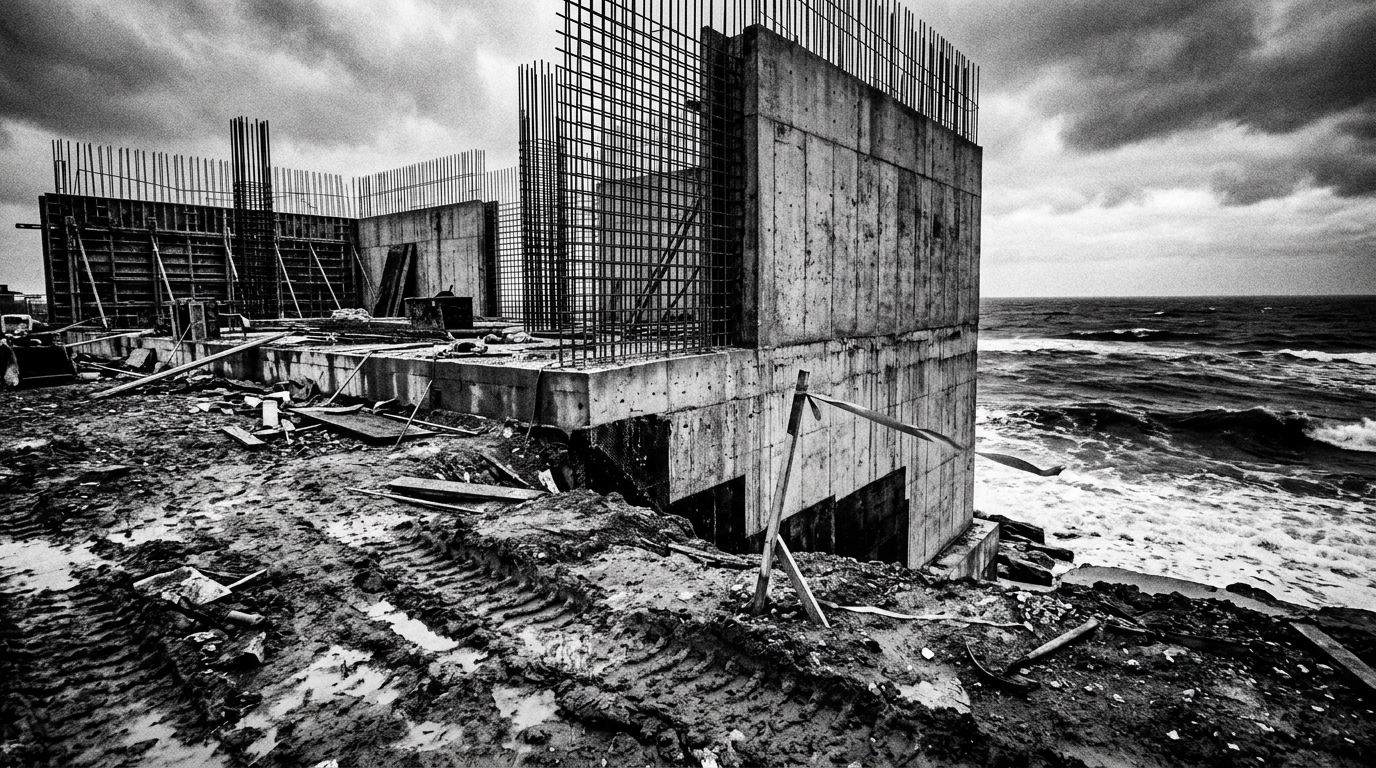
So here's Georgetown, Guyana, where a Qatari-backed group is moving earth on a $300 million seafront resort and convention center that'll carry the Hilton flag... 250-plus keys, conference facilities, villas, the whole thing. IDB Invest is in for up to $125 million in senior secured financing. Construction crews are on site. Foundation work is underway. And the Mayor of Georgetown is standing on the sidewalk saying the city owns the land and nobody's resolved the dispute. The national land commission says it's state property. The city says otherwise. Construction is proceeding anyway. This is the kind of thing that works perfectly until the day it doesn't.
Let me be clear about what's happening in Guyana right now, because the context matters more than the hotel. This is an oil-boom economy in full sprint. Foreign direct investment hit $7.2 billion in 2023. Tourist arrivals jumped from 82,000 in 2020 to over 371,000 in 2024. The government is handing out tax holidays and land assistance to get hotel rooms built because they literally don't have enough. Marriott just opened its third property in the country last month. Hyatt is coming. Best Western is there. Everybody's rushing in because the economics look irresistible... right now. I've seen this movie before. I've seen it in energy towns in North Dakota. I've seen it in casino markets that boomed before the second wave of supply arrived. The first wave of development in a boom market always feels like genius. It's the second and third waves that separate the smart money from the crowd.
Here's what the press release doesn't tell you. A 250-key full-service Hilton with convention facilities in a market with limited hospitality infrastructure means you're importing almost everything... talent, training systems, supply chain, management expertise. Four hundred fifty jobs sounds great until you try to staff a five-star operation in a market that was running 82,000 annual visitors five years ago. The room count itself is a question mark... the numbers keep shifting between 254, 256, and 411 keys depending on which source you read and whether the DoubleTree component is included or a separate phase. That kind of ambiguity in the public record tells me the project scope is still evolving, which is fine in a vacuum but less fine when you've already started pouring concrete on disputed land. And that oil-driven demand everyone's banking on? Commodity cycles don't send advance notice when they turn. The Guyanese government is smart to diversify into tourism. But building $300 million hotels to serve an economy that's fundamentally dependent on one commodity is a bet on the cycle staying friendly. Bets on cycles staying friendly are the most expensive bets in the industry.
The development will probably get built. Hilton doesn't put its name on something without doing its homework, and IDB Invest doesn't write $125 million checks casually. But "probably gets built" and "makes money for the owner over a 20-year horizon" are two very different statements. The land dispute alone is the kind of variable that keeps asset managers awake. And the broader market question... whether Guyana can absorb all the branded supply rushing in at once... that's the one that should keep everyone awake.
If you're a development executive or an owner looking at emerging Caribbean and Latin American markets right now, Guyana is the shiny object in every pitch deck. And the fundamentals are real... the oil money, the visitor growth, the government incentives. But before you write the check, run the downside scenario. What happens to your NOI if oil prices drop 30% and business travel contracts? What happens to your staffing model when three other branded hotels in the same small market are competing for the same limited talent pool? What's your breakeven occupancy, and is it achievable in a demand contraction, not just a boom? This is what I call the Shockwave Response... know your floor and your breakeven before the shock hits, because panic is not a strategy. The opportunity in Guyana might be real. But the opportunity in every boom market looks real until supply catches demand and the music stops. Do the math with the ugly assumptions, not just the beautiful ones.