Curio Collection's Hawaii Debut Looks Beautiful. Can It Pass the Tuesday Test?
Hilton is bringing its soft-brand collection to Kauaʻi with a 210-room new-build resort, and the renderings are gorgeous. The question nobody's asking is whether "purposeful experiences and immersive journeys" can survive a 3 PM check-in rush with a skeleton crew.
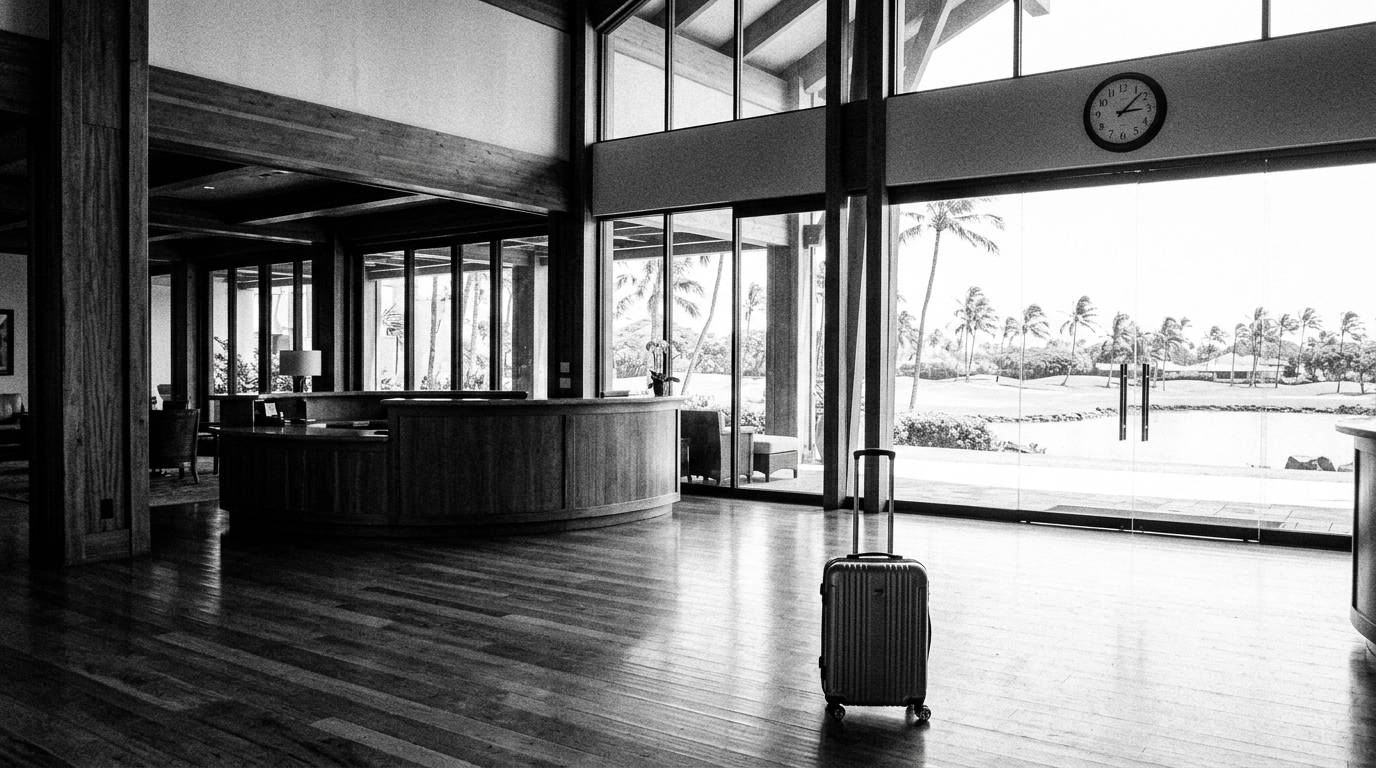
So Hilton just announced that Curio Collection is finally landing in Hawaii... a 210-room luxury resort called Hale Hōkūala Kauaʻi, owned by Denver-based Silverwest Hotels, managed by Hilton, opening fall 2026. Jack Nicklaus golf course. Signature restaurant overlooking a tropical lagoon. 10,000 square feet of outdoor event space. The whole fantasy. And I want to be clear: the bones of this project look legitimately strong. Kauaʻi is one of the most stunning leisure markets in the world, the developer isn't a first-timer, and they've hired a GM with 15-plus years of Hawaii luxury experience. That's not nothing. That's actually more operational forethought than I see in most brand announcements, and I read a LOT of brand announcements.
But here's where I start asking the questions that the press release was not designed to answer. Curio Collection is nearing 200 hotels globally, and Hilton's luxury and lifestyle portfolio hit 1,000 properties in 2025 with nearly 500 more in development. That is aggressive growth. And the whole value proposition of a soft brand is supposed to be that each property maintains its own identity while benefiting from Hilton's distribution engine... the Honors program, the booking infrastructure, the loyalty contribution. Beautiful in theory. In practice, what I've watched happen (at multiple soft-brand conversions across multiple companies) is that the "individual identity" part gets slowly eaten by the "brand standards" part until you're left with a property that's too standardized to feel independent and too independent to deliver the consistency loyalty members expect. It's the uncanny valley of hotel brands. You're not quite boutique, you're not quite Hilton, and the guest can feel it even if they can't name it.
The Hawaii context matters here, and it matters more than Hilton's press language about "evolving traveler preferences" lets on. Hawaii tourism is still recovering... international numbers remain below pre-pandemic levels, and the emotional and economic aftershocks of the 2023 Maui wildfires haven't disappeared just because the headlines moved on. Opening a luxury resort in this environment is a bet on continued recovery, and it's probably a good bet (Nassetta said on the Q4 call that demand patterns are improving, and Hilton already operates 25-plus hotels in the state with nearly 10 more in the pipeline). But "probably a good bet" and "guaranteed win" are two very different financial documents. If you're Silverwest, you're looking at a new-build cost in one of the most expensive construction markets in the country, resort-level staffing requirements on an island where the labor pool is finite, and a loyalty contribution number that Hilton projects but doesn't guarantee. I sat in a franchise review once where the owner pulled out a calculator, divided the projected loyalty contribution by the total brand cost, and just started shaking his head. Not laughing. Not angry. Just... doing the math out loud for the first time. That moment happens more often than brands would like you to believe.
The piece I keep coming back to is the Deliverable Test. Hilton's brand language talks about "meaningful connections" and "immersive journeys." I've been to four brand launches that used almost identical phrasing. (They always serve the same champagne, by the way.) What does "immersive journey" actually look like on a Wednesday afternoon when your signature restaurant is between lunch and dinner service, two of your front desk agents called out, and a family of five just arrived early wanting to check in? THAT'S the brand experience. Not the rendering. Not the lagoon at sunset. The 2:47 PM moment when the promise meets the operation. The GM they've hired, Jon Itoga, seems like the right pick... local, experienced, deeply embedded in Hawaii's luxury market. That gives me more confidence than any mood board. Because the person running the building is the brand. Everything else is marketing.
Here's what I'll be watching: whether Hilton treats this as a genuine flagship for Curio in a world-class leisure market, or whether it becomes one more pin on the growth map... opened, counted toward the 6-7% net unit growth target Nassetta promised for 2026, and then left to figure out the "immersive journey" part on its own. The difference between those two outcomes isn't in the architecture. It's in the staffing model, the training investment, and whether someone at corporate is still paying attention 18 months after the ribbon cutting. If you're an owner being pitched a Curio conversion right now, watch this property. Not the opening. The second year. That's when you'll know if the brand delivers or if the brand just launches.
If you're an independent owner in a leisure market getting pitched a soft-brand conversion right now... Curio, Tapestry, Tribute, any of them... don't get seduced by the distribution promise until you've done the math on total brand cost as a percentage of revenue. Pull the FDD. Look at actual loyalty contribution data, not projections. And ask the hard question: what am I giving up in identity that I can't get back? Because the sign goes up fast. The sign comes down slow and expensive.