Today · Jun 10, 2026
700 Box Lunches Tell You More About Vegas Than Any Earnings Call

700 Box Lunches Tell You More About Vegas Than Any Earnings Call

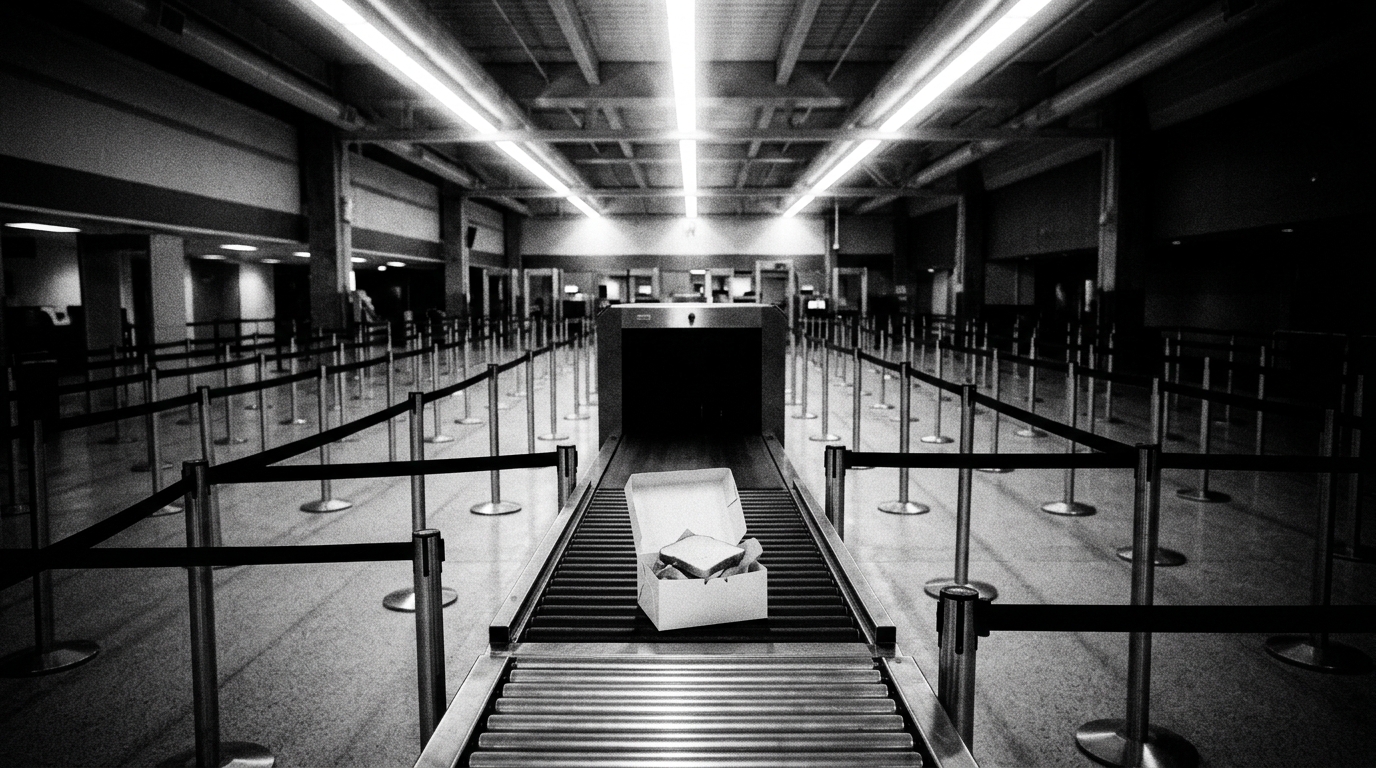
MGM Resorts is feeding TSA agents who are working without paychecks at Harry Reid International, and it's a genuinely good thing. But if you're an operator in a tourism-dependent market, the story underneath is what should keep you up tonight.

Available Analysis

I worked with a GM once in a gateway city... big convention hotel, airport was the lifeblood. He used to say "my hotel doesn't start at the front door. It starts at baggage claim." He meant it literally. He'd send bellmen to the airport with signage during citywide events. He understood something most operators don't think about until it's too late: the guest experience begins before the guest is your guest. And when the airport breaks down, your hotel breaks down right behind it.

So MGM sends 700 box lunches to TSA agents who are screening bags and patting down tourists without a paycheck. They've done it twice now across two separate shutdowns... 1,400 meals total, with more planned. Good for them. I mean that without a shred of sarcasm. There are over 1,000 TSA employees at Harry Reid, and when those folks are demoralized or calling out sick because they can't afford gas to get to work, the line at security backs up, flights get delayed, and the tourism machine that feeds every hotel on the Strip starts grinding slower. The U.S. Travel Association estimated a government shutdown costs the travel industry over $1 billion per week. A billion. Per week. And Vegas visitor numbers were already down 7.6% year-over-year through October 2025 before anyone stopped getting paid.

Here's what nobody's saying out loud. MGM isn't doing this because they're nice (though the people organizing it probably are). They're doing this because they can do the math. John Flynn, their SVP of Global Security and Aviation, said it plainly... supporting TSA agents keeps airport lines short and the tourism engine running. That's not spin. That's a company protecting its revenue pipeline at the source. The cost of 700 box lunches is... what, maybe $8-10K? Against a shutdown that's bleeding a billion dollars a week out of the industry? That's the best ROI in hospitality right now and it's not close.

But here's the part that should bother every operator in a tourism-dependent market. You are exposed to risks you cannot control, did not create, and cannot negotiate your way out of. A political fight in Washington about DHS funding can crater your airport traffic. Harry Reid saw a 9.6% year-over-year decline in November 2025. That's not a demand problem. That's not a rate problem. That's not a problem your revenue management system can solve. That's the federal government failing to fund itself, and your occupancy taking the hit. And the people standing between functional air travel and chaos... the ones actually doing the screening... are working for free. Let that reality sit with you for a minute.

The lesson from MGM isn't "go buy sandwiches." The lesson is that the smartest operators in this business understand their entire ecosystem, not just their four walls. They know where their guests come from, what has to function before those guests ever see their lobby, and what breaks first when the system gets stressed. MGM has the scale to feed a thousand TSA agents. You probably don't. But you can know your exposure. You can know what percentage of your demand comes through that airport. You can have a contingency rate strategy for when arrivals drop 10% because security lines hit two hours. You can build relationships with the local tourism bureau and the airport authority so you're in the information loop before the impact hits your books. The operators who survive disruption aren't the ones with the biggest budgets. They're the ones who saw it coming one week before everyone else.

Operator's Take

If you're running a hotel where 40% or more of your demand comes through an airport, you need a shutdown contingency plan and you need it written down before the next one hits (because there will be a next one). Map your airport-dependent demand as a percentage of total bookings. Know your breakeven occupancy number cold. Have a rate strategy ready that protects ADR while filling the gap... not panic discounting, but targeted offers to drive-to segments that don't need a plane. And if you want to do something small and smart, call your local TSA Federal Security Director's office and ask what the team needs. A few hundred dollars in coffee and food buys you goodwill with the people who literally control whether your guests arrive happy or furious. That's not charity. That's operations.
Read full analysis → ← Show less
Source: Google News: MGM Resorts
Another Government Shutdown. Another Week of Your Lobby Getting Quieter.

Another Government Shutdown. Another Week of Your Lobby Getting Quieter.

The hospitality industry lost $31 million a day in hotel business during the last shutdown, and we're back at it again. The trade associations are writing letters, but the GM staring at a half-empty house on a Tuesday night needs something more useful than a press release.

Available Analysis

I worked with a GM once during a previous shutdown... mid-market property, heavy government contractor mix, about 40% of his midweek base tied to federal travel. When the shutdown hit, he didn't lose 40% of his business overnight. He lost 40% of his CERTAIN business overnight. The difference matters. Because the leisure guests didn't show up to replace it, and the corporate travelers who were still moving started negotiating harder because they knew every hotel in the comp set had the same holes in the book. His occupancy dropped 11 points in three weeks. His ADR dropped another $8 because he panicked on rate. It took him four months after the government reopened to claw back what he lost in one.

Here's what's happening right now. We're in the middle of another partial government shutdown... the third funding disruption since October 2025, if you're keeping score. The first one lasted 43 days and cost the travel economy $6.1 billion. Hotels alone hemorrhaged an estimated $1.18 billion over that stretch. The industry got a brief reprieve in February with a four-day shutdown that ended before most properties felt the full impact. Now we're back, and this time the stakes are compounding. TSA can't train new workers without DHS funding. The FIFA World Cup is coming this summer. And 45% of consumers surveyed by AHLA in early March said they're likely to modify upcoming travel plans because of the disruption. Not "might consider changing plans." Modify. That word means cancellations are already in the pipeline.

The trade associations are doing what trade associations do... writing letters, making statements, urging Congress. And look, I'm glad AHLA and AAHOA are pushing hard on this. Somebody needs to be loud in Washington. But if you're a GM or an owner reading those press releases, you already know the uncomfortable truth: nobody in Congress is losing sleep over your Tuesday night occupancy. These shutdowns have become a recurring negotiation tactic, not a crisis. Which means the industry needs to stop treating each one like a surprise and start treating it like weather. You don't get mad at a hurricane. You board up the windows.

What kills me is the compounding effect that nobody talks about. The October shutdown lasted 43 days. Analysts at CoStar and Tourism Economics downgraded their 2025 AND 2026 growth projections for U.S. hotel performance. Then February. Now March. Each one chips away at consumer confidence a little more. Each one teaches corporate travel managers to build "shutdown contingency" into their booking patterns, which means softer commitments, later booking windows, and more cancellation flexibility baked into negotiated rates. That's not a temporary disruption. That's a structural shift in how your best customers plan their travel. And every time the government reopens and everyone says "crisis averted," the scar tissue stays.

The FIFA World Cup angle is the one that should have every operator in a host city paying attention right now. If DHS funding doesn't get resolved, TSA can't onboard and train the staff needed to handle the surge. That means longer security lines, potential flight delays and cancellations, and an international event where America's first impression on millions of global visitors is a three-hour wait at passport control. If you're running a hotel in any of the host cities and you think this doesn't affect you because "the games will still happen"... the games might happen, but the ancillary travel around them, the people who were going to extend trips, visit other cities, book extra nights... that demand is elastic. Make the travel experience miserable enough and the discretionary spending evaporates.

Operator's Take

Here's what I'd do this week if I were still running a property. First, pull your pace report and identify every segment with federal or government-adjacent exposure. Know your number. Not a guess... the actual percentage of your revenue base that's vulnerable to shutdown-related softening. Second, do NOT chase rate down to fill the gap. This is what I call the Rate Recovery Trap... you cut rate to fill rooms during a shutdown, and you spend the next quarter retraining your market to pay what you were getting before. Hold your rate integrity and get creative on value-adds instead. Third, if you're in or near a FIFA World Cup host city, start scenario planning NOW for what happens if TSA staffing isn't resolved by June. Your group sales team should be having honest conversations with event organizers about contingency plans. And fourth, bring this to your owner before they bring it to you. Walk in with the exposure analysis, the rate strategy, and the contingency plan already built. That's what separates operators who manage from operators who lead.

Read full analysis → ← Show less
Source: Google News: Hotel Industry
End of Stories