Hotels Killing Daily Housekeeping Are Making a Technology Problem Worse
The daily housekeeping rollback isn't about sustainability or guest preference. It's about labor costs — and the tech stack that was supposed to replace the human touch was never built for it.
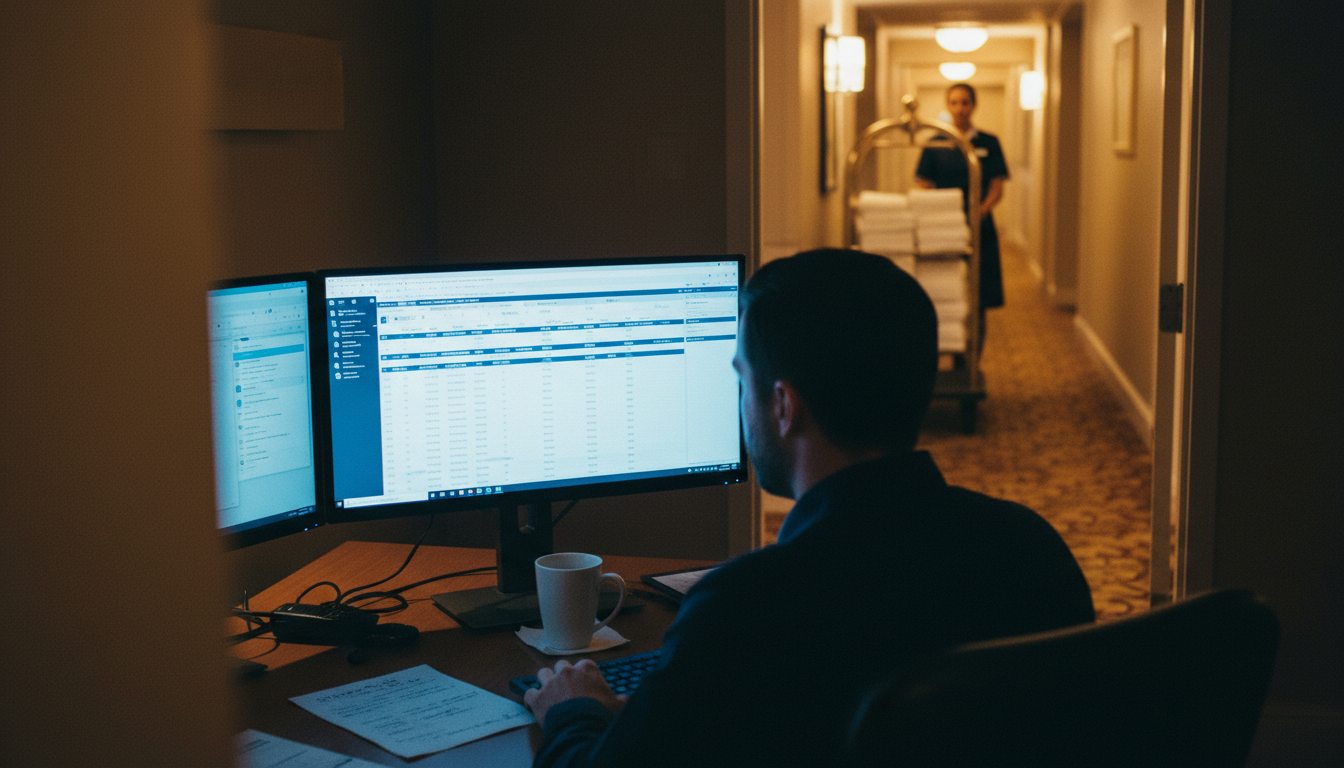
Look, I need to say something about this daily housekeeping story that nobody in the technology conversation wants to admit.
Hyatt, IHG, Hilton, Marriott — they've all been quietly pulling back daily housekeeping as a standard inclusion. The Daily Mail frames it as hotels "ditching a much-loved perk." Guests are frustrated. Loyalty members feel shortchanged. The brands position it as a sustainability initiative or a guest-choice empowerment play.
But here's what's actually happening underneath all of that.
This is a labor cost decision that got dressed up in green language and handed to the technology team to solve. And the technology team doesn't have the tools to solve it well.
I've been in the rooms — literally and figuratively — where hotel groups try to digitize housekeeping workflows. The pitch from every vendor is the same: give guests an app or an in-room tablet, let them request cleaning on demand, track it through your operations platform, route it to available staff. Elegant on a slide deck. Messy in a hallway.
Here's what the vendor isn't telling you. Most hotel PMS platforms don't have native integration with housekeeping management systems. You're stitching together a guest-facing request tool, a task management layer, and a PMS room-status module that were never designed to talk to each other. When a guest at a 400-key full-service property requests a mid-stay clean through the app at 2:47 PM, that request has to hit the housekeeping queue, get routed to a floor supervisor, get assigned to an available attendant, update the PMS room status, and confirm back to the guest. In real time. On infrastructure that was installed when flip phones were cutting-edge.
I've watched this break. Multiple times. The request goes into a queue nobody checks. Or it gets assigned to an attendant who's already left for the day because the scheduling system doesn't sync with the request platform. Or the guest never gets confirmation and calls the front desk, and the front desk agent has no visibility into where the request stands because they're looking at a different system.
The result? The guest who opted in to "choose when they want service" gets worse service than the guest who had automatic daily cleaning. And they know it. That's where the frustration the Daily Mail is capturing actually lives — not in the policy change itself, but in the broken execution layer underneath it.
Now multiply this across brands that are rolling this out at scale. Hyatt has what — over 1,300 properties globally? IHG has nearly 6,500? The technology maturity across that portfolio is wildly uneven. A newly built Hyatt Place with a modern tech stack can probably handle on-demand housekeeping requests reasonably well. A 30-year-old Holiday Inn running a legacy PMS with bolt-on modules? That property is handing guests a QR code that routes to a system held together with digital duct tape.
And here's the part that really gets me. The brands know this. They know the technology isn't uniform across their portfolios. They're making a policy change that requires a technology capability most of their properties don't reliably have, and they're letting individual GMs figure out the gap. That's not a strategy. That's a delegation of risk.
I think about the Magnolia — my family's 90-key independent. If we pulled daily housekeeping tomorrow, my mom would know within a day which guests were unhappy because she's at the front desk. She doesn't need an app for that. She needs eye contact and a conversation. The technology layer makes sense at scale. But "at scale" means it actually has to work at scale, and right now, for most properties, it doesn't.
The sustainability argument isn't nothing. Water savings, chemical reduction, linen lifecycle — those are real. But let's be honest about the proportions. The primary driver here is labor. Housekeeping is the single largest labor line item in most hotel operations. Reducing daily service frequency directly reduces hours. That's the math. The green story is the wrapper.
What I'd want to see — and what I'd tell any hotel group asking me — is this: before you change the policy, audit the technology. Can your PMS, your housekeeping management system, and your guest communication platform actually handle on-demand requests with real-time routing and confirmation? If the answer is no, you're not offering guests a choice. You're offering them a downgrade with a sustainability sticker on it.
The brands that get this right will be the ones that invest in the middleware — the integration layer that connects the guest request to the operational execution. The ones that get it wrong will watch their loyalty scores erode and blame the guest for being "resistant to change."
The guest isn't resistant to change. The guest is resistant to worse service sold as better service.
Rav's dead right about the tech gap — I've lived it. But let me tell you what's happening at the property level that even the technology conversation misses. When you pull daily housekeeping, you don't just change a workflow. You change the relationship between your housekeeping team and the guest. A housekeeper who cleans a room every day develops a rhythm — she knows 714 leaves towels on the floor, she knows 708 wants extra pillows restocked, she knows when something's off. That institutional knowledge disappears when she's only in the room every three days on request. I managed a 456-room unionized property. Housekeeping wasn't just our biggest labor line — it was our biggest quality-control mechanism. Every daily service was an inspection. Maintenance issues caught early. Guest preferences learned organically. When you reduce frequency, you reduce your eyes in the room. And nobody's building technology that replaces a veteran housekeeper's instinct when she walks into a room and knows something needs attention. Here's what I'd tell any GM dealing with this right now: don't let the brand hand you a policy change without the tools to execute it. If your tech stack can't handle on-demand routing — and Rav's right, most can't — then build a manual system that works. A whiteboard in the housekeeping office. A radio protocol. Whatever it takes. Because the guest doesn't care whether the failure is a technology problem or a policy problem. They care that their room wasn't cleaned when they expected it to be. And if you're an owner looking at the labor savings on a spreadsheet — yes, the savings are real. But so is the RevPAR hit when your scores drop. I watched a previous GM cut housekeeping time to 19 minutes and lock up the supplies to save money. Reviews tanked. I gave the time back, unlocked the closet, spent an extra $73,000 in labor. Revenue went up $2.1 million. The math on cutting service only works until it doesn't. GMs running full-service properties with loyalty-heavy guest mixes: fight for your top-tier members to keep daily service as a default, not an opt-in. That's not a perk — that's a promise. And when the brand tells you the new policy is about sustainability, ask them to show you the technology investment that makes it work. If they can't, you know exactly what this is about.