FIFA 2026 Won't Save You. Your Staff Will Break First.
Everyone's celebrating double-digit RevPAR projections for the World Cup. Nobody's talking about what happens to your team when 500,000 fans show up at once.
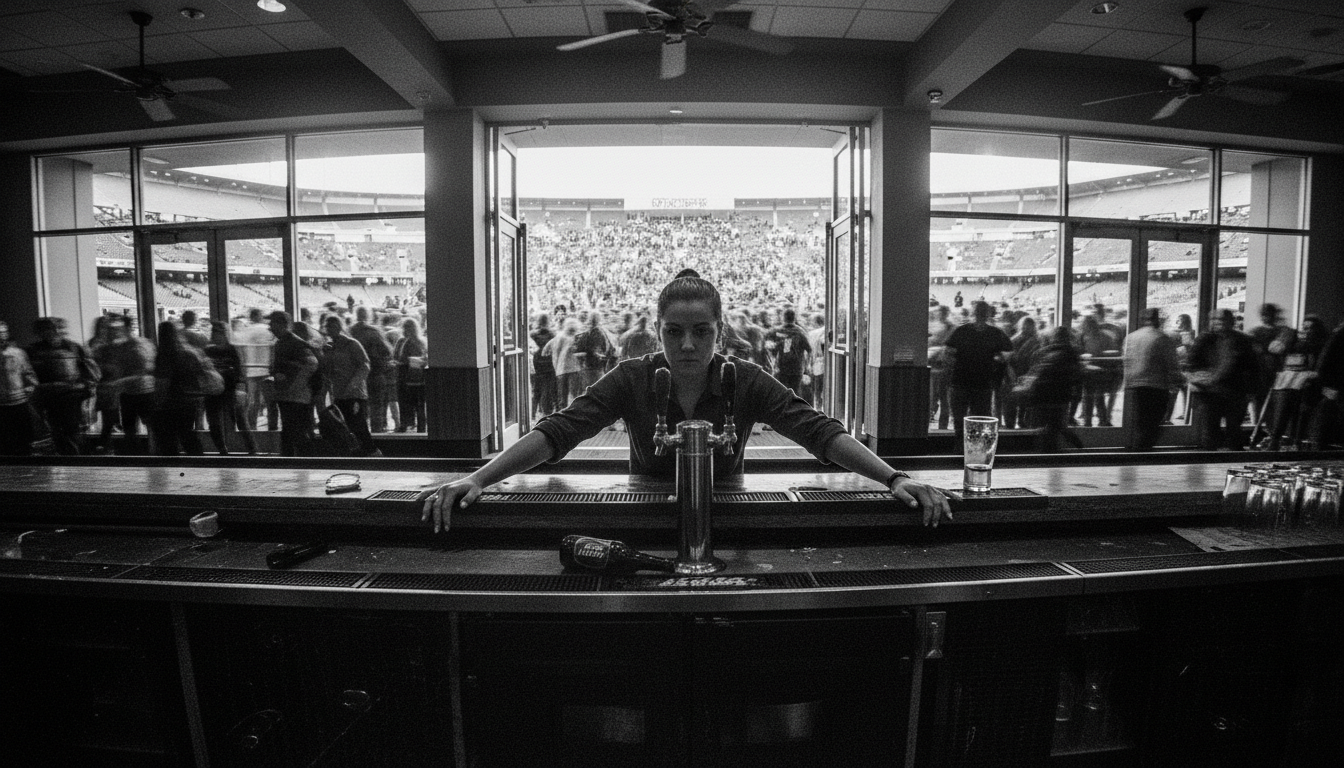
I was standing on Fremont Street in 2014 when we hosted a viewing party for the World Cup group stage. Not even a knockout round — group stage. We had maybe three thousand people show up to watch on the big screen, and by halftime my bar staff was underwater. We ran out of Bud Light. On Fremont Street. In Las Vegas. At a casino that sold more Bud Light per square foot than almost anywhere in the state.
That was three thousand people watching a sport most Americans didn't care about yet.
FIFA 2026 is putting matches in eleven U.S. cities. The projections are everywhere now — double-digit RevPAR growth, record occupancy, the biggest single sporting event ever held on American soil. And look, the demand is real. I'm not going to sit here and tell you soccer fans don't travel or don't spend. They do. International football supporters are some of the most passionate, highest-spending event travelers in the world. The cities hosting matches — New York, LA, Dallas, Miami, Houston, Seattle, Kansas City, Philadelphia, Atlanta, Boston, San Francisco — are going to see compression like they haven't seen since the Super Bowl, except it runs for weeks, not a weekend.
Here's what nobody's telling you.
Every article about FIFA 2026 is a revenue story. RevPAR up. ADR up. Occupancy through the roof. Great. I love revenue. Revenue is how I pay people. But revenue without operational readiness isn't a windfall — it's a catastrophe with a high price tag.
Let me walk you through what actually happens when a major international sporting event lands on your property.
First, your demand pattern inverts. You're not getting your normal business traveler Monday through Thursday, leisure Friday through Sunday mix. You're getting waves. Match day is chaos. The day before is almost as bad. The day after, half your guests check out before 7 AM to move to the next city, and the other half sleep until 2 PM and want late checkout. Your housekeeping schedule? Destroyed. Your front desk staffing model? Wrong. Your F&B pars? Not even close.
Second — and this is the one that keeps me up at night — you're going to be staffing this event during the worst labor market hospitality has seen in decades. Where are these people coming from? I ran a 375-room dual-brand Marriott complex right now. I know exactly how hard it is to hire one competent front desk agent in a normal week. Now multiply that across an entire host city where every hotel, every restaurant, every bar, every rideshare company, and every pop-up fan zone is competing for the same bodies.
Third, your guests are international. I don't mean Canadian. I mean you're going to have fans from 48 countries, many of whom have never been to the United States, don't speak English, don't understand tipping culture, don't know what a resort fee is, and are going to be confused and frustrated by things your staff handles on autopilot with domestic guests. Your front desk team needs to be ready for that. Your concierge — if you still have one — needs to be ready for that. Your security team absolutely needs to be ready for that.
Fourth, the party doesn't stay in the stadium. It comes back to your lobby. Your bar. Your parking lot. Your hallways at 3 AM. I managed a casino hotel during fight weekends in Vegas. I've seen what happens when tens of thousands of amped-up fans pour out of an event and back into the hospitality ecosystem. It's not dangerous — not usually — but it's intense, it's loud, it's sustained, and if you're not ready for it, your non-event guests are going to have the worst stay of their lives. And those are the guests who come back in August. The soccer fans are gone.
Here's the thing — I'm not bearish on FIFA 2026. I think it's going to be extraordinary. I think the host cities are going to see economic impact numbers that dwarf initial projections. I think smart operators are going to make a fortune.
But smart operators are starting now. Not next year. Now.
When I took over the Golden Gate — 122 rooms, smallest casino on the block — my advantage was never the building. It was never the rooms. It was the fact that every single person on my team knew what we were trying to do and had been trained to deliver it under pressure. When I built the outdoor entertainment program on Fremont, we rehearsed. We ran scenarios. We figured out where the bottlenecks were before opening night, not during it.
When the AC died at The Green Room in July, ninety-five degrees, packed house — I didn't panic because I'd already thought about what happens when something breaks on the busiest night. Cold towels. Open doors. Fans. Turn the disaster into the story. But that only works when your team trusts you and you trust them. You can't build that trust in June 2026.
So here's my list. If you're a GM in a host city — or within sixty miles of one — this is what you should be doing right now:
**Staff retention is your World Cup strategy.** Every person you keep between now and June 2026 is worth three people you'll try to hire in April 2026. Pay them. Train them. Tell them what's coming and make them feel like they're part of something historic. Because they are.
**Build your surge plan.** Not a memo. An actual operational plan. What does your staffing model look like on match day versus off day? Where are your flex positions? Do you have relationships with staffing agencies? Have you talked to your union — if you have one — about temporary scheduling modifications?
**Train for international guests now.** Basic phrases in Spanish, Portuguese, French, German, Arabic. Cultural briefings. Payment method expectations. How to explain a resort fee to someone who's never encountered one. This isn't a nice-to-have — this is the difference between a five-star review and a complaint to the tourism board.
**Scenario-plan your F&B.** Your pars are wrong. I promise you, your pars are wrong. Figure out what 100% occupancy with 80% F&B capture looks like and work backward from there. If you don't have the storage, figure that out now.
**Talk to your neighbors.** The properties around you aren't your competition during the World Cup. They're your ecosystem. If the bar next door runs out of beer, those fans are walking into your lobby. Coordinate. I know that sounds crazy. Do it anyway.
**Protect your non-event guests.** Designate quiet floors. Set expectations at booking. Have a plan for noise complaints that doesn't involve calling security every ten minutes. Your regulars — the ones who stay with you fifty weeks a year — are watching how you handle the two weeks of chaos.
The RevPAR projections are going to come true. I believe that. But RevPAR is a number on a report. It doesn't tell you about the housekeeper who worked a double because three people called out. It doesn't tell you about the front desk agent who handled a screaming guest at midnight because nobody trained her for international event crowds. It doesn't tell you about the bellman who carried bags for fourteen hours straight and quit the next day.
The money is coming. The question is whether your operation can catch it without breaking the people who make it work.
Here's the test. Pull up your property's staffing plan for June 2026 right now. If you don't have one — and most of you don't — that's my point. The industry is celebrating the revenue forecast like the check already cleared. It hasn't. I've run properties through fight weekends, New Year's on Fremont, casino grand openings, and a global financial crisis. The money always shows up eventually. The question is whether your team is standing when it does. If you're a GM in a host city, your World Cup started the day you read this. Call your HR director. Call your ops team. Build the plan. Train the people. And for the love of God, check your beer pars — because I promise you, they're wrong.