Choice Hotels Is Running Two Playbooks. One of Them Is Lying.
Choice is selling Wall Street a growth-through-mix story while selling owners a RevPAR story. The franchise agreement doesn't care which narrative wins.
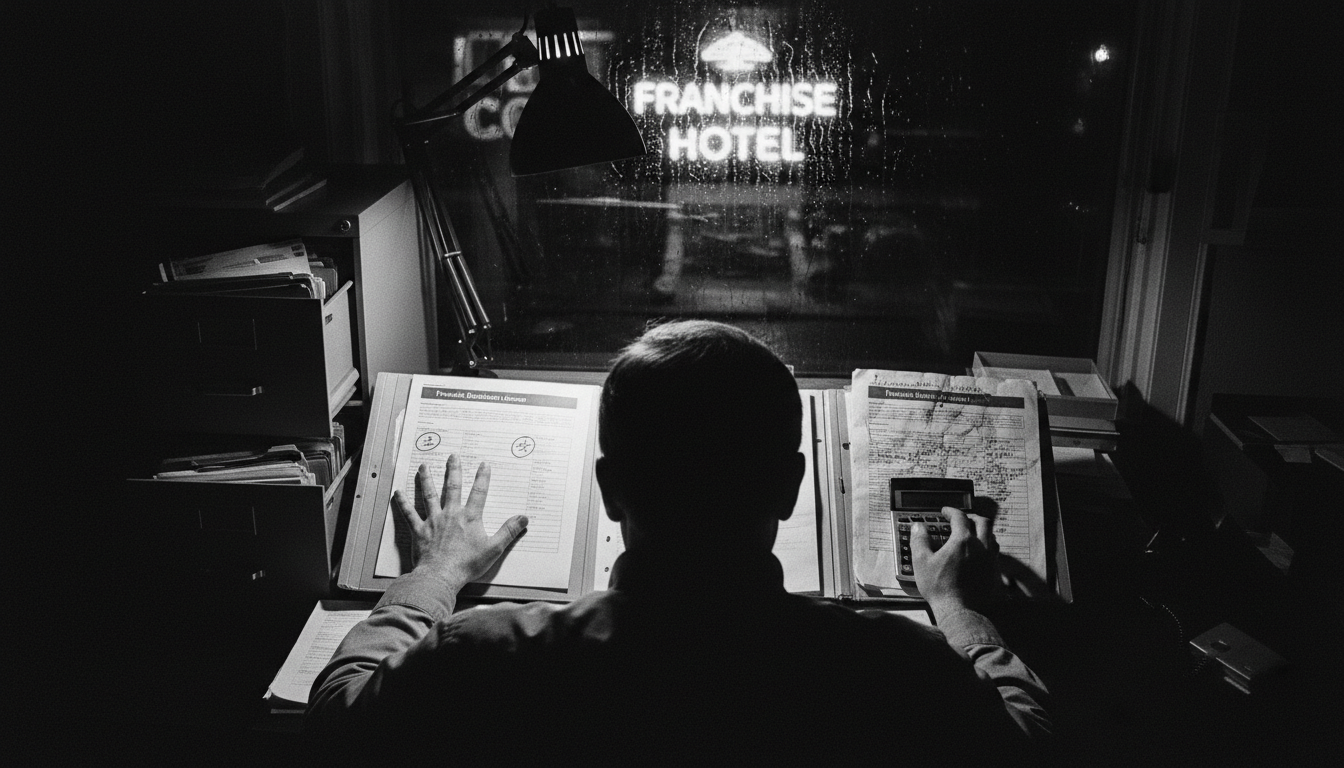
There's a filing cabinet in my office — three drawers, organized by year — filled with annotated Franchise Disclosure Documents. I pull them out when a company's earnings call tells one story and their franchise sales team tells another.
Choice Hotels just gave us a textbook case.
The headline coming out of their latest earnings call is a familiar split: unit growth looks strong, RevPAR is soft. The analyst community is calling it "growth mix vs. RevPAR headwinds," which is a polite way of saying the top line is expanding while the per-unit economics are under pressure. And Choice is threading the needle the way every franchisor threads it — pointing to development pipeline momentum on one slide and acknowledging domestic RevPAR challenges on the next.
Here's what the earnings call structure is designed to obscure: these two stories are in direct tension, and the person who absorbs that tension isn't the C-suite. It's the owner.
Let me decode this.
When a franchisor reports strong unit growth alongside flat or declining RevPAR, it means one of two things. Either new units are opening in markets that dilute the existing portfolio's pricing power, or the brand is converting properties that pull the quality — and rate — average down. Sometimes both. In either case, the owner who signed five years ago based on a loyalty contribution projection and a rate premium promise is now competing against more keys flying the same flag, often in the same market, often at a lower price point.
This is the oldest tension in franchising. Growth serves the franchisor's fee base. RevPAR serves the owner's P&L. When they move in opposite directions, someone is losing. And it's never the person collecting the royalty check.
I've been tracking Choice's international expansion narrative since earlier this year, when they started pointing overseas as a growth vector. And I said then what I'll say again now: global expansion doesn't fix what's breaking domestically. It moves the denominator. The franchise sales team in the U.S. is still selling the same projections. The FDD still contains the same Item 19 data — or conspicuously doesn't. The PIP requirements still land on the owner's balance sheet.
What the press release doesn't mention — what earnings calls never mention — is the experience gap that opens when a brand grows faster than its ability to maintain differentiation. I spent years brand-side writing standards manuals and designing training programs. I can tell you exactly how the sequence works: headquarters announces aggressive development targets, franchise sales accelerates to hit them, quality assurance gets stretched across more properties with the same team size, and the brand promise starts to drift. Not dramatically. Not in ways that make headlines. In ways that show up eighteen months later in loyalty contribution data that doesn't match what the franchise sales deck projected.
The Deliverable Test matters here. Choice is positioning several of its brands — Cambria, particularly — as premium players that command rate premiums. That positioning requires consistent execution across every property. Every conversion that doesn't fully deliver the brand experience doesn't just underperform individually — it erodes the rate authority of every other property in the system. One weak Cambria in a market gives the meeting planner a reason to negotiate every Cambria down.
So when I hear "growth mix vs. RevPAR headwinds," I hear a brand that's choosing the narrative that serves its fee revenue over the narrative that serves its owners' returns. That's not malice. It's incentive structure. The franchisor gets paid on gross revenue — every new key adds to the royalty base regardless of whether it helps or hurts the existing portfolio. The owner gets paid on what's left after franchise fees, PIP debt service, and operating costs. Those are fundamentally different math problems, and the earnings call only presents one of them.
What should owners be watching? Three things.
First, your market's supply pipeline. Not just Choice flags — all flags. But pay particular attention to how many units your own brand is adding within your competitive set. If Choice is opening or converting properties in your trade area, your RevPAR pressure isn't a macro headwind. It's your franchisor competing against you with your own brand.
Second, your actual loyalty contribution versus what was projected when you signed. Pull the FDD from your signing year. Compare the Item 19 representations — if they existed — against your trailing twelve months. If there's a meaningful gap, that's not a market problem. That's a promise problem.
Third, your total brand cost as a percentage of revenue. Add royalties, marketing fund contributions, loyalty program assessments, reservation system fees, and any brand-mandated vendor premiums. If that number is north of 14-15% and your RevPAR index is declining, the economic equation that justified your franchise agreement may no longer hold.
I keep the Albuquerque file in the front of the top drawer. Three generations. One family. They trusted the brand projection, took on the PIP debt, and the loyalty contribution came in at roughly sixty percent of what was presented during the sales process. They lost their hotel.
Not every owner faces that outcome. But every owner faces the same structural tension: the franchisor's growth incentive and the owner's profitability incentive are not aligned. They never have been. Earnings calls are designed to make you forget that. Don't.
Elena knows this game from the inside — she helped build the playbook. And she's right: when unit growth and RevPAR move in opposite directions, the owner is the one standing in the gap. Here's what it looks like at the property level. You're a GM running a Comfort Inn or a Cambria, and your comp set just added another Choice flag two exits down the highway. Your ADR is under pressure but your franchise fees aren't going down. Your loyalty contribution is flat but your marketing assessment went up. Your PIP from three years ago is still on the balance sheet, and now the brand wants you to upgrade the lobby furniture to match the new design package. I've been in that room. The owner calls you and says "RevPAR is down, what are you doing?" And the honest answer is: your franchisor just put more inventory in your market and there's nothing in your franchise agreement that prevents it. If you're an owner with Choice flags — or any flags — do what Elena said. Pull your signing-year FDD. Run the loyalty contribution comparison. Calculate your total brand cost. And then have an honest conversation with yourself about whether this agreement is still working for you, or whether you're paying a premium for a flag that's diluting its own value. And if you're a GM caught in this squeeze — work your direct bookings. Train your front desk to convert every walk-in and every call into a direct relationship. The brand is going to keep adding keys because that's how their math works. Your math works differently. Act like it.