BetMGM Lost 68% of Its Expected EBITDA in One Quarter. Casino Hotels Should Be Watching.
BetMGM's Q1 revenue missed forecasts by 14% and EBITDA cratered 68% below expectations, forcing a full-year guidance cut. If you're running a casino-adjacent hotel and assuming the gaming floor will keep subsidizing your room rates, this is the quarter that should make you nervous.
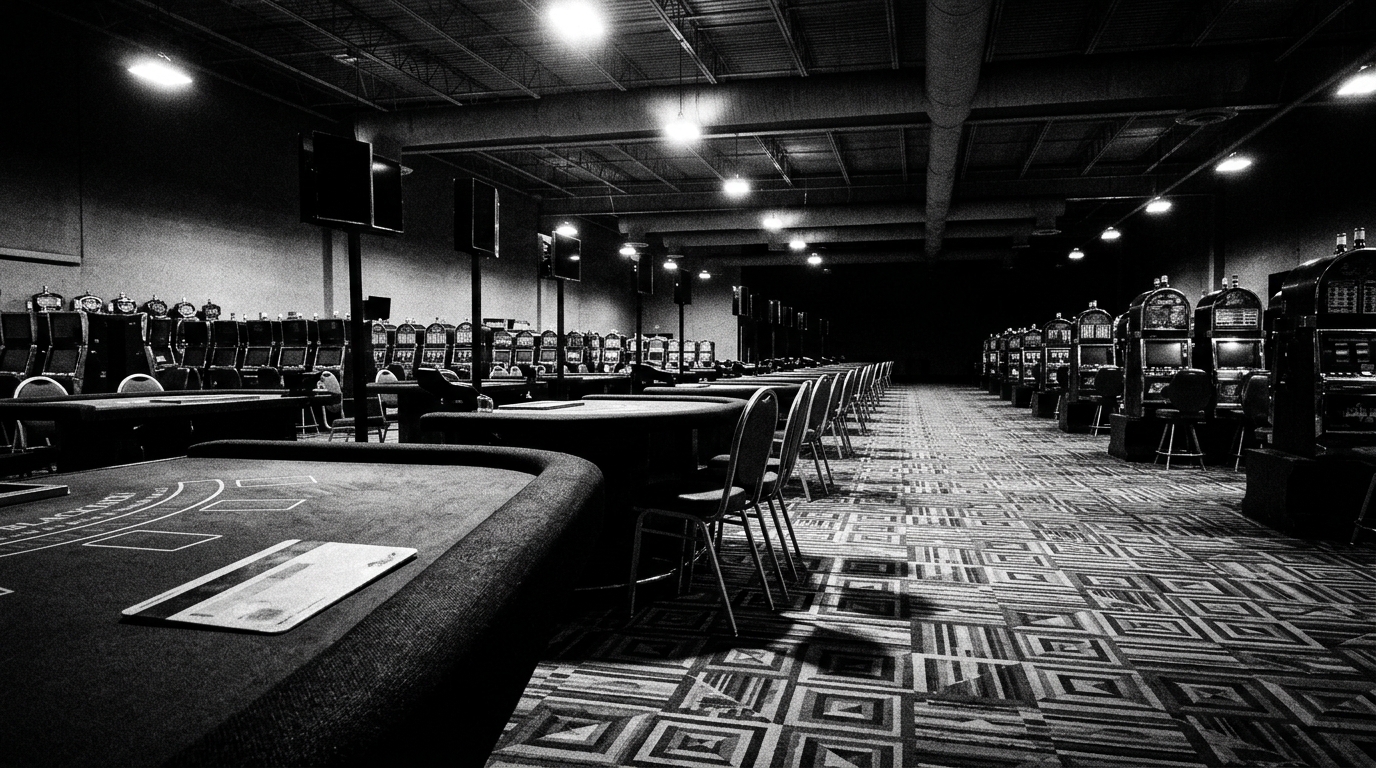
I watched a casino hotel GM lose his job once because he built his entire revenue strategy around the assumption that gaming would always carry the rooms. "The floor pays for everything," he used to say. The floor did pay for everything... until it didn't. His RevPAR collapsed not because anything changed in his hotel. Because something changed in the casino's math. He never saw it coming because he never looked at the gaming P&L. It wasn't his department.
That memory is what hit me when I saw BetMGM's Q1 numbers. Revenue of $696 million against an $810 million forecast... a 14% miss. EBITDA of $25 million against expectations of $78 million... a 68% miss. And now the full-year revenue guidance is cut from a range topping $3.2 billion down to a ceiling of $3.1 billion. These aren't hotel numbers, but if you think the hotel side of casino operations lives in a different economic universe, you haven't been paying attention. MGM is a 50% owner of BetMGM. When the digital gaming venture underperforms by that margin, the pressure moves somewhere. It always moves somewhere.
Here's what's actually happening inside these numbers. Monthly active users dropped 9% year-over-year. Online sports betting users specifically fell 16%. BetMGM's response has been to deliberately shed lower-value, promotion-chasing players and focus on higher-spending users... handle per active user jumped 23%, and revenue per active user in sports betting rose 25%. That's not panic. That's a strategic pivot. But it's a pivot that means fewer bodies in the funnel. Fewer bodies in the funnel means fewer people being marketed hotel rooms, fewer people being cross-sold resort experiences, fewer loyalty program members being driven to physical properties. The digital operation was supposed to be the top of the customer acquisition funnel for the entire MGM ecosystem. When you voluntarily shrink that funnel by 16% on the sports side, the downstream effects don't stay in the app.
The other piece nobody's connecting is the competitive squeeze. BetMGM's sports betting revenue grew 4% while DraftKings is projecting 17% growth and Rush Street Interactive is at 26%. When you're the laggard in a category that's supposed to be your growth engine, corporate attention and capital allocation shift. The CFO of MGM Resorts said publicly that he thinks BetMGM "is worth more than many analysts believe." That's the kind of statement you make when the numbers aren't making the case for you. For operators at MGM-affiliated properties, the question isn't whether BetMGM survives (it will... $696 million in quarterly revenue isn't a distress signal). The question is whether the digital business generates the kind of returns that keep capital flowing toward property-level reinvestment, or whether it becomes the thing that soaks up management attention and investment dollars that would otherwise flow to the physical hotels.
Look... if you're running a casino hotel or a property that feeds off casino-adjacent traffic, the lesson here isn't about BetMGM specifically. It's about the assumption that digital gaming growth is a one-way escalator that lifts hotel performance along with it. BetMGM just showed you that customer-friendly sports outcomes (bettors winning instead of the house), prediction market competition, and shifting consumer confidence can crater expected profitability by two-thirds in a single quarter. That kind of volatility in what's supposed to be your cross-selling engine should change how you model your own revenue expectations. The gaming floor... physical or digital... is not a guarantee. It never was. But the last five years of growth made a lot of hotel operators forget that.
If you're a GM at a casino resort or a property that benefits from gaming-driven traffic, stop treating gaming revenue as someone else's problem. Pull your room night mix and figure out what percentage of your occupancy is driven by casino loyalty programs, gaming packages, or comp rooms tied to the digital platform. If that number is north of 15%, you need a contingency plan for what happens when those programs get tighter... because when EBITDA misses by 68%, marketing budgets get scrutinized and comp allocations get squeezed. Build a 90-day plan that shows your owner how you'd hold rate and occupancy if gaming-driven demand drops 10%. Don't wait for the corporate call. Be the one who already has the answer.